


Thomas Massey and Remembering the American Revolution
May 21, 2026
In light of the Thomas Massey election, each of us should take the time and intensively look to the wisdom of the Founding Generation, whose definitive words and sacred ideals of liberty and justice are enshrined and written in our minds, hearts, and collective Memory.
We celebrate and commemorate this wisdom in 2026 upon the 250th anniversary of the Declaration of Independence.
This includes such noted exemplary men and women such as Thomas Jefferson, Benjamin Franklin, John and Abagail Adams, James Otis and Mercy Otis Warren, and the multitude of others.
They were keen students of history, both ancient and contemporary, of the decline and subversion of the Roman Republic into a destructive Empire, and the treasonous usurpations and infamies of the hubristic Stuart dynasty of English monarchs, who waged war without the consent of Parliament. These powerful facts have a direct consequential impact on the Trump regime and its war waged against Thomas Massey.
- The Power of the Purse: Charles I waged unauthorized foreign wars and attempted to bypass Parliament’s financial control, leading directly to the English Civil War. The framers ensured the President could not fund military conflicts without the House of Representatives.
- Standing Armies and Martial Law: The Stuart kings often maintained standing armies during peacetime and imposed martial law, which the framers viewed as a direct threat to civil liberties.
- Checks on Monarchical Ambition: The English experience demonstrated that a single executive is naturally prone to war because it offers them glory, expanded power, and domestic leverage. The Framers utilized the Stuart era as a historical cautionary tale. By dividing this authority and placing the power to initiate war in the hands of the people’s representatives, they deliberately created a system where consensus and congressional approval were required before engaging in armed conflict.
https://www.amazon.com/Ideological-Origins-American-Revolution/dp/0674443020
https://ia800106.us.archive.org/16/items/dli.bengal.10689.12758/10689.12758.pdf
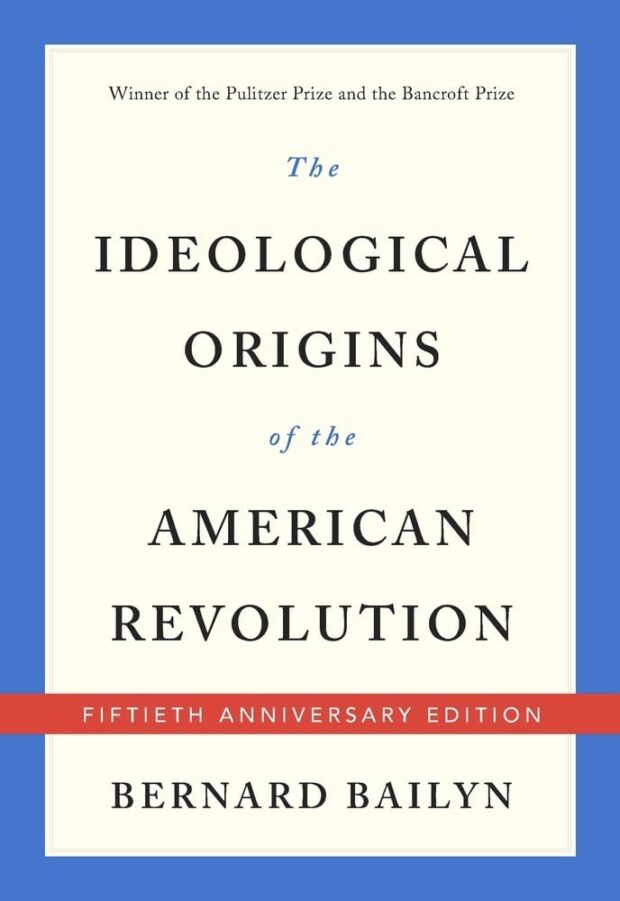
Bernard Bailyn’s The Ideological Origins of the American Revolution, is a Pulitzer Prize and Bancroft Prize-winning masterpiece that transformed how historians understand the American Revolution. He argued that the revolution was fundamentally an intellectual and ideological struggle rather than merely an economic or social class conflict.
Bailyn’s The Ideological Origins of the American Revolution is a foundational historical text exploring the political consciousness, pamphlets, and radical Enlightenment ideas that fueled the colonial rebellion against Britain.
Bailyn argued that the Revolution was not primarily driven by economic oppression or class warfare, but by a passionate ideological commitment to liberty and a deep fear of centralized power. His analysis highlights four main pillars of revolutionary thought:
The Pamphlet Literature: Bailyn based his study on hundreds of colonial pamphlets, discovering an intense, debate-driven political culture.
The Power vs. Liberty Dynamic: Colonists viewed history as an eternal struggle where “power” naturally tended to encroach upon and devour “liberty”.
The Logic of Conspiracy: Because of escalating British taxation and military presence, Americans became deeply convinced that a corrupt, tyrannical conspiracy was operating within the British government. This resembled an egregious Epstein Scandal of corruption and willful infamy.
The Contagion of Liberty: The revolutionary arguments for natural rights and freedom inevitably spilled over into social questions, forcing Americans to grapple with the contradictions of institutions like slavery and established religion.
Bernard Bailyn redirected much of the scholarship of the modern era of the American Revolution when he published the first edition.
American Revolution: A Bibliographical Essay by Murray N. Rothbard
Modern Historians Confront the American Revolution, by Murray N. Rothbard
Barnes Brothers Present the Philosophy of The Declaration of Independence
Version 1.0.0

