


In The Old Days Life Was So Much Simpler
August 2, 2016
In the old days life was so much simpler. If you were an attentive reader of select publications of the Old Left (George Seldes’ In Fact newsletter) and the Old Right (the Chicago Tribune), you knew exactly who stood at the pinnacle of the power elite. This elite was composed of two financial-industrial blocs of the northeastern seaboard Establishment. They were the J. P. Morgan bloc and the Rockefeller bloc.
This central fact was clearly stated by economist and historian Murray N. Rothbard at the beginning of his chapter, “From Hoover To Roosevelt: The Federal Reserve and the Financial Elites,” found in his A History of Money and Banking in the United States: The Colonial Era To World War II, Ludwig von Mises Institute, 2002:
“This (analysis) is grounded on the insight that American politics, from the turn of the twentieth century until World War II, can far better comprehended by studying the interrelationship of major financial groupings than by studying the superficial and often sham struggles between Democrats and Republicans. In particular, American politics in this period was marked by a fierce struggle between two major financial-industrial groupings: the interests clustered around the House of Morgan on the one hand, and an alliance of Rockefeller (oil), Harriman (railroad), and Kuhn, Loeb (investment banking) interests on the other. “
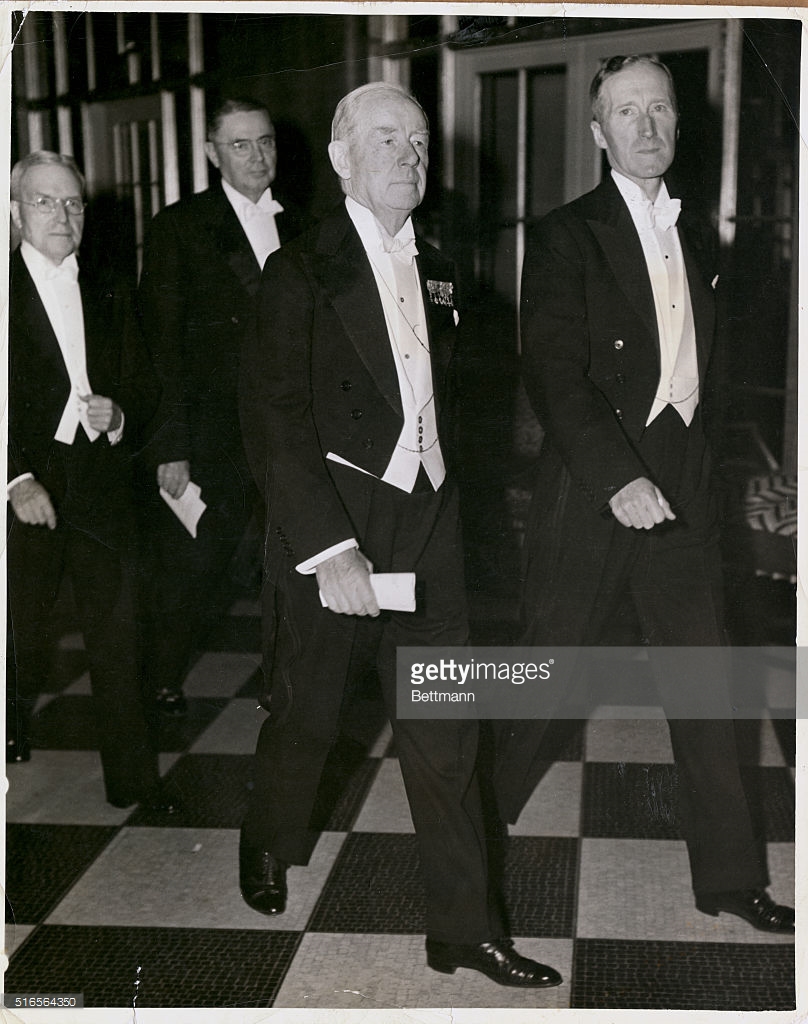
Above we have a rare revealing photo publicly capturing this dynamic of the rival two blocs. There is John D. Rockefeller, Jr. (far left) and the principal Morgan banker Thomas Lamont (center). They are both attending a dinner banquet of the Associated Canadian Organization of New York on June 18, 1941.
Ah, Bloods and Crips together at last!
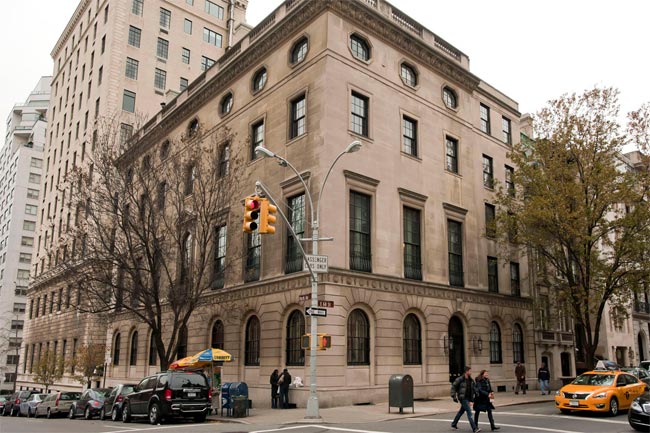
Actually the elite would meet covertly in the building below, the Harold Pratt House in New York, headquarters of the Council on Foreign Relations. All discussions and meetings were secret and off-the-record, governed by what was described as “Chatham House Rules.”
While the Round Table group, the British elite’s counter-point to the CFR, the Royal Institute of International Affairs, would meet at Chatham House, in London:


 The "Anti-Hillary Economy" is Booming . . .