


De-Quasimodo Yourself: 6 Exercises to Counteract Slouching
June 28, 2017
Earlier this year when I made a video about how to plan your week, several viewers commented on the terrible Quasimodo-like hunched back I displayed. As a guy who spends much of his time sitting slumped over a laptop, I was aware I had developed a terrible slouch. And I wasn’t proud of it. Not only did it make me look unconfident and lazy, little did I know, my poor posture was also wreaking havoc on my upper body flexibility. I discovered this while filming another video — this time on how to do a low bar squat.
Up until that point, I had never done a low bar squat; I had always performed the high bar variety. Getting the bar in proper position on the former requires a considerable amount of flexibility in the chest and shoulders. Your wrists need to be neutral, or straight, throughout the entire lift to avoid any of the weight being carried by your wrists or arms. If you have any wrist bend, you’re setting yourself up for a bad case of tendonitis in the elbow.
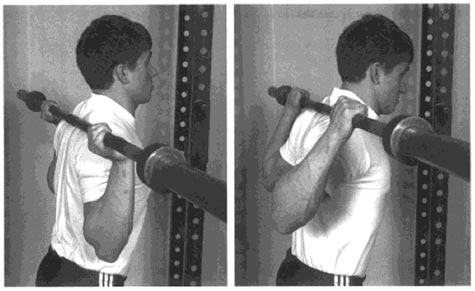
I looked like the guy on the left.
Despite ample gruff encouragement from my indomitable coach, Mark Rippetoe, I was never able to get my wrists straight while squatting, something plenty of YouTube commenters again made note of — much to my chagrin. The problem was that I simply didn’t have any flexibility in my shoulders or chest to place the bar in the proper position while maintaining straight wrists. My inflexibility was so bad that Rip even asked me if I had ever injured my shoulder or chest! I hadn’t — at least to my knowledge.
 Stretching Exercise Po...
Best Price: $18.99
Buy New $19.97
(as of 06:25 UTC - Details)
Stretching Exercise Po...
Best Price: $18.99
Buy New $19.97
(as of 06:25 UTC - Details)

I started to investigate what would cause so much tightness in my chest and shoulders, and the one thing that kept popping up was chronic slouching. When you slouch, your shoulders turn in, which causes your chest to sink in as well. If you keep yourself in a slumped-over position day in and day out for hours at a time, you’re going to lose flexibility in your shoulders and chest in a big way.
But slouching has other pernicious effects besides slowing your squat gains. According to Dr. Jason Quieros, a chiropractor at Stamford Sports and Spine in Connecticut, “every inch you hold your head forward [while slouching] you add 10 pounds of pressure on your spine.” If you’re like most chronic desk slouchers, you’re likely leaning your head towards your monitor by 2 or 3 inches. That’s 20 to 30 pounds of extra weight that your back and spinal column have to endure for extended periods of time.
In the short term, this can cause jaw aches and headaches, but in the long term it can result in kyphosis, or a permanently visible Quasimodo-esque hump on your upper back. Kyphosis isn’t just an aesthetic problem, either. It can cause pain due to excess strain on the spine, as well as breathing difficulties due to pressure on the lungs from the caved-in chest that comes with a rounded back.
Not wanting to become the hunchback of Notre AoM, I started researching different stretches and exercises I could implement to undo the consequences of years of slumping and hunching.
 HemingWeigh Extra Thic...
Best Price: $19.01
Buy New $29.95
(as of 10:10 UTC - Details)
Below I share six different exercises you can do to counteract the ill effects of slouching. They’ve helped me de-Quasimodo myself — maybe they’ll help you too. These exercises, of course, should be done in conjunction with a concerted effort to maintain good posture throughout the day while you’re working. (A detailed post and video on how to improve your posture are forthcoming.)
HemingWeigh Extra Thic...
Best Price: $19.01
Buy New $29.95
(as of 10:10 UTC - Details)
Below I share six different exercises you can do to counteract the ill effects of slouching. They’ve helped me de-Quasimodo myself — maybe they’ll help you too. These exercises, of course, should be done in conjunction with a concerted effort to maintain good posture throughout the day while you’re working. (A detailed post and video on how to improve your posture are forthcoming.)
The Routine
I typically do all of the exercises below on my rest days. A few of them, I’ll do before I start squatting (I note which ones below). Ever since I started incorporating these exercises into my fitness routine, my flexibility and posture have improved significantly. I’m happy to report that I’m now able to get my wrists straight in the low bar squat, and have become a healthier, more upright gent all around!
Doorway Stretch
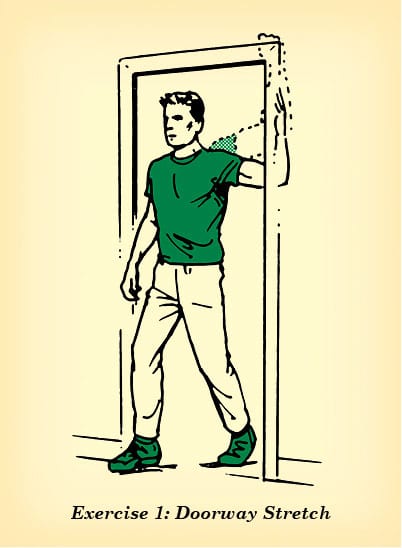
The doorway stretch is wonderful for counteracting the sunken chest you may have developed from years of slouching. This stretch (along with the shoulder dislocation exercise) have been key for me in developing the flexibility needed to properly low bar squat. Not only do I do these as part of a full anti-slouch routine during my rest days, I’ll also perform them before I squat so that I’m flexible enough to get in the proper position.
Stand inside a doorway (you can also stand next to a squat rack if you’re at the gym). Bend your right arm 90 degrees (like you’re giving a high five) and place your forearm against the doorframe. Position your bent elbow at about shoulder height. Rotate your chest left until you feel a nice stretch in your chest and front shoulder. Hold it for 30 seconds. Repeat with the opposite arm.
You can emphasize different parts of your chest by adjusting the height of your bent elbow on the doorframe. The lower your elbow, the more your pectoralis major gets stretched; the higher your elbow, the more you stretch your pectoralis minor.
Copyright © 2017 The Art of Manliness
 King Zog of Long Island