


Along with millions of other people, I was appalled by the well-organized theft of 170,000 items from the Baghdad museum. But the event got me thinking about national treasures and the people who loot them.
The museum’s directors could not safely trust American troops to protect property. But this means that the Iraqis could not safely trust the museum’s directors to protect property. It was all a matter of misplaced trust.
This got me to thinking: “Who is worthy of my trust when it comes to protecting national treasures?”
A government-run museum relies on people’s self-government to protect property. It opens its doors to the general public, and it rarely charges admission. It might as well put a neon sign above the door: “Come and get it!”
All government begins with self-government under God. There are not enough resources on earth to protect society from the effects of evil-doers if society did not inculcate the principle of self-government in its members. And when I say “society,” I do not mean “the State.” The familiar phrase, “Thou shalt not steal,” has reduced theft far more than any collection of police forces ever has.
NATIONAL TREASURE
The entire region’s governments have long defined the stone idols and monuments of past government administrations as national treasures, meaning government-controlled treasures. In other words, they have treated these artifacts as if they were oil reserves. Governments in the Middle East do not honor the private ownership of large pools of oil, either by local land owners or foreign buyers of local reserves. This is because oil is defined as a national treasure.
When a government identifies anything as being national, it is asserting a claim of ownership. When governments do the defining, “national treasure” means “nationalized treasure.” It means “too important to be left in the possession of individuals.” The State claims the authority to liberate national treasures from profit-seeking owners, who would otherwise waste them. Here is the general rule: “Show me a national treasure, and I’ll show you stolen goods.”
The Baghdad Museum was funded by the State. Iraq’s politicians over many decades used tax money that was confiscated from poverty-stricken Iraqi citizens to buy up these artifacts from private citizens. The most famous of these artifacts were relics of very ancient regional governments that were famous mainly for stealing everyone else’s national treasures. The Assyrians were the grand masters of this. Assyrian kings commissioned the sculpting of large statues of winged lions with kings’ faces. These statues surely did more justice to the nature of State power than Saddam’s statues ever did. I mean, a statue of a guy with an outstretched arm proportionally longer than Wilt Chamberlain’s surely doesn’t convey the same message of State power as a fearful beast that will swoop down on you and tear you to pieces. (If the Internal Revenue Service ever goes looking for a new symbol, I have a suggestion.)
As with all other Middle Eastern governments, Iraq’s government placed export controls on museum-designated national treasures. Private citizens from outside the country were not allowed to buy them.
There is a huge problem with national treasures: other governments. They want in on the deal. In the Bible, the classic example of this was Babylon. Judah’s King Hezekiah, not showing good judgment, showed the treasures of his house to agents of Babylon. “Hey, guys, look at this!” This was really stupid, as a prophet subsequently informed him (II Kings 20). Babylon later invaded, conquered Judah, stole the treasures, stripped the temple, and sent the people into captivity. Thanks, King!
So, along comes a foreign government that wants to get its hands on your national treasure. Saddam Hussein invades Kuwait. The United States defends Kuwait. The United States invades Iraq. So it goes. When Government A asserts ownership of a national treasure that was discovered by citizen A on his own land, thereby prohibiting citizen A from dealing with citizen B, who is under the jurisdiction of Government B, Government A can expect to hear from Government B regarding the terms of trade.
Today, oil is the premier national treasure. My prediction: what went on at the Baghdad Museum was a foretaste of things to come in the oil market.
MIDDLEMEN
The United States government is now liberating Iraq. It is also liberating Iraq’s most important national treasure. Here is a basic rule of Republican foreign policy: “Any nation that doesn’t have national treasure to liberate ought to be allowed to remain in its unliberated condition.” Or, to put it specifically, “No more Bosnias.” It’s the Democrats who always get us involved in national liberation without any hope of liberating national treasures, e.g., World War I, World War II, Korea, Vietnam, Haiti, Somalia, etc. That’s why they’re Democrats. Republicans are not so economically short-sighted.
There is a lot of oil under the ground in Iraq, just as there were a lot of artifacts in the Baghdad Museum. A lot of consumers would like to get their hands on that oil, just as a far smaller number of consumers want to get their hands on those ancient stones.
When buyers want something, they look for middlemen to deliver it. That’s the principle of the division of labor. Middlemen act as the economic agents of the highest-bidding buyers. This is the free market at work. But there are always organized groups of middlemen that find free market competition too burdensome. They want to cut costs by getting taxpayers to cover a large percentage of these costs.
There are today billions of people bidding for the energy that oil provides. They really aren’t particular about the middlemen. Chevron, BP, Shell: it’s six of one, half a dozen of the other. They think as I do: “Just post the price, guys. Let me decide.” I don’t really care who gets my money.
But it matters to the middlemen who gets my money. It matters a great deal.
Back in 1916, certain middlemen in Europe saw all that oil in the Middle East. They decided that the looming breakdown of the Ottoman Empire presented a unique opportunity to get their hands on billions of barrels of national treasure. As a matter of efficiency, it was easier for the middlemen to divide up the oil market among themselves if they had their own regional middlemen, who in turn had the power to consolidate the regional markets by force and parcel out the booty.
Along came T.E. Lawrence. Then along came American journalist Lowell Thomas. Thomas transformed T. E. Lawrence into Lawrence of Arabia. Lawrence of Arabia should have been known as Oil Slick Larry. He made a lot of promises to regional chieftains, and these promises were validated by various British bureaucrats, rather like various U.S. Presidents had made promises to regional chieftains in North America. The integrity of the people making the promises was similar. So was the outcome of the promises.
If you want to read about the creation of the region’s original political middlemen, which required the invention of new States, read David Fromkin’s magnificently titled book, A Peace to End All Peace. Then read Janet Wallach’s Desert Queen: The Extraordinary Life of Gertrude Bell.
The political legacy is clear: “If deal-doers want to do deals, they need other deal-doers.” If Iraq weren’t there, we would have to invent it. Fortunately, the British did. So, oil after 1918 became a national treasure, i.e., a resource in the budgets of national treasuries. Deals were made. Promises were made.
But then, in 1971, Libya’s Gadhaffi (or is it Ghadaffi, or Qadaffi?) decided that the national treasure just wasn’t national enough. He nationalized BP’s refineries and reserves. Then he did the same to Bunker Hunt’s. The OPEC cartel’s members waited to see what the West would do in response. The West sent official protests. The West thereby sent them a message: “Come and get it!” The result in 1973 was well described by Jerry Lee Lewis in 1957: “whole lot of shakin’ goin’ on.” Or, better put, “sheikin’.” The great sheikdown began. OPEC hiked the price of oil in 1973. This worked so well that they did it again in 1979.
They looted Western oil companies. The creeps!
That is why we are in Iraq today. The marginal price of oil is established by its marginal supply, and the U.S. government now has its hands on the spigots that establish the marginal supply. Dubya of Arabia is about to re-allocate the ownership of 110 billion barrels of national treasure. The re-negotiation of contracts among the middlemen will soon begin. “High bid wins.”
LOOTERS
The world — or at least lovers of old stuff — is outraged at the looting of the Baghdad Museum. Yet it is not equally outraged at the looting that made possible the Baghdad Museum. The world has been trained to think of museums as collections of national treasures. This means that the world accepts the economics of national museums. The economics of national museums is as follows.
The State restricts the sale of privately owned property, thereby creating an oligopsony (government-approved group of buyers) or a monopsony (a single buyer: the government). This reduces the prices offered to property owners.
The State confiscates from taxpayers the money to buy the artifacts.
The State brings the artifacts to the city where the State’s senior bureaucrats and its richest and most powerful supporters live.
The State opens the doors of the museum to anyone in the name of The People.
Since most of The People really aren’t interested in artifacts, the museums are visited mainly by — I have to say it — artsy-fartsy rich people who have had advanced formal educations, usually funded by the State, where an appreciation for really old stuff is inculcated.
Let’s face it: hillbillies and farmers sell their old stuff to middlemen (antique dealers) for city people (mainly wives of well-to-do husbands), and they are glad to have the money. What State-funded museums are all about is allowing an elite group of city people to admire really old stuff at taxpayers’ expense.
In short, it’s all about looting.
I say this as a man who, in March, 2003, spent half a day in London’s Victoria-Albert Museum, half a day in Britain’s National Gallery, and half a day in the British Museum. I even sat in the same chair in the British Museum where Karl Marx used to sit. Without that State subsidy to Marx in the 1850’s and 1860’s, a hundred million people would not have been killed in the twentieth century by their Marxist governments, and there would have been no Adolph Hitler, who rose to power in the name of anti-Bolshevism. How’s that for Museum Power? If Marx had been asked to pay a free market price for access to that chair, maybe he might have decided to try once again to get a job with the railway, which had turned him down the first time because of his poor handwriting.
What has outraged Western art lovers and museum-attenders is that a group of profit-seeking Iraqi middlemen have taken possession of the government’s loot. These profit-seeking private looters are now in the process of re-allocating the booty to private owners, who will hide the stuff, piece by piece, in private rooms, and not let the tax-funded elite see it any more. The creeps!
What happened in Iraq is that, for a brief period, the caretakers of the booty formerly administered by the recently departed looters — the Ba’ath Party — did not have the fire-power of the private looters. Meanwhile, the armed looters of oil (U.S. military forces, who are acting on behalf of the profit-seeking middlemen in the oil distribution cartel) stood by and let it happen. The horror!
CONCLUSION
It is a symptom of our era that the Great Thinkers of our day never ask the following interrelated questions:
Why doesn’t oil belong to the people on whose land it is discovered?
What gives the State the right to set the terms of trade in the oil markets?
Why don’t historic artifacts belong to the people on whose land they are discovered?
What gives the State the right to set the terms of trade for these artifacts?
What gives the State the right to sell the oil to wholesalers?
What gives the State the right to take money from people who don’t visit museums, so that people who like to visit museums don’t have to pay for them?
I don’t like looting. I don’t like looters. I like private property. I like governments that systematically protect private property. (Let me know if you spot one.) This is why I don’t like the idea of government-created oil cartels or the idea of government-funded museums. Nevertheless, I do buy gasoline from the most price-competitive members of the cartel. I also visit museums. I mean, if the British Museum subsidized Karl Marx, who am I not to get in on the deal for a few hours?
Call me schizophrenic. I don’t care. I’d sit here and argue with you, but I have to go to the library.
April 21, 2003
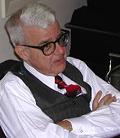 Gary North is the author of Mises on Money. Visit http://www.freebooks.com. For a free subscription to Gary North’s twice-weekly economics newsletter, click here.

