


Exploding the Spanish Flu Myth – Part 2. The Rosenau Experiments
July 13, 2024
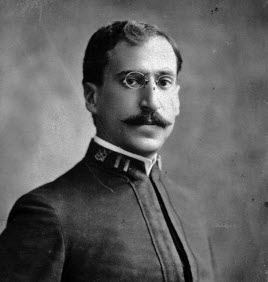
In November and December 1918 – spurred by the “Spanish Flu Epidemic” – Dr. Milton Joseph Rosenau, Professor of Preventive Medicine and Hygiene of the Harvard Medical School, was selected to head up extensive experiments to conduct exhaustive research into the causes, effects, and complications of influenza, together with their prevention and cure.
These experiments were conducted on Gallops Island in Boston Harbor using 100 “influenza free” volunteers from the US Navy.
Later, in June 1919, Rosenau delivered a paper on his findings before the Section on Pharmacology and Therapeutics, the Section on Pathology and Physiology and the Section on Preventive Medicine and Public Health at the Seventieth Annual Session of the American Medical Association in Atlantic City, NJ.
You can read the entirety of his presentation on this PDF, HERE.
As you read his presentation I would like to point out the following:
- Dr Rosenau did not know specifically what he was looking for. His quote, “We always kept in mind the fact that we have no criterion for influenza.”
- He openly admits he only assumed a Germ was causing this disease but none of “germs” he used made anyone sick. His quote, “We used some billions of these organisms, according to our estimated counts, on each of the volunteers; but none of them took sick.”
- When he found that no one was getting sick, he attempted many more experiments where, as Dr Rosenau stated, “We became bolder…”, even though each attempt to find a contagion failed.
So what horrible experiments did Dr Rosenau conduct on these poor sailors?
Below I’ve selected a few selections of his presentation (Emphasis Mine):
“…we proceeded rather cautiously at first by administering a pure culture of bacillus of influenza, Pfeiffer’s bacillus, in a rather moderate amount, into the nostrils of a few of these volunteers.”
“As the preliminary trials proved negative, we became bolder, and selecting nineteen of our volunteers, gave each one of them a very large quantity of a mixture of thirteen different strains of the Pfeiffer bacillus, some of them obtained recently from the lungs at necropsy; others were subcultures of varying age, and each of the thirteen had, of course, a different history.
“Suspensions of these organisms were sprayed with an atomizer into the nose and into the eyes, and back into the throat, while the volunteers were breathing in.
“We used some billions of these organisms, according to our estimated counts, on each one of the volunteers; but none of them took sick.
“Then we proceeded to transfer the virus [MM COMMENT: Please note they’d never seen a virus, only assumed it was there and neither could they find ANY contagion agent. They only assumed a virus/contagion.] obtained from cases of the disease; that is, we collected the material and mucous secretions of the mouth and nose and throat and bronchi from cases of the disease and transferred this to our volunteers.
“We always obtained this material in the same way: The patient with fever, in bed, has a large, shallow, tray-like arrangement before him or her, and we washed out one nostril with some sterile salt solution, using perhaps 5 c.c., which is allowed to run into this tray and that nostril is blown vigorously into the tray.
“This is repeated with the other nostril. The patient then gargles with some of the solution.
“Next we obtain some bronchial mucus through coughing, and then we swab the mucous surface of each nares and also the mucous membrane of the throat.
“We place these swabs with the material in a bottle with glass beads and add all the material obtained in the tray.
“This is the stuff we transfer to our volunteers. In this particular experiment, in which we used ten volunteers, each of them received a comparatively small quantity of this, about 1 c.c. sprayed into each nostril and into the throat, while inspiring, and on the eye.
“None of these took sick.
“Some of the same material was filtered and instilled into other volunteers but produced no results.”
At his concluding remarks, Dr. Rosenau says:
“As a matter of fact, we entered the outbreak with a notion that we knew the cause of the disease, and were quite sure we knew how it was transmitted from person to person.
“Perhaps, if we have learned any thing, it is that we are not quite sure what we know about the disease.”
MM Final Comment:
It is remarkable that even today people refer to the “Spanish Flu of 1918” as a shorthand proof that viruses exist, contagions are real and that you can catch a disease.
It’s important to UNLEARN what you ASSUME is true, especially when it’s repeatedly been shown to be false.
Being human we want to, of course, know…Well, what DID cause these people to become sick and die?
In order to start your understanding of that very important question, please watch Exploding the Spanish Flu Myth – Part 1, HERE.
Thank you.

 Trump Assassination Attempt: Complete Failure of Police and the Secret Service