


5 Warning Signs That America’s Systems Are Under Strain
September 2, 2026
Most people carry a mental image of collapse that looks like a movie scene. Tanks rolling through streets. Banks locking their doors overnight. Crowds panicking in front of empty stores. These dramatic moments do happen, but they’re usually the endpoint of a much longer process, not the beginning. By the time things get visibly chaotic, the foundations have already shifted in ways that are harder to see but easier to prepare for.
Real change tends to move slowly. It accumulates in the spaces between news cycles, in the gradual adjustment of expectations, in the slow realization that the systems we counted on have changed their nature without announcing the shift. You don’t usually get a memo when your society enters a transitional phase. You just notice, gradually, that things that used to work smoothly now require more effort, more patience, more improvisation.
 Amazon Grocery, Beef S...
Buy New $8.37
(as of 05:04 UTC - Details)
Amazon Grocery, Beef S...
Buy New $8.37
(as of 05:04 UTC - Details)

If you look carefully at the American landscape right now, you can spot patterns that suggest we are living through one of these transitional periods. Not a sudden collapse, but a gradual reconfiguration of how things work. The signs are there for those willing to see them, though they require looking past the noise of daily politics and economic headlines.
Here are the key observations that frame what follows:
 Debt has become a permanent feature, not a temporary bridge — Federal obligations now exceed $34 trillion, with annual interest payments consuming resources that once funded actual services. This isn’t a projection of future danger; it’s the current reality that shapes every budget decision.
Emergency guidance has shifted from “we will help” to “prepare to help yourself” — Federal agencies now routinely advise citizens to maintain 72-hour emergency supplies, not as supplemental caution but as acknowledgment that immediate response may not arrive.
Supply systems function on razor-thin margins — The efficiency that brings us cheap goods has eliminated the redundancy that ensures those goods remain available when conditions strain. Our logistical infrastructure assumes nothing goes seriously wrong, which is a risky assumption.
Trust in major institutions has entered freefall — Polling data across decades shows consistent decline in confidence toward government, media, corporations, and educational establishments. This isn’t partisan dissatisfaction; it’s structural delegitimation.
Local services are quietly degrading — Cities and counties face fiscal pressures that manifest in slower emergency response, deferred maintenance, and reduced staffing in essential functions. These failures hit home immediately and personally.
What comes next is uncertain, but preparation is possible — Recognition of vulnerability doesn’t require surrender to fear. Understanding these patterns allows for prudent adaptation without panic.
These observations aren’t predictions of doom. They’re diagnostic markers, like checking the oil in a car or reading blood pressure. They tell us something about the current condition of the systems we navigate daily.
Most people carry a mental image of collapse that looks like a movie scene. Tanks rolling through streets. Banks locking their doors overnight. Crowds panicking in front of empty stores. These dramatic moments do happen, but they’re usually the endpoint of a much longer process, not the beginning. By the time things get visibly chaotic, the foundations have already shifted in ways that are harder to see but easier to prepare for.
Real change tends to move slowly. It accumulates in the spaces between news cycles, in the gradual adjustment of expectations, in the slow realization that the systems we counted on have changed their nature without announcing the shift. You don’t usually get a memo when your society enters a transitional phase. You just notice, gradually, that things that used to work smoothly now require more effort, more patience, more improvisation.
 READYWISE Emergency Su...
Buy New $93.09
(as of 05:42 UTC - Details)
READYWISE Emergency Su...
Buy New $93.09
(as of 05:42 UTC - Details)
If you look carefully at the American landscape right now, you can spot patterns that suggest we are living through one of these transitional periods. Not a sudden collapse, but a gradual reconfiguration of how things work. The signs are there for those willing to see them, though they require looking past the noise of daily politics and economic headlines.
Here are the key observations that frame what follows:
Debt has become a permanent feature, not a temporary bridge — Federal obligations now exceed $34 trillion, with annual interest payments consuming resources that once funded actual services. This isn’t a projection of future danger; it’s the current reality that shapes every budget decision.
Emergency guidance has shifted from “we will help” to “prepare to help yourself” — Federal agencies now routinely advise citizens to maintain 72-hour emergency supplies, not as supplemental caution but as acknowledgment that immediate response may not arrive.
Supply systems function on razor-thin margins — The efficiency that brings us cheap goods has eliminated the redundancy that ensures those goods remain available when conditions strain. Our logistical infrastructure assumes nothing goes seriously wrong, which is a risky assumption.
Trust in major institutions has entered freefall — Polling data across decades shows consistent decline in confidence toward government, media, corporations, and educational establishments. This isn’t partisan dissatisfaction; it’s structural delegitimation.
Local services are quietly degrading — Cities and counties face fiscal pressures that manifest in slower emergency response, deferred maintenance, and reduced staffing in essential functions. These failures hit home immediately and personally.
What comes next is uncertain, but preparation is possible — Recognition of vulnerability doesn’t require surrender to fear. Understanding these patterns allows for prudent adaptation without panic.
These observations aren’t predictions of doom. They’re diagnostic markers, like checking the oil in a car or reading blood pressure. They tell us something about the current condition of the systems we navigate daily.
Sign One: When Money Buys Less Every Week
There’s a moment in every inflationary cycle that people miss because it doesn’t look like crisis. It looks like ordinary life getting slightly harder. Your grocery bill creeps up five dollars, then ten. The gas pump shuts off a few dollars earlier than it used to. The rent increase notice arrives, and you negotiate a compromise that leaves you with less discretionary income than before.
 Emergency Food Supply,...
Buy New $36.09
(as of 06:01 UTC - Details)
Emergency Food Supply,...
Buy New $36.09
(as of 06:01 UTC - Details)
These moments feel personal. They feel like individual financial management challenges. You tell yourself you need to budget better, pick up extra shifts, or find a side hustle. What you don’t recognize—what most people miss—is that these personal moments are actually signals of systemic monetary stress. Your shrinking purchasing power isn’t a reflection of your work ethic or intelligence. It’s the visible surface of a much deeper process.
Federal Reserve data puts the national debt at over thirty-four trillion dollars. That number is so large it becomes abstract, like trying to visualize the distance to distant galaxies. But the meaning becomes concrete when you look at where federal spending actually goes. An increasing percentage of the budget doesn’t build roads, fund schools, or maintain infrastructure. It services interest on money borrowed years ago. It pays for past consumption with present revenue, leaving less available for current needs.
This creates a feedback loop that’s difficult to escape. When interest payments consume budget space, governments face unpopular choices. They can raise taxes, which slows economic activity and angers voters. They can cut services, which angers voters and reduces quality of life. Or they can expand the money supply, which feels painless in the moment but shows up later as rising prices.
Historically, governments almost always choose the third option. It’s the path of least immediate resistance. Roman emperors debased their coinage, mixing copper into silver denarii until the currency became worthless. Weimar Germany printed marks until the paper was worth more than the purchasing power printed on it. More recently, Venezuela and Zimbabwe provided object lessons in how quickly monetary confidence can evaporate when governments treat currency as an unlimited resource.
American monetary policy operates through more sophisticated mechanisms than ancient coin-clipping, but the underlying dynamic remains similar. Quantitative easing, stimulus packages, and deficit spending all expand the money supply. When more dollars chase the same amount of goods and services, prices rise. This isn’t conspiracy theory; it’s basic economics that predates modern politics by centuries.
What makes this sign particularly insidious is how slowly it unfolds and how quickly people normalize it. Inflation doesn’t arrive as a sudden shock that triggers immediate response. It arrives as a series of small disappointments that accumulate over years. You adjust your expectations downward. You learn to do without. You tell yourself this is just how things are now.
But historical patterns suggest that monetary deterioration follows predictable trajectories. Early stages involve steady price increases that outpace wage growth. Middle stages see savings losing value and fixed-income populations falling into hardship. Late stages can involve rapid currency collapse, though that’s not inevitable and depends on policy responses.
Right now, we’re somewhere in the early-to-middle phase. You can see it in the way people talk about housing costs, in the proliferation of “side hustle” culture as people scramble to cover basic expenses, in the way grocery shopping has become a strategic exercise in cost comparison that previous generations didn’t need to practice.
The people who feel this pressure first are usually those without assets to appreciate alongside currency depreciation. Retirees on fixed incomes watch their purchasing power erode monthly. Renters see housing costs absorb increasing percentages of their wages. Workers in industries without strong bargaining power find their raises lagging behind price increases.
 READYWISE Emergency Su...
Buy New $208.99
(as of 05:42 UTC - Details)
READYWISE Emergency Su...
Buy New $208.99
(as of 05:42 UTC - Details)
Meanwhile, those with tangible assets—property, productive equipment, commodity reserves—often weather monetary instability better because these things retain utility regardless of what happens to currency values. A house provides shelter whether dollars are strong or weak. A fruit tree produces food regardless of exchange rates. This isn’t investment advice; it’s historical observation about what happens when monetary systems stress.
The response from authorities typically involves reassurance that inflation is “transitory” or “manageable,” accompanied by statistical measurements that exclude the categories rising fastest. Official inflation metrics often don’t capture the reality of grocery bills or rent increases because they’re designed to measure something different—general price levels across the entire economy, including categories like electronics that tend to decrease in price due to technological advancement.
This creates a disconnect between official narrative and lived experience. You hear that inflation is two percent while your grocery bill has increased twenty percent over three years. Both can be true simultaneously, but only one matches your daily reality.
What’s happening beneath the surface is a slow transfer of wealth from those holding currency to those holding debt, since debt can be repaid in devalued dollars. It’s a quiet redistribution that never appears on ballots or in legislative debates, yet it shapes economic outcomes more profoundly than many explicit policy choices.
Understanding this sign doesn’t require predicting collapse. It simply requires noticing that the relationship between work and purchasing power has shifted in ways that make life harder for millions of people simultaneously. When that happens across an entire economy, it’s not a personal failing—it’s a systemic signal worth recognizing.
Sign Two: When Officials Start Suggesting You Handle It Yourself
Language matters. Not just in poetry or literature, but in the dry prose of government documents and emergency guidelines. When official messaging changes, it often reveals shifts in institutional thinking that aren’t announced in press conferences.
Consider how emergency preparedness guidance has evolved over the past two decades. Previously, the implicit message from federal agencies was: “We have this covered.” Emergency management existed to coordinate response, mobilize resources, and restore normalcy. Citizens might be advised to have basic supplies, but the underlying assumption was that professional systems would handle serious crises.
Contemporary guidance tells a different story. FEMA now routinely recommends that households maintain seventy-two hours of self-sufficiency—food, water, medications, emergency supplies. The Red Cross suggests two weeks of preparation for certain scenarios. Local emergency management offices increasingly emphasize “community resilience” and “neighbor helping neighbor” rather than centralized response capabilities.
On the surface, this looks like sensible caution. Preparation is good. Self-reliance is virtuous. But the shift in emphasis matters. A system confident in its capacity doesn’t need to constantly remind citizens that help might not arrive immediately. The frequency and urgency of these messages suggests something beyond standard precaution.
 LifeStraw Personal Wat...
Buy New $14.99
(as of 08:25 UTC - Details)
LifeStraw Personal Wat...
Buy New $14.99
(as of 08:25 UTC - Details)
Look at the lessons drawn from recent disasters. Hurricane Katrina in 2005 revealed that federal logistics couldn’t quickly reach everyone who needed help. Thousands waited on rooftops and in overcrowded shelters while supplies sat undistributed in warehouses. The system didn’t just move slowly; in places it broke entirely under the weight of demand.
Hurricane Maria in 2017 showed similar patterns in Puerto Rico. Months passed before full electrical restoration. Clean water access remained problematic for extended periods. Medical supply chains failed. These weren’t remote historical events; they happened within recent memory and involved territories under federal jurisdiction.
The Texas winter storm of 2021 provided perhaps the clearest demonstration of infrastructure fragility. A modern American state, rich in energy resources, saw its electrical grid collapse under weather conditions that other regions handle routinely. Millions lost power during freezing temperatures. Water treatment plants failed. People died in their homes from hypothermia, a cause of death that shouldn’t occur in a developed nation with functioning infrastructure.
After each of these events, official messaging adjusted. Not dramatically, not through announced policy changes, but through gradual recalibration of expectations. The new normal involves acknowledging that help may be delayed, that citizens should prepare for initial self-sufficiency, that systems have limits.
This represents a significant psychological shift in the relationship between governed and governing. For most of the modern era, the social contract in developed nations included an assumption that serious emergencies would trigger institutional response. Police, fire departments, medical services, and logistical support would arrive. The question was when, not if.
Current messaging suggests a more qualified understanding. Response will come, but perhaps not immediately. Systems will function, but perhaps not completely. Help is available, but citizens should be prepared to bridge gaps.
For individuals, this shift has practical implications. It changes how people think about their relationship to systems. When you internalize the possibility that you might be on your own for seventy-two hours or longer, your behavior changes. You stock supplies. You learn basic emergency skills. You build relationships with neighbors that might prove crucial if external support is delayed.
Historically, when governments begin emphasizing citizen self-reliance, it often signals institutional capacity constraints. Late Soviet emergency protocols increasingly emphasized local organization as central capacity contracted. Pre-revolutionary French provincial administrations distributed self-help guides as royal authority weakened. These weren’t admissions of failure in those contexts either; they were adaptations to reality.
The modern American version involves “resilience” as a buzzword. Community resilience. Infrastructure resilience. Economic resilience. The word sounds positive, but its prevalence suggests awareness that brittleness exists and needs mitigation.
What’s striking is how quickly populations adapt to these lowered expectations. Within a few years, having emergency supplies shifts from “prepper” eccentricity to mainstream prudence. Discussing grid failure possibilities moves from conspiracy theory to dinner table conversation. The normalization happens gradually enough that people don’t notice their expectations have shifted.
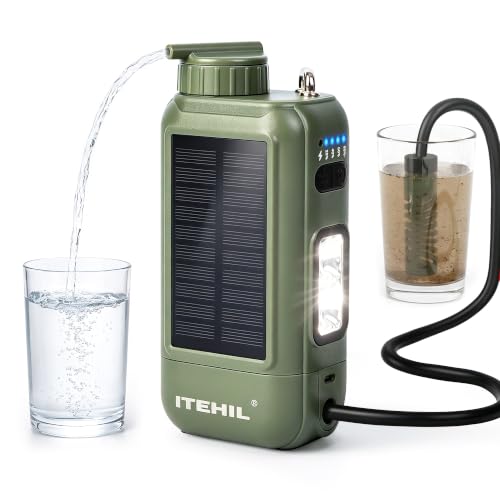 ITEHIL Portable Electr...
Buy New $72.89
(as of 05:04 UTC - Details)
ITEHIL Portable Electr...
Buy New $72.89
(as of 05:04 UTC - Details)
This sign matters because it changes the psychology of crisis. When people assume help will arrive quickly, they wait. When they assume delays are possible, they act. This affects everything from evacuation compliance to resource hoarding behavior. It can make communities more resilient in some ways—better prepared, more connected—but also more fragmented in others, as trust in institutional response diminishes.
The shift also reflects fiscal reality. Maintaining emergency response capacity sufficient for simultaneous major disasters is expensive. As municipal and federal budgets face pressure from pension obligations, debt service, and deferred infrastructure maintenance, emergency preparedness often faces cuts. It’s easier to advise citizens to prepare themselves than to maintain the stockpiles and personnel for comprehensive response.
Understanding this sign means recognizing that the safety net has developed holes, and official guidance now implicitly acknowledges those holes. It doesn’t mean abandonment—emergency services still exist and still respond. But the assumption of comprehensive coverage has given way to a more qualified understanding that individuals bear initial responsibility for their own safety.
 BioEmblem Magnesium Gl...
Buy New $22.39
(as of 10:16 UTC - Details)
BioEmblem Magnesium Gl...
Buy New $22.39
(as of 10:16 UTC - Details)
 One A Day Multivitamin...
Buy New $16.60
(as of 07:46 UTC - Details)
One A Day Multivitamin...
Buy New $16.60
(as of 07:46 UTC - Details)
 OLLY Women’s Mul...
Buy New $16.04
(as of 10:11 UTC - Details)
OLLY Women’s Mul...
Buy New $16.04
(as of 10:11 UTC - Details)
 AZO Cranberry Urinary ...
Buy New $11.57
(as of 07:20 UTC - Details)
AZO Cranberry Urinary ...
Buy New $11.57
(as of 07:20 UTC - Details)
Copyright © Madge Waggy
 VIPS MEMO: Dangerous Talk of Putin’s ‘Loss’ in Ukraine