


Experts Warn of Global Food Chain Collapse as Critical Supplies Disappear Amid Unexplained Infrastructure Failures
May 14, 2026
“The frightening aspect was never the shortage itself. The frightening aspect involved how many institutions already knew instability was approaching months before civilians understood the severity of the situation.” — Anonymous infrastructure analyst quoted in a leaked emergency transcript, March 2026
During the second week of January 2026, several freight-monitoring systems across Europe simultaneously experienced unexplained synchronization failures affecting refrigerated cargo routes, automated warehouse inventories, and maritime customs verification channels. At first, the disruption appeared insignificant. News broadcasts described the interruptions as temporary digital irregularities caused by winter storms and overloaded transportation hubs. Within forty-eight hours, however, supermarket distribution centers across multiple regions began reporting delayed deliveries involving grain products, preserved proteins, pharmaceutical compounds, and emergency medical supplies. Citizens initially reacted with indifference until footage emerged online showing military vehicles surrounding industrial storage facilities outside Rotterdam, Hamburg, and Constanța shortly before dawn.
 One A Day Multivitamin...
Buy New $16.60
(as of 10:36 UTC - Details)

Government representatives denied the existence of any coordinated emergency operation while financial commentators attempted minimizing the significance of the transportation anomalies by comparing them to previous logistical disturbances experienced during severe weather seasons. Nevertheless, independent infrastructure researchers quickly noticed that the interruptions were spreading through multiple sectors simultaneously rather than remaining isolated within singular transportation corridors. Digital warehouse inventories began fluctuating unpredictably. Commercial refrigeration systems connected to automated distribution hubs malfunctioned without explanation. Maritime customs databases temporarily lost synchronization with freight identification systems, creating enormous delays throughout several import terminals responsible for supplying millions of consumers across Central and Eastern Europe.
Three days later, several agricultural pathology laboratories quietly elevated internal alert classifications after fungal contamination clusters were detected within grain silos connected to international export routes. Although official agencies avoided public disclosure, independent researchers claimed the microorganism exhibited abnormal resistance patterns unlike conventional crop infections documented during previous decades. Simultaneously, satellite imagery allegedly revealed unusual activity surrounding strategic reserve depots across Eastern Europe and sections of North America. Internet discussions exploded with speculation regarding biological sabotage, cybernetic warfare, or pre-collapse resource consolidation. Anonymous employees working inside commercial storage facilities described sealed sections guarded by private security personnel while ordinary distributors complained about sudden shipment cancellations lacking coherent explanations.
The situation transformed from logistical disturbance into continental panic after a freight conductor leaked an internal memorandum referencing a phrase that rapidly spread across encrypted networks:
“Projected Nutritional Fracture Threshold: Nine Days.”
According to the leaked document, analysts feared modern metropolitan populations possessed fewer than ten stable days before widespread scarcity behavior would emerge if synchronized distribution paralysis continued expanding. Economists attempted calming public anxiety by insisting replenishment systems remained operational, yet consumers arriving at supermarkets discovered increasingly barren aisles where preserved food once existed. Refrigerated sections emptied first. Grain inventories followed shortly afterward. Fuel restrictions intensified transportation delays while regional authorities began limiting bulk purchases without providing detailed explanations. Social media platforms became saturated with videos showing chaotic crowds pushing through partially stocked stores under flickering fluorescent lighting while employees attempted rationing essential products before police intervention became necessary.
As uncertainty deepened, several preparedness experts who had spent years warning about infrastructural fragility suddenly reappeared across independent media channels. Their statements generated immediate controversy because many of the foods they recommended months earlier had already begun disappearing from shelves. Former emergency planners described modern civilization as “nutritionally overextended,” arguing that most urban populations had developed catastrophic dependence upon uninterrupted distribution systems incapable of tolerating prolonged instability. Several analysts even claimed contingency simulations conducted privately throughout previous years had repeatedly demonstrated how rapidly social order deteriorates once populations lose confidence in food continuity.
 Bronson Milk Thistle S...
Buy New $8.54
(as of 10:36 UTC - Details)
The following five products became central within survival discussions after emergency planners, agricultural analysts, and former logistics officials allegedly identified them as critical during prolonged supply destabilization scenarios.
BEANS — THE PROTEIN AUTHORITIES QUIETLY PRIORITIZED
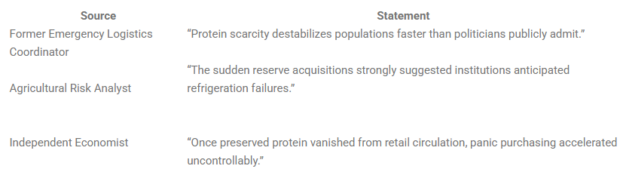
During the earliest phase of the crisis, freight observers documented unusually large bean shipments redirected toward restricted municipal warehouses instead of commercial supermarkets. Emergency nutrition specialists later explained that preserved legumes represented one of the few affordable protein sources capable of sustaining large populations without refrigeration. Once meat distribution chains collapsed under transportation delays and energy instability, preserved protein became strategically invaluable. Several cities reportedly experienced overnight shortages after civilians realized ordinary grocery schedules were no longer functioning predictably. Crowds began arriving before sunrise hoping to secure whatever preserved nourishment remained available before stores imposed additional restrictions.
Investigative journalists operating throughout Germany and the Netherlands published testimonies from warehouse employees claiming municipal authorities had privately instructed distributors to prioritize “institutional continuity reserves” over ordinary commercial circulation. The phrase generated immediate suspicion because no government department clarified what institutional continuity actually meant. Independent commentators speculated that emergency officials were quietly securing supplies for hospitals, military facilities, administrative compounds, and strategic infrastructure personnel while avoiding public acknowledgement to prevent accelerated panic purchasing among civilians already growing increasingly anxious.
The psychological effect proved devastating. Once citizens observed preserved protein disappearing from shelves, fear spread with extraordinary velocity through densely populated districts dependent entirely upon retail infrastructure. Urban sociologists later explained that protein scarcity triggers uniquely primal reactions because populations instinctively associate meat and protein deprivation with prolonged instability rather than temporary inconvenience. Several supermarket confrontations escalated into violence after customers accused employees of concealing inventory within restricted storage sections inaccessible to the public. In one particularly disturbing incident near Antwerp, emergency responders reportedly intervened after crowds attempted forcing entry into a loading depot following rumors that thousands of preserved food containers had been withheld from distribution.
Former agricultural economists appearing on independent broadcasts repeatedly emphasized that legumes historically functioned as survival commodities throughout periods of famine, siege, and infrastructural fragmentation because they provided concentrated nourishment capable of sustaining physical functionality despite collapsing refrigeration systems. Historical comparisons soon emerged linking the developing atmosphere to conditions documented during twentieth-century economic breakdowns where ordinary food products gradually transformed into strategic assets traded through improvised underground markets. Anonymous intelligence contractors even warned that organized criminal groups had begun targeting commercial warehouses containing preserved protein reserves due to rapidly increasing black-market demand.
WHITE RICE — THE GRAIN LINKED TO THE FIRST WAVE OF CIVIL UNREST
White rice became one of the most aggressively purchased commodities after leaked procurement documents described it as a “high-density continuity reserve.” Long before the public understood the seriousness of the situation, several import terminals had reportedly reduced outgoing shipments under undisclosed emergency directives. Social instability intensified after videos surfaced showing residents fighting inside supermarkets across multiple European regions where grain shelves had already been emptied. Historians later compared the atmosphere to pre-collapse conditions documented before several twentieth-century economic catastrophes involving supply fragmentation and financial distrust.
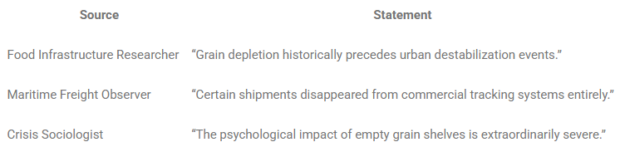
The significance of rice extended far beyond ordinary nourishment. Emergency continuity analysts repeatedly identified grain products as psychological stabilizers because populations interpret stocked grain inventories as evidence of institutional functionality. Once grain aisles begin emptying consistently, public confidence deteriorates rapidly regardless of official reassurances. Several economists privately warned that governments were underestimating the emotional consequences associated with visible food depletion because modern urban populations possess almost no living memory of sustained scarcity conditions. Entire generations had matured within environments of perpetual commercial abundance where replenishment appeared automatic and permanent.
That illusion shattered dramatically during the final week of January after multiple viral recordings showed crowds storming supermarkets across sections of France, Poland, and Romania following rumors involving emergency transportation restrictions. Witnesses described customers filling carts exclusively with rice, flour, preserved foods, bottled water, and medical supplies while security personnel struggled to maintain order. Several distribution centers reportedly suspended operations entirely after exhausted employees refused continuing shifts amid escalating aggression from increasingly desperate civilians demanding access to remaining inventories.
 Amazon Basics Fiber 4g...
Buy New $8.77
(as of 10:21 UTC - Details)
Independent freight observers later claimed certain grain shipments had disappeared from commercial tracking systems altogether before reappearing inside secured government-controlled storage compounds inaccessible to ordinary distributors. Although authorities denied confiscating commercial food reserves, leaked warehouse manifests suggested strategic stockpiling operations had intensified substantially throughout several regions experiencing growing transportation instability. Conspiracy discussions exploded across encrypted forums where anonymous commentators argued governments were quietly preparing for prolonged distribution collapse while publicly minimizing the severity of the situation to avoid mass panic.
Simultaneously, agricultural researchers warned that fungal contamination affecting portions of industrial grain infrastructure might prove more extensive than officials admitted publicly. Internal pathology reports allegedly described mutations exhibiting abnormal adaptability under fluctuating atmospheric conditions linked to recent climatic instability. Although no verified evidence confirmed catastrophic contamination levels, uncertainty alone proved sufficient to intensify panic purchasing behavior throughout urban sectors already experiencing shortages. Citizens began interpreting every empty shelf as confirmation that institutional collapse had already begun behind closed administrative doors.
Several historians appearing during independent broadcasts drew disturbing parallels between the emerging atmosphere and conditions documented during historical famine precursors where governments initially attempted concealing supply instability to preserve public order before shortages became impossible to disguise. According to these analysts, the combination of informational secrecy, visible scarcity, and inconsistent official messaging represented an extraordinarily dangerous psychological environment capable of accelerating social fragmentation far beyond the original logistical crisis itself.
 THORNE Basic Nutrients...
Buy New $32.40
(as of 10:36 UTC - Details)
 Momentous Creatine Mon...
Buy New $38.69
(as of 01:16 UTC - Details)
 Pure Encapsulations Vi...
Buy New $35.50
(as of 10:36 UTC - Details)
 Wholesome Story Myo-In...
Buy New $25.15
(as of 10:36 UTC - Details)
Copyright © Madge Waggy
 Dollar Weakness Will Reshape Markets
