


The Day Electricity And Water Disappeared
And The World Did Not End It Was Quietly Taken Over By Something We Cannot See!
April 28, 2026
There is a version of the end that does not come with fire, explosions, or dramatic collapse, but with something far more unsettling: silence. It begins quietly, almost politely, with small interruptions that seem temporary, harmless, familiar. The lights go out. Phones lose signal. Screens freeze mid-motion as if time itself hesitated. People wait, because waiting is what modern life has trained them to do. Systems fail sometimes, but they always come back. That is the unspoken promise of civilization—that even if something breaks, there is always someone, somewhere, fixing it. But what happens when nothing comes back? When the silence stretches, deepens, settles into the walls, into the streets, into the space between people, until it becomes clear that this is not an interruption, but a condition?
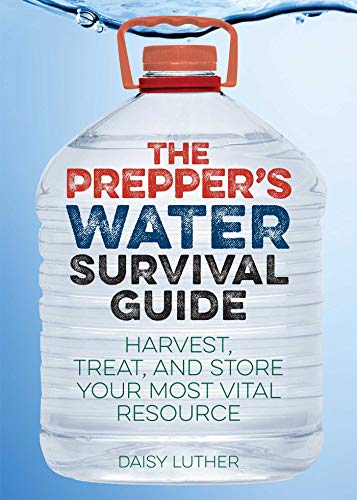 The Prepperu2019s Wate...
Best Price: $7.49
Buy New $9.94
(as of 06:00 UTC - Details)
The Prepperu2019s Wate...
Best Price: $7.49
Buy New $9.94
(as of 06:00 UTC - Details)
 The first true sign that something was fundamentally wrong was not the darkness, but the absence of water. Electricity can disappear and life can still function for a while, but water is different; it is immediate, physical, impossible to ignore. Someone turns on a faucet expecting at least a weak response, a stutter in the pipes, some lingering sign of pressure—but there is nothing. Not even air. That absence carries weight, because it reveals something most people never think about: water does not simply exist in cities, it is delivered constantly, forced through a vast system that depends entirely on power. Without that power, the system does not degrade gracefully—it stops. And when it stops, millions of people are left with no buffer, no reserve, no plan.
At first, the reaction is denial, and denial has its own rhythm. People check things repeatedly, as if repetition might somehow restore function. They move from room to room, from building to building, from street to street, searching for confirmation that this is localized, temporary, fixable. But as hours pass, a pattern emerges, and that pattern spreads. No lights anywhere. No signals. No movement in the systems that are supposed to respond automatically. It becomes clear, slowly and then all at once, that the failure is total. And with that realization comes the first fracture in collective thinking, because modern life is not built to handle total failure. It is built on assumptions, and those assumptions are now gone.
Water, or rather the lack of it, begins to reshape behavior almost immediately. People search for what they have, ration what little is available, and then begin looking outward. The problem is not just scarcity, but scale. In a small community, a well or a stream might be enough, but in a city, where millions depend on continuous supply, the absence becomes catastrophic within days. Toilets stop functioning, and with that, an entire layer of civilization disappears. Waste, which was once invisible, managed, removed without thought, begins to accumulate. At first, it is contained within buildings, but systems that rely on flow cannot function without it, and what does not move begins to stagnate. What stagnates begins to spread. And what spreads becomes impossible to control.
As people turn to natural water sources, another shift begins—one that is less visible but far more dangerous. Lakes, rivers, and reservoirs that once seemed abundant are suddenly under pressure from a population that has no alternative. The problem is not just that people are taking water, but that they are bringing contamination with them, because without sanitation, there is no separation between waste and survival. It happens gradually, almost invisibly, as human activity alters the environment in ways that cannot be reversed quickly. And then, as if following a script written long before, illness begins to appear. Not as a single outbreak, but as a convergence of multiple threats, each feeding into the same weakened system.
The progression is subtle at first, easy to dismiss, but it follows a pattern that becomes increasingly difficult to ignore as it spreads through groups and communities:
- Initial discomfort—fatigue, mild dehydration, a sense that something is off.
- Escalation—digestive distress, weakness, inability to retain fluids.
 Practical Backyard Hom...
Buy New $18.99
(as of 11:57 UTC - Details)
Practical Backyard Hom...
Buy New $18.99
(as of 11:57 UTC - Details)
- Breakdown—severe dehydration, loss of strength, impaired judgment.
- Collapse—where the body can no longer compensate and begins to shut down.
What makes it particularly dangerous is not just the speed, but the feedback loop it creates. People need water to survive, but the water they have access to is making them weaker, reducing their ability to seek better sources, to move, to think clearly. It is a trap that closes slowly, giving just enough time for awareness to grow, but not enough for effective response.
At the same time, another system begins to fail—the one that most people never see, but rely on every day: the supply chain. Food does not appear in cities by accident; it is transported continuously, in massive volumes, coordinated through systems that require power, communication, and fuel. Remove those elements, and the flow stops. At first, stores still have stock, and people move quickly to secure what they can. But consumption does not slow, and without resupply, depletion is inevitable. Within days, the shelves are empty, not because food has ceased to exist, but because the mechanisms that distribute it are no longer functioning.
Hunger does not arrive as a sudden shock, but as a gradual pressure that builds until it becomes dominant. It changes how people think, how they interact, how they make decisions. What begins as concern turns into urgency, and urgency into something sharper, more focused, less constrained by the rules that once governed behavior. The transformation follows a pattern that is as psychological as it is physical:
- Conservation—people reduce activity, try to extend what they have.
- Obsession—thoughts narrow, focusing almost entirely on obtaining food.
- Adaptation—standards change, things once considered unacceptable become options.
- Action—people begin to take what they need, regardless of ownership or consequence.
It is at this stage that the social structure begins to shift in ways that are difficult to reverse. Trust, which once existed by default, becomes conditional, then rare. Interactions are no longer neutral; they carry weight, risk, calculation. Groups begin to form, not out of ideology, but out of necessity. Individuals alone are vulnerable, but groups can defend, can organize, can control access to resources. And with that organization comes hierarchy, because decisions need to be made quickly, and not everyone can make them at once.
Violence does not explode into existence; it emerges, slowly, in the spaces where systems used to enforce limits. At first, it is subtle—arguments that escalate, confrontations that go too far, situations where desperation overrides hesitation. But as people realize that there is no longer a higher authority to intervene, to punish, to restore order, the boundaries shift. What was once unthinkable becomes possible, then practical, then normal. The progression is not chaotic; it follows a pattern that reflects underlying human behavior when constraints are removed:B00DS5BGDY
- Opportunistic actions—taking advantage of unguarded resources.
- Defensive aggression—protecting what one has from others.
- Organized force—groups acting together to secure territory or supplies.
- Dominance structures—where certain groups establish control over areas and enforce rules.
The city, once a place of density and opportunity, becomes something else entirely—a concentration of need without the means to fulfill it. Buildings that once offered shelter become liabilities, especially those that extend vertically. Without elevators, without water pressure, without lighting, upper floors become inaccessible, dangerous, impractical. Movement within these structures becomes a risk, especially in darkness, where visibility is limited and control is minimal. Gradually, people begin to leave, not in coordinated efforts, but in a steady flow outward, driven by the understanding that survival requires access to resources the city can no longer provide.
This movement outward creates pressure in new areas, places that were never designed to support large populations. Land that once sustained small communities becomes contested, not because it has changed, but because the number of people depending on it has increased beyond what it can support. The balance between availability and demand breaks down, and with it, the possibility of peaceful coexistence becomes more fragile. Those who were already there see the change immediately, because it affects not just their resources, but their security, their predictability, their control over their environment.
And through all of this, as the physical world reshapes itself around the absence of systems, another layer of thought begins to emerge, one that is harder to define but impossible to ignore. Systems of this scale are not supposed to fail completely, not all at once, not without partial recovery or isolated functioning. The totality of the silence, the absence of any visible attempt to restore what has been lost, begins to suggest something that people are reluctant to articulate, but cannot entirely dismiss. The idea forms gradually, not as a conclusion, but as a question that refuses to disappear:
- Why did everything stop at the same time?
 One A Day Multivitamin...
Buy New $13.29
(as of 11:26 UTC - Details)
One A Day Multivitamin...
Buy New $13.29
(as of 11:26 UTC - Details)
- Why is there no sign of recovery anywhere?
- Why has no authority re-established even minimal control?
- And most importantly—who benefits from a world where the system no longer exists?
These questions do not have immediate answers, and perhaps they never will, but they change the way people interpret what is happening. Because once the possibility of intent enters the equation, the situation is no longer just a collapse. It becomes something else—something that was allowed, or even designed, to happen. And in a world where survival has already become uncertain, that possibility introduces a different kind of fear, one that is not tied to hunger or thirst, but to the realization that the systems people trusted may not have failed them accidentally.
They may have been turned off.
 L Methyl Folate 15mg P...
Buy New $19.79
(as of 11:16 UTC - Details)
L Methyl Folate 15mg P...
Buy New $19.79
(as of 11:16 UTC - Details)
 Natureu2019s Bounty Ir...
Buy New $5.18
(as of 01:01 UTC - Details)
Natureu2019s Bounty Ir...
Buy New $5.18
(as of 01:01 UTC - Details)
 AZO Cranberry Urinary ...
Buy New $11.57
(as of 07:20 UTC - Details)
AZO Cranberry Urinary ...
Buy New $11.57
(as of 07:20 UTC - Details)
 Amazon Basics Melatoni...
Buy New $8.59
(as of 08:01 UTC - Details)
Amazon Basics Melatoni...
Buy New $8.59
(as of 08:01 UTC - Details)
Copyright © Madge Waggy
 When Money Stops Existing