


If You Want to MAHA, Plant a Garden
We debate spend billions on supplements, medications, and biohacking trends; meanwhile, we ignore one of the most powerful and accessible tools for restoring human health.
April 10, 2026
Everyone wants to Make America Healthy Again, but we’re looking in the wrong places.
We debate health-care policy, argue about insurance systems, and spend billions on supplements, medications, and biohacking trends; meanwhile, we ignore one of the most powerful and accessible tools for restoring human health: we’ve stopped growing our own food.
Less than a century ago, our food wasn’t in grocery stores. It was in homes, in larders, and in gardens. Today, many Americans don’t even know how to cook for themselves, let alone grow or preserve; we rely instead on premade, ultra-processed options or takeout.
 Container Gardening fo...
Buy New $14.99
(as of 07:56 UTC - Details)
Container Gardening fo...
Buy New $14.99
(as of 07:56 UTC - Details)
 Meanwhile, industrial agriculture is jeopardizing our ability to grow anything at all with its reliance on pesticides, herbicides, and synthetic fertilizers that degrade our once-fertile land. Worldwide, synthetic fertilizers and other agricultural runoff have contributed to over 700 “dead zones” where once-thriving marine ecosystems can no longer support life. Our pollinators are disappearing. By some estimates, the United States has just decades of topsoil left if industrial agriculture goes left unchecked.
But beyond the environmental impact, this has led to a full-scale human health crisis.
The same system that has depleted our soil has also depleted our food. The same practices that maximize yield have stripped nutrients, increased our exposure to toxins, and contributed to the rise of chronic disease, metabolic dysfunction, neurodegeneration, and cancer. We cannot separate the health of our bodies from the health of the land.
If we want to make America healthy again, we have to start at the root—literally.
Why Gardening Is the Missing Piece of MAHA
While these problems feel global, the solution begins at home.
Gardening is one of the most practical and transformative steps a family can take, not just for the environment but for their own health. When we grow our own food (or source it locally), we reduce reliance on a system that ships produce thousands of miles before it reaches our plates. In the process, we reclaim something we’ve lost: real nourishment.
Homegrown produce is measurably more nutrient-dense. Food that ripens in the soil and is eaten shortly after harvest retains far more vitamins and minerals than food picked early, transported long distances, and engineered for shelf life. It also comes without the chemical residues that are now commonplace in conventional agriculture.
And then there is the soil itself.
When we garden well—by composting, mulching, and building organic matter—we don’t deplete the earth, we restore it. Healthy soil teems with microbial life, supports biodiversity, retains water, and produces food that is richer and more resilient. Backyard gardens are small but meaningful acts of regeneration in a culture of depletion.
Even a modest garden supports pollinators, beneficial insects, and birds with the power to rebuild the ecosystems that industrial agriculture has disrupted.
 Practical Backyard Hom...
Buy New $18.99
(as of 07:56 UTC - Details)
Practical Backyard Hom...
Buy New $18.99
(as of 07:56 UTC - Details)
This is not a fringe lifestyle. It’s a return to sanity.
Grow Where You Are Planted
Whether God has given you sprawling acreage, a suburban backyard, or a small patio, you can do more than you think.
This isn’t a new idea. Before we outsourced our food system, families grew what they needed close to home. Even as agribusiness began to dominate—and profit from—“feeding the world,” Walt Disney envisioned an “agrifuture,” designing Tomorrowland to be landscaped almost entirely with edible plants. He believed that a sustainable future depended on cities being able to provide food for themselves and not rely on rural communities to do it for them. Given the state of our country’s topsoil, it seems that Disney prophetically imagineered what we are coming to realize is necessary decades later.
Today, regenerative farmer and USDA advisor Joel Salatin makes a similar argument: if we transformed suburban lawns and city edges into productive landscapes, we would be overwhelmed with abundance.
Inspired by this vision, our family set out to see how much food we could grow in our third-acre suburban backyard. We tore up our lawn and replaced it with an herbal tea and flower garden. We built raised beds for vegetables, planted raspberry bushes along the fence line, and tucked a small orchard of dwarf fruit trees into the corner of the yard.
Our lawn, once a water-guzzling monoculture, is now teeming with biodiversity that gives more to the earth than it takes.
The abundance draws in butterflies and hummingbirds, who in turn delight us. We provide them with a habitat and sustenance, and their feasting makes our harvest possible. In caring for this small piece of land, we’ve found ourselves more attentive, more grateful, and more connected to the rhythms of creation.
None of it would have happened if we hadn’t decided to get our hands dirty.
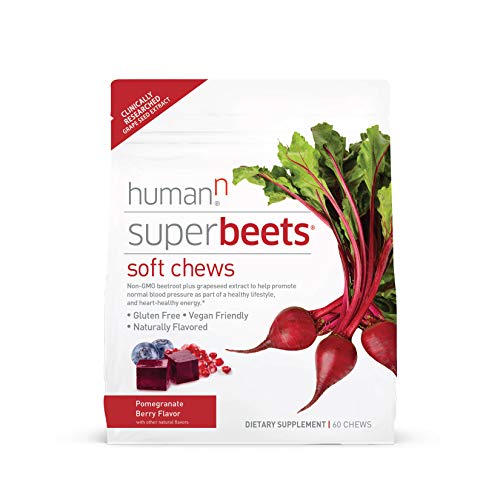 humanN SuperBeets Soft...
Buy New $39.95 ($0.67 / Count)
(as of 06:22 UTC - Details)
humanN SuperBeets Soft...
Buy New $39.95 ($0.67 / Count)
(as of 06:22 UTC - Details)
What Happens When You Grow Your Own Food
Growing food changes us.
It changes our bodies. Exposure to sunlight improves mood, regulates sleep, and strengthens the immune system. Contact with soil introduces beneficial microbes that support the gut microbiome and have been linked to reduced rates of anxiety and depression.
It changes what we eat. When you grow food organically, you reduce your exposure to pesticides and herbicides—chemicals increasingly associated with gut dysbiosis, metabolic disorders, autoimmune disease, and even certain cancers.
It changes our budgets. A single head of lettuce might cost a few dollars at the store, but a packet of seeds can yield thousands. With heirloom varieties, you can even save seeds and replant them year after year, multiplying your harvest infinitely for next to nothing. It also reduces our reliance on unstable supply chains and bolsters us against an unpredictable economy.
Gardening even changes our soul. Scripture is filled with agricultural imagery, and Jesus’ parables return often to growing things. If we are to understand God’s instructions for our faith and salvation, we need a working knowledge of the garden. As I write this, it is Holy Week, and I am reminded that our creation and our salvation both took place in gardens. We may not all be called to homesteading or full-time farming, but we are all made for the Garden.
 Metamucil Fiber Gummie...
Buy New $23.70
(as of 11:51 UTC - Details)
Metamucil Fiber Gummie...
Buy New $23.70
(as of 11:51 UTC - Details)
 RYZE Organic Mushroom ...
Buy New $40.49
(as of 08:01 UTC - Details)
RYZE Organic Mushroom ...
Buy New $40.49
(as of 08:01 UTC - Details)
 BioEmblem Magnesium Gl...
Buy New $22.39
(as of 09:51 UTC - Details)
BioEmblem Magnesium Gl...
Buy New $22.39
(as of 09:51 UTC - Details)
 SmartyPants Kids Multi...
Buy New $17.07
(as of 09:51 UTC - Details)
SmartyPants Kids Multi...
Buy New $17.07
(as of 09:51 UTC - Details)
Copyright © Crisis Magazine
 Global Economy Doesn't Know How To React to America's Erratic Foreign Policy