


Virgil: Opposition Research -- A Guided Tour of the Deep State's Covert Resistance to Trump
March 8, 2017
First in a Series…
Please, walk with me, and let’s take a tour of the Deep State.
Virgil is used to being a guide. After all, in his immortal way, he was the docent for Dante as he traveled through Hell and Purgatory, 700 years ago, in The Divine Comedy.
More recently, Virgil has been haunting a different kind of netherworld, here in Washington, DC—the Deep State.
Indeed, Virgil is amused to see that “Deep State” is popping up more and more—although, of course, when the Main Stream Media use the words, its goal is to deny its existence. That is, the MSM wants you to think that the Deep State is just a paranoid right-wing fantasy, something flitting through the fevered imagination of Donald Trump and his supporters.
Current Prices on popular forms of Gold Bullion
For example, on March 4, New York Times columnist Maureen Dowd mockingly referred to Trump’s “increasingly paranoid” attitude “about what he sees as the Vast Deep-State Conspiracy.” And in another article that same day, the Times again dismissed the phrase. So that’s the MSM meme: Nothing to see here, move along.
Yet as Rep. Devin Nunes (R-Calif.), the Chairman of the House Intelligence Committee, told The Washington Post on March 5:
It’s not paranoia at all when it’s actually happening. It’s leak after leak after leak from the bureaucrats . . . and former Obama administration officials—and it’s very real.
Okay, so let’s have a look for ourselves. Let’s visit the Deep State. Admittedly, we won’t see its subterranean activities, but we’ll at least see its lair from the surface—and Virgil can add a few details.
We can start with the heart of the US government’s bureaucracy, the Federal Triangle. That’s the hulking federal office complex, some 70 acres, stretching block after block along Pennsylvania Avenue, dominating the landscape between the White House and Congress.
Mostly built in the 20s and 30s, the architecture of the Triangle is in the neoclassical style; that is, the buildings are the light gray of marble and limestone, adorned with columns, inscriptions, and friezes—and, on top, red-tiled roofs. It’s enough to make an old Roman nostalgic.
Pedestrians are welcome to file respectfully by these exteriors, wending their way through the many masterful pavilions and courtyards—and there’s even a fountain or two. In fact, the zone has been formally designated as the Federal Triangle Heritage Area. (And oh yes, two buildings within the Triangle were built earlier, and not in the Greco-Roman style; each has an interesting story. Virgil will get to them later.)
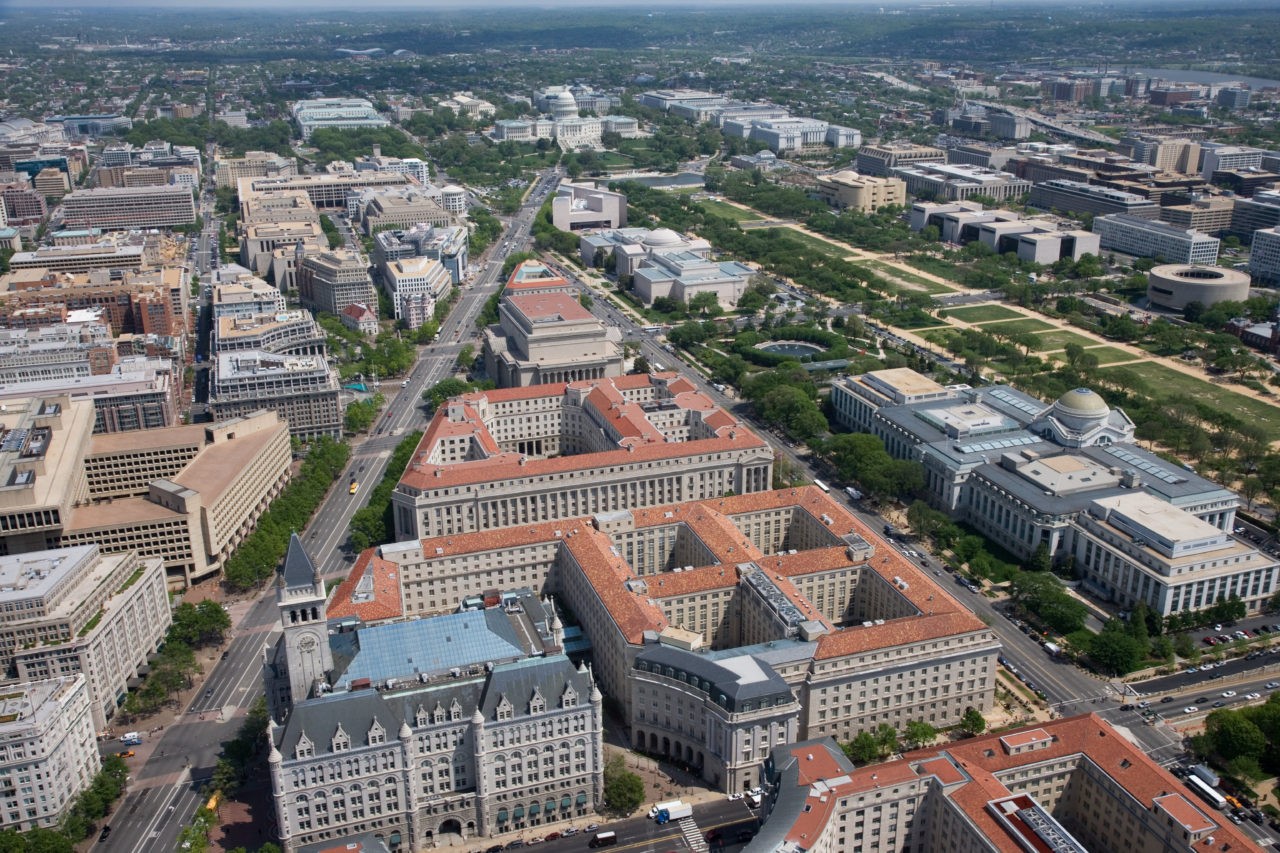
The Federal Triangle, facing east (Source: Wikimedia Commons)
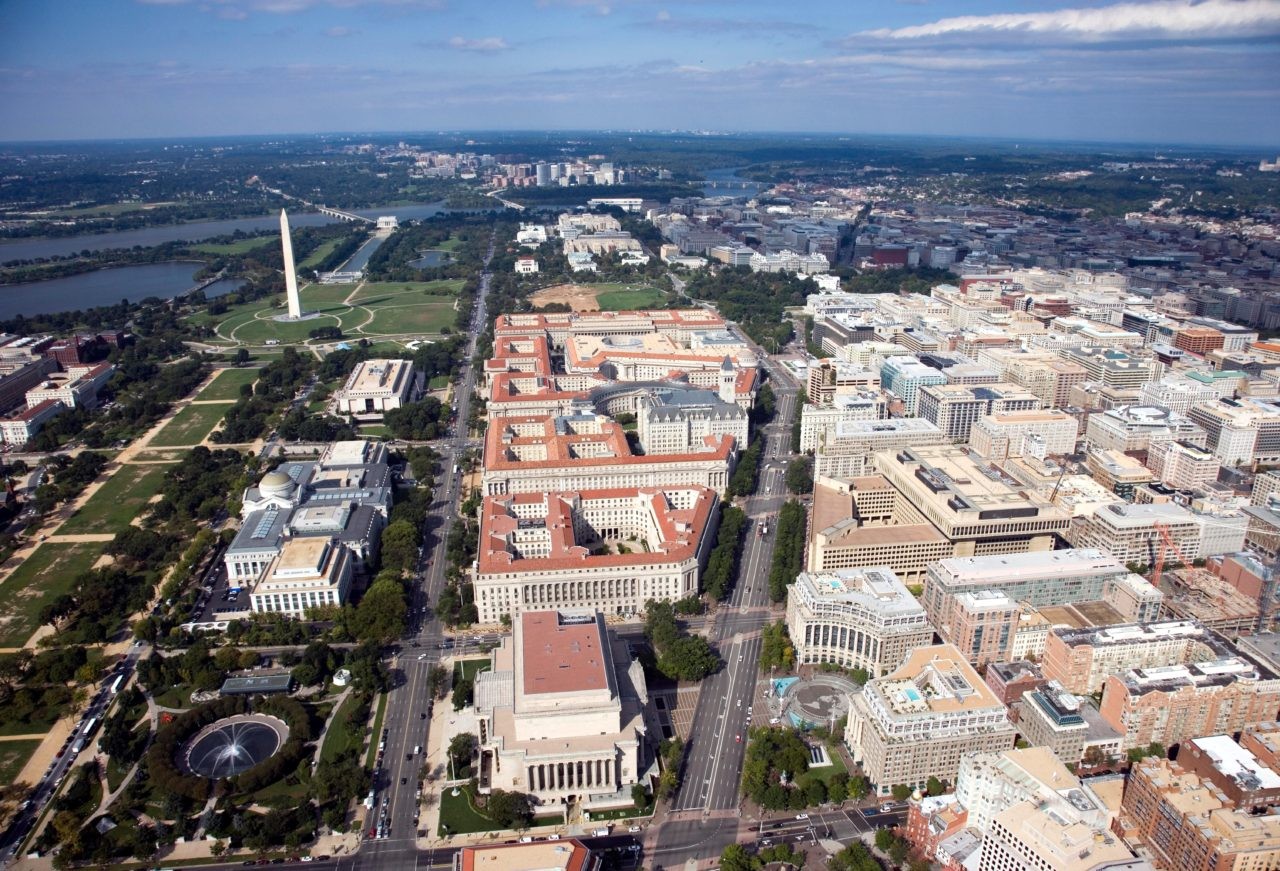
The Federal Triangle, facing west (Source: Wikimedia Commons)
Yes, the Federal Triangle was consciously built to inspire, or at least to impress. Another name for the area is the Monumental Core. In addition to the grandeur of ancient Rome, a second inspiration was another capital, Paris. Over there, the Versailles-like offices of les grandes bureaucraties were built to overawe the peasants.
Copyright © 2017 Breitbart
 The Great Enemy of American Freedom