


Review of The CIA As Organized Crime
January 13, 2017
If you want to learn about the CIA as a deep state within the surface state, read this book. The strength of this book is that it gives us the goods on the Phoenix program used in Vietnam for assassination and murder and explains its use in Afghanistan and how it has been established in the US under the auspices of the Department of Homeland Security. The CIA’s influence over the media lets the CIA avoid accountability and control explanations. Everything works to serve the CIA’s agendas, which are essentially power and profit.
Priceless explanations abound in paragraphs. Valentine writes that the government wages psywar against the American public in various ways for various purposes. For example, the CIA plants deceptive articles in foreign newspapers. Domestic media are notified and dutifully report the stories. Such disinformation or “black propaganda” creates false perceptions that generate public support for military actions or economic sanctions against foreign governments the US government wishes to overthrow, or it can provide assurance for the public that abusive regimes like Israel, Egypt, and Saudi Arabia are worthy of massive tax-funded aid programs. In either case, language is the key to creating perceptions and assumptions that make immoral and illegal policies acceptable to the American public.
Instant Access to Current Spot Prices & Interactive Charts
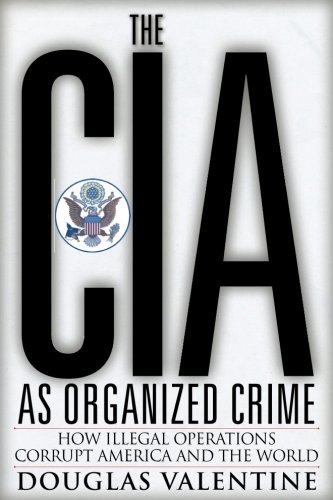 The CIA as Organized C...
Best Price: $21.35
Buy New $23.74
(as of 11:36 UTC - Details)
The CIA as Organized C...
Best Price: $21.35
Buy New $23.74
(as of 11:36 UTC - Details)
 Valentine’s problem is that he is unable to confine himself to what he knows and does his best to discredit himself by engaging in every left-wing rant imaginable. He asserts that Flyover America did not vote for Trump because they have experienced the disappearance of their jobs and middle-class incomes, but because of Trump’s “outspoken racism.” He gratuitously attacks truth-tellers such as Daniel Ellsberg, Glenn Greenwald, and Chris Hedges. Valentine says that Ellsberg released the Pentagon Papers, which led to the end of the Vietnam War, as a way to deflect attention from the CIA. That Greenwald and Hedges have had to operate under constraints does not mean that they are CIA stooges. Both have told enough truth to be confined to the Internet media. Valentine carries on vendettas against former CIA personnel who were just cogs in the machine. Yet he believes the far-fetched bin Laden assassination story.
 There are gratuitous, unexplained attacks on just about everyone in the lexicon of left-wing hatred, such as Ronald Reagan, Confederate soldiers, supply-side economists, Donald Trump, and Thomas Jefferson who Valentine describes as “slave owner and serial rapist,” adding “not surprisingly, Jefferson and his co-conspirators soon came to own all the Indians’ land.” So how come Jefferson died broke?
Valentine needed a strong and ruthless editor to save himself from himself. But few publishers can afford this, and possibly Valentine is so confident of himself that he might have refused any editing. Consequently, some readers might dismiss Valentine’s impressive account of the Phoenix program as just a rant against the CIA. The kind of revelation that Valentine has provided needs to be presented judiciously and dispassionately as it is shocking to the uninitiated.
Nevertheless, he knows about the Phoenix program, and he will bring you to a new appreciation of the power and villainy of the CIA.
The Best of Paul Craig Roberts
 Top 10 Political Myths