


The Brazillionaire Families at the Heart of the Olympic Construction Bribes Scandal
August 3, 2016
The Olympics were supposed to be Brazil’s chance to show off its progress toward developed-nation status. Instead, they reveal a country still haunted by violence, mismanagement, economic crisis and corruption.
In the host city of Rio de Janeiro, investigators have recently uncovered millions of dollars in bribes skimmed from Olympic projects. This adds to the cost of an already wasteful event, but the backstory also reveals how Brazil’s elites hold onto power.
Some of Brazil’s richest families are at the heart of the Olympic scandals. I dug into their lives while working as a ‘Billionaires Reporter’ for Bloomberg News in São Paulo, where I covered the ultra-rich as a full-time job. This gave me a rare window on one of the world’s most unequal countries, where money and influence have long been concentrated in few hands.
 Brazillionaires: Wealt...
Best Price: $1.48
Buy New $5.01
(as of 11:55 UTC - Details)
Brazillionaires: Wealt...
Best Price: $1.48
Buy New $5.01
(as of 11:55 UTC - Details)

Describing his country in the 1970s, a Brazilian economist coined the term Belíndia – islands of Belgium inside a sea of India – and in many places, it still rings true.
Tourists arriving for the Olympics will see this inequality embedded in the city around them. On steep hills rising from the neighborhoods of Ipanema and Copacabana, where beachfront penthouses sell for more than $10 million, whole families live in crowded shacks of cinderblock and aluminum. After the games, the billion-dollar Olympic village constructed for athletes in the wealthy suburb of Barra da Tijuca will be converted into luxury apartments to be sold on the open market – none are slated for affordable housing, as London did after 2012. Odebrecht, the family-owned construction giant that won the right to build the village along with many of the Olympic venues, is among the companies under investigation for bribes.
Physical Gold & Silver in your IRA. Get the Facts.
Brazil’s poor saw their lives improve thanks to the social programs of the Workers’ Party, which came to power in 2003 under Luiz Inácio Lula da Silva, who was succeeded by Dilma Rousseff. But there were strange contradictions in the party’s choice of allies in business. Its largest campaign donors had grown rich by forging ties with the right-wing military dictatorship that ruled from 1964 to 1985. And it was the same families who later won the contracts for most of the Olympic infrastructure projects.
Long before she would face impeachment for allegedly breaking budget rules, Rousseff herself belonged to a Marxist guerrilla group that fought the dictatorship. Arrested in São Paulo in 1970, she was taken to the headquarters of
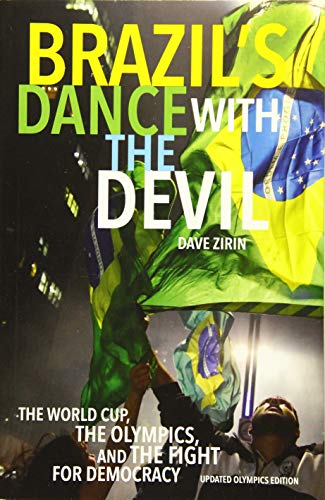 Brazilu2019s Dance wit...
Best Price: $2.06
Buy New $8.43
(as of 05:40 UTC - Details)
an anti-subversion unit known as Operação Bandeirante, or Oban. There, government agents beat her and gave her electric shocks while she hung by her elbows and knees from a pole known as the parrot’s perch.
Brazilu2019s Dance wit...
Best Price: $2.06
Buy New $8.43
(as of 05:40 UTC - Details)
an anti-subversion unit known as Operação Bandeirante, or Oban. There, government agents beat her and gave her electric shocks while she hung by her elbows and knees from a pole known as the parrot’s perch.
Oban was funded by prominent bankers and businessmen. According to the 2014 report by Brazil’s National Truth Commission, a construction tycoon named Sebastião Camargo was one of the top donors. Through a side venture, he even provided frozen meals for its agents.
In those Cold War days, some industrialists believed that crushing the insurgent left was a matter of their own survival. But for Camargo, doing favors for the military was also a smart business move, because his company built public works. Known as Camargo Corrêa, it went on to build some of the regime’s most grandiose projects, such as the 10-mile bridge linking Rio with neighboring Niterói – one of the longest in the world.
Copyright © 2016 The Telegraph
 Old-Time Weather Wisdom