


Revealed, The Top 10 Nutrients YOU May Be Lacking - And How The Deficiency Could Be Making You Ill
June 14, 2016
For those of us who live busy lives it’s easy to just grab a coffee on our way to work, a bagel in our lunch break and an unhealthy dinner on the way home.
But how does lack of variation in your diet affect your health?
A poor diet can lead to a range of nutritional deficiencies – which present themselves in various ways.
If you’re bothered by tiredness and muscle soreness, for example, you may need to eat more dark green vegetables, oily fish, and whole grains.
This is because your body is likely to be low in magnesium.
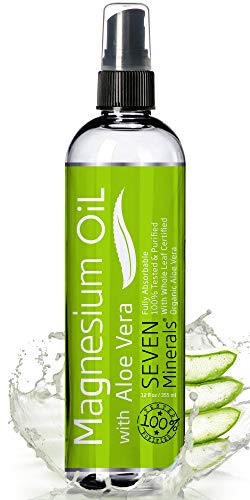 Magnesium Oil with Alo...
Buy New $19.95 ($1.66 / Fl Oz)
(as of 11:05 UTC - Details)
Magnesium Oil with Alo...
Buy New $19.95 ($1.66 / Fl Oz)
(as of 11:05 UTC - Details)

Here, registered nutritionist Rob Hobson investigates the nation’s diet and reveals what many of us may be lacking…
HE SAYS…
When we talk about how the food we eat affects our health, the priority tends to focus on weight.
This often includes limiting the amount of sugar, salt and saturated fat that goes into our mouths.
But how do we fare when it comes to getting enough nutrients such as vitamins and minerals essential to keeping our bodies working in tip-top condition?
Research findings from the UK National Diet and Nutrition Survey have shown that, on the whole, most of us manage to achieve the recommended daily intakes of micronutrients.
Surprisingly, even those with less than perfect diets can still meet these guidelines, especially as many of the foods we eat are fortified either by law or commercial means.
Whilst diagnosed nutrient deficiencies are relatively uncommon, they do exist.
 Infowars Life - Surviv...
Check Amazon for Pricing.
But these are more likely to occur in groups with clinical problems that affect absorption of nutrients, eating disorders, alcohol abuse or those who choose to cut out many foods – such as vegans with poorly planned diets or those embarking on exclusion diets such as gluten or dairy-free.
Infowars Life - Surviv...
Check Amazon for Pricing.
But these are more likely to occur in groups with clinical problems that affect absorption of nutrients, eating disorders, alcohol abuse or those who choose to cut out many foods – such as vegans with poorly planned diets or those embarking on exclusion diets such as gluten or dairy-free.
However, aside from this, there are still many of us that have particularly low intakes of certain nutrients that can potentially increase the risk of deficiency if left untreated.
Here are ten of the nutrients you may be lacking in your diet and the percentage of us that have inadequate intakes.
MAGNESIUM
WHY WE NEED IT
Magnesium is one of the most abundant minerals in the body and helps to maintain muscle and nerve function, healthy bones and a healthy heartbeat.
It also helps to regulate blood sugar and is involved in converting food into energy within the body.
True deficiency is rare but very low intakes may lead to sleeplessness, anxiety, tiredness and fatigue (muscle weakness).
 Manitoba Harvest Hemp ...
Buy New $9.81 ($0.61 / Ounce)
(as of 09:25 UTC - Details)
LOWEST INTAKES AND MOST AT RISK OF DEFICIENCY
Manitoba Harvest Hemp ...
Buy New $9.81 ($0.61 / Ounce)
(as of 09:25 UTC - Details)
LOWEST INTAKES AND MOST AT RISK OF DEFICIENCY
Teenage girls: 53%
Teenage boys: 28%
Men: 16%
Women: 11%
TOP 5 FOODS THAT CONTAIN MAGNESIUM
Dark green vegetables
Nuts and seeds
Beans (cannellini and edamame) and lentils
Whole grains (brown rice)
Oily fish (e.g.mackerel).
BEST SOURCE
Cashew nuts and Brazil nuts are very high in magnesium and provide around 25 per cent of your recommended daily intake 25g serving.
TOP TIP
Get sprinkling seeds! You can add seeds to salads, stir-fries, soups and even ground into smoothies for a magnesium boost.
Copyright © 2016 Daily Mail
 The Latest Hilarious Hate Crime on Campus