


Manual Transmissions: Tomorrow’s 8-Tracks?
February 13, 2016
There are two things pushing the manual transmission off the stage – or at least, off to the sidelines:
First, there is government pressure – lots of it – that’s got the car companies sweating nights to figure out ways to make what they make use less gas while still delivering what car buyers (most of them) expect in terms of power/performance.
This is no easy trick.
De-powering the engine (or making smaller engines) is problematic because cars have become heavy, in order to qualify as “safe” per Uncle’s edicts… but making them lighter – so they could get by with less engine – and use less gas – would make them less “safe”…
Round and round we go.
So, what to do?
One way to squeeze an extra 3-4 or so MPG out of a given car without gimping its performance is to get rid of the manual transmission.
The same car with the same engine but with an automatic – a modern automatic – will usually deliver better EPA numbers than the same car with a manual because modern computer-controlled automatics can be programmed to shift gears “just right” (and at just the right time) for optimum mileage while a manual under the control of a human driver is inevitably less precise.
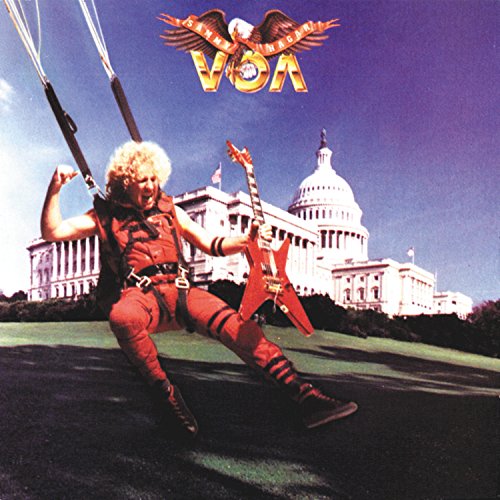 I Canu2019t Drive 55
Buy New $1.29
(as of 10:47 UTC - Details)
I Canu2019t Drive 55
Buy New $1.29
(as of 10:47 UTC - Details)
 Especially as far as the EPA’s tests – the ones they use to determine the city/highway mileage numbers touted by a given car and which are used for purposes of determining compliance with federal fuel efficiency (CAFE) edicts.
This latter business (CAFE) is crucial.
Huge money at stake. If an automaker doesn’t meet its CAFE target – currently 35.5 MPG (average) it gets hit with fines, which are then folded into the price of cars, which makes those cars a harder sell vs. competitor cars that did make the CAFE cut. And so we get more automatics.
And with them, some other things.
 Are We Having Any Fun ...
Best Price: $2.36
Buy New $25.12
(as of 03:15 UTC - Details)
You may have noticed if you’ve driven a new or recent model year car with an automatic, that they are in a hurry to shift up to the highest gear they can short of lugging the engine (sometimes, they actually do lug the engine). Sometimes, they will shift up to a higher gear when the car is going downhill – which makes the car feel as though you’re stepping on the gas.
Are We Having Any Fun ...
Best Price: $2.36
Buy New $25.12
(as of 03:15 UTC - Details)
You may have noticed if you’ve driven a new or recent model year car with an automatic, that they are in a hurry to shift up to the highest gear they can short of lugging the engine (sometimes, they actually do lug the engine). Sometimes, they will shift up to a higher gear when the car is going downhill – which makes the car feel as though you’re stepping on the gas.
And pretty much forces you to ride the brakes.
Not good for the pads – but better for the MPGs.
This is the computer programming – which is programmed for maximum fuel efficiency.
If the car has a manual, the driver’s tendency is to not move up to the next-highest gear until the car feels ready for it – which may be less than optimum, mileage-wise. As when the car is going downhill and the driver keeps it in fourth rather than fifth to take advantage of the engine-braking effect )instead of riding the brakes) to keep the car from over-speeding.
 Cointelpro