


Think Twice Before Shaking Hands With a Man and Keep Your Toothbrush Two Metres From the Loo to Avoid Bugs, New Book Says
September 24, 2015
Bacteria play a central role in our lives, shaping much of the world around us, as well as the world within us.
We’ve long regarded bacteria as something to be feared – agents of illness and death – but, increasingly, it’s understood that many bacteria are, in fact, harmless and even beneficial.
Bacteria in our gut, for example, help us produce vitamins, such as folic acid, while others help us to absorb important metals, such as calcium, from our food.
In a fascinating new book, Adam Hart, a biologist, broadcaster and professor of science communication at the University of Gloucestershire, helps to untangle the good from the bad – with sometimes surprising revelations…
Does anyone wash their hands properly?
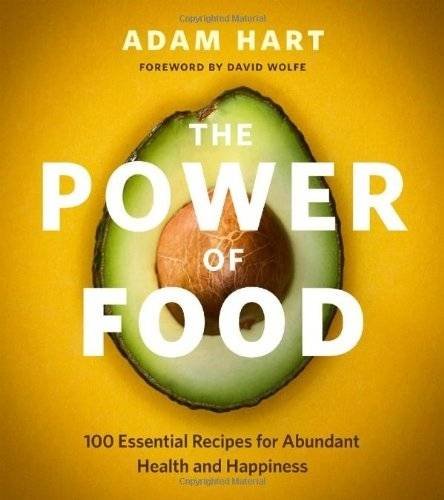 The Power of Food: 100...
Best Price: $6.02
Buy New $14.86
(as of 07:20 UTC - Details)
The Power of Food: 100...
Best Price: $6.02
Buy New $14.86
(as of 07:20 UTC - Details)
 Not all bacteria are bad or, more accurately, they aren’t bad provided they’re in the right place. For instance, if bacteria that might be useful in our gut end up somewhere else, they can make us ill.
For this to happen, they have to enter our body. The most common route is via the mouth. In other words, we eat them – and that includes bacteria commonly found in faeces, as well as all the others you might find anywhere you touch.
Poor hand hygiene is a major cause of all food-borne illness outbreak, yet very few of us wash our hands properly, while almost none of us do so on a regular basis.
In fact, scientific studies have found we are very poor at washing our hands, but exceptionally good at lying about it. In recent surveys, 94 per cent to 96 per cent of those asked said they consistently washed their hands after going to the loo.
 NOW Supplements, Gr8-D...
Buy New $7.88
(as of 09:54 UTC - Details)
However, in studies where people are directly observed, the level of handwashing tends to be much lower. A 2003 study found only 61 per cent of women and 37 per cent of men actually washed their hands after using a public convenience.
NOW Supplements, Gr8-D...
Buy New $7.88
(as of 09:54 UTC - Details)
However, in studies where people are directly observed, the level of handwashing tends to be much lower. A 2003 study found only 61 per cent of women and 37 per cent of men actually washed their hands after using a public convenience.
Interestingly, signs telling us to wash our hands may have the opposite effect – on men, at least. In one study, women’s handwashing leapt from 61 per cent to 97 per cent when a sign was put up. In men, it declined from 37 per cent to 35 per cent.
Even dirty water can be effective
What does ‘proper’ handwashing actually involve? You may think it requires clean, running water, but research shows this is not essential.
In a study in an urban squatter settlement in Pakistan, where water was faecally contaminated, one group of women were given soap, a safe water vessel and the ability to sterilise water; another had soap alone – the latter had to
 Nice Pak D43600 PDI Sa...
Buy New $9.80
(as of 10:49 UTC - Details)
use untreated water to wash their hands.
Nice Pak D43600 PDI Sa...
Buy New $9.80
(as of 10:49 UTC - Details)
use untreated water to wash their hands.
Testing their hands, researchers found both groups had greatly reduced bacterial counts, compared with a third group who hadn’t used soap. So even dirty water can be effective as long as soap is used.
Another issue is temperature – several studies have shown warm or hot water offers no improvement over cold. It’s the use of soap and a vigorous scrubbing action that does the trick. This is because when soap molecules are put in water, tiny soapy spheres called micelles form.
These trap the grease and oil (and anything in these) and allow them to mix with the water, which then gets flushed down the sink.
Conventional soap doesn’t actually kill bacteria: it helps dislodge it on our skin. The action of soap on the cells is enhanced by the act of scrubbing, helping dislodge material and dispersing the soap into nooks and crannies where
 Clorox ToiletWand Disp...
Best Price: $7.91
Buy New $8.88
(as of 09:56 UTC - Details)
bacteria may thrive.
Clorox ToiletWand Disp...
Best Price: $7.91
Buy New $8.88
(as of 09:56 UTC - Details)
bacteria may thrive.
It seems men are particularly soap-averse. One study found just over half of men (50.3 per cent) washed with soap and water – around 35 per cent did the rinse and shake, while 15 per cent didn’t bother to wash at all. Women fared far better, with only 7 per cent not washing and 78 per cent using soap and water.
Why you must scrub hands for 15 seconds
It’s not just whether we wash and what we use – the length of time spent handwashing also matters.
A study published in the Journal of Environmental Health in 2013 found only 30 per cent of people washed for longer than nine seconds and 70 per cent did so for less than eight seconds (including the 10 per cent who didn’t bother at all).
 Hydrogen Peroxide 3% F...
Buy New $17.99
(as of 10:47 UTC - Details)
Hydrogen Peroxide 3% F...
Buy New $17.99
(as of 10:47 UTC - Details)
Think about washing your hands: four to five seconds feels about right. But while few studies examine the health impact of different durations, the balance of the evidence suggests longer is better, with 15 to 30 seconds a sensible time.
Drying is vital, as bacteria like moist surfaces and are more easily transferred to and from wet hands. While there’s contradictory evidence about different methods, the conclusion is that drying with paper towels is the best means of removing bacteria (the friction of rubbing against the skin aids the process).
Overall, it’s fair to say that, at best, only one in 20 people you meet has washed their hands in anything like an effective way. And, arguably, in terms of effective bacterial removal, no one has washed their hands!
Copyright © 2015 Daily Mail
 Heroic Reistance to Green Tyranny