


Christian, is your preacher a minister of war or a minister of peace?
It is a horrible blight on Christianity that many of the preachers in America today who claim to be conservative Christians waste their time defending the president and upholding the Republican Party instead of defending the Bible and upholding Christianity. Instead of indoctrinating their congregations in the Christian faith, they propagandize them in government falsehood. Instead of exalting the name of Jesus Christ, they exalt the name of George Bush. Instead of diligently studying and giving their church members the truth, they indolently watch Fox News and give their church members government lies. Instead of helping their parishioners grow in their Christian life, they help them grow in their admiration for the state.
What an embarrassment that some preachers parrot Fox News instead of preach the gospel! What a shame to hear a sermon that glorifies the sacrifices of U.S. troops in Iraq instead of the sacrifice of Christ on Calvary! What a disgrace that some preachers are ministers of war instead of ministers of peace!
A Minister of Peace
 Warmongering and making apologies for the state were not always the forte of preachers. The British preacher Vicesimus Knox (1752—1821) was a minister of peace.
Knox was educated at home by his father of the same name until he was fourteen. After graduating from St. John’s College, Oxford, he became a fellow of the college and was ordained a priest in the Church of England. He served as the headmaster of Tonbridge School from 1778 to 1812. He was preceded by his father, who was headmaster from 1772 to 1778, and succeeded by his son, Thomas, who was headmaster from 1812 to 1843. Knox was said to be “a good scholar, an impressive preacher, and a popular and voluminous writer.” He was both an advocate of civil liberties and an adversary of offensive war. Knox’s collected works of letters, sermons, educational writings, and political pamphlets take up seven volumes.
The Prospect of Perpetual and Universal Peace
In 1793, Knox preached a sermon in the parish church at Brighton on the unlawfulness of offensive war. This sermon, “The Prospect of Perpetual and Universal Peace to Be Established on the Principles of Christian Philanthropy,” which is available online and in print, was attended by some officers from the local army garrison. Several days later, these same officers compelled Knox and his family to leave a play at the Brighton theatre when they spotted him in one of the boxes. The text of Knox’s sermon was “Glory to God in the highest, and on earth peace, good will toward men” (Luke 2:14). He begins by imploring his hearers to
consider whether among those who bear rule, by power or by example, GLORY IS DULY GIVEN TO GOD; whether they do really promote to the utmost of their power, PEACE ON EARTH; and whether they seem to entertain GOOD WILL TOWARDS MEN, in that extent and degree which the Gospel of Jesus Christ requires of all who profess to believe it, and who expect the rewards of the pious and the peaceful.
He concludes that such is not the case:
The picture is sadly shaded with misery. Peace on earth! Alas where is it? amid all our refinement in the modes of cultivated life, all our elegant pleasures, all our boasted humanity, WAR, that giant fiend, is stalking over empires in garments dropping with the blood of men, shed by men, personally unoffended and unoffending; of men, professing to love as brethren, yet cutting off each other from the land of the living, long before the little time allotted them by nature is elapsed; and increasing beyond measure, all the evils to which man is naturally and morally doomed, at the command of a narrow shortsighted human policy, and an ambition which, considering the calamities causes, I must call accursed.
By all but the vulgar and the creatures of despotism, offensive war, with all its pompous exterior, must be deprecated as the disgrace and calamity of human nature. Poor outside pageantry! What avails the childish or womanish finery of gaudy feathers on the heads of warriors? Though tinged with the gayest colours by the dyer’s art, they appear to the eye of humanity, weeping over the fields of battle, dipt in gore. What avails the tinsel, the trappings, the gold and the scarlet? Ornaments fitter for the pavilions of pleasure than the field of carnage. Can they assuage the anguish of a wound, or call back the departed breath of the pale victims of war; poor victims, unnoticed and unpitied, far from their respective countries, on the plains of neighhouring provinces, the wretched seat of actual war; not of parade, the mere play of soldiers, the pastime of the idle spectator, a summer day’s sight for the gazing saunterer; but on the scene of carnage, the Aceldama, the field of blood, where, in the fury of the conflict, man appears to forget his nature and exhibits feats at which angels weep, while nations shout in barbarous triumph.
The elegant decorations of a sword, wantonly drawn in offensive war, what are they, but a mockery of the misery it was intended to create? An instrument of death to a fellow-creature who has never injured me, a holiday ornament! Colours of the darkest hue might form the appropriate habiliments of those who art: causelessly sent as the messengers of death; of death, not to animals of another species, fierce and venomous; but to those who like themselves, were born of woman, who sucked the breast of a woman, and who, if spared by the ruthless sword, must like themselves in a few short years die by the necessity of nature; die, and moulder into dust, under the turf once verdant and flowery, but now crimsoned with human gore. Alike born the victors and the vanquished, alike they die if spared in the battle; and alike must stand at the latter day, all stript of the distinctions of finer dress and superior rank, in the presence of those whom they cut off in this world before their time, in youth and health, like rose-buds cropt in the bud of existence.
Oh war! thy blood-stained visage cannot be disguised by the politician’s artifice. Thy brilliant vestments are to him who sympathizes with human woe in all climes and conditions, no better than sable mourning; thy melody, doleful discord, the voice of misery unutterable. Decked, like the harlot, in finery not thine own, thou art even the pest of man nature; and in countries where arbitrary power prevails, the last sad refuge of selfish cruel despotism, building its gorgeous palaces on the ruins of those who support its grandeur by their personal labour; and whom it ought to protect and to nourish under the olive shade of peace.
What feeling man can cast his eyes (as he proceeds in contemplating the picture) over the tented plains, on the theatre, glittering in the sunbeams with polished arms and gay with silken banners, without a sigh, if he views it undazzled by the “pride, pomp and circumstance,” which the wisdom of this world has, from the earliest times, devised to facilitate its own purposes; purposes, it is to be feared, that have little reference to him who said, that his kingdom was not of this world; and whose religion was announced by a proclamation of peace on earth. What a picture is the tablet we are viewing of the heart of man, and of the misery of man! that he should thus find it necessary to defend himself with so much effort, at such expense of blood and treasure, not, as I said before, against the beast of the forest, not against the tiger and the wolf, for then it were well; but against his fellow man, his Christian brother, subject to the same wants, agonized with the same natural sufferings, doomed to the same natural death, and as a Christian, hoping for the same salvation; and perhaps separated from him only by a few leagues of intervening ocean.
Lo! in countries where war actually rages, thousands and tens of thousands of our fellow-creatures, all perhaps Christians in profession, many in the flower of their youth, torn from the peaceful vale, the innocent occupations of agriculture, or the useful employments of mechanic arts, to learn with indefatigable pains (separated at the same time from all the sweet endearments and duties of domestic life) to learn the art of spreading devastation and most expeditiously and effectually destroying those of their fellow-creatures, whom politicians have bade them consider as enemies, and therefore to cut off in their prime; but whom Christ taught, even if they were personal enemies, to love, to pity, and to save. Do they not, thoughtless as they are, require to be reminded of the gracious proclamation from Heaven, “On earth peace, Good-will towards men.”
I wish not to dwell on the gloomy picture exhibited by various nations of Europe, professing Christianity as part of their respective constitutions; but acting towards each other with the ferocity of such savages as never heard that invitation of Christ; Come unto me, all ye that labour and are heavy laden and I will give you rest.
Alas! is it not enough that age, disease, death, and misery, in a hundred forms, are hourly waging war with all mankind; but they must add to the sting of death new venom; new anguish to every pang by waging war with each other? Men who as individuals are kind and humane, appear as nations, still in a state of barbarism and savage nature.
Yet we must believe and maintain the political necessity of war, though the greatest evil which can be endured by a civilized, flourishing and free people; we must believe its political necessity, because they, who in the various nations of the world, seem to claim an hereditary right to wisdom, as well as power, have, in all ages and in the most enlightened and Christian countries, so determined; yet, with all due submission to that wisdom and to that power, let every man who justly glories in the name and feelings of a man, mourn and lament the existence of that political necessity; and if it be such, pray to the father of us all, of every clime and colour, that under the benign influence of that Christianity which we profess, war may be no more on the face of the whole earth, and the sword every where converted into the pruning hook and the plough share.
O! that the still small voice of religion and philosophy could be heard amidst the cannon’s roar, the shouts of victory, and the clamours of discordant politicians! It would say to all nations and to all people “Come unto me, all ye that labour in the field of battle, heavy laden with the weapons of war, worn out with its hardships, arid in jeopardy every hour; come unto me and I will give you rest; I will be unto you as a helmet, and a shield from the fiery darts of the common enemy of all mankind; and will lead you, after having rendered you happy and safe in this world, to the realms of everlasting peace.”
As much as he hated war, Knox was not a pacifist: “Defensive war, in the present disordered state of human affairs, is sometimes as necessary as it is honourable; necessary to maintain peace, and the beautiful gradations of a well regulated society.” But he believed that
faithful ministers of the Gospel, are on our part bound by our duty, to pray for peace; to promote peace as much as in us lies; to preach peace, to cry aloud for peace and spare not, even though the instigators to war should frown upon us; and in defiance of the God of peace, prepare for the battle, It is our indispensable duty.
As a minister, Knox’s answer to the problems of the world was, of course, Christianity:
If the Christian religion, apparently laid aside, when to lay it aside suits the convenience of politicians, were indeed allowed to influence above every thing else the conduct of princes, and the councils of all cabinets, how different would be the picture of Europe.
If the Christian religion in all its purity, and in its full force, were suffered to prevail universally, the sword of offensive war must be sheathed for ever, and the din of arms would at last he silenced in perpetual peace.
He finishes his sermon with a prayer that is rather unlike the war prayer recorded by Mark Twain:
O thou God of mercy, grant that the sword may return to its scabbard for ever; that the religion of Jesus Christ may be duly understood, and its benign influence powerfully felt by all kings, princes, rulers, nobles, counsellors, and legislators, on the whole earth; that they may all combine in a league of philanthropy, to enforce by reason and mild persuasion, the law of love, or Christian charity, among all mankind, in all climes, and in all sects; consulting, like superior beings, the good of those beneath them; not endeavouring to promote their own power and aggrandizement by force and arms; but building their thrones, and establishing their dominion on the hearts of their respective people, preserved from the horrors of war by their prudence and clemency: and enjoying, exempt from all unnecessary burthens, the fruits of their own industry; every nation thus blest, permitting all others under the canopy of heaven to enjoy the same blessings uninterrupted, in equal peace and security.
The Spirit of Despotism
But it was not just in his sermons that Knox spoke out against war. His main work, The Spirit of Despotism, written in 1795, is an analysis of how political despotism at home can arise under the cover of fighting a foreign war. The complete text is available online and the complete chapters from which the following abstracts are taken are available in print.
Knox begins in his Preface:
I attribute war, and most of the artificial evils of life, to the Spirit of Despotism, a rank poisonous weed, which grows and flourishes even in the soil of liberty, when over-run with corruption.
I have frequently lifted up my voice — a feeble one indeed — against war, that great promoter of despotism; and while I have liberty to write, I will write for liberty.
In section X, “When Human Life is held cheap, it is a Symptom of a prevailing Spirit of Despotism,” he says of war:
Despotism delights in war. It is its element. As the bull knows, by instinct, that his strength is in his horns, and the eagle trusts in his talons; so the despot feels his puissance most, when surrounded by his soldiery arrayed for battle. With the sword in his hand, and his artillery around him, he rejoices in his might, and glories in his greatness. Blood must mark his path; and his triumph is incomplete, till death and destruction stalk over the land, the harbingers of his triumphant cavalcade.
We hear much of necessary wars; but it is certainly true, that a real, absolute, unavoidable necessity for war, such as alone can render it just, has seldom occurred in the history of man. The pride, the wanton cruelty of absolute princes, caring nothing for human life, have in all ages, without the least necessity, involved the world in war; and therefore it is the common cause of all mankind to abolish absolute power; and to discourage, by every lawful means, the spirit that leads to any degree of it. No individual, however good, is fit to be trusted with so dangerous a deposit. His goodness may be corrupted by the magnitude of the trust; and it is the nature of power, uncontrolled by fear or law, to vitiate the best dispositions. He who would have shuddered to spill a drop of blood, in a hostile contest, as a private man, shall deluge whole provinces, as an absolute prince, and laugh over the subjugated plains which he has fertilized with human gore.
What are the chief considerations with such men, previously to their going to war, and at its conclusion? Evidently the expense of money. Little is said or thought of the lives lost, or devoted to be lost, except as matters of pecuniary value. Humanity, indeed, weeps in silence and solitude, in the sequestered shade of private life; but is a single tear shed in courts, and camps, and cabinets? When men high in command, men of fortune and family, fall, their deeds are blazoned, and they figure in history; but who, save the poor widow and the orphan, inquire after the very names of the rank and file? There they lie, a mass of human flesh, not so much regretted by the despots as the horses they rode, or the arms they bore. While ships often go down to the bottom, struck by the iron thunderbolts of war, and not a life is saved; the national loss is estimated by the despot, according to the weight of metal wasted, and the magnitude and expense of the wooden castle.
Great numbers of men, trained to the trade of human butchery, have been constantly ready to be let to hire, to carry on the work of despotism, and to support, by the money they earned in this hellish employment, the luxurious vices of the wretch who called them his property.
In section XVII, “On debauching the Minds of the rising Generation and a whole People, by giving them Military Notions in a free and commercial Country,” he says of war:
The abettors of high prerogative, of absolute monarchy, and aristocratical pride, always delight in war. Not satisfied with attacking foreign nations, and keeping up a standing army even in time of peace, they wish, after they have once corrupted the mass of the people by universal influence, to render a whole nation military. The aggregate of military force, however great, being under their entire direction, they feel their power infinitely augmented, and bid defiance to the unarmed philosopher and politician, who brings into the field truth without a spear, and argument unbacked with artillery.
The diffusion of a military taste among all ranks, even the lowest of the people, tends to a general corruption of morals, by teaching habits of idleness, or trifling activity, and the vanity of gaudy dress and empty parade.
The strict discipline which is found necessary to render an army a machine in the hands of its directors, requiring, under the severest penalties, the most implicit submission to absolute command, has a direct tendency to familiarize the mind to civil despotism. Men, rational, thinking animals, equal to their commanders by nature, and often superior, are bound to obey the impulse of a constituted authority, and to perform their functions as mechanically as the trigger which they pull to discharge their muskets. They cannot indeed help having a will of their own; but they must suppress it, or die. They must consider their official superiors as superiors in wisdom and in virtue, even though they know them to be weak and vicious. They must see, if they see at all, with the eyes of others: their duty is not to have an opinion of their own, but to follow blindly the behest of him who has had interest enough to obtain the appointment of a leader. They become living automatons, and self-acting tools of despotism.
While a few only are in this condition, the danger may not be great to constitutional liberty; but when a majority of the people are made soldiers, it is evident that the same obsequiousness will become habitual to the majority of the people. Their minds will be broken down to the yoke, the energy of independence weakened, the manly spirit tamed; like animals, that once ranged in the forest, delighting in their liberty, and fearless of man, caught in snares, confined in cages, and taught to stand upon their hind legs, and play tricks for the entertainment of the idle. They obey the word of command given by the keeper of the menagerie, because they have been taught obedience by hunger, by the lash of the whip, by every mode of discipline consistent with their lives, which are saleable property. But they are degenerate, contemptible animals.
The whole of the military system is much indebted for its support to that prevailing passion of human nature, pride. Politicians know it, and flatter pride even in the lowest of the people. Hence recruiting-officers invite gentlemen only, who are above servile labour. “The vanity of the poor men” (says a sagacious author) “is to be worked upon at the cheapest rate possible. Things we are accustomed to we do not mind, or else what mortal, that never had seen a soldier, could look, without laughing, upon a man accoutred with so much paltry gaudiness and affected finery? The coarsest manufacture that can be made of wool, dyed of a brick-dust colour, goes down with him, because it is in imitation of scarlet or crimson cloth; and to make him think himself as like his officer as it is possible, with little or no cost, instead of silver or gold lace, his hat is trimmed with white or yellow worsted, which in others would deserve bedlam; yet these fine allurements, and the noise made upon a calf-skin, have drawn in and been the destruction of more men in reality, than all the killing eyes and bewitching voices of women ever slew in jest.”
The spirit of pride is in fact the spirit of despotism; especially when it is that sort of pride which plumes itself on command, on external decoration, and the idle vanity of military parade.
When this pride takes place universally in a nation, there will remain little industry, and less independence. The grand object will be to rise above our neighbours in show and authority. All will bow to the man in power, in the hope of distinction. Men will no longer rely on their own laborious exertions; but the poor man will court, by the most obsequious submission, the favour of the esquire; the esquire cringe to the next lord, especially if he be a lord-lieutenant of the county; and the lord-lieu-tenant of the county, will fall prostrate before the first lord of the treasury; and the first lord of the treasury will idolize prerogative. Thus the military rage will trample on liberty; and despotism triumphant march through the land, with drums beating and colours flying.
In section XXX, “The Spirit of Despotism delights in War or systematic Murder,” he says of war:
Fear is the principle of all despotic government, and therefore despots make war their first study and delight. No arts and sciences, nothing that contributes to the comfort or the embellishment of human society, is half so much attended to, in countries where the spirit of despotism is established, as the means of destroying human life. Tigers, wolves, earthquakes, inundations, are all innocuous to man, when compared with the fiercest of monsters, the gory despots. Fiends, furies, demons of destruction! may the day be near, when, as wolves have been utterly exterminated from England, despots may be cut off from the face of the whole earth; and the bloody memory of them loaded with the execration of every human being, to whom God has given a heart to feel, and a tongue to utter!
Wherever a particle of their accursed spirit is found, there also will be found a propensity to war. In times of peace, the grandees find themselves shrunk to the size of common mortals. A finer house, a finer coach, a finer coat, a finer livery than others can afford, is all that they can display to the eye of the multitude, in proof of their assumed superiority. Their power is inconsiderable. But no sooner do you blow the blast of war, and put armies under their command, than they feel themselves indeed great and powerful. A hundred thousand men, in battle array, with all the instruments of destruction, under the command of a few grandees, inferior, perhaps, in bodily strength, to every one of the subject train, and but little superior in intellect or courage, yet holding all, on pain of death, in absolute subjection; how must it elevate the little despots in their own opinion! “This it is to live,” (they exclaim, shaking hands with each other) “this is to be great indeed. Now we feel our power. Glory be to us on high; especially as all our fame and greatness is perfectly compatible with our personal safety; for we will not risk our precious persons in the scene of danger, but be content with our extended patronage, with the delight of commanding the movements of this human machine, and with reading of the blood, slaughter, and burnt villages, in the Gazette, at our fire-side.”
All the expense of war is paid by the people, and most of the personal danger incurred by those, who, according to some, have no political existence; I mean the multitude, told by the head, like sheep in Smithfield. Many of these troublesome beings in human form, are happily got rid of in the field of battle, and more by sickness and hardship previous or subsequent to the glorious day of butchery. Thus all makes for the spirit of despotism. There are, in consequence of a great carnage, fewer wretches left to provide for, or to oppose its will; and all the honour, all the profit, all the amusement, falls to the share of the grandees, thus raised from the insignificance and inglorious indolence of peace, to have their names blown over the world by the trumpet of Fame, and recorded in the page of history.
But a state of war not only gives a degree of personal importance to some among the great, which they could never obtain by the arts of peace, but greatly helps the cause of despotism. In times of peace the people are apt to be impertinently clamorous for reform. But in war, they must say no more on the subject, because of the public danger. It would be ill-timed. Freedom of speech also must be checked. A thousand little restraints on liberty are admitted, without a murmur, in a time of war, that would not be borne one moment during the halcyon days of peace. Peace, in short, is productive of plenty, and plenty makes the people saucy. Peace, therefore, must not continue long after a nation has arrived at a certain degree of prosperity. This is a maxim of Despotism.
And finally, in section XL, “The Pride which produces the Spirit of Despotism conspicuous even on the Tombstone. It might be treated with total Neglect, if it did not tend to the Oppression of the Poor, and to Bloodshed and Plunder,” Knox warns of the dangers of standing armies:
Standing armies are therefore the glory and delight of all who are actuated by the spirit of despotism. They would have no great objection to military government and martial law, while power is in their own hands, or in the hands of their patrons. The implicit submission of an army, the doctrine, which the military system favours, that men in subaltern stations are to act as they are bidden, and never to deliberate on the propriety of the command, is perfectly congenial with the spirit of despotism. The glitter, the pomp, the parade and ostentation of war are also highly pleasing to minds that prefer splendour and pageantry to solid and substantial comfort. The happiness, which must ever depend on the tranquillity of the people, is little regarded, when set in competition with the gratification of personal vanity. Plumes, lace, shining arms, and other habiliments of war, set off the person to great advantage; and as to the wretches who are slain or wounded, plunged into captivity and disease, in order to support this finery, are they not paid for it? Besides, they are, for the most part, in the lowest class, and those whom nobody knows.
Such is the love of standing armies, in some countries, that attempts are made to render even the national militia little different from a standing army. This circumstance alone is a symptom of the spirit of despotism. A militia of mercenary substitutes, under officers entirely devoted to a minister, must add greatly to a standing army, from which, in fact, it would differ only in name. Should the people be entirely disarmed, and scarcely a musket and bayonet in the country but under the management of a minister, through the agency of servile lords lieutenant and venal magistrates, what defence would remain, in extremities, either for the king or the people?
Antipolemus
Included in the works of Knox is also his translation of a work of Erasmus, “Antipolemus, or the Plea of Reason, Religion, and Humanity against War,” that examines why Christian nations are constantly at war. This is also available online and in print. Knox added a lengthy preface in which he said of war:
There will never be wanting pamphleteers and journalists to defend war, in countries where prime ministers possess unlimited patronage in the church, in the law, in the army, in the navy, in all public offices, and where they can bestow honours, as well as emoluments, on the obsequious instruments of their own ambition.
Near three hundred years have elapsed since the composition of this Treatise. In so long a period, the most enlightened which the history of the world can display, it might be supposed that the diffusion, of Christianity, and the improvements in arts, sciences, and civilisation, would either have abolished war, or have softened its rigour. It is however a melancholy truth, that war still rages in the world, polished as it is, and refined by the beautiful arts, by the belles lettres, and by a most liberal philosophy.
To eradicate from the bosom of man principles which argue not only obduracy, but malignity, is certainly the main scope of the Christian religion; and the clergy are never better employed in their grand work, the melioration of human nature, the improvement of general happiness, than when they are reprobating all propensities whatever, which tend, in any degree, to produce, to continue, or to aggravate the calamities of war; those calamities which, as his majesty graciously expressed it, in one of his speeches from the throne, are inseparable from a state of war.
There is nothing so heterodox, I speak under the correction of the reverend prelacy, as war, and the passions that lead to it, such as pride, avarice, and ambition. The greatest heresy I know, is to shed the blood of an innocent man, to rob by authority of a Christian government, to lay waste by law, to destroy by privilege, that which constitutes the health, the wealth, the comfort, the happiness, the sustenance of a fellow-creature, and a fellow Christian. This is heresy and schism with a vengeance!
I hope the world has profited too much by experience, to encourage any offensive war, under the name and pretext of a holy war.
Let Mahomet mark the progress of the faith by blood. Such modes of erecting the Cross are an abomination to Jesus Christ. Is it, after all, certain, that the slaughter of the unbelievers will convert the survivors to the religion of the slaughterers? Is the burning of a town, the sinking of a ship, the wounding and killing hundreds of thousands in the field, a proof of the lovely and beneficent spirit of that Christianity to which the enemy is to be converted, by the philanthropic warriors?
They who defend war, must defend the dispositions which lead to war; and these dispositions are absolutely forbidden by the gospel. The very reverse of them is inculcated in almost every page. Those dispositions being extinguished, war must cease; as the rivulet ceases to flow when the fountain is destitute of water; or as the tree no longer buds and blossoms, when the fibres, which extract the moisture from the earth, are rescinded or withered. It is not necessary that there should be in the gospel an absolute prohibition of war in so many express words; it is enough that malice and revenge are prohibited. The cause ceasing, the effect can be no more. Therefore I cannot think it consistent with the duty of a bishop, or any other clergyman, either to preach or pray in such a manner as to countenance, directly or indirectly, any war, but a war literally, truly, and not jesuitically, a defensive war pro aris et focis; and even then, it would be more characteristic of Christian divines to pray for universal peace, for a peaceable conversion of the hearts of our enemies, rather than for bloody victory.
Wars of ambition, for the extension of empire or for the gratification of pride, envy, and malice, can never be justified; and therefore it is, that all belligerent powers agree to call their several wars defensive in the first instance, and then, just and necessary. This is a tacit, but a very striking acknowledgment, on all sides, that offensive war is unjustifiable. But the misfortune is, that power is never without the aid of ingenious sophistry to give the name of right to wrong; and, with the eloquence which Milton attributes to the devil, to make the worse appear the better cause.
But as war is confessedly PUBLICA MUNDI CALAMITAS, the common misfortune of all the world, it is time that good sense should interpose, even if religion were silent, to controul the mad impetuosity of its cause, ambition.
War has certainly been used by the great of all ages and countries except our own, as a means of supporting an exclusive claim to the privileges of enormous opulence, stately grandeur, and arbitrary power. It employs the mind of the multitude, it kindles their passions against foreign, distant, and unknown persons, and thus prevents them from adverting to their own oppressed condition, and to domestic abuses. There is something fascinating in its glory, in its ornaments, in its music, in its very noise and tumult, in its surprising events, and in victory. It assumes a splendour, like the harlot, the more brilliant, gaudy, and affected, in proportion as it is conscious to itself of internal deformity. Paint and perfume are used by the wretched prostitute in profusion, to conceal the foul ulcerous sores, the rottenness and putrescence of disease. The vulgar and the thoughtless, of which there are many in the highest ranks, as well as in the lowest, are dazzled by outward glitter. But improvement of mind is become almost universal, since the invention of printing; and reason, strengthened by reading, begins to discover, at first sight and with accuracy, the difference between paste and diamonds, tinsel and bullion. It begins to see that there can be no glory in mutual destruction; that real glory can be derived only from beneficial exertions, from contributions to the conveniencies and accommodations of life; from arts, sciences, commerce, and agriculture; to all which war is the bane.
The total abolition of war, and the establishment of perpetual and universal peace, appear to me to be of more consequence than any thing ever achieved, or even attempted, by mere mortal man, since the creation.
I detest and abhor atheism and anarchy as warmly and truly as the most sanguine abettors of war can do; but I am one who thinks, in the sincerity of his soul, that reasonable creatures ought always to be coerced, when they err, by the force of reason, the motives of religion, the operation of law; and not by engines of destruction. In a word, I utterly disapprove all war, but that which is strictly defensive.
The Need of the Hour
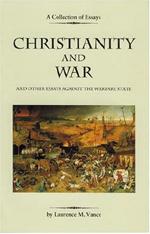 We need preachers who will serve as ministers of peace instead of ministers of war. We need preachers who will preach the Bible instead of Bush’s “compassionate conservatism.” We need preachers who will refuse to defend the president with the words: “But he’s a Christian.” We need preachers who will refuse to make excuses for Bush’s warped and unorthodox view of Christianity. We need preachers with some backbone who will not blindly follow the state as they incessantly repeat the mantra: “Obey the powers that be.” We need preachers who are willing to apply the commandment, “Thou shalt not kill” (Exodus 20:13), to killing in an unjust, immoral war. We need preachers who are as concerned about killing on the battlefield as they are about killing in the womb.
We need more preachers like Vicesimus Knox and fewer preachers like Jerry Falwell.
For another minister of peace, see also my article on Charles Spurgeon.


