

Health, Brought To You By… Your Federal Government
by Bill Sardi by Bill Sardi
 If you live in the USA you are in good hands, so say federal government websites. Federal health agencies abound, and they are not reticent to tell the public what they are doing to promote a healthy America. Tap water is cleaner than most countries, milk is pasteurized, terrestrial radon gas leaks into households are being detected and sealed daily, cattle are being tagged and monitored for disease, annual flu vaccination drives prevent seasonal epidemics, the Food & Drug Administration is doubling its efforts to ensure new drugs are safe, and the National Institutes of Health is led by honorable and ethical researchers who solely labor in the public interest. Now, for the next fairy tale….
Let’s conduct a quick public audit, just to see how federal health agencies really stack up.
What the US Department of Agriculture has come up with to deal with the growing threat of "mad cow" and other animal-to-human transmitted disease is the National Animal Identification System (NAIS). This program intends to "identify specific animals in the United States and record their movement over their lifespans." Tags will be affixed to the ears of cattle. But this does nothing to rid disease from the animals.
 While USDA officials are busy implementing cattle tagging procedures, somebody at the USDA certainly should have alerted the public when a recently published report revealed 3 percent of retail milk cartons are contaminated with paratuberculosis. [J Food Protection 68: 966—72, 2005] That roughly amounts to a half billion gallons of tainted milk that everyone from babies to the elderly drink every day.
PARA-TB, a human pathogen, is commonly found in the soil and now infects over 40% of cattle and dairy herds in the US. Most of these animals should be culled. But PARA-TB doesn’t always produce symptoms, so the animals continue to transmit this bacterium to humans when their meat or milk is consumed.
 The US Department of Agriculture admits that 40 percent of dairy herds are infected with Para-TB, and 22—40% of herds actually have an animal form of Crohn’s disease (called Johne’s disease). The USDA also concedes that "paratuberculosis has been implicated as a causative factor in Crohn’s disease." Yet the public isn’t alerted to the potential human health threat.
The US Food & Drug Administration mandates that dairymen may be required to conduct bacteriological tests "as it deems necessary" and "any diseased animal shall be disposed of as the regulatory agency directs." The FDA indicates "the health of the animal is a very important consideration, because a number of diseases of cattle… may be transmitted to man through the medium of milk." [Grade "A" Pasteurized Milk Ordinance, Section 8, May 15, 2002, US Food & Drug Administration]
Recent reports conclusively link PARA-TB infection with Crohn’s disease [Inflammatory Bowel Disease 11:116—25, 2005], and an alarming new report that now links milk drinking with Parkinson’s disease! It’s possible that the same bacterium in retail milk cartons could be causing brain disease! [Neurology 64:1047—51, 2005] The system to monitor and prevent animal-to-human infection is obviously enforced in word only.
 The Environmental Protection Agency
On its website, the EPA takes pride in its efforts to prevent lung cancer by encouraging testing and sealing of homes exposed to terrestrial radon gas. The EPA says three-quarters of the American public understand that radon is a health hazard, 18 million homes have been tested for radon and 800,000 homes sealed to prevent human gas exposure. The EPA estimates approximately 650 future lung cancer deaths will be prevented each year.
The problem here is that the estimated lung cancer deaths from low-dose radon gas exposure is not a body count but rather a guesstimate based upon mathematical formulas of mortality caused by high-dose radiation. The geographical areas of the US with high radon gas exposure coincide with the areas that have the lowest cancer rates. Maps bear this out and can be viewed in a previous LR report.
The EPA may be helping home owners protect themselves from radon gas, but the health benefits are imagined. The field of radon gas measurement and control appears to be another useless jobs program.
Centers for Disease Control
The Centers for Disease Control issues seasonal warnings of potential flu outbreaks. When a flu vaccine 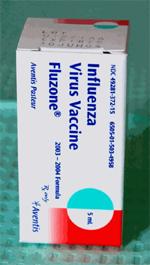 manufacturer lost money because citizens didn’t line up for flu shots in sufficient numbers to use up vaccine produced for the flu season, the following years the CDC "cried wolf" and scared the public into getting flu shots because of an alleged flu epidemic. Maybe this ruse can be justified if it saves lives. Then a shocking report was released.
While influenza vaccination coverage amongelderly persons in the United States increased frombetween 15%—20% before 1980 to 65% in 2001, unexpectedly,estimates of influenza-related mortality in this age group alsoincreased during this period. Researchers could not correlate increased vaccinationcoverage after 1980 with declining mortality rates in any agegroup. National Institutes of Health researchers conclude that earlier studiessubstantially overestimate the benefits of vaccination. [Archives Internal Medicine 165:265—272, 2005] Flu shots don’t save lives. Readers can examine the evidence at these web pages:
- http://www.sciencedaily.com/releases/2005/02/050218132606.htm
- http://archinte.ama-assn.org/cgi/content/abstract/165/3/265
Food & Drug Administration
According to the FDA’s website, the FDA is improving drug safety monitoring in the wake of the Vioxx, Celebrex, Bextra drug disaster that resulted in the discovery that use of these drugs may have caused heart disease and hastened thousands of people to an early grave. An FDA press release says "FDA will create a new independent Drug Safety Oversight Board to oversee the management of drug safety issues, and will provide emerging information to health providers and patients about the risks and benefits of medicines." [FDA Feb. 15, 2005]
However, Dr. David Graham, the whistleblower that revealed the FDA approves relatively unsafe drugs, now says the FDA’s corrective measures are as flawed as the drug approval process. Dr. Graham and a key senator say the new drug safety board established by the FDA to restore confidence in the nation’s drug supply will actually set back efforts to improve the safety of the medications Americans take and will not make it any easier to remove dangerous drugs from the market.
 After reviewing the makeup and structure of the Drug Safety Oversight Board, FDA safety officer David Graham concludes that the panel is “severely biased in favor of industry” and that “the FDA cannot be trusted to protect the public or reform itself.” [Washington Post, Wednesday, June 8, 2005; A05] “Ironically, drug safety in the U.S. is worse off today than it was in November,” Graham says. In a letter to acting FDA Commissioner Lester M. Crawford, Senator Charles Grassley said that the makeup of the safety oversight panel led him to conclude that “what we have here is nothing more than the status quo.” Grassley said 11 of the 15 voting positions on the board are filled by senior managers of the FDA’s Center for Drug Evaluation and Research, the same office responsible for reviewing and approving new drugs. In other words, the players are refereeing their own game. According to a Washington Post report, the current voluntary system for reporting serious drug reactions is believed to capture only 10 percent of actual cases.
 The National Institutes of Health is a small city. NIH employs 18,000 people and has an annual budget of $28 billion (that’s over $1 million per employee). The NIH conducts countless research studies. Lately the NIH has come under fire because some of its leading researchers are on the take from pharmaceutical companies and have even appeared on television endorsing a drug while wearing a white coat with the NIH logo. Strict new ethics rules have been imposed, but NIH researchers are balking at the idea.

