


Never Say Retire!
April 23, 2008
BACK TO WORK
Recently, I saw a network news segment on retirees who have been forced to go back to work. One woman had planned to travel in her golden years. She had invested in the stock market instead of gold, 2000—2008. She failed to notice that the S&P 500 is lower today than it was eight years ago. To this loss add 20% price inflation.
She said that she finally sat down to see what income she would have in retirement. She said she cried when she got the figures in front of her.
The woman had lived in la-la land for at least eight years. She did not come to grips emotionally with what economic reality really is. She did not want to know. She had not bothered to monitor her retirement portfolio’s performance. She was surprised by the result. She should have been depressed, but not surprised. Jesus said,
For which of you, intending to build a tower, sitteth not down first, and counteth the cost, whether he have sufficient to finish it? Lest haply [it happen], after he hath laid the foundation, and is not able to finish it, all that behold it begin to mock him, Saying, This man began to build, and was not able to finish (Luke 14:28—30).
The foundations of that woman’s tower started to break apart eight years ago, but she went right on building. Her tower has now collapsed.
What should she have done back in late 2000, after stocks began their journey down? She should have started a side business. She should have tested it with a couple of thousand dollars plus at least 10 hours of research each week. To that she needed to add 10 hours of work on implementation. That makes a 60-hour work week.
I work a 72-hour work week and have for 30 years. This is what it takes to run a business or several small ones.
Most people will not start a small side business. So, most people will not be able to retire. Those who do will find that Social Security and Medicare have contracted a terminal disease: fiscal hemophilia. These programs will die before the retirees do. They will probably take the dollar with them.
Unless you have a retirement portfolio of at least a million dollars at age 65, you will have the following options:
Keep your present job.Look for a new job.Create a new job.Move in with your children.Have them move in with you.Retire, hoping you die young.Panhandle.
Can you create a profitable business that will give you a lot of leisure? Yes. But you will have to find someone to run it or else buy it. You will retain a piece of the action.
I have a friend who runs day cares. The parents pay his mortgages. The bank gets paid. After 17 years, each mortgage is paid off. The money will then come to him. That is passive income. He owns five centers. If he opens no new ones, they will generate $300,000 a year when he retires. His children will inherit this. He has set up a family trust.
You could do this. Almost anyone can. He even posted a manual on how to do it. It’s free. But no one is interested. Why not? I wish I knew. I never found out. I did his initial marketing for him.
I don’t know anyone who has a functioning business who works as little as a 40-hour week. Maybe they like work. Maybe they can’t delegate. But they work at least a full work week.
WHICH FEAR IS GREATER?
People are afraid to start a business. I understand this. But it is never a question of fear vs. no fear. It is a question of which kind of fear.
Think of that woman who refused to look at the numbers of her retirement portfolio. She was afraid to look. The numbers would have told her that she would not be able to travel in her retirement. So, she postponed the inevitable. She procrastinated.
Procrastination kills.
We discount the future. This applies to benefits and costs alike. We assume that something will turn up to deliver us from the bad numbers. People gamble based on this hope. But gambling is a statistically foolish hope unless you own the casino.
Present fear registers more intensely than future fear. We respond quicker to present fear. We want to move it to future fear status. Future fears can be ignored more comfortably.
So, we think, “Doing something now is expensive. Doing something later costs less now. It will cost more later, but I am responding to now.”
A future-oriented person responds to “later.”
The overwhelming majority of people try to ignore “later.” They don’t like to think about it. “Now” dominates their lives. We call this the tyranny of the present. It takes considerable self-discipline to escape from this tyranny. Most people lack self-discipline. They much prefer to be nagged rather than to devise a plan and stick to it on their own.
There is nothing like poverty to nag you. It is relentless.
As long as people think the Federal government will provide a free safety net, they refuse to plan. The politicians tell them: “Vote for me, and I will do your planning for you.” They won’t, of course. They will kick the fiscal can down the road until the next election.
The Federal tower will fall. You had better come to grips with this now. Begin here. You will be stunned.
When it falls, don’t be under it. Don’t be dependent on it. Keep your distance from it.
Fears come in separate packages. You get your choice of packages.
Package 1:
Fear of failureFear of embarrassmentFear of losing moneyFear of workFear of competitionFear of extra riskFear of personal responsibilityFear of self-discipline
Package #2:
Fear of future povertyFear of dependence on othersFear of politicians’ promisesFear of inflationFear of boredomFear of Wal-Mart greeterdomFear of retirement living (Bingophobia)Fear of daytime television (Opraphobia)
The first package, being immediate, looms large in the minds of most people. The second package, being in the future, is more easily ignored. But the clock keeps ticking. You are headed toward the second package if you stick with the first.
TIME OR MONEY
Adult life is a constant trade-off between time and money. Time can buy money. Money can buy time. Are you short of money or time?
In our early adult years, we are short of money. We focus our attention on getting more money. As economists say, additional money offers high marginal utility. So, we buy money with our time.
At some point, the marginal utility of time vs. money shifts. We become aware that we are running out of time. We start looking for ways to buy time with money. We start thinking about retirement. We start thinking about the open road. We start going to movies like “Wild Hogs.”
I never have been lured by the open road. This is because I have been focused since age 17 on my lack of time. I have been concerned about a different trade-off: money vs. legacy. I have always put legacy first. But to fund it, I had to have money. As I writer, I had to publish my own books. It used to cost $15,000 to $40,000 (today’s dollar) to publish a hardback book. Then I had to store 5,000 copies. That was before the Web. I can publish a book today in two minutes for free. That was not true in 1980 or 1990.
So, I bought money and significance with my time. That was why I worked 12×6. I got into that habit decades ago. Habits are difficult to break: good or bad. I have always been short of time.
Sensing this shortage of time at an early age, I decided to buy more time. How? By planning not to retire. I factored in an extra 15 years — 20, if things go well — to produce my legacy. I decided to stay in the work force beyond age 65.
My goal was to work at my job part-time (30 hours) and write books and curriculum full-time (40 hours). I have done this for decades. Achieving this after 2006 has been the difficult part. I keep getting offers to work longer hours. These offers are attached to money. Buyers of my time keep sending me money (www.GaryNorth.com). It is difficult to turn down money. So, my job keeps eating into my serious (i.e., no income) time.
Bill Gates is about to quit working for money. He is retiring from Microsoft this year to give away his foundation’s money: significance. A century ago, Andrew Carnegie did the same thing. This is very rare.
WHAT ABOUT YOU?
What is your primary goal for age 65?
Passive income?Active income?
Part-time work?Full-time work?
Volunteering?
Volunteering for free?Volunteering into a new paid career?
Have you sat down to write a plan to achieve your primary goal? Yes?
Has this plan got a series of intermediate goals?
Has it got review dates: quarterly, annually, 5 years?
If the answer is “no,” then you are like that woman who had a goal for retirement: to travel. She will not achieve it. She began a new career.
What should she have done? It seems clear to me. She should have started a website on travel in 1996. She should have focused on that niche where she wanted to spend her time traveling. Then she should have created a site on that niche. By now, she would be a well-known expert in the field. Starting in 1996 would have given her an edge: web traffic before Google.
This is hindsight. Or maybe hindsite. What you need is foresight. Or foresite.
You need a career to retire into.
Maybe it should be an extension of what you do now. Maybe it should be related to the lifestyle you would like to achieve. Maybe it should be related to your area of hoped-for significance. Maybe it should be geography nonspecific: earn money from anywhere. Maybe it should be geography specific: earn money in the place where you want to live, but don’t.
Ask the three crucial questions:
What do I want to achieve?How soon do I want to achieve it?What am I willing to pay?
Once you decide, achieve it by supplying a service. Your service company service must be governed by variations of the three questions.
Do what you say you will do.Do it by the time you said you would do it.Do it at the price agreed upon.
Do this, and you will achieve your goal. Count on it. Hardly any competitor will do this consistently.
 CONCLUSION
Procrastination kills.
The clock is ticking.
The dollar is depreciating.
The politicians are lying.
The government is going broke. Proof.
What are you going to do about all this?
April 23, 2008
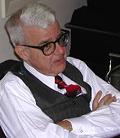
Gary North [send him mail] is the author of Mises on Money. Visit http://www.garynorth.com. He is also the author of a free 20-volume series, An Economic Commentary on the Bible.
Copyright © 2008 LewRockwell.com
 The World Likes Obama