


Books make excellent Christmas gifts and in the weeks preceding Christmas you will be seeing numerous lists of book recommendations. I would also like to suggest a few books but not the kind that are usually recommended on a site like this — history, economics, political science, etc. Instead I want to recommend works of fiction. Books about the South, written by Southern authors who avoid the stereotypical Hollywood clichés about the region.
 Fittingly, I will begin with a Christmas book, one that portrays Christmas in South Carolina’s Lowcountry in the mid-1800s: The Golden Christmas by William Gilmore Simms. This little book is described as being influenced by Shakespeare’s Romeo and Juliet as well as Charles Dickens’s A Christmas Carol. But there is also the flavor of Oscar Wilde’s The Importance of Being Earnest as Simms humorously describes two young Southern aristocrats trying to win the affection of their true loves during Charleston’s holiday season. Although Simms’s language offers quite a contrast to today’s speech, the book is a pleasure to read and Simms draws you into the festive environment. As a bonus, the book includes an introduction by Simms scholar, David Aiken, that provides a wealth of information about the Lowcountry at the time of Simms’s story.
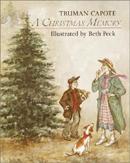 Next, a Christmas book that you are probably familiar with but one that deserves to be mentioned: A Christmas Memory by Truman Capote. This book, little more than a short story, is a remembrance of a Christmastime when Capote was seven years old and living with relatives in Monroeville, Alabama. The young boy and his elderly cousin, a very special lady who has retained her youthful enthusiasm, prepare for Christmas in a small town in the rural South in the 1930s. Although often referred to as a children’s story, it has been enjoyed by many adults. And if you are not too jaded, you might be very moved by it.
 Band of Angels may not be a well-known novel but it is a very special one. This is a work by Robert Penn Warren, Pulitzer Prize winner and member of the literary group known as The Fugitives that came out of Vanderbilt University in the 1920s. This book has been compared to Gone With the Wind and there are striking similarities. Both protagonists are beautiful women eagerly sought after by men, often to their regret. Both are daughters of Southern plantation owners and both stories are set in the period before, during and after The War Between the States. Without giving away too much of the story, I will say that the idyllic life of Warren’s heroine, Amantha Starr, comes to an abrupt end when she learns that her recently deceased father was deeply in debt and creditors are seizing his entire estate. Among the "property" seized is Amantha herself, who discovers that her long-deceased mother, whom she had never known, was a slave. This makes Amantha a half-caste and, according to her father’s creditors, a slave. At a New Orleans slave auction, she is purchased by a strange yet kindly master and so begins a series of entanglements and adventures. This is quite a book and Warren’s portrayal of historical events is informative and accurate, especially the Union’s military occupation of New Orleans.
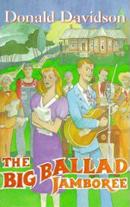 Another member of The Fugitives literary group was Donald Davidson, whose scholarly essays made him a preeminent advocate of the agrarian South. In the mid-1950s, Davidson tried his hand at fiction, writing The Big Ballad Jamboree, a humorous account of the conflicts arising when urbanism creeps into rural communities. A country music star, Danny MacGregor, tries to win his childhood sweetheart, Cissie Timberlake, once a country music singer but now a serious folk-music scholar. MacGregor stops at nothing in his romantic quest and his shenanigans are as inept as they are hilarious.
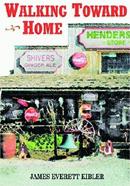 In Walking Toward Home, James Kibler presents a thoroughly enjoyable collection of eccentrics who inhabit a remote rural area of South Carolina — the nearest ATM is over twenty miles away. You will encounter strange names like Shot-Face, Triggerfoot, Lulu Bess, Mattie Lou, Jim-Jesse, and Hoyalene. And the dialect is authentic throughout. Kibler’s people, like Davidson’s characters, also have conflicts with modernity. But they don’t lose their identity and their stories are often humorous but not without a touch of sadness. This is one of those books that come along from time to time to give us respite from the troubles of the day.
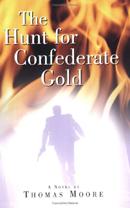 Finally, for those who love mysteries, and most of us do, I recommend The Hunt for Confederate Gold by Thomas Moore. As the title implies, the story concerns an attempt to find the legendary Confederate gold, hidden from the invading Union forces at the end of The War Between the States. Moore tells his story craftily, switching back and forth between 1865 and the current era, allowing his main character, Bo Bolitho, to reveal a few facts at a time to keep us in the chase. Moore adds spice to his tale with the inclusion of trumped up charges of treason against Bolitho’s cohort and mentor, University of South Carolina history professor, Parker Hastie; charges that result in Hastie’s imprisonment by the Federal government. And, of course, there is the obligatory attractive female, Iona Herrick, to tickle the romantic fancies of the intrepid Bo Bolitho. In a preview, you can’t say too much about a mystery story for fear of diluting the mystery. But this book is a great read and would make an excellent Christmas gift.

