


Tyrants, Torturers, and Taxmen: Pillars of 'Civilization'
February 26, 2010
Maxwell Smart (referring to various implements of torture): Are you sure KAOS has all these devices?
CONTROL scientist Carlson: Oh, yes — it’s standard equipment for terrorist organizations.
Max: Well, where did you get these?
Carlson: From the Bureau of Internal Revenue.
“More tax is collected by fear and intimidation than by the law. People are afraid of the IRS.”
Given its source — former IRS District Chief David Patnoe — that indictment of the Regime’s most notorious secret police organ could be considered a confession. What he describes can only be called state terrorism.
The IRS is an agency that uses the threat of lethal violence to terrorize people into surrendering their legitimately earned wealth. In their unguarded moments, officials of that dreaded terror syndicate admit that they are at war with the public they supposedly serve.
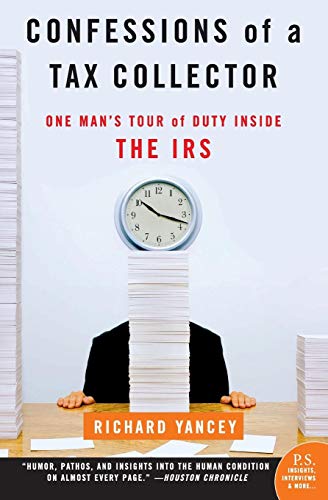
“The language of war and the culture of conflict are the only means to prepare us for what is expected of us,” recalled former IRS revenue officer Richard Yancey in his invaluable memoir Confessions of a Tax Collector. “How else could they [the commissars whom Yancey and his fellow cadres in the agency] demand what was expected of us? You can’t take [the] life savings [of income tax victims], their car, their paycheck, the roof over their head and the heads of their children, without dehumanizing them, without casting yourself in a role that by necessity makes them the enemy.”
 Confessions of a Tax C...
Best Price: $1.70
Buy New $12.97
(as of 09:05 UTC - Details)
Confessions of a Tax C...
Best Price: $1.70
Buy New $12.97
(as of 09:05 UTC - Details)

One of Yancey’s supervisors considered taxpayers to be, at best, fodder for the firing squad. That official, Yancey recalls, ended a profanity-infused tirade by describing taxpayers unable to surrender every dime demanded by agents of federal extortion as “Deadbeats … if it were up to me, I’d line ’em all up against a wall and shoot them.”
Yancey’s supervisor obviously shared the late Joseph Stack’s view that “violence is the only answer” — whether that violence is implicit or overt.
Perhaps that official will receive one of the sixty Remington Model 870 pump-action shotguns ordered by the Treasury Department for the IRS’s Criminal Investigation Division (in this case, the name refers to investigations conducted by, rather than of, criminals).
Interestingly, each of those shotguns has a barrel fourteen inches long, much shorter than the “illegally” modified shotguns sold by Randy Weaver to an undercover ATF agent who carefully entrapped Weaver in the hope of forcing him to become an informant for that detestable outfit.
When Weaver — displaying admirable character — refused to become a stukach, the same Regime that entrapped him laid siege to his family, murdering his wife and only son. Weaver had never had any trouble with the “law” prior to his encounter with a street-level thug employed by the ATF — an agency that could be considered the clumsier, more overtly thuggish sibling of the IRS. Despite the fact that he had done no harm to anybody, Randy Weaver and his family like the “deadbeats” denigrated by Yancey’s IRS supervisor, were seen as suitable targets for extermination.
The term “deadbeats,” of course, is properly applied to people who refuse to carry out legitimate contractual obligations by making timely payments. Since nobody has the moral right to claim the property of another through force, there is nothing legitimate about the supposed “obligations” the IRS enforces through terrorism.
Those who cannot or will not pay what the IRS demands are not deadbeats in any sense. They are “criminals” in exactly the same sense that the term could be applied to escaped slaves in the antebellum South, or those who abetted their escape in defiance of the Fugitive Slave Act.
 If you like this site, please help keep it going and growing.
Those who refuse to pay taxes are making a prudential calculation with which I do not agree, but one that neither harms nor threatens me in any way. The same cannot be said of the means used by the IRS to enforce the spurious enactments its functionaries call the “law” — a usage that illustrates that not even the language is safe from the violence employed by that abhorrent agency.
The outpouring of statist sanctimony following Joseph Stack’s despairing murder-suicide attack against the IRS was predictable — and as malodorous — as the consequences of drinking untreated water in Mexico. The effects of that onslaught are most unpleasant in the immediate vicinity of the main emunctory orifice, which in the present case is the fraudulent outfit called the Southern Poverty Law Center.
“This morning’s attack by Joseph Andrew Stack against an IRS building in Austin, Tex., is a reminder again of how extreme hatred of government can morph into violence,” oozed SPLC commissarina Heidi Berich.
Neither she nor anyone else at the SPLC deigned to prescribe the proper attitude toward a government that can ruin a man’s career and financial prospects through a small change in the vast and all-but-inscrutable tax code. Nor has the SPLC or other self-anointed arbiters of acceptable political attitudes evinced concern over the hatred toward tax victims that can be found suppurating from the IRS, or the violence that frequently results from it.
In 1997 congressional testimony, Houston IRS agent Jennifer Long explained that the agency teaches its agents to use “tactics — which appear nowhere in the IRS manual … to extract unfairly assessed taxes from taxpayers, literally ruining families, lives, and businesses — all unnecessarily and sometimes illegally.”
“The IRS will often pursue a taxpayer who is viewed to be vulnerable,” testified Long. “To the IRS, vulnerability can be based on a perception that the taxpayer has limited formal education, has suffered a personal tragedy, is having a financial crisis, or may not necessarily have a solid grasp of their legal rights. Please understand, many agents are encouraged by management to pursue tax assessments that have no basis in tax law from individuals who simply can’t fight back. However, if that taxpayer does object or complain, every effort will be made by the IRS to run up their tax assessment, despite their financial resources and force them to capitulate to IRS demands.”
In many cases, Long continued, “IRS Management can determine that a particular taxpayer is simply someone `to get.’… Management will go about fabricating evidence against that taxpayer to demonstrate that he, or she, owes [sic] more taxes than was originally claimed.”
“In certain instances, the IRS Management has even employed its authority [sic — the IRS exercises power, not authority] to intimidate the actual taxpayers into fabricating evidence against its own IRS employees,” Long disclosed. This is done to retaliate against any IRS agent who objects to the agency’s illegal and immoral tactics. Sometimes the threats are mingled with offers of reduced or vacated tax judgments or even cash awards to those willing to perjure themselves.
 Feeling Your Pain: The...
Best Price: $0.25
Buy New $19.95
(as of 12:00 UTC - Details)
Feeling Your Pain: The...
Best Price: $0.25
Buy New $19.95
(as of 12:00 UTC - Details)
Those disclosures, remember, were made by an active duty employee of the IRS. To her considerable credit, Long eschewed the long-established practice of other defectors from crime syndicates by declining to concealing her identity. Not surprisingly, Long’s genuinely patriotic act of public truth-telling provoked severe and undisguised retaliation from the agency’s ruling oligarchy.
A year prior to Long’s testimony, a videotaped training lecture by an IRS agent for the Arkansas-Oklahoma district was leaked to the public. In that record (described and documented in James Bovard’s 2000 book Feeling Your Pain) the instructor is seen catechizing the trainees about the supposed virtues of arrogant, sadistic cruelty:
 HIGH COTTON Doormat - ...
Buy New $18.99
(as of 11:05 UTC - Details)
HIGH COTTON Doormat - ...
Buy New $18.99
(as of 11:05 UTC - Details)
“Make them cry. We don’t give points around here for being good scouts. The word is `enforced.’ If that’s not tattooed on your forehead, or somewhere else, then you need to get it. Enforcement. Seizure and sales. That’s our mind-set…. You’re not out there to take any prisoners. Prisoners are like an installment agreement. They [prisoners] have to be fed and clothed and housed. All that stuff. They’re expensive. We’re not here to do that. If you’ve got an assessment, enforce collection until they come to their knees.”
The SPLC and its allies, who play to prurient interests by diligently documenting and publicizing vituperative utterances by repulsive but obscure and powerless Klansmen and neo-Nazis, have never bestirred themselves to object to violent rhetoric of this kind issuing from the tax-devouring pie-hole of someone who actually carries out such terroristic threats against helpless people. (It’s worth remembering that many of those professional racists are federal assets paid with funds extorted from the taxpayers by the IRS.)
In his memoir, Yancey recalls a similar training session in which he and other future revenue agents were told by the instructor that the IRS had no use for “those who anguished over each closure, as if their decisions meant life or death for the taxpayer.”
 Zippo Sons of Anarchy ...
Buy New $10.77
(as of 10:49 UTC - Details)
Zippo Sons of Anarchy ...
Buy New $10.77
(as of 10:49 UTC - Details)
One trainee, in whom the light of human decency had yet to be extinguished, objected that decisions to confiscate a tax victim’s money and property very often are matters of life and death.
Oh, pish, retorted the supervisor: The IRS’s mission has nothing at all to do with “doing the right thing for the taxpayer”; your mission is that of “protecting the government’s interest.”
“But what if the government’s interest is wrong?” persisted the trainee.
“Our interest is never wrong or right,” rejoined the supervisor in a reply worthy of his kindred spirits in the service of other totalitarian enforcement organs. “It just is.”
 The Freedom Outlaw&rsq...
Best Price: $14.10
Buy New $57.50
(as of 03:45 UTC - Details)
The Freedom Outlaw&rsq...
Best Price: $14.10
Buy New $57.50
(as of 03:45 UTC - Details)
From that perspective, the State — like Jehovah Himself — is a self-existing, morally autonomous entity, and its consecrated agents are likewise above accountability to any power under heaven.
Former IRS Revenue Officer David Patnoe offers a parallel account to that of Yancey. In his congressional testimony, Patnoe — who became a representative of tax victims before the IRS’s Collection Division in California — described, in detail, the “outright illegal and highly unethical behavior of IRS officials he encountered in his new profession.
In one case, an IRS functionary placed an illegal levy on $21,000 on an account belonging to one of his customers, a small businessman who owed no taxes but paid $7,000 in what can only be described as ransom in the hope of appeasing the IRS.
“I informed the Revenue Officer that … her actions were not just abusive, but blatantly illegal,” Patnoe recalled. “The Revenue Officer responded with one word: `AND?'”
That single, contemptuous syllable — like so many other lawless actions undertaken by IRS functionaries — offers an echo of Vladimir Lenin’s 1920 definition of “scientific dictatorship”: “Power without limit, resting directly on force, restrained by no laws, absolutely unrestricted by rules.” (Emphasis added.)
In the days that have passed since Joseph Stack made the tragic and unsupportable decision to end his life in an act of aggressive violence (taking the life of another man, a father and grandfather, in the process), the organs of approved opinion have barraged the public with potted platitudes denouncing Stack’s lawless behavior.
During that same period, the Regime served by the IRS killed at least dozens — more likely scores, or even hundreds — of innocent people in an illegal war of aggression against a distant, impoverished land.
The branch of the central government wittily called the department of “Justice” announced that its lengthy investigation of the Bush Regime’s torture policies would result in no criminal, civil, or professional penalties against the apparatchiks who had devised “legal” rationales for those crimes.
The official report of that investigation revealed that one of the architects of the torture state, John C. Yoo, was committed to the principle that it is a suitable and proper use of presidential “authority” to order the wanton slaughter of civilians, if mass murder comports with his “tactical” judgment.
All of this provided the coda to a week that began — as if by way of depraved overture — with former Vice President Dick Cheney smugly confessing to the crime of abetting torture during his reign.
 Liberty in Eclipse
Best Price: $10.58
Buy New $57.61
(as of 09:10 UTC - Details)
Liberty in Eclipse
Best Price: $10.58
Buy New $57.61
(as of 09:10 UTC - Details)
Yet we are ordered to believe, or at least pretend to believe, that all of this was eclipsed by Joseph Stack’s self-destructive act of criminal violence.
The unduly revered Oliver Wendell Holmes, a belligerent statist (albeit one more akin to Maistre and Mussolini, rather than Marx and Lenin), memorably described taxes as the price we’re compelled to pay for “civilization.”
After all, absent the key confiscatory role played by the tax collector, how could torturers and other agents of state-sanctified violence perform their vital civilizing functions?
Civilization is built on the foundation of peaceful cooperation, rather than official coercion. It won’t be restored through cathartic but morally unsound and strategically counter-productive acts of retaliatory aggressive violence.
The least we can do — perhaps all we can do — is exercise the liberty to call things by their proper names (e.g., “taxpayers” are more properly called “tax victims”; one doesn’t “owe” taxes, but has them “extorted” from him), and use whatever peaceful means are at our disposal to cultivate contemptuous disrespect for anyone employed by the Regime’s apparatus of wealth confiscation.
Each gesture of this sort, taken individually, seems as evanescent as a snowflake. But an avalanche begins as nothing more than a particularly large gathering of individual snowflakes that somehow found their way to the high ground.
The Best of William Norman Grigg
 Dear Bank: Here Are the House Keys