


The Face in the Mirror
July 21, 2009
Last year, at my birthday, I wrote “When I’m 64…,” a post about war and (lack of) peace in my time. Another year has rolled around, as it tends to do, so think of what follows as further scribbled notes, stuffed in an e-bottle, and set afloat, all part of a future memoir I’ll never write. If you finish and have the urge to know more about a Cold War childhood (and many other matters), check out the updated edition of my book, The End of Victory Culture. If you enjoy my description of my early reading experiences, then consider picking up a copy of my 2003 novel, The Last Days of Publishing, which, sadly, turned out to be prescient when it came to the problematic present of my lifelong business and avocation. ~ Tom
Borrowed Time: The World at 65
“Being an historian, I am jotting down these notes out of habit; but what I saw and experienced two days ago I am sure no one else as civilized as I am will ever see. I am writing for those who shall come a long time from now.”
So began “The Prophecy,” a mock futuristic fantasy set after some great Cold War cataclysm, which several members of my high school graduating class collaborated on back in 1962. It was, of course, for our yearbook and made fun of the class, A to Z. It was also a classic document of the moment, written by representatives of the first generation of “teenagers” who, crouching under their school desks as the sirens of an atomic-attack drill howled outside, imagined that no one in their world might make it.
“First of all, let me introduce myself,” “I” continued. “I am Thomas M. Engelhardt, world renowned historian of the late twentieth century, should that mean anything to whoever reads this account. After the great invasion, I was maintaining a peaceful, contented existence in the private shelter I had built, and was completing the ninth and final volume of my masterpiece, The Influence of the Civil War on Mexican Art of the Twentieth Century…”
Okay, so they had me pegged. Not only, in those years, did I read whatever post-nuclear pulp fiction I could get my hands on — you know, the kind with landscapes filled with atomic mutants and survivalist communities — but I was a Civil War nut. Past disasters and future catastrophes, and somehow it all made sense.
I was, in fact, a nut for the American past generally, in part, I suspect, because the familial past wasn’t available. My parents, typically enough for second and third generation Americans, were in flight from their own pasts, from all that not-so-distant squalor and unhappiness, or just plain foreign-ness, much the way, once upon a time, so many other Americans had fled small towns for the Big City.
 Ben Franklin of Old Ph...
Best Price: $1.25
Buy New $3.75
(as of 01:25 UTC - Details)
Ben Franklin of Old Ph...
Best Price: $1.25
Buy New $3.75
(as of 01:25 UTC - Details)

My father rarely spoke of his own life — his parents, his childhood, his years growing up, the Great Depression, and especially his experiences in World War II (and in this he was typical of a generation that did not come home from the grimmest of wars with the idea that they were “the greatest”). My mother acted as if her past were the proverbial blank slate. She told but three stories from her childhood: one in which she broke her nose in a softball game, another in which she jumped out of a second-story window to test whether a sheet would work as a parachute, and a third in which an evil but rich uncle humiliated her loveable but ne’er-do-well inventor of a father.
Perhaps that very past-less-ness left me with a yen for roots, which I then found in the sole place available: American history. Toss in the time an only child had in a room still surprisingly bare of entertainment, and it was hardly surprising that, as early as third grade, I started devouring the biographies — hagiographies actually — of assorted American heroes. They were little books focusing on Kit Carson or Clara Barton with memorably orange covers.
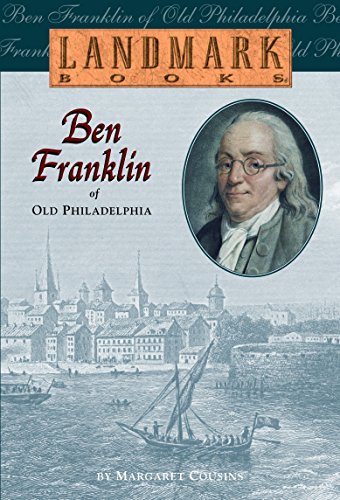
And not so long after, I graduated to the Landmark Books series, back in the days when history was still a series of accepted and acceptable “landmarks”: Ben Franklin of Old Philadelphia, The Pony Express, Gettysburg, The Panama Canal, Custer’s Last Stand. By high school, I was ingesting every book the popular Civil War historian Bruce Catton ever wrote. I was, by then, a proud subscriber to the classy American history magazine, American Heritage, thought of the American past as mine, memorized famous speeches by generals and presidents in my spare time, and so was an all-too-inviting target for a little teenage fun.
Quoits, Anyone?
Tomorrow, I turn 65, an age I simply never imagined for myself back in those youthful years. And the past, I must admit, now lurks somewhat closer to home, as of course does the future, my future. Sometimes these days, when I catch a glimpse of myself in the mirror — the bald head, the mustache that’s gone silvery white, the little bumps and discolorations of every sort, in short, that aging face — I see my long-dead father staring back. Each time, it’s a visceral shock. Like an ambush. Like a sucker punch in the gut. I feel horror — not him, not in my face! — and love, but not acceptance. Not yet anyway.
I can’t begin to tell you how eerie it feels when the past resides not in some book, but like a still-developing snapshot, a blurry subway portrait of the dead, in your own face. It led me recently to pull down from the topmost reaches of my closet some of my old family photos, many of them now beyond meaning, the equivalents of inscriptions in the hieroglyphs of an unknown language. For this part of my private past, there are no witnesses left. Not a one. No one who can fill me in on the dramatis personae.
The oldest of the albums I have, my mother’s, I discovered only after both my parents were dead: two-holed and horizontal, a black cover with the words “Snap Shots” on it, each black page now loose of any binding, edges crumbling as if nibbled by mice.
Only several pages in do I first recognize, in an elfin child’s face, the woman who would become my mother and would die in 1977, so long ago that sometimes I hardly believe she existed.
There she is, though, perhaps six or seven, standing in a garden in a battered brimmed hat, wearing long rubber gloves, a shirt and pants, and looking for all the world like a street urchin from some Charlie Chaplin silent film. The album is, of course, her story — the one she never told me — of her Chicago world just after the turn of the last century. There are young boys with bikes and girls with flowers, girls doing headstands and boys strutting their stuff, friends lined up arm-in-arm, college students in their toques, and adults who, in their formality, look to be from yet another century. All unknown to me, all lost to whatever lies beneath history, beyond memory.
Still, one thing is unmistakable: this is a record book of dreams and memories. There are her recital cards and yearly marks (E for “accuracy,” “rhythm,” “theory and hearing”) from the Caruthers School of Piano; a “senior ticket” to Hyde Park High School’s Junior Prom (which took place at 8 p.m. on March 22 sometime in the early 1920s); there is Camp Wewan-eeta’s brochure, its cover autographed in a now faded hand by camp co-director Eva Radzinski (“Hope we may have the joy of having dear Irma with us again this year”) and just inside is the camp song, the first of whose many verses is,
“I love Wewan-eeta, Just think what we do. There is weaving, tennis, quoits, And we’re good marksmen, too.
Quoits?
Above all, there are the drawings of a girl who, from an early age, dreamed of becoming a commercial artist and, some two decades later, in World War II newspaper ads offering portraits in return for war-bond purchases, would be identified as “New York’s Girl Caricaturist.” There’s her first published sketch, a playbill cover for a high school production of “The Two Vagabonds,” with a tiny “Irma Selz” signature snuck in at page bottom. And there’s her first appearance in a newspaper, the Chicago Daily Tribune, on April 24, 1924, in a comic strip called “Harold Teen,” evidently about a young flapper and her boyfriend.
The middle box of the strip offers possible hairdos for the flapper (“the mop,” “pineapple bob,” “Sandwich Isle shingle,” and “Anita Loos,” among others) with a tagline, “from sketches by Irma Madelon Selz,” who must then have been about 17 years old. Of “Madelon,” which was not her middle name, I know a little something, for even half a century later my mother still found it more beautiful than her actual “Madeline,” and still wished her parents, about whom I know almost nothing, had bestowed it on her.
If you hold such an album — and somewhere in most houses one certainly exists — it is hardly possible not to feel the sadness of loss. This single album is, after all, what’s left of the early part of my mother’s life. It’s a story, wish, fantasy, organized, edited, and summarized almost wordlessly by her, and yet no matter how gently you hold the pages, there is no way to prevent the photos from cracking off into the margins, leaving only bits of dried glue behind, while placed on any surface it promptly sheds a tiny residue of black paper ashes.
One could, of course, simply experience this as a kind of pathos — and so fill the emotional space it creates with nostalgia for a lost world. But in the disintegration of such everyday documents, packed away on the top shelves of closets or in bottom drawers, in boxes or garbage bags, worn attach cases or old suitcases, attics, basements, or garages, there is also an everyday fierceness that we seldom consider.
It’s the fierceness of death, and of everything that’s lost to us all the time, everything the brain, even a well-functioning one, is incapable of holding. It’s the sense of, I think, borrowed time in this world, on this planet. It’s everything that, like that face inside mine, remains difficult to swallow. But above all, it’s the brief span of our lives, as ephemeral as any set of digital photos.
Racing the Bomb into the World
Thought of another way, however, that familiar face embedded in mine offers the chance for a little whirlwind double bio of the last century-plus. In one merged face, he and I cover a span of history, of change, carnage, and promise so unsettling that it, too, is almost impossible to take in.
The son of a poor immigrant who made good (but just for a while) in America, my father was born in 1907. I have, on my wall, a photo of him at perhaps age two, his older sister, in a white dress, a bow in her hair, sitting beside him on a little bench, her arm proudly around him. She faces the camera with the kind of intentness that went with a slower photographic process. A big white house and trees are behind them. This must be turn-of-the-century Flatbush in New York’s Brooklyn, where they grew up.
Perhaps because the action snapshot had yet to arrive, everything seems remarkably still. My father’s hair is blond. (I, of course, mainly knew him as a stocky, balding man with graying hair.) He wears a little Buster Brownish outfit and long socks as well as what appears to be a halter of bells (in case he wanders off?). Perched on that seat, he looks tiny, fragile, and a bit dazed, something like a porcelain doll, but nothing like my father. Nothing at all. I can find no resemblance to the angry bull of a man who raged through the golden 1950s, as likely unemployed and drinking as anything else. Nor like the prosperous salesman/businessman of the 1970s, nor the stroke-struck elderly gent (with a mustache just like mine) with whom I spent so much time in the early 1980s.
As I said, he was not someone to dwell on the past. But he did once tell me that he could still remember a man with a horse and cart pulling up to his house with blocks of ice for what was then an actual “ice” box. He was 11 when the War to End All Wars ended, and somewhere I have a picture of him from that time in a little uniform. He could remember buying charlottes russe (ladyfingers and Bavarian cream) — which, decades later out of nostalgia, he would pick up for me from a local bakery — off the back of a wagon on a street near Erasmus High in Brooklyn where he went to school and played lacrosse.
He was 22 when the stock market crashed in 1929 and he was working — doing what? I don’t know — for the Swift Meat Packing Company. He was in his mid-twenties when the Nazis rose to power in Germany, and our relatives (some of whom he would later help escape from Austria) began, as Jews, to feel the heat.
In December 1941, at the age of 34, soon after the Japanese struck Pearl Harbor, he volunteered for the U.S. Army Air Corps to fight the Nazis and was sent to India as operations officer for the 1st Air Commando Group, a glider outfit striking behind Japanese lines in Burma. I have a photo of him in full uniform before he left, looking so young and handsome and (a word I wouldn’t normally associate with him) vulnerable, with a not-quite-smile on his face. For the second time in mere decades, a world war was underway, and this time it would be so much more global and so much worse.
And here, as the American wars in Europe and the Pacific were reaching a crescendo, in July 1944, I — the other half of that merged face — entered the picture, almost halfway through his life, only three years after Henry Luce proclaimed his century the American one. “Pops” to the men in his unit in a young man’s war, he was 37 years old, and had by then been reassigned to the Pentagon. His son arrived just in time to celebrate the triumph of American science and technology, the dawning of a new age.
In the race to be born, I beat the atomic bomb into existence by almost a year. It was first tested in the desert at White Sands Proving Ground near Alamogordo, New Mexico, on July 16, 1945. I was born on July 20, 1944 at Lenox Hill Hospital in New York City, less than 13 months before an A-bomb would leave the bomb bay of the Enola Gay with “autographs and messages,” some obscene, scribbled on it by American soldiers, “greetings” to those about to die and the last human acts of the pre-atomic age.
In an instant, that new bomb would obliterate Hiroshima. And a few days later, the atomic annihilation of Nagasaki would follow, raising the curtain on the next war even before the War to End All Wars (redux) was officially over (again).
A new war, the third global one, this time fought by only two “superpowers,” would be icier than the last two, restrained, ironically enough, by what was then called “the unthinkable,” the worst that science could conjure up. It was, that is, restrained by the ability of either superpower, after a time, to destroy not just humanity but potentially the planet itself.
By the end of 1945, American troops already occupied one half of the Korean Peninsula, and Russian troops the other. Soon enough, the two nuclear-armed superpowers would be going at it in the only way they could, given the world-destroying weapons they possessed — with bitter fury, but by proxy and “in the shadows,” inscribing their nightmare version of a global war for domination on the bodies of Koreans, Vietnamese, Laotians, Cambodians, Afghans, and others.
Dreams and My Room
So the atomic age was underway, an age of horror, but also of wonder. Already in 1945, with the war still raging, Belmont Radio (“Today, Belmont’s job is to produce high-precision electronic equipment for the Armed Forces…”) was typical in offering a vision of a dazzling war-inspired future as Belmont Television: “You can pull pictures from the air as easily as you ‘tune in’ with your present radio… talking pictures at television’s best.” The image that went with Belmont’s ad showed an impressive wooden cabinet perched atop which was a small screen displaying a cowboy on a bucking bronco.
“[I]n these days of tired bodies and troubled minds, it’s good… to think about… the new kind of a home you will have after victory,” began a 1944 ad from General Electric, while General Motors (“Victory is our business”) swore in ad copy that it would “provide more and better things for more people in the coming years of peace.”
Indeed, for the Third World War, aka the Cold War, the arms race and the race for the good life were to be put on the same 24/7 “war” footing. In the 1950s, all the promised big ticket items, including the “electric refrigerator with ample space for everything, frozen foods included” — it had been but a few decades since that horse and cart with ice had pulled up at my father’s door — and the “new automatic clothes dryer” were to tumble into new American homes. These, not any event in history, would become the agreed upon “landmarks” of this age along with (soon enough) Mickey Mouse, the Golden Arches, and the Swoosh. A military Keynesianism and its consumer doppelganger would now drive the U.S. economy toward desire for the ever larger car and missile, electric range and tank, television console and submarine, all of which would be wedded in single corporate entities, displaying their wares in your bedroom and selling them in the labyrinthine corridors of the Pentagon.
Here was the promise: From the ashes of war, new wonders would emerge — and so they did bountifully (as well, of course, as further ashes). The buying of big-ticket — and then not-so-big-ticket — items and the making of war with the most advanced technology around, that was the dizzying story of my time (until a frazzled planet’s economic system began to melt down in the fall of 2008).
But you wouldn’t have known it from my room in the 1950s. In those years, after all, the “teenager” was just being discovered by the corporation. I was part of the first generation of American children who, if they had jobs, as I did every summer from the age of 14 on, didn’t have to turn their money over to their families, the first to have more than spare change in their pockets and to be able to choose where to spend it.
I was, of course, living in a country where, with the exception of Pearl Harbor, and Attu and Kiska in the Aleutian islands, there had been no fighting, no ashes at all. In 1945, the United States loomed triumphantly untouched over a ruined planet, and with perfect symbolism, two of that country’s secretaries of defense would, in the mid-1950s and again in the early 1960s, be plucked from the presidencies of the great automakers. (“…I thought what was good for the country was good for General Motors and vice versa,” GM President Charles Wilson told senators at his confirmation hearings in 1953.)
The imperial vistas of the 1950s were expansively vast and clean — and in the world of the child, looked at from the toy-stuffed, video-game filled, hand-held, ear-glued techno-universe of the twenty-first century, remarkably, sometimes even horribly, often boringly, empty, like the sightlines Baron Haussman cleared on Paris’s great boulevards to gun down the mob. From the child’s point of view, what’s still striking about that Golden Age of suburban consumerism was the relative bareness of its interiors.
My own room would seem spare indeed today for a “middle class” family, even one like ours living deep in debt and beyond its means. My mother, the artist, painted its walls with sprightly Mother Goose scenes when I was tiny, and later with marching grenadiers, and there was a bed, a chair, at some point a small desk, a lamp, a giant wooden hand-me-down Philco radio, a few games, some books, my precious toy soldiers, a toy six-gun with holster (cowboys were the craze then), and by the end of that decade, a cheap record player for 45s (not that anyone now remembers what they were) — each limited and distinct purchase entering my life with its own special history, its own familial price tag attached.
That Philco was, for me, what we now call “the media,” along with the newspapers which then seemed like the lifeblood of the city, and as in so many American houses, LIFE magazine. New York City was then a riot of daily reportage. After all, it still had at least eight or nine papers, and that already represented a loss in numbers. The very names of some like the Journal American (the New York American and the New York Evening Journal) or the World-Telegram & Sun (the New York World, the Evening Telegram, and the New York Sun) were amalgams of previously independent papers. And — the crucial thing in those childhood years — most of them had comics.
My favorite board game growing up was “Star Reporter.” I still remember the little cards you picked that offered you, the potential star reporter, ordinary stories, but also “disasters” and “catastrophes.” And then, having been assigned your story, with a role of the dice you left the city of “Urbania” to cover it. In my spare time, I dreamed of becoming a reporter — a dream that, these days, looks as outmoded as the desire to be an arctic explorer.
Here is what I grew up reading:
- Cereal boxes (I used to joke that I learned my ABCs off them — otherwise how could I send in the correct number of box tops and get the “atomic rings” and “secret decoders” they offered?)
- comic strips
- comic books (however, like many children in those years, I was forbidden from buying “horror comics”)
- real books (from that radical resource, the library, where, if the librarian let you out of the children’s section, you had access to anything in the adult world without having to invest a penny in it)
- MAD magazine (after the “bad” comics went down in a 1950s childhood version of an auto-da-f)
- pulp sci-fi (the more mutants the merrier)
- foreign novels (in my later teens)
The first of those works of foreign fiction was Jorge Amado’s Gabriella, Clove and Cinnamon, which I stumbled upon in a tiny neighborhood bookstore. I plunked down my money — no small thing then — not because it was intriguingly foreign and I had a yen to explore, but because each volume in its uniquely designed Avon Books paperback series had rounded corners. I bought it with one mission in mind — to ensure that my classmates and others, noting the strangely shaped book I was carrying around, would conclude that I was a far odder and more interesting character than, in those days, I felt I had any right to be, or was. So painfully straight, I desperately wanted others to think I was, if not “cool,” then at least just a little “crazy” (a category gaining something of a cachet in those days as hip-ness came into style among the young).
No one, of course, ever noticed, but having that paperback in my hands, I naturally read it, which is why — since I kept on buying from the series — I’ve always said that it doesn’t matter how you get to a book, as long as you get there.
 I Lost it at the Movies
Best Price: $6.09
Buy New $11.93
(as of 09:54 UTC - Details)
I Lost it at the Movies
Best Price: $6.09
Buy New $11.93
(as of 09:54 UTC - Details)
This, then, was the way that, from the privacy of my relatively empty world, in the financial capital of the globe’s great, throbbing superpower, I tried to sneak a few peeks, like that wonderful later children’s fictional character, Harriet the Spy, at a mysterious adult world you couldn’t access by clicking a remote to some “reality” show or Oprah.
The Screen and the Foreign Film
Perhaps the most dizzying story of our time is the story of the multiplying screen, which, when I was young, you still visited — a special moment — outside the house at the movies. New Yorker magazine film critic Pauline Kael once wrote a book entitled I Lost It at the Movies. I know just what she meant, but my own title would be the opposite. I found it — life — there. It helped that, in the 1950s, I was living on, cinematically speaking, the single strangest street in the United States. Within five blocks, there were four movie houses, including the RKO where, on any weekend day, you could see Merrill’s Marauders, To Hell and Back, or The Long Grey Line, and regularly experience in all its glory the war my father wouldn’t talk about.
Hollywood was, as it remains, the unchallenged imperial capital of the movie world, and yet the lives it displayed in its products, riveting as they were, seemed somehow to have nothing to do with mine. The other three movie houses — The Paris, The Plaza, and The Fine Arts — were, however, what made that street unique. At a time and in a country in which “foreign films” were essentially impossible to find for thousands of miles in any direction, all three theaters showed them. Subtitles, that was my life. I read at the movies, too.
 Hiroshima Mon Amour (T...
Best Price: $11.67
Buy New $14.99
(as of 04:10 UTC - Details)
Hiroshima Mon Amour (T...
Best Price: $11.67
Buy New $14.99
(as of 04:10 UTC - Details)
The manager of The Plaza, who befriended me, used to let me sneak in. The Rose Tattoo, Last Year at Marienbad. I often had no idea what I was seeing — only that it invariably opened a window onto a world that was amazingly alive, and amazingly unlike anything anyone told me this world was, or should be, about. It was at the movies that I learned about Hiroshima as a human catastrophe (Hiroshima Mon Amour), the French War in Algeria (Sundays and Cybele), the fact that Germans (The Bridge), Japanese, and, above all, Red Rusky Commies (Ballad of a Soldier) were actually living, breathing, struggling human beings. Such a small, simple point that, at the time, seemed anything but.
Somehow, those films collectively reassured me that, beyond the empty vistas of childhood that left kids like me wondering when, if ever, our lives would actually begin, lay life itself, even if, in all its bizarre, pretentious, thrilling, moving everydayness, it seemed only to be lived by foreigners. Those movies were my escape. They saved my life. Plenty of other American kids weren’t so lucky.
In those years, of course, the screen entered the house as something inescapable and would, in the decades to come, begin to multiply. If the TV had first landed on the lawn or (in my case) the street, it would have been clear enough that it was an invader. But that purveyor of all things commercial made a soft landing directly in the comfortable living room, only then heading for the bedroom, previously the most private of spaces, which would now be attached to the most public and visual of selling spectacles.
Remembering the exact moment it entered my house — April 1953 — I once wanted to write an essay called “Thank God for Senator McCarthy!” In that spring, my mother was doing political caricatures for the New York Post, then a liberal tabloid, which assigned her to draw the Army-McCarthy Hearings, about to be shown in the afternoons on ABC.
So, we finally got the TV for which I had been begging fruitlessly all the previous year. It was a major moment in my young life and the Senator’s iconic face was — so less-than-reliable memory assures me — the first image I saw on a TV screen in my own house. The truth was I found him unsurprising. With those jowls and that pugnacious, in-your-face face, he looked to me like half the fathers I knew, including my own. Me? I wanted to raise a cheer for the infamous senator, who got me off the TV blacklist. After all, he brought me Disney (“When you wish upon a star…”), and Lucy, and Ed Sullivan.
Soon enough, he was gone, but TV was forever.
 The End of Victory Cul...
Best Price: $5.06
Buy New $15.79
(as of 03:00 UTC - Details)
The End of Victory Cul...
Best Price: $5.06
Buy New $15.79
(as of 03:00 UTC - Details)
Conspiracies Large and Small
As in the original meaning of the word “conspire” — to breathe the same air — we conspire in the realities we breathe in. No wonder we so often can’t see them for what they turn out to be.
Until recently, our world looked so easy, so stable. A two-party world. No one imagined that the world my father and mother lived through, that of the Great Depression, could sneak back on stage for another bow. A year ago, had I told you that a former Clinton-era secretary of labor was going to write a piece headlined “When Will the Economic Recovery Begin? Never.,” you would have laughed.
Now, we know. Our reality, like that of our last president, was distinctly inside the bubble, while the world out there was so much fiercer, so much less tame than we imagined.
Let’s face it. It’s been a dizzying journey, these last hundred years, so much odder than we imagine. We don’t have a picture of it yet. Not really. We’re still waiting for the face of the past — the actual face — to appear in a mirror, or on one of those many screens of our lives, to tell us where we’ve really been, and where we may really be going.
Surprises abound. For 65 years, my face lacked my father, at least when I looked, anyway. Now, entering my 66th year, he’s back to take another bow and that — you’ll have to take my word for it — is fierce.
And here I am, well beyond any point I was capable of imagining when young. That’s fierce too, especially when your life, no matter how you look at it, is so much closer to death than is truly comfortable.
It’s been a dizzying trip so far. Screens are now everywhere you turn — in bars, airports, taxis, on gas pumps, in restaurants, hair salons, your new car, your doctor’s office, in your pocket, in the street, and in your home in multiple ways — and you’re often attached to them, not them to you. People check their screens and then take phone calls at your dinner table. The young, while sitting in restaurants not talking to each other, text friends in distant places.
In the meantime, the newspaper, that lifeline of my childhood, is in the media ER on life support. It’s amazing to think that the print newspaper-reading habit, passed down from parent to child, is now following the typewriter out the door and into oblivion. Meanwhile, for the first time in our world, a new reading habit, the online one, is being passed upward from child to parent.
 The World According to...
Best Price: $1.49
Buy New $14.57
(as of 05:40 UTC - Details)
The World According to...
Best Price: $1.49
Buy New $14.57
(as of 05:40 UTC - Details)
We grew up imagining the newspaper as primarily a purveyor of the news, and pundits still write about it that way, regularly bemoaning the potential “loss” of a pillar of the American democratic system. But looked at in a fiercer way, everything about the present moment tells us that was never the real story.
It’s clearer now that the newspaper as we knew it was, first and foremost, a purveyor of ads. That, not the news, was what actually mattered, which should be apparent to anyone who bothers, for instance, to glance at the anorexic Sunday New York Times Magazine. Like the Incredible Shrinking Man of 1950s sci-fi, it’s disappearing right before our eyes. Ads fleeing the premises take journalists, bureaus, meaning, the news itself, the paper, everything, with them.
It was a small flap, the recent one at the Washington Post, in which publisher Katharine Weymouth was to host “salons” at her house, offering corporations and lobbyists off-the-record, non-confrontational “access” to Post reporters, Obama administration officials, and Congressional representatives. At $25,000 a pop, corporations could get a seat at these friendly soires, $250,000 for a package of 11. The stern, tsk-tsking discussions of this attempt to pull a little extra dough into a dying brand have all focused on newspaper “ethics” — the Post’s own ombudsman referred to the to-do as “an ethical lapse of monumental proportions.”
In the meantime, a striking aspect of the brouhaha has gone uncommented upon. Weymouth (or, at least, the sales side of the paper) was offering full-frontal access at only $25,000 per salon. That’s chump change for a big health corporation, or Exxon, or a major lobbyist. It would be like tossing a few coins to a beggar. If her grandmother, Post publisher Katherine Graham, had offered a similar deal — and that, of course, would have been inconceivable in an era when the ads in the pages of the paper were still thick as thieves — imagine the value she might have put on a night of her time and the Post’s influence. Not $25,000, you can be sure of that.
 The world reveals itself to us in its own sweet time, just as my father waited all these years after his death on Pearl Harbor Day 1983 to remind me that I’m his child — as indeed I am — and that I was shaped by his world — as indeed I was. A world of war and suffering, of wonder and ashes. It’s also a reminder that our pictures of how life works can develop late indeed.
Who knows when you’ll glance into a mirror and meet a past you hadn’t expected and weren’t ready for. Or a future for that matter. After all, that can happen, too. You’re passing, as usual, through our land of screens and war, driven by ads and companies that were so sure until yesterday that the arms race and the good life could be melded in them forever and a day, when suddenly the planes appear, the skyscrapers begin to tumble, everything that’s ordinary and accepted begins to unravel. As it could. All those screens, all connected, and all the texts that go with them, everything we count on. It could go.
If you care to look, you can see the outlines, the shorelines, of our world changing even as I write this. For the future, “dizzying” might hardly be the word.
Look in the mirror and tell me what you see.
 How They Lie About Lincoln