

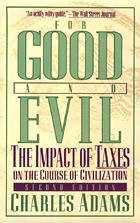
 The great libertarian tax historian Charles Adams (author of For Good and Evil: The Impact of Taxes on the Course of Civilization and Those Dirty Rotten Taxes: The Tax Revolts that Built America) has just published a sequel of sorts to When in the Course of Human Events: Arguing the Case for Southern Secession. Hot off the presses is his Slavery, Secession, and Civil War: Views from the UK and Europe, 1856—1865, a collection of magazine and journal articles about the War to Prevent Southern Independence by European — mostly British — authors.
Readers will be impressed, if not astounded, by the remarkably well-informed and extraordinarily articulate commentary in these articles. We don’t speak and write the English language like they used to. Nor are most Americans nearly as well informed about the facts of the war as these nineteenth-century European writers were. Several generations of American court historians have seen to that.
The idea for this book is quite innovative: Since the Northern press was heavily censored by the Lincoln regime, and the Southern press, regardless of how factual it may have been, is not believed by most Americans, the European journals are perhaps the only credible source of popular opinion on the war during the 1856—1865 period.
 There were prominent European supporters of both North and South, as Adams shows, although they all strongly opposed slavery. Quite a few of the European writers altered their opinions and became Southern sympathizers after observing the actions of Lincoln and his regime in the first months of the war.
Many British writers "saw the separation of North and South as a good thing" and believed that "slavery had no significant part in the conflict," writes Adams. In fact, many of the articles presented here make the argument that, thanks to secession, Southern slavery was doomed because secession eliminated the protection (for slave owners) of the Fugitive Slave Act. (The same argument is one of the major points of Jeffrey Hummel’s book, Emancipating Slaves, Enslaving Free Men, which I suppose would qualify him, along with these nineteenth-century European writers, as a Confederate sympathizer).
One of the most influential British journals of the day was All the Year Round, edited by Charles Dickens. On September 6, 1861, Dickens gave his account of the causes of the war: It was "a question of political power between North and South," he wrote, mostly because of the Three-Fifths Clause of the Constitution, which inflated the congressional representation of the southern-dominated Democratic Party. This allowed the South to effectively oppose the North’s mercantilist agenda of protectionist tariffs, corporate welfare, and central banking (the economic platform of the Republican Party of the time).
 Thanks to the protectionist tariff, Dickens wrote, "Union means so many millions a year lost to the South; secession means the loss of the same millions to the North. . . . The quarrel between the North and South is . . . solely a fiscal quarrel." Many other European journals repeated this theme, as Adams shows. The Quarterly Review called the Morrill Tariff "a revolting tribute" to Northern businessmen paid by southerners who "had been groaning for years under the crushing bondage of Northern protectionists." (Dickens entertainingly described Lincoln as "a bit of a country bumpkin" according to Europeans who had met him).
These essays show that European writers understood that the Republican Party platform of 1860 strongly supported "the right of each State to order and control its own domestic institutions" (i.e., slavery); that Lincoln pledged his support for the notorious Corwin Amendment to the Constitution that would have enshrined slavery in the document; that blacks were treated in despicably inhumane ways in the North; that opposition to the extension of slavery was based on political and economic, and not moral grounds; that the Emancipation Proclamation freed no one because it only applied to "rebel territory"; and that Lincoln himself was worse than some of the most tyrannical European despots in history. Blackwood’s magazine correctly pointed out that most Northerners "would have rejoiced exceedingly if the whole [black] race could be transported to their native Africa." This of course was the goal of Lincoln’s "colonization" policy.
A London journal called The Athenaeum published such famous authors as T.S. Eliot, George Santayana, and Thomas Hardy. It agreed with Charles Dickens’ account of the cause of the war, and excoriated Lincoln as a brutal tyrant. "President Lincoln . . . suspended the writ of habeas corpus. He has muzzled the press and abridged the freedom of speech . . . . He has, without authority of law and against the Constitution . . . plunged the country into war, murdered citizens, burned . . . houses . . . . He has seized unoffending citizens [in the North] and . . . has imprisoned them in loathsome dungeons." And, "under the tyrant’s plea, he is proceeding to do a great many acts and things which would more become the savage and the brute."
 In 1862 Blackwood’s magazine, which is still in print, denounced Lincoln as "monstrous, reckless, devlish." For he had "inaugurated dictatorship" and "abolished liberty" in the Northern states.
The magazine Punch published a series of editorial cartoons about the war. One particularly eye-catching one entitled "The Federal Phoenix," published in December of 1864, portrayed a gigantic Lincoln head as the head of the "Phoenix," a mythical bird of ancient Egypt which, according to legend, was consumed by fire and rose again from its own ashes to a youthful life. There is a blazing fire in the cartoon, and the crumbling logs that are fueling the fire are labeled "low tariffs and world trade"; "United States Constitution"; "States Rights"; "Habeas Corpus"; and "Free Press."
The Quarterly Review compared Lincoln to Napoleon III and called him "a poor plagiarist in the art of tyranny," for "his plan is just like that of any Old-World despot, to crush out adverse opinion by sheer force." In a line that would be applauded by the Bush administration and all of its media lapdogs, from Rush Limbaugh and G. Gordon Liddy to Sean Hannity and Ann Coulter, the magazine opined that "it is now the undisputed law of the United States that a President may suspend civil liberty whenever and for as long as he thinks fit."
 In what sounds like an early definition of "National Greatness Conservatism," the Times of London editorialized that the North was fighting "for nothing more than the old idea of Empire and national grandeur." It also condemned the Republican Party regime for "putting empire above liberty" and for having "resorted to political oppression and war rather than suffer any abatement of national power." Other European journals echoed this theme as well. English writers during the heyday of the British empire could recognize megalomaniacal empire builders when they saw them.
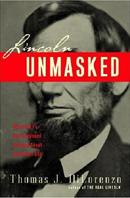 These conclusions are all glaringly obvious to anyone who studies the historical facts. For several generations now, it has been the job of "Lincoln scholars" in America to keep these facts from the American public, lest they learn the ugly truth about their own history. Whenever such facts do occasionally pop up and see the light of day, they are typically buried in an avalanche of lame excuses, justifications, and silly rhetoric (i.e., see anything Harry Jaffa has ever written on the subject), and the messengers denounced as public enemies — or worse.
Charles Adams has performed a great service to the cause of historical truthfulness in editing this fascinating collection of essays by some of the best writers that I have ever run across.


