

Attention Students: Should You Get Your Ph.D. and Become a Professor?
Recently, appearing on these pages, are several columns that would appear to incline to the negative on this question.
A. Crovelli
First was the highly unfortunate story told by Mark Crovelli about his unjust mistreatment by the Department of Political Science at the University of Colorado, Boulder. Our hearts can only go out to this young man, and hope and trust that he can put this horrid experience behind him. The prognostication looks good: anyone who can write so eloquently, insightfully and movingly about his sad experiences surely has a rewarding and fruitful intellectual career ahead of him. Mark intends to switch from political science to economics, which is all to the good: the latter is far more receptive to libertarian insights, of which his forthcoming paper in the Journal of Libertarian Studies is an excellent example. We must all take our hats off to anyone who can apply praxeological insights to international relations. The fact that Mr. Crovelli has had this brilliant paper accepted for publication by this prestigious journal so early in his career serves as only one more bit of evidence in this regard. We can only apply the "sour grapes" insight sparingly, but in this case I think it fully applies: a masters degree in political science would probably not count at all toward a Ph.D. in economics. So, bad cess to the Department of Political Science at the University of Colorado, Boulder; onward and upward for Mark Crovelli.
This author in the course of his essay links to some publications written by my friend and colleague Gary North, who has on several occasions taken the view that a career as a professor is unwise, in the extreme. Let us consider each of these essays of his in some detail, for Dr. North counsels young people to eschew the professoriate, and I take an entirely different stance on this matter.
B. North
Part I
In the first of his three op eds on this topic, Dr. North takes the view that the academic cartel will soon break down. Since it was written in 2000, eight long years ago, and this particular scheme to bilk the public is still very much alive and kicking, we must take his prediction as more of an expression of hope than an actual expectation. (However, to be fair to him, he does say that "This will take less than two decades," and we still have quite a ways to go until 2020; on the other hand, in the third publication of his which we will be considering below in full he states in this regard: "It is a self-policing, tax-funded system of indoctrination. It has worked for seventy years. This is unlikely to change in our time.") As for the actual analytics of higher education, I am in full accord with Gary; this "industry" is one heavily protected by government favoritism. Without the deleterious arm of the state, the academy would look very different. There are no truer words than these of his: "Whenever you find a cartel that has existed for several decades (such as that in higher education), begin a search for State intervention: civil sanctions placed on non-members who seek to enter the market through price competition."
Where he and I part company is not so much, indeed, not at all, with regard to his description of the present economic situation of universities, his yearning for statist protectionism to end, and for a truly free enterprise situation to take its place. Rather, it is his advice, often merely implicit in this article, that young people would be unwise to enter this field: to obtain Ph.D.s, and become professors. For example, in his view, the likely future for them is to be paid as full-time faculty members "a pathetic $24,000 a year to teach 8 classes." He opines that the colleges of the future will "hire an army of Ph.D-holding teaching assistants at $15 per hour." Not a very attractive prospect.
However, according to this source: "…most economists who graduated with a doctorate in 1996—97 found full-time career-tracking jobs that paid well (those in permanent full-time jobs in the U.S. earned an average starting salary of $61,000)." This accords with the pay scale for starting assistant professors at my own school. But ponder what this means on an hourly basis. For round numbers, assume a salary of $60,000, and a teaching load of 3 courses per semester, or a total of 6 per year. Each course meets for 3 hours per week (well, two and a half hours; there are three weekly 50 minute periods for a total of 150 minutes, but let that pass; we want to be conservative here) for 15 weeks, or, for 45 hours per semester. Round that up to 50 hours per semester per course, so as to include exam marking (this would be a wild overestimate for multiple choice questions which are machine made and marked), and a few committee meetings. That comes to 150 hours per semester or 300 hours per year. Given an annual salary of $60,000 that amounts to $200 per hour. Quite a difference from North’s "$15 per hour." An hourly $200 smackeroos ain’t chicken feed! (This compares favorably — (see here) — with the much "higher" salaries typically paid by jobs on Wall Street, where you have to work, oh, 60—70 hours per week, 50 weeks per year.)
True, in order to gain tenure and promotion one must "publish or perish." But that is the fun part. If you do not enjoy writing articles and books, and then going on radio and television to talk about them, giving public speeches about them (usually for another $500—$1,000 per hour, plus travel and hotel expenses) maybe you should try a different profession. Come to think of it, pretty much the entirety of a professor’s life is a joy (see here). If you think that standing in front of a few dozen students, and pontificating about supply and demand, the business cycle, free enterprise, etc., is work, you’ve got another think coming. For the overwhelming majority of us, this is pure pleasure. In Misesian terms, this is play; we would be glad to do it for free if we had to. (Okay, okay, I admit that marking exams is not a pure unalloyed pleasure.)
Part II
In the second essay of North’s (January 24, 2006) on this topic, he steps up his criticism of the decision to earn a Ph.D. and enter the professoriate. His charge: that there is a Ph.D. glut, and newly minted holders of doctorates will be unable to land any academic job whatsoever. This charge is crucial to his case; for if new Ph.D. economists cannot land a faculty position, the $200 per hour salary, the long vacations, etc., are entirely irrelevant.
As a good economist, North of course acknowledges that excess supplies of anything typically result in lower prices, which tends to reduce supply and increase demand, thus ending the glut problem.
Why does this not work in academia? In his view, this market mechanism only works with "Experienced sellers (who) do get the picture. The problem is a continuing supply of new sellers who are unfamiliar with the market and ignorant of the past supply-demand conditions." Well, perhaps, this sounds like people with a doctorate in poetry, or feminist studies, but seems to ill fit those who have just completed a half decade of study of the dismal science.
Here is some evidence that applications for Ph.D. programs are dependent upon actual market conditions for graduates (table 1 of these authors is most instructive in this regard):
A period of malaise in the mid-1990s led to a contraction in enrollment at many economics Ph.D. programs. The resulting reduction in the supply of new Ph.D. economists, combined with a smaller contraction in demand for new Ph.D. economists, generated, as the Wall Street Journal reported, a “hot pursuit” for some economics Ph.D.s, with “even low-level candidates [being] treated like big shots” (Jon E. Hilsenrath, 2001, p. B1). As might be expected, the scarcity of new economics Ph.D.s that materialized at the end of the decade appears to have induced more enrollments in economics Ph.D. programs, with annual matriculations rising by about 25 percent between Fall 1998 and Fall 2002 (Charles E. Scott and John J. Siegfried, 1999—2003)."
North’s analysis relies on the man who "first blew the whistle on the economics of the Ph.D., David W. Breneman … in 1968, the year prior to the beginning of the Ph.D. glut." North also refers to Allan Cartter’s work in 1964, and Clark Kerr’s in 1966. But this, too, is more than passing curious. We are now, presumably, discussing the excess supply of economics Ph.D.s in 2008, or, even better, 2013, the year those entering graduate study today will start rolling off the assembly line. How can research some four decades ago be of much relevance to our present concerns?
Dr. North also seems to posit some sort of iron law of growth in graduate departments, based on full-time equivalent (FTE) considerations:
We know from Parkinson’s Law that growth is an institutional imperative. Administrators advance their careers by expanding the number of subordinates in their department. So, every academic department wants more students — students of a special kind.
Students are not of equal value to a department. The lower-division student (freshman or sophomore) does not rate highly in the currency of academic resource allocation: the full-time enrollment, or FTE. The FTE figure is what justifies the hiring of a full-time faculty member. The lower the ratio, the better. It may take 15 lower-division students to generate one FTE. It may take only eight Ph.D.-level graduate students to generate an FTE.
The more Ph.D. students a department can attract, the faster the growth of that department. This is the iron law of academia. All other economic laws are sacrificed for it, as the economist says, other things being equal.
This fact of academic economic life creates an incentive for departments to enroll lots of graduate students. It also rewards those departments that persuade M.A. students to go into the Ph.D. program.
The Ph.D. glut has existed ever since the fall of 1969."
But, this cannot be all that there is to it. If it were, Ph.D. programs would have grown, in the last 40 years, like Topsy, like the lizard that ate Tokyo.
An alternative perspective to North’s pessimism may be found here. According to this study,
1. The number of economics Ph.D. degrees awarded in the U.S. fell from 1008 in 1996 to 930 in 2001.
2. The number of Ph.D. degrees awarded to American citizens fell from 430 in 1996 to 350 in 2001. This number has not been so low since the Johnson administration…
5. The median “time to degree” is 5.4 years…
7. Only four percent of finishing Ph.D. students received no financial aid whatsoever.
8. The unemployment rate for graduating Ph.D. students is projected at 2.1 percent.
9. 23 percent found jobs outside the U.S., down from 31 percent five years earlier. The biggest foreign employers are, in order, Canada, South Korea, the U.K., and Brazil, Taiwan, and Turkey.
10. Only six percent of Ph.D. graduates in economics say they do not like their jobs. The median salary is $74,000, again noting that not everyone responded to the questionnaire.
The bottom line? It’s a great life. Sign up now.
Another study, by John Cawley (his is the most comprehensive of those I have read; I highly recommend this to all those contemplating a career in academia) offers this assessment of the job market: "… almost everyone lands a job that they like. In a survey of new economics Ph.D.s in 2001—2002, Siegfried and Stock (2004) find that only 2.1% were unemployed shortly after the job search season. Moreover, 94% of the new Ph.D. economists in 2001—2002 reported that they liked their jobs very much or fairly well (Siegfried and Stock, 2004)."
And here is quite an optimistic, and, I think, more realistic assessment from economist Bryan Caplan:
"… economists’ wages are relatively high for the following reason. Few people, as a teenager, say to their parents: u2018I want to be an economist when I grow up.’ Yet many people wish to be writers, astronauts, professional athletes, scientists, psychologists, and so on. I don’t know of any situation comedy where the lead star is an economist. So our relative lack of popularity keeps the supply low and our wages relatively high."
I have on more than one occasion had friendly debates with Bryan regarding several technical issues in economics. But on this matter, I am entirely in accord with him.
Gary North, Ph.D., (emphasis, mine) continues with his pessimistic outlook claiming that new assistant professors are typically given large classrooms, which do not usually allow them to do the research necessary for acquiring tenure. So they are let go after six years (not eight, as per North), and then confined to the swamps of community colleges, there to earn that proverbial "$10 to $15 an hour."
Well, let’s see. According to this source, the average salary for a community college faculty member … nationally … was $53,934. Round this up to $54,000 (hey, give me a break, I’m trying to make a point here). Assume that the professor teaches 5 courses of 3 hours each for 30 weeks a year (yes, these people get long vacations too). That amounts to 450 hours per year (we ignore publishing requirements, committee meetings, marking essays, since there are virtually none in this sector of academia), or $120 per hour, roughly 10 times North’s estimate of "$10 to $15 an hour." I wonder at the source of his calculations.
Next, North asks: "Who gets an entry-level position at Boonsdocksville State University, which in 1960 was a public schools teacher training college? New graduates with Ph.D.s from the two-dozen major universities.
"Then what happens to graduates with Ph.D.s issued by Boonsdocksville State? They go straight into the community college circuit."
Again, not so, not so. In order to test this empirical claim of his, I wrote to a dozen or so institutions of higher learning. It is a bit insulting to regard them as "Boonsdocksville State," but these institutions were chosen since none of their Ph.D. programs is ranked very highly. (For rankings of graduate programs in economics, see here, here, here and here.)
I sent them this letter:
Dear Colleague:
I am doing a bit of research regarding the placement of recent economics Ph.D. students in academia. Could you please tell me the name of the universities or colleges or firms or government agencies that hired your recent graduates in the last 3 years? I also wish to test the hypothesis that the first jobs of newly minted doctoral students are at two year or community colleges. So, second question, please tell me the (rough, if need be) proportion of your recent grads who took jobs at community colleges, vs. those who found positions at 4-year colleges, or universities. I would be very grateful for your cooperation, and shall not report your replies on an individual basis; rather, I will aggregate the results.
Yours truly,
Here are the responses I got.
(Collegeville, MN), Assistant Professor, Washington and Jefferson College (Washington, PA), Assistant Professor; Washington and Jefferson College (Washington, PA), Assistant Professor; State University of New York at Oneonta (Oneonta, NY), Assistant Professor; Florida Gulf Coast University (Fort Myers, FL), Assistant Professor; Georgia College and State University (Milledgeville, GA), Assistant Professor; New York ISO (Albany, NY), Economist; Indiana University (Bloomington, IN), Assistant Professor; Pacific Lutheran University (Tacoma, WA), Assistant Professor; Appalachian State University (Boone, NC), Assistant Professor; Beloit College (Beloit, WI), Assistant Professor; Southern New Hampshire University (Manchester, NH), Assistant Professor.; Chiang Mai University (Chiang Mai, Thailand), Lecturer; Central Washington University (Ellensburg, WA), Assistant Professor; Central Michigan University (Mount Pleasant, MI), Visiting Assistant Professor; University of Texas at El Paso (El Paso, TX), Assistant Professor; University of Louisville (Louisville, KY), Assistant Professor; BBVA Bank (Lima, Peru), Assistant Manager Economic Research Department; Northwestern University (Evanston, IL), Lecturer; Capital University (Columbus, OH), Assistant Professor; University of New Hampshire (Durham, NH), Visiting Assistant Professor; Duquesne University (Pittsburgh, PA), Assistant Professor; The Korea Institute for Industrial Economics and Trade (Seoul, Republic of Korea), Associate Research Fellow; University of the Pacific (Stockton, CA), Regional Economic Analyst; Shepherd University (Shepherdstown, WV), Assistant Professor; Gustavus Adolphus College (St. Peter, MN), Assistant Professor; Penn State University at Erie (Erie, PA), Assistant Professor; Boston Pacific Company, Inc. (Washington, DC), Project Director; St. Cloud State University (St. Cloud, MN), Assistant Professor; Western Illinois University (Macon, IL), Assistant Professor; Penn State University at Erie (Erie, PA), Assistant Professor; Lawrence University (Appleton, WI), Visiting Assistant Professor; Washington and Jefferson College (Washington, PA), Assistant Professor; Office of the Prime Minister (Seoul, Republic of Korea), Financial Supervisory Commission; Utica College (Utica, NY), Assistant Professor; Youngstown State University (Youngstown, OH), Assistant Professor; Mahidol University (Bangkok, Thailand), Lecturer; The World Bank (Washington, DC), Trade Economist; University of Texas at El Paso (El Paso, TX), Assistant Professor, Boise State University (Boise, ID), Assistant Professor; Kennesaw State University (Kennesaw, GA), Assistant Professor; Gonzaga University (Spokane, WA), Assistant Professor; University of Regina (Regina, Canada), Assistant Professor; California State University at Bakersfield (Bakersfield, CA), Lecturer; Rose-Hulman Institute of Technology (Terre Haute, IN), Assistant Professor; Chaoyang University of Technology (Taichung, Taiwan), Assistant Professor; University of Missouri at Rolla (Rolla, MO), Assistant Professor; Indiana University (Bloomington, IN), Lecturer; Western Illinois University (Macon, IL), Assistant Professor; Elgin College (Illinois), Assistant Professor; Ripon College (Wisconsin), Assistant Professor; Youngstown State University (Ohio), Assistant Professor; University of Kuwait, Assistant Professor; World Bank, Consultant; PriceWaterhouseCoopers, Chicago, Senior Associate; Hope College (Michigan), Assistant Professor; University of Arkansas-Little Rock, Assistant Professor; DePauw University (Indiana), Assistant Professor; Duquesne University (Pennsylvania), Assistant Professor; Cleveland State University; then Keene University (New Jersey), Assistant Professor; WVU (post-doc); WVU (post-doc); then Kansas State University, Assistant Professor; U.S. Representative City of Tianjin and Tianjin Economic Development Area; University of North Dakota, Assistant Professor; Marietta College (Ohio), Assistant Professor; Augustana College (South Dakota), Assistant Professor; Institute for Urban and Regional Research, Austrian Academy of Sciences, Vienna (Research Scholar); Center for Chinese Business at WVU, Research Assistant Professor; Lingnan University, Hong Kong, Assistant Professor; Fukuoka University (Japan), Assistant Professor; Salem-Teikyo University (in WV), Assistant Professor; University of Nebraska Extension; Janus Pannonius University in Pecs, Hungary, Associate Professor; Univ. of Hawaii at Manoa, Center for Labor Education and Research; Allegany College (in MD), Office of Institutional Research; Frostburg State (in MD); State of Virginia Office of Revenue; Post-doc at Univ. of Alabama; then Univ. of Colorado at Denver; Frostburg State (in MD); WVU Extension Service, Institute for Labor Studies; I-Net, Inc. (an accounting firm in Washington, DC); then Coleman Research Corp. (a defense company); Fudan Univ. in Shanghai, China; Waynesburg College (in PA); Washington Univ. (St. Louis), post-doc; U.S. General Accounting Office; International Islamic Univ., Malaysia; Staffordshire Polytechnic Inst., United Kingdom; New York Institute of Technology; returned to Thailand; Korea University; West Liberty State College (in WV); Univ. of Missouri at Rolla; Nat’l. Inst. of Development Admin. (Thailand); University of Southern Indiana; Susquehanna University; Kebargsaan University (in Malaysia); A small firm in Washington, DC; Al-Azhar University, Cairo, Egypt; A Saudi government agency; A private company in Korea; Georgia Southern College; A private research institute under contract to Northwestern Univ; Frostburg State University (in MD); City Administration of Alexandria, VA; Somerset College (in Kentucky); WVU Institutional Analysis and Planning; WVU Division of Applied Research; Frostburg State Univ. (in MD); St. John Fisher College (in Rochester, NY); St. Augustine College (in SC); Univ. of Malaysia; Grinnell College (in Iowa); State of WV Insurance Commisioner’s Office; Rutgers-New Brunswick, Ag. Ec. Dept.; Allegheny College (in PA); American Electric Power; Monmouth College (in Illinois); Government job in Thailand; Glenville State (in WV); Limestone College (in SC); Shepherd College (in WV); Virginia Polytechnic Institute; J.P. Morgan Chase; U of Rochester, PhD program in political science; St. Louis University; Colgate University; SUNY Cortland; University of Southern Indiana; University of Southern Indiana; University of the West Indies
Note, that none of these lower-ranking Ph.D.-granting institutions placed any of their graduates at Harvard, MIT, Chicago, Princeton, Berkeley or Columbia. (Repeat mention of colleges means that more than one student was placed there.) On the other hand, not a single solitary new Ph.D. went to a community college. As one of my correspondents put it: "As you can see, none of our students are placed at two-year community colleges."
A personal note. During this last academic year my own university was in the market for a starting assistant professor of economics. We made offers of campus visits (this means, typically, that you are a semi-finalist; most hiring institutions offer fly-ins to three candidates, and make an offer to the best one of them) to two recent graduates of the University of West Virginia. Both turned us down, in favor of better options.
Based on this informal survey, it is fair to reject North’s claim that "graduates with Ph.D.s issued by Boonsdocksville State … go straight into the community college circuit." Again, I would be interested to see the empirical basis for this contention of his.
North’s next knock at a career as a university faculty member is this:
"For over three decades, all it has taken to generate 1,000 applicants was this ad in a professional journal in the humanities:
Tenure-track position Ph.D. required Teach 12 hours of the freshman course
If the ad said u2018Ph.D. or ABD required,’ it would generate 2,000 applicants. ABD stands for u2018all but dissertation.’"
Again, I query the source of these statistics. My own experience on the hiring end is that North’s numbers are somewhat inflated. During our 2008 hire at Loyola we had only about 300 applications. But, North’s intention in bringing up these statistics is to buttress his claim that there is a glut in the market. Not so fast; there is a much more reasonable explanation for these large numbers: applicants make multiple submissions. There are hundreds of jobs for economics professors; applying for them through e-mail is very cheap. Some applicants apply for each and every assistant professor job advertised. Hence, the seeming excess of applicants compared to employment slots available. According to Cawley: "In the Stock et al. (2000) sample of economics job candidates during 1995—96, the average applicant sent 76 applications; 25% sent 100 or more." This author further states: "Although applicants attempt to signal their interest through cover letters and other communication, such signals are not credible because applicants can send an unlimited number of them (i.e. they could carefully tailor hundreds of cover letters without regard to quality of match in an attempt to maximize their number of interviews)."
One divergence between my own views and those of Gary North: he focuses on all disciplines, and I am involved in this note with economics only. Hence he tells us this:
"Graduate students do not learn about supply and demand, and it does not pay senior professors to teach them. Here is evidence. In response to the ever-growing glut of Ph.D.’s, the American university system turned out about 30,000 Ph.D. graduates per year, 1969 to about 1975. Since then, it has increased the output. In 1980, it was 33,615. In 1990, it was 38,371. In 2000, it was 44,808. In 2003, it was 46,024. (Statistical Abstract of the United States, 2006, Table 290.) Despite this, we read on a website devoted to selling “how to get higher learning degrees” materials, …
"There’s one born every minute . . . and two who will relieve him of his funds."
It is unsurprising that "Graduate students (in such fields as poetry, black studies, sociology and physics) do not learn about supply and demand" but this is clearly untrue for the dismal science. Cawley (his table 2) supplies this information about recent doctoral awards in economics:
Economics Ph.D.s Granted by U.S. Universities: 2000: (948); 2001: (930); 2002: (903); 2003: (932); 2004: (960)." In other words, the trend line numbers are pretty flat, not burgeoning, as depicted by North for all fields. By no means all of these new Ph.D.s enter academia. Rather, many choose the business world, or consulting, or government, or international organizations. Cawley’s table 3 is also most instructive; it lists the number of academic jobs offered during these same years. They are as follows:
2000: (1,635); 2001: (1,589); 2002: (1,487); 2003: (1,381); 2004: (1,487); 2005 (1,715).
There are several things to be noted about this latter statistical series. First, although slightly V-shaped, the number of jobs offered, too, is for the most party pretty flat. No increasing or decreasing glut in these figures. Rather, demand and supply seem to be keeping pace with one another. Second, the number of open employment slots is appreciably higher than the number of new entrants (the previous statistical series). If we assume that retirements roughly offsets the numbers of new Ph.D.s coming off the assembly line, again, it is difficult to discern any "glut" compatible with these figures. Third, these figures include both junior and senior positions. But, if we assume that for every non-entry level job slot there is someone vacating it as well as others seeking it, again it is not easy to reconcile these statistics with the claim of an over-supply.
In the view of North, "year after year, decade after decade, the supply of Ph.D.-holding students increases, despite an academic market that does not hire most of them, and hires a minority at wages that do not compensate them for the money and time invested in earning their degrees." This is not proper empirical economics. At the very least claims of this sort should be accompanied by statistical support.
North’s critique continues:
"At $20,000 or more per year in tuition and living expenses, plus the $35,000+ not earned in the job market, trying to earn a Ph.D. is a losing proposition." But, as we have seen "Only four percent of finishing Ph.D. students received no financial aid whatsoever." In my experience, the great majority receive partial and even complete tuition waivers, particularly after successfully completing the first year, and a significant percentage are given bursaries over and above that amount.
To conclude my comment on this section: North’s claim of a Ph.D. "glut" is not demonstrated, certainly not, at least, in the field of economics, my own area of concern.
Part III
In the third and much more recent (June 3, 2008) of his essays on this topic, Gary North continues with his very explicit critique of the supposed foolishness of young people entering the professoriate.
He starts off with this sally: "After about six or seven years of teaching mainly lower-division classes that senior professors refuse to teach, an assistant professor comes up for tenure. If he gets it, he can never be fired except for moral infractions far worse than adultery committed with female students. Very few assistant professors are granted tenure. The Ph.D. glut then consigns the losers to part-time work in community colleges for wages in the range of what apprentice plumbers receive."
There are errors here. The trial period in not seven years, as stated right here, nor eight, as mentioned above, but six. In most schools, tenure will not protect a professor who commits adultery with a female student. As to the claim that "Very few assistant professors are granted tenure," this sounds more apocryphal than serious empirical analysis.
North continues by painting a very, very bleak, and, for the most part, highly accurate, portrayal of the job market at the top universities. As he says, it will indeed be virtually impossible for any Austro-libertarian, even if he is a math whiz, and certainly if he is not, to attain tenure in an economics department at any of the top (20) ranked research universities; e.g., those that offer the Ph.D. degree.
So what? There are no Austro-libertarians at such exalted schools, and there never have been (apart from Nozick at Harvard), to the best of my knowledge. (For an eloquent and incisive explanation of this state of affairs, look here, here and here.) Most of those actively promoting liberty on campus are located at far less prestigious institutions, and are doing reasonably well there, thank you very much.
Yes, indeed, "The losers … wind up at second-tier or third-tier universities." But, as I have taken great pains to say, life at these establishments is pretty good, in terms of promoting liberty, personal satisfaction, and pay. Remember, the typical teaching load at these "lesser tier" places is nine hours per week. Moreover, you get 22 weeks off per year, and, in most places, two full semesters every seven years. This ain’t chopped liver.
In North’s view, "the limbo of academia … (includes) … a third-tier university that grants only the B.A. and a few M.A. students. "Well, Loyola is one such, and, let me tell you, I am ecstatically happy here (for more on that, see below).
North continues his critique: "If you are granted a Ph.D. by any lower-tier school, then you probably will not get a career job in academia, but if you do … (y)ou may get a tenure-track job at a college no one has heard of except its alumni, who do not have much money to donate to the endowment. If a Ph.D. holder is granted tenure at one of these schools, he has lifetime employment in safety but obscurity. No one ever hears about him or her again."
Sadly, true, alas, all too true. But, compared to what? If you go into the think tank world, or edit the Remnant Review, do you think you will win the Nobel Prize? Be featured on the front cover of Time Magazine? With the major media in present hands, which of us, except a Hayek or a Nozick, is on the lips of boobus americanas? Mises and Rothbard labored their entire lives, in some sense, in "obscurity." Yes, they were gigantic frogs in our own little Austro-libertarian pond, but, as far as the general populace is concerned, Mises might as well have been the editor of Ms. Magazine, and Rothbard a painter (Rothko, anyone?).
North also greatly regrets that "there has never been a… (best selling) … Austrian School economics textbook," as do I. His explanation for this fact are very much on target. However, as more and more Austro-libertarian professors enter the lists, North’s advice to the contrary notwithstanding, this will be become more and more a thing of the past. At present, it is difficult to envision a national best seller Austrian economics text. But, in most schools each instructor can choose his own textbook. I think it is not too much to hope for that with more Austrian professors, our texts will sell better, too.
C. Conclusion
I have serious reservations about this bashing of the academic life that my good friend Gary North engages in from time to time. How else are we to promote liberty? Let me count the ways:
1. Political action. Fine. I am all for it. Whether the Libertarian Party, or a libertarian in the Republican (or, indeed, Democratic) party. But, we now have Bob Barr running for the LP, and his connection to libertarianism can best be described as loose (e.g., he opposes the drug war not on principled rights grounds, but, because it "doesn’t work"). Ron Paul is a more consistent libertarian, and did wonderful work during his recent campaign, but that is now over, and the prospect for Ron Paul libertarians taking office as Republicans is not as bright as we would all like. For example, consider the case of Murray Sabrin, who got only 14% of the vote in the New Jersey primary for Senator.
2. The Free State project. Again, fine. I am all for this, too. Let us by all means gather many libertarian voters into one small state, New Hampshire. Perhaps, one day, that state will elect a proper congressional colleague for Ron Paul. But there has been no success as of yet.
3. Libertarian think tanks. Hooray. What libertarian could oppose them? Practically all of the 50 states have one, focused on local issues. There are numerous national and even international ones. (This listing includes many, but somehow manages to ignore my favorite, the Mises Institute. Here is a somewhat more inclusive listing.) These organizations have done yeoman work in publicizing libertarian analyses, op eds, books, studies. Many, such as the Mises Institute, have over the decades promoted the careers of numerous libertarian scholars and activists.
4. Gary North’s own Remnant policy. I support this, too. Here, the concern is not so much for achieving liberty in our time — deemed an all but impossible task — as much as it is an effort to keep that flickering light of liberty alive, so that it can be better utilized in the future when perhaps the likelihood of its success will be greater. And, the more Austro-libertarian professors there are in academia, the better the prospects for success in this regard.
5. Libertarian "special interest" groups. By all means, let us try to legalize drugs, gold, prostitution, promote free speech on campus and elsewhere, support free trade, get rid of patents, attack critics of the Second Amendment, move in the direction of secession, peace, etc., etc. But none of these efforts have so far even come close to succeeding. And again, the more Austro-libertarian professors there are in academia, the better the prospects for success in this regard.
6. Libertarian efforts to make "common cause" with other initiatives, where there is some overlap in interests: one the basis of religion, environmentalism, anti-imperialism, etc. Again, applause from this quarter. But, to repeat, the more Austro-libertarian professors there are in academia, the better the prospects for success in this regard.
7. Last but not least, promoting the careers of those in the academic world, and encouraging young people to enter this field. There are now hundreds of free-market-oriented economics professors teaching in colleges and universities in the U.S. and around the world. They, too, have not yet succeeded in bringing about the free society, any more than the initiatives listed above. But, surely, these free enterprise academics have all together moved us that one small part of an inch closer in this direction. Why oh why single out this one avenue for opprobrium, as does North, is beyond me. Yes, there are pitfalls and problems in university life; there is dirty dealing and back stabbing in academia. But that is the human condition. It applies, also, to political action, think tanks, etc.
I follow "Uncle" Mao in this regard: "Let 1,000 flowers bloom." And, surely, encouraging young libertarians to take up careers in higher education is one such. Let us not trample it down.
A lot of Gary’s comments seem to be based upon his own experiences, not on objective data; this being the case, perhaps my own story in academia will be of interest in this context.
 I received the Ph.D. degree in 1972. From that time until 1979, I taught at Rutgers University (Newark), and the City College of New York (Baruch). I didn’t get tenure at either place; this, for the most part was my own fault: I did not publish in refereed journals with any regularity. From 1979 to 1991 I left academia for the think tank work, working at the Fraser Institute in Canada. No students, just writing and editing. One would think that this would be nirvana for a person such as myself who wants to publish, but it was not. I couldn’t write about anything really radical, except rarely, and in obscure journals; my work for the FI mainly concerned very basic issues where my extremism wouldn’t arise to the fore: support of free trade; anti—rent control, and minimum wage; critiques of unions, socialism; calculations of economic freedom; privatization. But, even here there were problems: I favored unilateral declarations of free trade with all countries, not Nafta. I wanted to not only get rid of minimum wages, but incarcerate those responsible for this economic outrage. Privatization did not extend to schools; there, Milton Friedman’s voucher plan was as radical a proposition as could be entertained. Plus, my boss wanted to put his name on my work, and in other such ways take credit for my thoughts. Not too pleasant. I was fired in 1991: I was asked to write a book about the benefits of government; when I looked for another job, seeing the handwriting on the wall, I was fired for seeking employment elsewhere.
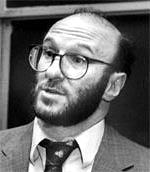 Off to Holy Cross it was for me, from 1991—1997. I was denied tenure on the grounds that my publications and teaching were not good enough. But I published more than anyone else in my department (in some years, almost as much as all of them put together) and in many of the same journals as my colleagues. Out of some 700 student evaluations, there were a half dozen that were highly critical; I asked that my student evaluations be compared with those of the tenured members of the department, and/or with all those from any department who were being tenured that year; this request was denied. My department voted in my favor by a 7—4 majority, which is like a damning with faint praise; the interdisciplinary committee on tenure voted against me 13—0.
I then spent 1997—2001 as an untenured department chairman at the University of Central Arkansas, charged with getting the department (which was underperforming in terms of refereed journal publication) past the scrutiny of the AACSB evaluation committee. I did so, but made more than a few enemies while cracking the whip. I was offered tenure there, over the vociferous protests of my department, by the University president, with whom I was on good terms. I turned this down in 2001 for an offer of an endowed chair, with tenure at Loyola University New Orleans. So, finally, at age 60, I had a tenured faculty position.
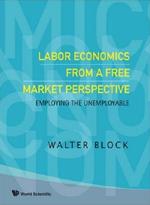 All of this, I hate to admit but I must, is entirely compatible with Gary North’s pessimistic outlook on academia. But, my story is one of the worst that I know about, of all my colleagues. Many of them are they who obtained their Ph.D. without too much trouble, landed an acceptable academic job, and were awarded tenure after six years of satisfactory service. Also, there are many non-Austrian, non-libertarians who had more than an aliquot share of disappointment. No, everything is not wonderful in academia; but, in the business world, no one at all has anything like tenure; you can be let go on a few hours notice. In the university, contracts are typically for an entire year. And, how many lawyers failed to make partner in their law firms, and had to seek employment elsewhere?
In any case, there is a happy end to my oft-times bumpy career. I now have wonderful colleagues. I am publishing up a storm. My teaching load is three courses per year, not per semester. That works out to a total of 3 courses x 15 weeks each x 3 hours per week = 135 teaching hours per year. At an approximate salary of $150k, that means for each class hour, where I plunk myself down and talk about things I love dearly, I earn a truly amazing (at least to me) $1,111.11. And that ignores a sabbatical every seven years. Wow. Sometimes I have to pinch myself to ensure myself that this is all real.
So, young students: Should you get your Ph.D. and become a professor of economics? You betcha. There’s no heavy lifting, the pay is excellent (on a per hour worked basis), there are long, long vacations (did I mention long?), the work is meaningful, you are promoting liberty and good (Austrian) economics, you will inspire generations of students, some of them will follow you into the professoriate and that will increase your satisfaction even more, you will have plenty of time to publish, and, in general, to make of yourself a pain in the neck to the bad guys. What more could anyone want from a profession? (Potential grad students are advised to seek my advice on an academic career here.)


