


Science Fiction and Libertarianism
May 8, 2009
If science fiction is the literature of the future, then the future is going to be libertarian. That’s what even a cursory examination of the genre will show.
Many science fiction writers openly identify themselves as libertarians. There’s Robert Heinlein, regarded as the greatest science fiction writer of the twentieth century. There’s David Brin, who has won the Hugo Award, science fiction’s highest literary award. There’s Poul Anderson, James P. Hogan, Vernor Vinge, and L. Neil Smith and a host of others as well. Even if libertarians aren’t the dominant voice in science fiction — and frankly, I suspect we are — we are nonetheless a voice that is too loud to ignore.
In what other genre are you going to find such a strong libertarian showing among its writers? Mainstream fiction, whose writers almost always are left-wing statists? Mystery writers, who unilaterally portray cops as heroes and capitalists as villains? Adventure writers, whose heroes are invariably suave government agents who are quick to torture and murder in the name of the State?
Let’s face it: you’re just not going to find a better display of pro-libertarian writers as you are in science fiction.
Perhaps you’re thinking that, sure, some writers that few people ever heard of may be libertarian, but by the time Hollywood gets through with it, science fiction is nothing more than warmed-over neo-Marxism. Anyone who thinks that hasn’t been watching movies recently — or at least not the movies that everyone else is watching.
 Star Wars Trilogy (Wid...
Best Price: $55.88
Buy New $187.00
(as of 11:25 UTC - Details)
Star Wars Trilogy (Wid...
Best Price: $55.88
Buy New $187.00
(as of 11:25 UTC - Details)

Modern science fiction films are frequently and vehemently anti-government. Take Star Wars, in which ragtag rebels battle against an evil interstellar empire. Take X-Men, in which government leaders conspire to control and then exterminate mutant individuals who wish only to live their lives in peace. Take the Terminator series, in which the US Military builds a supercomputer which promptly seeks to exterminate mankind, and a mother and her son fight against it in their capacity as private citizens.
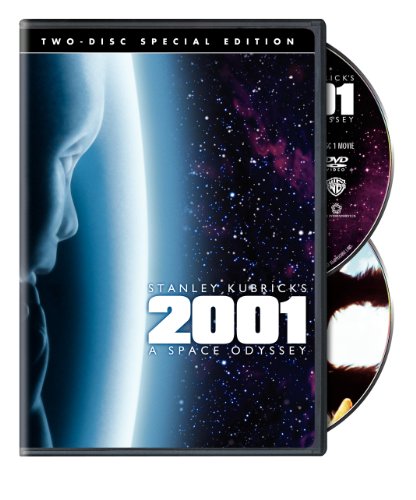
It’s nigh impossible to go to a science fiction movie these days and not witness the classic libertarian theme of Individual versus State. This is not something new. Even many older films have anti-government aspects. In 2001: Space Odyssey, the government so badly botches an attempt to contact extraterrestrials that the spaceship computer kills the crew. In Close Encounters of the Third Kind, the aliens turn from government attempts to contact them and instead embrace a group of private citizens. In E.T.: The Extra-Terrestrial, government agents and scientists prove to be far less competent than children at dealing with an alien encounter.
These are not minor films. These are the biggest box office grosses and most critically acclaimed science fiction films of their time. Libertarianism may be shunned by mundane society, but among science fiction fans the politics of individual freedom is a dominant concern — so much so that even the statist corporatocracy of Hollywood recognizes it is mandatory that every science fiction film include at least one government conspiracy.
 2001 - A Space Odyssey...
Best Price: $2.49
Buy New $17.71
(as of 11:55 UTC - Details)
2001 - A Space Odyssey...
Best Price: $2.49
Buy New $17.71
(as of 11:55 UTC - Details)
Why do science fiction writers feel compelled to tell libertarian stories? Well, maybe it’s just the natural inclination of people to root for the underdog. Moreover, when you tell a story that is set in the future and thus stripped of today’s divisive labels such as "Republican" or "Democrat" (or This Nationality versus That Religion), the audience instinctively sides with the individual against the state. To be popular, science fiction must follow the same libertarian paradigm.
With that in mind, let me give one piece of advice to any would-be libertarian science fiction writers out there: DON’T PREACH! There’s a place for preaching, but it ain’t a novel or a movie where the audience expects to be entertained. When you tell a story, just make it the best you can — and if the internal logic is plausible, the tale will naturally lead to a libertarian conclusion.
Let the writers of Star Trek jump on their special-effects soapbox and preach the Social Gospel and see how many yawns it gets them. If their stories are successful, chances are the phaser blasts drowned out the message anyhow. Libertarians don’t have to worry about that, because stories set in science fictional settings are inclined to favor personal liberty by their very nature.
In its battle against the Individual, the State has many powerful weapons — but we have the Future on our side. The reason why so many science fiction writers, movies, and fans are libertarian is because, according to science fiction, The Future is Libertarian.
That’s good to know — because if there is any prediction of science fiction that no one disputes, it’s that the Future is getting closer all the time.
 Forget 'Terrorism'