


Hans F. Sennholz, RIP
June 28, 2007
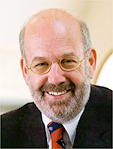
On Saturday, June 23, Hans F. Sennholz died at the age of 85. In October 2004, he was awarded the Gary G. Schlarbaum Prize for lifetime defense of liberty. This article is taken from Lew Rockwell’s introduction to Professor Sennholz, “Misesian for Life.”
 Hans F. Sennholz is one of the handful of economists who dared defend free markets and sound money during the dark years before the Misesian revival, and to do so with eloquence, precision, and brilliance. From his post at Grove City College, and his lectures around the world, he has produced untold numbers of students who look to him as the formative influence in their lives. He has been a leading public voice for freedom in times when such voices have been exceedingly rare.
This much is well known about him. But there are other aspects to his life and career you may not know. Sennholz was the first student in the United States to write a dissertation and receive a Ph.D. under the guidance of Ludwig von Mises. Mises had only recently completed Human Action. Imagine how having such an outstanding student, and a native German speaker no less, must have affected Mises’s life, how it must have encouraged him to know that his work could continue through outstanding thinkers such as this.
When Mises arrived in New York, determined to make a new life for himself after having first fled Austria and then sensing the need to leave Geneva too, he had no academic position waiting for him. He had no students and no prospects for students. But then came Sennholz. Here was living proof that ideas know no national boundaries, that even in the darkest hour there was hope for a new generation of economic scientists who cherished freedom, and were not fooled by the promise of government planning.
And think of the crucial time in which he entered the Austrian picture. Mises was by now carrying the school by himself. Most of his students had moved on to other things, whether Keynesian economics or social theory. For the Austrian School to survive in a profession now fully dominated by interventionists, it needed economists. The School desperately needed the new life that only new faces, names, books, and ideas provide.
When Sennholz began studying with Mises, it would still be another twelve years before Rothbard’s Man, Economy, and State would appear, and nearly a quarter century before Kirzner’s Competition and Entrepreneurship would be published. Sennholz provided exactly what was needed: that crucial bridge from the prewar School to the postwar School in America, where the Austrian School would now make its home.
His dissertation became the book How Can Europe Survive, published in 1955. It remains the best and most complete critique of European political union ever written. Sennholz demonstrated, some fifty years before others even cared, that political union under the interventionist-welfare state was only a prescription for chaos and bureaucrat rule. True union, he demonstrated, comes from free trade and decentralized states that do not attempt to plan their economies.
Europe today has a burgeoning movement of intellectuals who realize this same thing, and are working to curb the power of Brussels even as they attempt to preserve the free-trade zone. But we must remember that Sennholz anticipated this critique and agenda by nearly five decades. By taking a detailed look at all the programs for unification that were then being batted around, he saw precisely what was ahead for Europe: not prosperity and peace, but stagnation and conflict. So it is and will continue to be, so long as Sennholz’s final chapters, which present a blueprint for authentic unity, are not followed.
Sennholz followed up this treatise, which included an account of the Great Depression and the onset of war, with a long string of trenchant writings on monetary theory and history, on employment, on fiscal policy, and even on the moral basis of freedom. Truly he followed in Mises’s footsteps, and, like Mises, he refused to let the ideological hostility of his age and ours deter him from speaking truth to power, using every means at his disposal.
Let me provide one example of just how he carries the torch. During the 1980s, much like today, there were two camps on fiscal policy: the left, which wanted more spending and no tax cuts, and the supply-siders who wanted tax cuts plus spending increases. Sennholz became the voice for sanity: in Misesian terms, he called for tax cuts to be matched by spending cuts.
In doing so, he dismissed the magic fiscal dust called "dynamic scoring" as well as the socialist demand for bigger government, while warning against the dangers of inflationary finance. Here was a hero of fiscal conservatism! During the early eighties, too, he wrote an extended Austrian critique of supply side that anticipated all future trends of the decade.
At Margit von Mises’s request, Sennholz was the translator of Mises’s Notes and Recollections, which is the closest thing we have to an autobiography. It has been this book, above all else, that has shaped the way the generations that never had the chance to meet Mises have come to know the way an economist thinks about science and life amidst personal tragedy. Sennholz and his wife and partner Mary produced the first Mises Festschrift, presented to Mises on February 20, 1956, long before Mises’s fame in the United States would grow. Sennholz alone took the initiative to do Mises this honor.
Sennholz acquired Mises’s papers for Grove City College, where they have been guarded as the treasures they are. He made Grove City stand out among American colleges as one of the few places where economic sense was taught during the heyday of Keynesian orthodoxy.
Sennholz did not only work to promote the Misesian school. He has been the great benefactor to all economists and scholars by being the translator and promoter of the work of Mises’s teacher, Eugen von Bhm-Bawerk. This was an act of great intellectual piety, since the market was not exactly clamoring for hundred-year old books on interest-rate theory. And he did it all on the urging of Mises.
And though an outstanding theoretician, Sennholz placed a strong emphasis on the application of Austrian theory to the timing of business cycles, and to explaining the current state of affairs. This is, by itself, highly unusual in the economics profession. If you know anything about academic economists, you know that they are the last people you want to ask about the state of the economy. But Sennholz made it his job to explain the world around him, a trait which drew many to his thought.
The Mises Institute, for which he serves as an adjunct scholar, is grateful to Professor Sennholz for his early support of our work. He wrote a wonderful paper on Carl Menger, later published in a volume on the gold standard, in which he showed that Menger was not just a theorist, but an activist in the cause of sound money. That paper changed the way we viewed Menger. We came to see him more clearly for what he was: an old-world liberal concerned about the fate of his country in difficult times — much like Sennholz himself.
 Finally, I must add that Sennholz has never been shy about insisting on the centrality of ethics in the study of economics. He has decried the welfare state as confiscatory and immoral. He has called inflation a form of theft. He has identified government intervention as coercion contrary to the true spirit of cooperation. He did this at a time when saying such things was taboo in the profession. Here again, he was keeping alive the spirit of Mises, and the spirit of truth.
 Nobody can ever gauge the full impact of a great intellectual in the development of culture. His influence spreads like waves in a lake; by the time the waves hit the shore, few are in a position to remember the source. But this much I’m sure of. We are in Hans Sennholz’s debt far more than we know.
The Best of Llewellyn H. Rockwell, Jr.
 Slandering the Dead