


Memories of Rothbard and Hayek
July 3, 2003
The following story is part of Walter Block’s Autobiography Archive.
Biographical outlines of the life and work of Murray N. Rothbard and F.A. Hayek – listing their major achievements and their accomplishments, awards and honors – are easily available. Rather, I thought I would recount a few of the many fond memories I have of these two men, which might give you a small sense of what they were like and how I felt toward them.
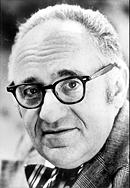 I first met Murray and Joey in the mid-1950s, soon after starting college, through George Reisman, who had been a friend of mine since junior high school. George and I formed part of a group of somewhat strange kids who had little in common with our fellow students. While we shared a wry sense of humor that kept us continually laughing whenever we were together, we each of us had our own private eccentricity, George's being to read Adam Smith's Wealth of Nations from cover to cover while still in the ninth grade. George had managed to find his way to Ludwig von Mises' Thursday evening seminar at New York University and I began joining him when I moved back to New York City from Ithaca in 1956. It was there that I became acquainted with Murray and Joey and this soon flourished into a very close friendship.
From that time until Murray's death in 1995 their apartment on 88th Street and Broadway was a second New York home for me whenever I visited the city and I felt as comfortable there as at my mother's apartment in Queens. Nor was I the only regular guest. Among the regulars were George Reisman, Ralph Raico, and Leonard Liggio who, together with Murray and Joey, spent most of our time together doubled over with laughter at our burlesques of the social democratic left and the National Review right.
Murray and Joey's guests, especially we regulars, were always warmly received and made to feel welcomed no matter how late we stayed, which occasionally was as late as five or six in the morning. Joey was a terribly generous hostess and no matter how often I or other members of our group showed up, she would bring out a tray laden with liquor and mixes.
Since we were all ardent movie fans, we often went to the movie houses on Broadway, especially to the New Yorker, a revival house that served us in the same way as does Turner Classic Movies today. And it seemed that when we weren't spoofing our enemies or composing parody operas (Murray's magnum opus was a Randian operetta entitled "Mozart was a Red") we spent our evenings playing board games (nothing as intellectual as chess, mind you, but those whose boxes were customarily marked "fun for ages 8 to 80″) like Mille Borne, Monopoly, Scrabble, and, if we felt particularly adult, Diplomacy. Our favorite was Risk, which gave rise to Murray's perennial comment, which we were forever repeating: "Harry him in the Congo!"
We were all keen political buffs, Murray – who read three or four New York newspapers every day – far more than the rest of us, and we spent the time between going to movies and playing games discussing contemporary politics and libertarian theory. We were forever posing theoretical questions that hinged on some incredibly complex issue of responsibility and trying to work out its libertarian implications. "Should I be legally culpable for the destruction of someone's property if I am ordered to destroy it under threat of your harming my wife?" "Who's responsible if you throw me through someone's plate glass window?" And on and on. We spent hours trying to work out the minutiae of libertarian theory, avoiding no hard issues from children's rights to intellectual property.
And when not debating theoretical issues, we'd end up discussing some topic in history, economics, sociology, or that day's headlines. It soon became evident to all of us how truly amazing was the depth and breadth of Murray's knowledge. He appears to have read everything and could cite the relevant bibliography on almost any topic that came up. One of our more erudite games involved the Book Review section of the Sunday New York Times. One of us would read the book title and as brief a description as a quick scan of the review would allow and the others would then have to guess, given the political inclinations of the Book Review's editorial staff, who had been chosen to review the book. Looking back on those days it is amazing to me how often we guessed correctly.
Everyone familiar with Rothbard's writings is aware that he wrote a truly prodigious amount. What is not as well known is that he seems to have totally mastered the literature in those fields in which he had an interest. He had a vast library and unlike the books in my own library, all of Murray's books had been read, and read with care. All one need do is scan a book out of Murray's library and he will find marginal comments in Murray's hands scribbled on each page ("Bull____!," "Ugh!" "Right on!", etc.) and that almost every line on every page was underlined. One of the great mysteries for all who knew him, at least at the outset, was where on earth he found the time to turn out the dozens of books, hundreds of articles, and literally thousands of letters he wrote and on top of it to read so much. In addition to have written a massive amount he seemed to have read everything that came within his grasp, newspapers, magazines, journals, newsletters, even flyers and advertisers.
I discovered the answer to this conundrum one day when reading an interview with W. Somerset Maugham, who was asked how he could turn out so many novels and short stories when he partied every evening. His reply was that if he devoted only four hours a day to writing, he'd be able to produce three or four pages each day. That meant, he pointed out, that if he were to keep to that schedule regularly, he could produce no less than 1,000 pages a year! I don't mean to suggest that Murray's schedule was the same as was Maugham's, but he certainly devoted a good part of almost every day to reading and writing and even if he spent his evenings in conversation and otherwise enjoying the company of his friends, that left him each afternoon in which to work, which he did religiously. I don't recall ever going over to his apartment without finding him in the midst of either reading or writing.
Murray composed at the typewriter, footnoting his material in the text itself. During my last year as an undergraduate at City College I agreed to take on the job of typing the second volume of Man, Economy, and State. I must say that it was one of the most pleasurable work experiences I've ever had. Not only was I provided with an endless supply of Pepsi-Cola and potato chips, but I got the chance to work under two good-humored and accommodating employers who excused every failing in their employee while at the same time having had the opportunity to read and discuss a first-rate text in economic theory. One of my major subjects as an undergraduate had been economics, but I confess to have learned more economics during the six-month period I spent typing Murray's manuscript than I did during my whole undergraduate career.
There are few things more irritating than having to defend a proposition against someone who clearly has given almost no thought to the issue but is speaking off the top of his head and Murray, like most of us, had little tolerance for such people. However, when asked to explain a point one didn't understand or about which one was unclear Murray was extremely patient and uncomplaining and doubtless this must have accounted for why he was regarded as a fine teacher at both Brooklyn Poly and UNLV while still being incapable of suffering fools gladly.
Those of us who knew Murray in the 1950s were aware that he disliked traveling and that he had a phobia about flying. In this, as in so many other ways, Joey's forbearance was almost superhuman as she slowly enlarged Murray's world to include places as far away as eastern Europe, Asia, and South America. I remember with absolute clarity receiving a postcard from Murray from Washington, D.C. after his very first flight, on which he'd written in bold letters: "Finally made it!”
Murray's strong opposition to the Vietnam War and his sympathies with the New Left's distrust of government led, in November 1970 to his being invited to speak in Los Angeles at what I vaguely recall was billed as a Festival of Light and Freedom, or some such New Age title. Among the other speakers, if my memory serves, were Thomas Szasz, the foremost authority on the relation between psychiatry and law, Tim Leary, the apostle of LSD, Paul Goodman, the author of one of the 1960s most influential books of social criticism and the guru of the New Left, and Nathaniel Brandon, who was then archbishop of the Randian Church. The organizers' aim, apparently, was to bring together the establishment's major critics in the hope of creating a grand coalition that would fuse elements of the drug culture, libertarianism, and opposition to the military-industrial complex into a new impregnable alliance. But despite the many cries of "Right On" that punctuated Murray's speech, it soon became apparent that he and most of the audience were on very different wavelengths and that their attempt to fuse Rothbard with the Grateful Dead were doomed to failure.
Most of those who participated at the Festival were simply incapable of appreciating just how conservative Murray's approach to social issues was and that neither he nor Joey carried around their own roach clip nor were either ready to join in sharing a plate of hash brownies. Murray might have sympathized with the some of the anti-orthodox elements of the counter-culture but those who knew him were keenly aware of where he stood on love-ins, dropping acid, and turning his back on industrialism in favor of the world of unspoiled nature.
In 1974 the Mt. Pelerin Society held its meetings in Brussels and, via separate routes, Murray and Joey and I arranged to meet there. I had flown to southern France to visit Lee Brozen, who had a summer home there. She and her two boys were planning a leisurely drive to Brussels and I had agreed to accompany them. It was a marvelous trip, made even more pleasant by our decision to use a Michelin restaurant guide to determine our route.
Meanwhile, Murray and Joey had met up with Ralph Raico in Germany and they made their own way by car to Brussels. As is customary, the Mt. Pelerin meetings were held in one of the most expensive hotels in the city as befitted the fact that almost all attendees were either think-tank executives traveling on expense accounts, South American latifundia owners, for whom hundred-dollar bills were small change, or the officers of the Society itself, a self-perpetuating oligarchy who, thanks to its members' dues, traveled around the world in first-class accommodations.
One of my fondest memories of our stay in Brussels was our first evening there. Following dinner a number of us had found ourselves in Murray and Joey's hotel room, laughing and joking as we recounted our recent European adventures. Over the course of the evening more and more people kept dropping by, to the point where the Rothbard's room began to look like the Marx Brothers' cabin in A Night at the Opera. We had started to sing and, in a fit of bravado, had decided to do the whole Cole Porter canon. Someone, I think it was John O'Sullivan, maintained that he needed something to lubricate his throat if he were to sound his best.
Since Cole Porter clearly had priority, Joey opened the room's minibar and we all helped ourselves to whatever was available. Needless to say, by the time we left the room the bar was completely empty. Neither Murray or Joey gave a thought to what their hospitality would end up costing but I can imagine the bill turned out to be staggering. I know this because, while staying at the same hotel, I made the mistake of having the hotel do eight or nine days' worth of laundry and cleaning. I had not had the opportunity to get anything cleaned while traveling from north from the Mediterranean and figured I'd splurge instead of waiting until I got back to New York. There is no way I could have predicted what I would have been charged for a week's worth of laundering and cleaning. I shall never forget my final bill; while the room's substantial cost was perfectly predictable, the cleaning bill was $225.00!
F.A. Hayek
F.A. Hayek began his career at the University of Chicago in the fall of 1950 and during his tenure there he was associated with the Committee on Social Thought, an interdisciplinary department headed by the eminent economic historian John Ulrich Nef. Milton Friedman reports, and there seems to be every reason to accept its accuracy, that the Department of Economics was reluctant to hire Hayek because Hayek's approach to capital theory was at odds with Departmental orthodoxy. Equally important, Hayek's salary while at Chicago was paid by the Volcker Fund and the Department of Economics, according to Friedman, was opposed to accepting a member appointed from outside the Department.
 I first met Frederick Hayek in the fall of 1960, when I entered the Committee on Social Thought to do graduate work with him. I had been preceded the year prior by my close friend Ralph Raico, whom I had met in New York and who was a regular visitor at the home of Murray and Joey Rothbard. When I joined the Committee in 1960 Hayek had been at Chicago for ten years and was to remain for only another two. Although his tenure there was brief, he had a substantial impact both on the Committee on Social Thought and on the reputation of the University as a center for free-market thought.
Hayek was a somewhat formal man, invariably considerate and good-natured. He was immensely erudite and had a thorough knowledge of the literature in economics and social and political philosophy, both historical and contemporary, gained from books and articles in half a dozen languages. Hayek's primary concerns, by the time he arrived at Chicago, were in the area of social theory, although he continued to remain active as an economist and regularly taught an excellent graduate course in the history of economics prior to Adam Smith.
Hayek always impressed me as self-possessed and unflappable, although he occasionally allowed himself to loosen up, at least two or three times in my presence. Hayek's office, as were the offices of all members of the Committee on Social Thought, were on the fifth, or top, floor of the Social Sciences Building, an old Gothic structure at the corner of University Avenue and 59th Street. For some reason, probably because it had least seniority among the departments that made up the Social Sciences Division, the Committee was relegated to the eaves of the building and each of its cramped and bleak offices were jammed into its gables. Hayek's was a particularly small office with room for one desk, a couple of chairs other than his own, a filing cabinet, and a table tucked against the wall directly across from the door.
Study on the Committee was done through tutorials, in which students studying a particular work or author would meet privately with that member of the Committee most conversant with the topic. Most of the time this presented no problem since, given the diversity of topics being studied by each of us, it was usually the case that we met alone with our instructor. In this particular case, however, for some reason there were no less than three of us meeting with Hayek at the same time, three students and only two chairs!
Having arrived last, I was compelled to use the table as a seat, which I tried to mount by turning Hayek's wastepaper basket upside down to use as a step, all this while Hayek continued to complete the point he was making when I entered his office. It probably comes as no surprise that my attempt proved disastrous. The wastepaper basket overturned and rolled away, I fell to the ground, and the table, unable to sustain the pressure I was placing on it as I grabbed for it, tipped over, knocking one of the other student's chairs into Hayek's desk. All and all, the effect was that Hayek's office looked a shambles but to my great surprise and pleasure Hayek was guffawing to the point where his eyes were tearing. It took several minutes before decorum was reestablished but my dreadful embarrassment was substantially eased by the humor Hayek seems to have found in the incident.
During the many years I knew Hayek I recall only one occasion when I saw him really angry. In occurred soon after the death of Dag Hammarskjöld, then Secretary-General of the United Nations, who was killed in a plane crash in the Congo in September 1961 while attempting to bring some order to the chaotic situation that obtained there. Hammarskjöld, an economist by training, was, like Hayek, particularly interested in business cycles. Indeed, his doctoral dissertation at the University of Uppsala had been on that topic. Unlike Hayek, however, he was a firm adherent of planned economies and of the need for government intervention in the market. Despite the ideological differences that separated them, however, Hayek and he became and remained quite friendly.
Soon after Hammarskjöld's death, William Buckley, in some comments attacking Hammarskjöld that appeared, I seem to recall, in the pages of National Review had maintained that Hammarskjöld had been a less than honest man and had suggested that he cheated at cards – the phrase "had an ace up his sleeve" comes to mind. This attack on Hammarskjöld's personal integrity so infuriated Hayek that he wrote a blistering letter to Buckley denouncing his maliciousness and asking that National Review stop sending him future issues of the magazine. Buckley responded to Hayek's letter, regretting Hayek's reaction and pointing out that the characterization was only "un jeu de mot," but it made no difference to Hayek, whom, I believe, remained only on the most formal terms with Buckley for the rest of his life.
I indicated that Hayek was given to a certain level of formality and this was reflected in his appearance. He was extremely distinguished-looking, with an air of courtly elegance about him that, at least in my case, discouraged close familiarity. Whenever we spoke I always I called him Professor, even though the last time I saw him I was in my forties and we had known each other for over twenty years.
Hayek was not an effusive person but I suspect that he genuinely liked me. There were two occasions when he was demonstratively warm. The first occurred at a going-away dinner that was held for him by the Committee on Social Thought on the eve of his departure from Chicago in the spring of 1962. I was chosen to speak on behalf of his graduate students and among the things for which I thanked Hayek was his generosity in lending his name to the New Individualist Review, a publication several of his students on the Committee had started.
I was then the journal's editor-in-chief and as such it fell upon my shoulders to turn down an article that had been submitted by John Nef, the Committee's chairman. Nef, who had done excellent work in European economic history and had become one of the leading scholars in his field, had, by this point in his life, almost totally lost touch with reality. I assume that he was allowed to continue on as chairman of the Committee because the position was one in which he could do little if any damage. It was, however, somewhat of a strain on the few students on the Committee who had anything to do with him. In one case I went through a whole tutorial with him in which he referred to me by another student's name. On leaving his office I realized that I had forgotten my umbrella and once again knocked on his door. This time he greeted me by my correct name although it had been only a matter of a couple of minutes since I left.
The situation with respect to his submission to the New Individualist Review put the editors in an impossible situation. There really were no circumstances that could justify the journal carrying Nef's crackpot article, which was a plea that the nations of the world choose Jesus Christ to replace Dag Hammarskjöld as Secretary General of the UN. Nef seemed to take it quite well when I told him that the editors did not think that our small student journal was an appropriate home for a piece of this sort, which deserved far wider distribution.
However, he made his feelings abundantly clear at the farewell dinner given for Hayek a month later when he referred to Hayek's graduate students – that is, the group that edited NIR, as unfeeling calculating machines whose only interest in life revolved around questions of profit and loss and that none of us was worthy of having Hayek as our supervisor. Needless to say, everyone in the room, especially Hayek, was stunned by these comments and Hayek, in his own remarks went out of his way to speak glowingly of us and, to my great pleasure, especially of me.
The second occasion when Hayek showed an unusual amount of warmth towards me was at the 1982 meeting of the Mt. Pelerin Society, which was held in Berlin. Although we had occasionally corresponded I had not seen Hayek for five or six years so it was particularly pleasant to find him active and in good health. We both entered the main reception hall where the meetings were to be held at about the same time but at opposite ends of an enormously large room, and we both appear to have noticed each other at about the same moment. Both of us began to briskly walk towards each other. Hayek appeared genuinely delighted to see me; when we met, he beamed down at me and I was surprised to find that, in shaking hands, he put his other arm around me in what amounted to a half-hug. He went on to tell me how pleased he was to see me again and that he had often thought of me. It was the last time I was to see him and I remember that meeting with great fondness and affection.
In composing these comments, it has occurred to me how terribly lucky I've been to have had the opportunity to get to know both Murray and Hayek. They were both truly brilliant men from whom I have profited immensely. Indeed, they – together with three other great men I've been fortunate enough to know or study with – have given shape to everything I've ever written. I can claim no originality because everything I've composed can be traced back to them. One of my regrets is that I did not get to know one of these three, Ludwig von Mises, better than I did. He, together with my old college professor of intellectual history, Hans Kohn, and Sir Isaiah Berlin, under whom I studied at Oxford, are all responsible for how I understand the world. But this is especially true of Murray Rothbard and Frederick Hayek, whom I knew best and whom I loved most.


The Best of Murray N. Rothbard
 Get Paid To Molest Citizens!