The Courage To Wear Hats
August 29, 2008
"Not long ago, we were a country of hat wearers. Hats were tipped, raised, handed, tossed, snapped, passed, checked, waved, and eaten (metaphorically, at least). Many believe the end of this way of life was precipitated by the presidential inauguration of a bareheaded John F. Kennedy; suddenly desperate American hatters were convinced that persuading the young, charismatic new leader to wear a hat would save their declining business."
So writes Neil Steinberg in his fascinating account of the decline of the hat, Hatless Jack: The President, the Fedora, and the History of American Style.
Anyone who’s old enough to remember — and those of us who aren’t who have seen old movies, photos, or newsreel footage — know that a tremendous change occurred in the early-mid-60s, where men’s hats abruptly went from ubiquitous to rare.
Did Kennedy Kill the Hat?
There is a long-running myth that John F. Kennedy broke with tradition and appeared at his 1961 inauguration bareheaded, after which millions of American men followed his lead and ditched their hats.
But, according to Mr. Steinberg’s account, "Inauguration morning at 8:55, John F. Kennedy walked out of his brick Georgetown home on his way to attend mass at Holy Trinity Church, two and a half blocks down N Street. He was wearing a light gray suit with a dark blue overcoat.
"Kennedy spied a cluster of waiting newsmen, attired in their Sunday best, some wearing homburgs.
"’Didn’t you get the word?’ Kennedy teased, as if he were back at Harvard. ‘It’s top hat time.’"
Indeed it was, so let’s retire this myth and absolve President Kennedy: While it is true that he didn’t like hats and often carried one, rather than wearing it (numerous photos exist of him as a senator, carrying his homburg), he did wear a silk top hat to his inauguration, continuing a nearly-unbroken tradition that Andrew Jackson began with his inauguration in 1829: see the Snopes account, which includes numerous photos.
But Kennedy was the last president-elect to wear one to his inauguration; LBJ broke with tradition in 1965 not only by not wearing a hat, but by mandating semi-formal black tie — instead of full-formal white tie — at his inaugural galas, which helped to kill off white tie — but, like Kennedy isn’t responsible for killing hats, and wouldn’t be even if the myth of his appearing hatless at his inaugural were true, Johnson didn’t kill white tie; he just solidified a decades-long trend; Carter broke further with tradition in 1977 by being the first president-elect to wear an everyday business suit, rather than a formal morning suit; Reagan didn’t bring back formal morning full-dress in 1981, but he did at least wear a semi-formal stroller instead of a business suit; to the best of my knowledge, that was the last time the stroller made a significant public appearance in the United States. Reagan had the style and the look of the old Hollywood star that he was to have convincingly worn a top hat if he had wanted to, but he didn’t. Like Carter in 1977, Reagan just wore a business suit in 1985, and that’s all anyone has worn since.
Neither Kennedy — nor any one man — is responsible for the death of the top hat, or of hats in general. As Mr. Steinberg meticulously documents, top hats, which had debuted in the late-1700s, hadn’t been everyday wear for anyone since the early-1900s, and had been on a decline even for highly formal functions since the 1930s. And sales of all men’s hats peaked in the U.S. in the 1920s; it just took a couple of generations for the gradual decline to reach the tipping-point where non-hat wearers became the majority.
If Not Kennedy, Then Who — or What?
The most likely culprit for the death of hats was advancing technology. As Bernard Roetzel points out in his gorgeous book, Gentleman: A Timeless Fashion, virtually everything a person wears — and this is even more true for men than for women — is utilitarian first, decorative second: we wear clothes for modesty and to keep ourselves warm in winter or the sun off of our skin in summer; we wear shoes to protect our feet from the ground; etc.
Exceptions for men — like ties, pocket squares, or lapel pins — usually involve relatively inexpensive items that are worn on the body, and can be forgotten once in place.
For everything else, if the utilitarian need is made obsolete because of advancing technology and the item becomes merely decorative, it usually dies.
The automobile was probably the single biggest culprit: not only did it eventually render the utility of the hat nearly obsolete, but the social norms associated with hats, like tipping them as a greeting, are impossible to perform while driving a car.
A hat is a practical thing to wear for protection from the elements: a great deal of heat his lost from the body through the top of the head, so a felt hat helps keep the wearer warm in winter, and a straw hat helps keep the sun off of the face and neck in summer.
One-hundred years ago, a car was basically a motorized, open horse carriage on wheels, and a man traveled either by riding in one of those miserable things or by walking — either to a train station or all the way to his destination. Further, there was no television, radio, Internet, or video games, so for entertainment, a man might walk his dog in the park, or walk to a newsstand. And there was little indoor plumbing, so it was inconvenient (and unsafe in winter) to wash one’s hair often, so there was a need to protect one’s hair from dirt and dust. There was also no central heating or air-conditioning, so being inside wasn’t even very comfortable.
So it’s not hard to understand why almost everyone living in those conditions wore a hat.
Contrast that with today: unless you work outside — in which case you wouldn’t wear a dress hat because it’s impractical — the only time you have to spend time in pouring rain, scorching heat, or bitter cold is walking for a few seconds between your home, car, place of employment, etc. — all of which are heated, air-conditioned, and insulated.
Under those conditions, hats are more trouble than they’re worth in terms of utility. Even the cheapest ones are somewhat expensive. They have to be cleaned. They take up space in the house. When you take one off in public, you have to either carry it around with you or find someplace to put it — in which case you have to remember to go back and get it, and you have to worry that someone may steal it or (hopefully accidentally) smash it. Let’s face it: hats are a nuisance.
But comfort is the enemy of elegance, and hats are still as useful aesthetically as they ever were. So, if you’re a man looking to start wearing real hats, here’s a guide to the types of dress hats and when to wear them:
Types
There are two basic types of hats: winter hats, which are made of felt, and summer hats, which are made of straw.
During the hat era, many parts of the country used to observe the official change between straw and felt season on Apr. 15 and Sept. 15. Today, those seasons basically coincide with clothing seasons; you’ll often hear the beginning date pegged as Easter, and the end as Labor Day. Memorial Day and Labor Day are good rough guides, but the beginning or end can be expanded by 2-3 weeks on a year-by-year basis, depending on that year’s climate.
Winter hats are made of either fur felt or wool felt; fur felt is warmer, more durable, and more expensive, but wool felt is perfectly fine. Either felt comes in different weights, and there are lightweight, transitional felts for times when straw is out of season, but it’s still too warm for a winter-weight hat.
Here are the types of men’s dress hats and when to wear each:
WINTER HATS
Top Hat
The aforementioned top hat is the most formal hat; a black one is worn with white tie (evening formal wear) or black tie (evening semi-formal wear), and a gray or black one is worn with daytime full-dress (daytime formal wear) or with a stroller (daytime semi-formal wear). The collapsible silk top hat, also known as the opera hat, may be the most elegant hat ever made, but most top hats made today don’t collapse.
You’re unlikely to ever get the chance to wear a top hat outside of a wedding; if you go to formal events — like the opera — in a large city and see anyone else wearing one, by all means follow suit the next time you go, if you want.
If I ever get the chance in winter to wear white tie, I intend to go all the way with it and not only wear a top hat, but also get an opera cape — which is also one of the most elegant garments ever created — and a cane.
Here is Fred Astaire wearing his signature top hat.
Homburg
The homburg is the second-most formal hat; it’s worn with black tie or a business suit (it’s too informal for white tie and too formal for anything less than a suit). It has a center dent like a fedora, but with a stiff, pencil-curled brim trimmed in silk or grosgrain. It usually doesn’t have side dents, but it can, which give it a more casual appearance.
The homburg has seen somewhat of resurgence in the past 10 years or so, due to its popularity with entertainers and athletes. It’s sometimes called a "Godfather," probably because Al Pacino wore one in the first Godfather movie.
A homburg should make you look like a banker, not like a pimp; to achieve a conservative look, choose a homburg with a narrower, flat brim like this, rather than one with a wider brim that’s turned up on the sides.
Lord’s Hat
A lord’s hat is identical to a homburg, except it has an unbound brim. It’s appropriate with anything up to a suit in formality, but you’re unlikely to find one, unless it’s vintage or you have one custom-made.
Here is a lord’s hat.
Fedora
This was probably the most popular hat when they died. Many associate it with their fathers or grandfathers; my grandfather retired in the early-80s, after which he quit wearing a suit, tie, and hat every day — but, for the rest of his life, when he put a suit and tie on for church every Sunday, he never left without also donning one of his fedoras.
This is a soft hat, with center and side dents; it’s often called a "snap-brim," because the brim is also soft and flexible: it’s usually worn up in the back and down in the front, but it can be worn all down or all up, which always reminds me of Archie Bunker. (Never wear it down in the back and up in the front, or people will think you have it on backward.) It can be worn with anything up to a business suit in formality.
Fortunately, this hat isn’t yet so unusual that it elicits any special notice; when I wear a hat, this is usually the style I wear — felts in the winter and straws in the summer — and receive nothing but compliments, especially from women.
Here is Cary Grant carrying a fedora.
Bowler / Derby
Bowlers and derbies are two names the same hat: the round, "bowl"-shaped hat with the narrow, stiff brim. Many associate it with the British, probably because it originated in England. Some historians have contended that it was more prevalent in 1800s America than the cowboy hat, and thus was the "real" western hat. Like the fedora, it’s appropriate with anything up to a suit in formality.
Here is a bowler or derby.
Porkpie
The pork pie is a soft hat, similar to a fedora except with a round, flat crown. It’s appropriate in the same situations as a fedora. Like the homburg, it has seen a mild resurgence lately, largely due to its popularity with jazz musicians.
Here is Fred Astaire wearing a porkpie.
Trilby
The trilby is another soft hat, also similar to a fedora except that it has a narrower brim and is sometimes made of tweed. A felt trilby is appropriate in the same situations as a fedora; a tweed trilby is too casual to wear with a suit, unless the suit is also tweed.
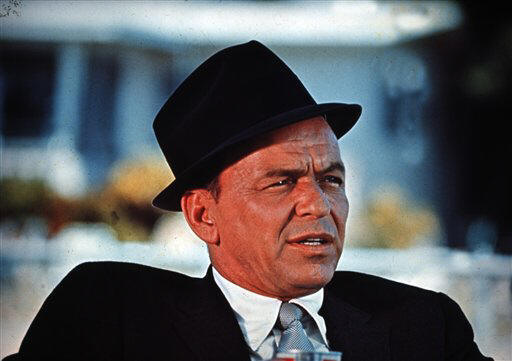
Here is Frank Sinatra in a wool trilby; here is a tweed one.
SUMMER HATS
Boater / Skimmer / Sennit
The boater, also known as the skimmer or sennit (because it’s made from sennit straw), may be the most beautiful hat ever created.
It was wildly popular 100 years ago, but hasn’t been seen much in about 50 years; today, it’s most often seen in Styrofoam at political conventions. A real one is made of rough, amber-colored straw, and is stiff, with a flat top and a stiff, flat brim either two- or three-inches wide.
It’s the most formal straw hat and is similar in formality to a homburg, appropriate only with business suits or black tie. It usually has a red-and-white striped band that looks great with a business suit, but a black band looks better with a tuxedo
I’ve always wanted one, but new ones are expensive and I don’t know that I would have the courage to wear one.
Here is Fred Astaire wearing a boater.
Panama
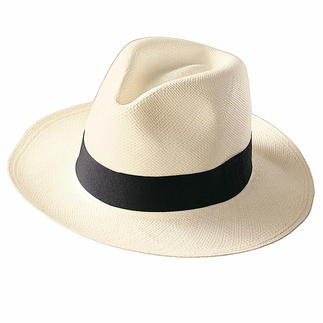
Many connote all white straw hats with black bands, often in fedora shapes, as "Panamas," but a real Panama is soft, has no dents in the crown, and has a crease down the center of the crown, because it can be rolled up and stored in a tube. A Panama is appropriate for anything in formality up to a suit.
Here is a Panama with its storage tube.
Straw Fedoras
This hat is a straw fedora; it’s the same style as a felt one, and is what is often erroneously referred to as a "Panama." Like the Panama for which it’s often mistaken, it’s appropriate for anything in formality up to a suit.
Colors
Unless you want to look like a pimp, the only acceptable felt colors are gray, tan, black, brown, or navy; straw hats should generally be either white or tan.
The band for dress felts should be grosgrain, usually the same color as the felt, and either the same shade of that color, or darker (a lighter band than the felt will usually make you look like a mobster; it’s the equivalent of wearing a black shirt with a white tie). I like a wider band, but that’s a matter of preference.
Sources
A Google search for "men’s hats" will reveal numerous sources; most operate only online, while others are brick-and-mortar stores that ship merchandise.
If you have a real hat store in your city, which is unlikely, start there; an experienced hatter will help you choose a hat appropriate for where you intend to wear it and with a crown height, brim width, and color that suits your features. A real hatter will also be able to "block" the hat to make slight changes to the hat’s shape; change the hatband; or add, remove, or change the hat’s feather, all to suit your personal tastes and features.
Basic straw hats in a real hat store usually start at about $35; wool felts usually start at about $70. And, like anything else, they can often be had cheaper at end-of-season clearance sales. This should be a great time to pick up a straw hat to save for next spring.
 I’m fortunate to be near a real hat store, Hatman Jack’s. Owner Jack Kellogg is very knowledgeable and personable. He has sold hats to the likes of Luciano Pavarotti, Harry Connick, Jr., Mickey Mantle, Charlie Daniels, and B.B. King, and I’ve been buying hats from him for 15 years. You can reach him at 316-264-4881.
Bare-headedness and baseball caps are old-hat
The next time you feel the need to wear something on your head, try a real hat, which is much more attractive — and usually more practical — than a baseball cap. You might find that you like it!
 Justice, Policing, and E-Gold