


A Thousand Clowns
April 30, 2005
We can’t resist a good comedy…or a good opportunity to point and giggle. We keep our eye on economists and politicians the way children watch clowns; we can’t wait to see them get whacked in the head or trip over each other.
But what is amusing is also instructive. Are not clowns people too? Are they not part of human life…human organization…and human economy? Every one of them is driven by the same motors that power everyone else. They want power…glory…money. But how do they get it? Can we not watch politicians and economists and learn something about ourselves?
One of the many conceits of politicians and economists are that they are somehow out of ordinary. They are godlike, or so they pretend, having no other ambition but to make the world a better place. Neither drink, nor meat, nor false witness cross their lips. They sweat for no material gain…and know no lust — save for the betterment of all mankind. They pass laws…they enact codes and regulations…they jiggle this lever and turn another — as if they were the masters of the whole human race, rather than mere parts of it themselves. Since they float above it all, they are not subject to the normal temptations. The rest of us spend our whole lives like animals — craving profits, mates, status, pride, love, and money like a raccoon searching for a garbage pail without a lid. Unless we are kept in tight cages, who knows what we will do?
That is why the tabloid press — especially in England — loves the stories of the government ministers having affairs with their secretaries or cheating on their income tax. Who doesn’t like to see hypocrisy revealed in public? It is as if the King himself had been caught with his pants down; we gape…and see that he is human, just like the rest of us.
But thank God there are leaders! Thinkers! Theorists with their “isms” and their rat wire…ready not merely to keep us from hurting one another, but also to give us a sense of moral purpose. It is not enough that we should each seek happiness in our own private way, we must Free the Sudetenland! Abolish Poverty! Make the World Safe for Democracy! We must realize our manifest destiny…and provide Lebensraum [living space] for the German people! Full employment! A minimum wage! No humbug left behind!
We bring this up only to laugh at it.
In the early 20th century, John Maynard Keynes came up with a new idea about economics. The politicians loved it; Keynes explained how they could meddle in private affairs on a grand scale — and, of course, make things better. Keynes argued that a government could take the edge off a business recession by making more credit available when money got tight…and by spending itself to make up for the lack of spending on the part of consumers and businessmen. Keynes suggested, whimsically, hiding bottles of cash all around town, where boys might find them, spend the money, and revive the economy.
The new idea caught on. Soon economists were advising all major governments about how to implement the new “ism.” It did not seem to bother anyone that the new system was a fraud. Where would this new money come from? And what made anyone think that the economists’ judgment of whether it made sense to spend or save was better than individuals? All the Keynesians had done was to substitute their own guesses for the private, personal, economic opinions of millions of ordinary citizens. They had resorted to what Franz Oppenheimer called “political means,” instead of allowing normal “economic means” to take their own course.
The economists wanted what everyone else wants — power, prestige, women (except for Keynes himself, who preferred men). And there are only two ways to get what you want in life, dear reader. There are honest means, and dishonest ones. There are economic means, and there are political means. There is persuasion…and there is force. There are civilized ways…and barbaric ones. The economist is a harmless crank as long as he is just peeping through the window. That is what we do here at The Daily Reckoning. But when he undertakes to get people to do what he wants — either by offering them money that is not his own…by defrauding them with artificially low interest rates…or by printing up money that is not backed by something of real value (such as gold)…he has crossed over the dark side. He has moved to political means to get what he wants. He has become a jackass.
Keynesian improvements were applied in the ’20s — when Fed governor Ben Strong decided to give the economy a little “coup de whiskey” — and later in the ’30s when the stockmarket was recovering from the hangover. The results were predictably disastrous. And along came other economists with their own bad ideas. Rare was the man, like Robert Lucas or Murray Rothbard, who pointed out that you could not really improve economic results with political means. If a national assembly could make people rich simply by passing laws, we would all be billionaires, because assemblies have passed a multitude of laws and seem capable of enacting any piece of legislation brought before them. If laws could make people wealthy, some assembly somewhere would have found the magic edicts — simply by chance.
But instead of making them richer, each law makes them a little poorer. Every time political means are used they interfere with the private, civilized economic arrangements that actually get people what they want. One man makes shoes. Another grows potatoes. The potato grower goes to the cobbler to buy a pair of shoes. He must exchange two sacks of potatoes for one pair of penny loafers. But then the meddlers show up and tell him he must charge three sacks…so that he can pay one in “taxes,” to the meddlers themselves. And then he needs to put in an alarm system in his shop, and buy a hardhat, and pay his helper minimum wage, and fill out forms for all manner of laudable purposes. When the potato farmer finally shows up at the cobbler’s he is informed that the shoes will cost seven sacks of potatoes! That is just what he has to charge in order to end up with the same two sacks he needed to charge in the beginning. “No thanks,” says the potato man, “At that price, I can’t afford a pair of shoes.”
What the potato grower needs, say the economists, is more money! The money supply has failed to keep pace, they add. That was why they urged the government to set up the Federal Reserve in the first place; they wanted a stooge currency that would be ready to go along with their plans. Gold is fine, they said, but it’s anti-social. It resists new “isms” and drags its feet on financing new social programs. Why, it is positively recalcitrant! Clearly, when we face a war or a Great National Purpose we need money that is willing to stand up and sign on. Gold malingers. Gold hesitates. Gold is reluctant and reticent. Gold is fine as a private money. But what we need is a source of public funding…a flexible, expandable national currency…a political money that we can work with. We need a dollar that is not linked to gold.
In the many years since the creation of the Federal Reserve system as America’s central bank, gold has remained as steadfast and immobile as ever. An ounce of it today buys about the same amount of goods and services as an ounce in 1913. But the dollar has gone along with every bit of political gimcrackery that has come along — the war in Europe, the New Deal, WWII, the Cold War, the Vietnam War, the war on poverty, the war on illiteracy, the New Frontier, the Great Society, Social Security, Medicare, Medicaid, the War in Iraq, the war on terror…the list is long and sordid. As a result, guess how much a dollar is worth today in comparison to one in 1913? Five cents.
Keynesianism is a fraud. Supply-siderism is a con. The dollar itself is a scam. All were developed by people with good intentions. But these good intentions not only paved the road to Hell, they greased it. There was no point putting on the brakes. Once underway, there was no stopping it.
Right now, the United States slides towards some sort of Hell. A half-century of deceit has produced a nation that is ready to believe anything…and go along with anything…provided it promises to make them rich. They will be very disappointed when they discover that all the political means they counted on — the phony money, the laws, the regulations, and the wars — have made them poorer. That is when we will really need cages…
“Nothing in nature is evil,” said Marcus Aurelius. Keynes was human. Even Adolf Hitler was a man, a part of nature himself. And the “Evil Empire,” was it not created by men too, men who — like economists and politicians — followed their own natural impulses? Adolf may have erred and strayed. But he did so with the best of intentions; he thought he was building a better world. And he had all the “reasons” you could ask for. He could argue all day; “proving” that his plan was the best way forward.
Not that there weren’t arguments on the other side. What were smart people to do? People argued about Keynesianism for many years. Each side had good points. One was convincing; the other was persuasive. It was like a couple arguing in divorce court — the husband forgot to take out the trash and knocked over a vase; the wife ran him over with the family car. “He had it coming,” she says.
What would an observer think? No amount of logic could help him. Both parties made good points. All the judge could do was to fall back on his own deep sense of right and wrong, of proportion…and good taste. “She shouldn’t have run him down,” he says solomaniacally.
 “Love the man, hate the sin,” say the Baptist preachers. They have a useful point. There’s no point in hating Adolf, Josef, Osama…or John Maynard…or any of the other thousands of clowns who entertain, annoy and murder us. They are God’s creatures too, just like the rest of us. What they did wrong was what they always do wrong…they all resorted to political means, to get what they wanted.
We do not hate them; we just hope they get what they deserve.
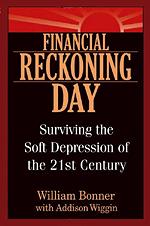
Bill Bonner [send him mail] is the author, with Addison Wiggin, of Financial Reckoning Day: Surviving the Soft Depression of The 21st Century.
 Do We Really Want Conservative Judges?