


Gold: The Barbarous Relic You Can Trust
February 28, 2009
San Jose de los Perros, Nicaragua — Oh…we are such optimists!
So far, the Crash of ’09 has paralleled the Crash of ’29…and the Crash of 1873.
All three began in early September. All three saw the big selling in late October. Both in the case of ’29 and ’09 a near-term bottom was hit in mid-November.
“Moreover, the percentage declines,” writes Dominic Frisby at MoneyMorning, “were virtually identical. An initial decline from the high to a late October low of about 40%, then a rebound of about 15%, followed by a final low in late November — down about another 22%. The parallels are uncanny.
“The worrying thing…it is not unreasonable to expect the eventual low to come no earlier than 2010—11.”
After the initial lows were hit in the Crash of 1873, a rebound continued until May of the following year. After the Crash of ’29, the rebound continued until late April of the following year. In the case of the 1873 sell-off, the final low was not hit until four years later, and in the case of the ’29, the final low was hit in 1932, with stocks 90% below their peaks.
This time the rebound following the November low only recovered 15% of the losses…then, stocks headed down again…and have just now slipped to a new low. If the pattern of the previous two major crashes continues; the final low won’t come for a couple years.
Unless we have a Japan-style slump…in which case, it will take much, much longer. Everything keeps falling in the land of the rising sun. Exports have fallen 45%. And stocks are now at a 26-year low. If we follow that pattern, the eventual low in the Dow may not come until 2019…when stocks will be back to 1994 levels.
And just look at what has already happened to some of America’s leading companies. Citigroup is down 90% from its high. You can buy a share for just $2. But be careful. A government takeover could wipe out the shareholders. The Bank of America has lost 90% of its value. GM is only worth about 3% of what it once was.
JP Morgan cut its dividend by 87%…to just 5 cents a share. Overall, dividends are being cut by a record amount.
Yesterday, the Dow fell again — down 80 points. We have been estimating that it would fall to between 3,000—5,000. But we are eternal optimists. Always looking on the bright side — every glass has a silver lining…and every cloud is half-full! But if the stock market repeats the experience of ’29, it will fall below 2,000.
Frisby reminds us that Bob Prechter has been right about deflation, but wrong about how gold would react to it. Prechter assumed that the price of gold would fall along with everything else. Instead, gold resisted the general downtrend and now seems to be moving in the opposite direction. How come?
We explained it yesterday. Investors aren’t buying gold as a protection against inflation; they’re buying it to protect themselves against deflation. Markets are always trying to figure out what things are worth. At times like this, it becomes obvious that they’re not worth nearly as much as people thought. One company doesn’t have enough sales to pay its overhead. Another can’t make its debt payments. One counterparty fails. Another was counting on that counterparty to pay a third.
When investors buy a stock…they wonder: does this company have unseen liabilities…hidden losses? How will it survive the financial crisis? Will it flourish in the post-bubble economy?
Even if the company is solid…what about the firms that owe it money? What about the firm’s assets? What about its bank account? What about the bank itself?
Question marks had been unwanted and unloved during the boom period. Everyone was so sure of everything. Every sentence was declaratory — stating a fact: “Stocks always go up in the long run.” “You can’t go wrong in housing.” “America has the world’s most dynamic and flexible financial system, where risks are spread thanks to the use of derivative instruments.”
Now, suddenly, question marks are in demand. People are pulling them out of closets and desk drawers; there’s hardly a sentence that doesn’t seem to need one. Every one of them is an interrogatory: “When will this bear market end?” “What do you mean you can’t pay me?” “Are you doing any hiring?”
Investors buy gold because they want something that doesn’t have a question mark behind it. Does the yellow metal depend on its lenders? No. Are its earnings at risk? No. Does it have any toxic assets? No.
Gold is what it is…and nothing more. Useless most of the time; occasionally indispensable.
Uh oh… gold is putting in a “double top” says Frisby:
“I remain convinced of gold’s long-term future, but it looks like we are in the early stages of an intermediate correction.
“I suppose a 50% retracement of the gains since October is not an unreasonable target. That would take us back to the $850 area. (It would also give us a superbly bullish, inverted head-and-shoulders pattern — more on that another day.) I said in my new year predictions in MoneyWeek magazine that a retest of $1,000 was likely in the first part of the year, but that gold would not break through $1,000 until next autumn or winter. We still seem to be on course for that. For now though, the late February to March seasonal correction for gold is playing out to the script…”
Gold is correcting from its recent high. It rose over $1,000 last week. Since then, it’s been giving ground. Yesterday, for example, it lost $3 more…taking it down to $966. Colleague Byron King ruminates on the subject:
“It’s as if the ancient Chinese or Babylonians or Etruscans all figured out how things work in the universe of money, savings and exchange. The trick was to use gold as the key unit of monetary measure. They figured it out back in ancient days. They all had their own Galileo who explained the monetary equivalent of how planets orbit the sun, moons orbit the planets…how the universe worked…except it was that their Galileos explained the meaning of gold. When you have gold, you possess wealth. And it keeps your society honest.
“And in the 20th century, along came the central bankers of the world… modern monetary Copernicuses, of a sort. ‘No,’ they said. ‘Gold is irrelevant. It’s a barbarous relic.’ It’s the monetary equivalent of saying that the planets all orbit around the earth. So no wonder that nobody in modern monetary theory can explain anything, or solve the current mess. Just as you can’t explain the positions of the planets with Copernican methods, modern monetarism is unable to explain why the economy has frozen and won’t get moving again. No one can trust the money. The modern financiers created so much fake currency, that nobody trusts anybody anymore.”
There are 19 million empty houses in America. In Maricopa, Arizona, you can buy a house for $69,000, says a news report.
“Heck, you can buy good houses for just $50,000 in the Miami area,” reports a friend. “I’m beginning to think that property is the best investment I can make now. Stocks could fall another 50%. I’ve got municipal bonds, but who knows what towns are going broke. I don’t trust the dollar. What else can I do?
“I buy a decent house and I know what I’ve got. And right now, I can rent those $50,000 houses for $1,000 a month. So, figuring I miss a few months, I’ll get a gross return of 20% per year. I pay my expenses for half of that. So, I’m getting a very good yield. And I don’t think they will go down much further.”
 Want an even better yield? As you know, we try to keep up with events in Argentina. The country is a mess, of course…but it’s always a mess. A major drought is killing thousands of cattle (we’re selling ours as fast as we can find buyers). And the government is losing whatever little credibility it ever had.
All of these factors, combined with the worldwide financial meltdown, hit Argentine debt like an Australian brush fire. Debt fell 58%. Yields rose to 30% in October ’08.
Since then, investors have calmed down. And now, analysts from Fidelity say they think the Argentine 8.23% bonds of 2033 are a good by. They say the government has enough money to keep going for a couple years. So, investors can collect a 25% yield while they wait for the government to go broke.
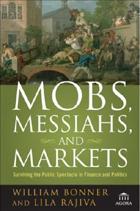
Bill Bonner [send him mail] is the author, with Addison Wiggin, of Financial Reckoning Day: Surviving the Soft Depression of The 21st Century and Empire of Debt: The Rise Of An Epic Financial Crisis and the co-author with Lila Rajiva of Mobs, Messiahs and Markets (Wiley, 2007).
 It May Surprise Obama