


What Ron Paul's Book Accomplishes
April 30, 2008
The Revolution: A Manifesto, whose official release date is today, accomplishes much more than what you see here. But, for starters, here goes:
1. It gives Ron Paul’s movement a statement for the ages. One reason Taft Republicanism died is that Robert Taft left behind no systematic statement of his philosophy around which a continuing effort could cohere. Former Member of Congress Barry Goldwater, Jr., says of the book: "This book takes a wrecking ball to the political establishment. Senator Goldwater would have loved it. It’s The Conscience of a Conservative for the twenty-first century."
2. It is excellent for those who say they respect and agree with Dr. Paul’s domestic views but cannot abide his foreign policy, and/or who denounce his foreign policy as "liberal" (in the sense of left-liberal rather than classical liberal). The foreign policy chapter of The Revolution: A Manifesto is as persuasive and succinct a defense of nonintervention as I’ve ever seen anywhere, and it answers his critics very effectively.
3. A lot of people joined Ron Paul’s movement out of an attachment to one particular issue, and without necessarily understanding the whole package. The Revolution: A Manifesto lays out that whole package as a single, coherent, and elegant whole.
 4. The book gives supporters of Ron Paul’s message scores of additional arguments they can use to defend their positions.
5. This book will be what countless young people, 10 to 20 years down the road, will cite as the formative influence on their political outlook. Although anyone’s mind can be changed, it’s the young, who are still figuring out where they stand, who are most likely to be reached. The Manifesto will reach them, and will continue to reach people long after no one remembers what The Audacity of Hope even was.
6. It explains Dr. Paul’s position on gold, fiat money, and the Federal Reserve System concisely and for the layman. Here’s an issue essentially no one was talking about before, but is now cracking through into mainstream discussion.
Now to be sure, the usual hacks of Left and Right, who supposedly occupy opposing ends of our political spectrum, couldn’t kiss and make up fast enough in their mad rush to defend the institution that has emptied the dollar of its value since 1913. That was to be expected: whenever anyone asks a truly fundamental question, mainstream Left and Right always give the game away and close ranks in defense of the status quo. But enough independent thinkers began investigating Dr. Paul’s arguments that our discourse on these matters has already begun to change.
Still, most people know nothing about the subject, except for an inchoate sense that gold = bad, so Dr. Paul’s chapter on the subject is of great importance. I’ll never forget an entry at DailyKos in which the writer (who wished to explain to her liberal friends that Dr. Paul was really a terrible person who should be ignored in favor of the pro-war, pro-police state Hillary) argued that the gold standard "would destroy the economy." At first we wonder if she’s ever cracked open a single book on the subject, but we already know the answer. Since she never hears monetary freedom and opposition to central banking discussed in Newsweek or the New York Times, she just knows it just has to be wrong.
Dr. Paul calmly eviscerates lazy thinking like that.
7. It is filled with things no presidential candidate would dare tell the American people. I’ve compiled a few examples here.
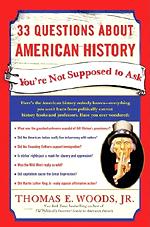 8. A bestselling book, which this one promises to be, gives the movement additional credibility and visibility. Grand Central Publishing (the former Warner Books) is a major publisher, boasting authors ranging from Stephen Colbert to John Paul II. They can get books into stores and Dr. Paul in the media. (Though the more he sells, the more media curiosity he’ll attract, so book purchases certainly help in this department.)
9. For your friends who have heard of Ron Paul only in caricature, or have never heard of him at all, it shows him to be a learned, thoughtful, and mature statesman. Its arguments are consistently persuasive, and it’s written in a way that keeps your attention from the first page to the last. It is a book that can change minds.
 And we sure need plenty of that.
 A Greater Threat Than Global Warming!