


Rethinking the Good War
September 2, 2009
“Rarely in history has a war seemed so just to so many.” ~ Michael Bess “Participation in the war against Hitler remains almost wholly sacrosanct, nearly in the realm of theology.” ~ Bruce Russett On September 1, 1939 — 70 years ago — Germany attacked Poland and officially began World War II. Although over 50 million people died in the war — including 405,000 Americans — it is considered to be the Good War. The fact that most of deaths were on the Allied side (the “good” side), the majority of those killed were civilians, hundreds of millions were wounded — including 671,000 Americans — and/or made refugees, homeless, widows, or orphans, hundreds of billions of dollars worth of property was destroyed, hundreds of billions of dollars more were wasted on armaments, and untold millions underwent an incomprehensible amount of suffering, misery, and loss doesn’t seem to matter either. World War II is still universally recognized as the Good War. How is it possible to make such a description of such carnage on a grand scale? As John V. Denson explains in his essay “Franklin D. Roosevelt and the First Shot” in his book A Century of War: Lincoln, Wilson, and Roosevelt: Part of the mythology that surrounds this war is that it was the “last good war.” It was a “just” war because it was defensive. Despite President Roosevelt’s supreme efforts to keep America neutral regarding controversies in Europe and Asia, the Japanese launched an unprovoked surprise attack at Pearl Harbor, thereby “forcing” America into the fray. It was also a “noble” war because America fought evil tyrannies known as Nazism in Germany and fascism in Italy and Japan. From the American point of view, World War II is basically considered to be the Good War for two reasons: Pearl Harbor and Hitler.
 The Origins of The Sec...
Best Price: $2.01
Buy New $10.65
(as of 03:25 UTC - Details)
The Origins of The Sec...
Best Price: $2.01
Buy New $10.65
(as of 03:25 UTC - Details)
 But setting aside for a moment the facts of Roosevelt’s duplicity and culpability, as well as the U.S. provocation of Japan: Was it necessary for 405,000 American soldiers to die to avenge the 2,400 (1,177 were from one ship, the USS Arizona) who were killed at Pearl Harbor? Was it moral to incinerate hundreds of thousands of civilians in Japanese cities because Japan bombed the Pearl Harbor Naval Base, a military target? And setting aside for another moment the folly of U.S. intervention in World War I, which prevented a dictated peace settlement and paved the way for the harsh terms of the Treaty of Versailles, thus facilitating the rise of Hitler: Was it necessary that tens of millions were slaughtered to prevent Hitler from slaughtering millions? Was it wise to join forces with a brutal dictator like Stalin, who had already killed millions, with the result that he enslaved half of Europe under communism? It is time to rethink the Good War. World War I “The Second World War,” as explained by the widely-published British military historian John Keegan in his book of that name, “in its origin, nature and course, is inexplicable except by reference to the First; and Germany — which, whether or not it is to be blamed for the outbreak, certainly struck the first blow — undoubtedly went to war in 1939 to recover the place in the world it had lost by its defeat in 1918.” Not only would World War II never have taken place without World War I: “The first war explains the second and, in fact, caused it, in so far as one event causes another,” said British historian A. J. P. Taylor (1906—1990) in his seminal work The Origins of the Second World War. “Germany fought specifically in the second war to reverse the verdict of the first and to destroy the settlement that followed it,” adds Taylor. “This is not peace,” said French Marshal Ferdinand Foch after Versailles, “it is an armistice for twenty years.”
 War is a Racket: The A...
Best Price: $2.55
Buy New $7.01
(as of 05:45 UTC - Details)
World War II as we know it would never have taken place without U.S. intervention in World War I. Just before the Second Battle of the Marne, only five months before the armistice of November 11, 1918, German armies, as related by John Keegan, occupied the whole of western Russia . . . enclosed Kiev . . . and cut off from the rest of the country one-third of Russia’s population, one-third of its agricultural land and more than one-half of its industry. . . . German expeditionary forces operated as far east as Georgia in Transcaucasia and as far south as the Bulgarian frontier with Greece and the plain of Po in Italy. Through her Austrian and Bulgarian satellites Germany controlled the whole of the Balkans and, by her alliance with Turkey, extended her power as far away as northern Arabia and northern Persia. In Scandinavia, Sweden remained a friendly neutral, while Germany was helping Finland to gain its independence from the Bolsheviks . . . . In distant south-east Africa a German colonial army kept in play an Allied army ten times its size. And in the west, on the war’s critical front, the German armies stood within fifty miles of Paris. In five great offensives, begun the previous March, the German high command had regained all the territory contested with France since the First Battle of the Marne fought four years earlier. A sixth offensive promised to carry its spearheads to the French capital and win the war. The United States officially declared war on Germany on April 6, 1917. By June of that year, the first U.S. troops landed in France. By March of 1918, 250,000 U.S. doughboys were in France. That number increased to 1 million by the time of the Second Battle of the Marne. But even after this and subsequent victories for the Allies, no battles were ever fought on German soil. World War I was not our war. In a memo written at the end of World War II, Churchill wrote: This war should never have come unless, under American and modernizing pressure, we had driven the Habsburgs out of Austria and the Hohenzollerns out of Germany. By making these vacuums we gave the opening for the Hitlerite monster to crawl out of its sewer onto the vacant thrones. No doubt these views are very unfashionable. The Revolutionary War was our war. The War of 1812 was our war. The Mexican War was our war. The Spanish-American War was our war. The Philippine-American War was our war. But World War I was not our war. Had we stayed out of it, another European war would have come to an end — as they had for centuries. The history of Europe is the history of war.
War is a Racket: The A...
Best Price: $2.55
Buy New $7.01
(as of 05:45 UTC - Details)
World War II as we know it would never have taken place without U.S. intervention in World War I. Just before the Second Battle of the Marne, only five months before the armistice of November 11, 1918, German armies, as related by John Keegan, occupied the whole of western Russia . . . enclosed Kiev . . . and cut off from the rest of the country one-third of Russia’s population, one-third of its agricultural land and more than one-half of its industry. . . . German expeditionary forces operated as far east as Georgia in Transcaucasia and as far south as the Bulgarian frontier with Greece and the plain of Po in Italy. Through her Austrian and Bulgarian satellites Germany controlled the whole of the Balkans and, by her alliance with Turkey, extended her power as far away as northern Arabia and northern Persia. In Scandinavia, Sweden remained a friendly neutral, while Germany was helping Finland to gain its independence from the Bolsheviks . . . . In distant south-east Africa a German colonial army kept in play an Allied army ten times its size. And in the west, on the war’s critical front, the German armies stood within fifty miles of Paris. In five great offensives, begun the previous March, the German high command had regained all the territory contested with France since the First Battle of the Marne fought four years earlier. A sixth offensive promised to carry its spearheads to the French capital and win the war. The United States officially declared war on Germany on April 6, 1917. By June of that year, the first U.S. troops landed in France. By March of 1918, 250,000 U.S. doughboys were in France. That number increased to 1 million by the time of the Second Battle of the Marne. But even after this and subsequent victories for the Allies, no battles were ever fought on German soil. World War I was not our war. In a memo written at the end of World War II, Churchill wrote: This war should never have come unless, under American and modernizing pressure, we had driven the Habsburgs out of Austria and the Hohenzollerns out of Germany. By making these vacuums we gave the opening for the Hitlerite monster to crawl out of its sewer onto the vacant thrones. No doubt these views are very unfashionable. The Revolutionary War was our war. The War of 1812 was our war. The Mexican War was our war. The Spanish-American War was our war. The Philippine-American War was our war. But World War I was not our war. Had we stayed out of it, another European war would have come to an end — as they had for centuries. The history of Europe is the history of war.
 America First! Its His...
Best Price: $2.00
Buy New $20.00
(as of 11:14 UTC - Details)
European Wars The America Founding Fathers, whatever their faults, realized this. Most educated people are familiar with the “isolationist” sentiments of George Washington in his farewell address: The great rule of conduct for us in regard to foreign nations is, in extending our commercial relations to have with them as little political connection as possible. Europe has a set of primary interests which to us have none; or a very remote relation. Hence she must be engaged in frequent controversies, the causes of which are essentially foreign to our concerns. Hence, therefore, it must be unwise in us to implicate ourselves by artificial ties in the ordinary vicissitudes of her politics, or the ordinary combinations and collisions of her friendships or enmities. Why, by interweaving our destiny with that of any part of Europe, entangle our peace and prosperity in the toils of European ambition, rivalship, interest, humor or caprice? It is our true policy to steer clear of permanent alliances with any portion of the foreign world. But it is our third president, Thomas Jefferson, who had spent time in Europe, that over and over and over again warned about getting embroiled in European affairs: For years we have been looking as spectators on our brethren in Europe, afflicted by all those evils which necessarily follow an abandonment of the moral rules which bind men and nations together. Connected with them in friendship and commerce, we have happily so far kept aloof from their calamitous conflicts, by a steady observance of justice towards all, by much forbearance and multiplied sacrifices. We have seen with sincere concern the flames of war lighted up again in Europe, and nations with which we have the most friendly and useful relations engaged in mutual destruction. While we regret the miseries in which we see others involved let us bow with gratitude to that kind Providence which, inspiring with wisdom and moderation our late legislative councils while paced under the urgency of the greatest wrongs, guarded us from hastily entering into the sanguinary contest, and left us only to look on and to pity its ravages. Believing that the happiness of mankind is best promoted by the useful pursuits of peace, that on these alone a stable prosperity can be founded, that the evils of war are great in their endurance, and have a long reckoning for ages to come, I have used my best endeavors to keep our country uncommitted in the troubles which afflict Europe, and which assail us on every side. You will do what is right, leaving the people of Europe to act their follies and crimes among themselves, while we pursue in good faith the paths of peace and prosperity.
America First! Its His...
Best Price: $2.00
Buy New $20.00
(as of 11:14 UTC - Details)
European Wars The America Founding Fathers, whatever their faults, realized this. Most educated people are familiar with the “isolationist” sentiments of George Washington in his farewell address: The great rule of conduct for us in regard to foreign nations is, in extending our commercial relations to have with them as little political connection as possible. Europe has a set of primary interests which to us have none; or a very remote relation. Hence she must be engaged in frequent controversies, the causes of which are essentially foreign to our concerns. Hence, therefore, it must be unwise in us to implicate ourselves by artificial ties in the ordinary vicissitudes of her politics, or the ordinary combinations and collisions of her friendships or enmities. Why, by interweaving our destiny with that of any part of Europe, entangle our peace and prosperity in the toils of European ambition, rivalship, interest, humor or caprice? It is our true policy to steer clear of permanent alliances with any portion of the foreign world. But it is our third president, Thomas Jefferson, who had spent time in Europe, that over and over and over again warned about getting embroiled in European affairs: For years we have been looking as spectators on our brethren in Europe, afflicted by all those evils which necessarily follow an abandonment of the moral rules which bind men and nations together. Connected with them in friendship and commerce, we have happily so far kept aloof from their calamitous conflicts, by a steady observance of justice towards all, by much forbearance and multiplied sacrifices. We have seen with sincere concern the flames of war lighted up again in Europe, and nations with which we have the most friendly and useful relations engaged in mutual destruction. While we regret the miseries in which we see others involved let us bow with gratitude to that kind Providence which, inspiring with wisdom and moderation our late legislative councils while paced under the urgency of the greatest wrongs, guarded us from hastily entering into the sanguinary contest, and left us only to look on and to pity its ravages. Believing that the happiness of mankind is best promoted by the useful pursuits of peace, that on these alone a stable prosperity can be founded, that the evils of war are great in their endurance, and have a long reckoning for ages to come, I have used my best endeavors to keep our country uncommitted in the troubles which afflict Europe, and which assail us on every side. You will do what is right, leaving the people of Europe to act their follies and crimes among themselves, while we pursue in good faith the paths of peace and prosperity.
 Peace: A History of Mo...
Best Price: $6.99
Buy New $27.25
(as of 10:47 UTC - Details)
Since this happy separation, our nation has wisely avoided entangling itself in the system of European interests, has taken no side between its rival powers, attached itself to none of its ever-changing confederacies. Their peace is desirable; and you do me justice in saying that to preserve and secure this, has been the constant aim of my administration. Peace and abstinence from European interferences are our objects, and so will continue while the present order of things in America remain uninterrupted. I have used my best endeavors to keep our country uncommitted in the troubles which afflict Europe, and which assail us on every side. Nothing is so important as that America shall separate herself from the systems of Europe, and establish one of her own. Our circumstances, our pursuits, our interests, are distinct. The principles of our policy should be so also. All entanglements with that quarter of the globe should be avoided if we mean that peace and justice shall be the polar stars of the American societies. I am decidedly of opinion we should take no part in European quarrels, but cultivate peace and commerce with all. I am for free commerce with all nations, political connection with none, and little or no diplomatic establishment. And I am not for linking ourselves by new treaties with the quarrels of Europe, entering that field of slaughter to preserve their balance, or joining in the confederacy of Kings to war against the principles of liberty. At such a distance from Europe and with such an ocean between us, we hope to meddle little in its quarrels or combinations. Its peace and its commerce are what we shall court. Determined as we are to avoid, if possible, wasting the energies of our people in war and destruction, we shall avoid implicating ourselves with the powers of Europe, even in support of principles which we mean to pursue. They have so many other interests different from ours, that we must avoid being entangled in them. In 1941, Representative Frances Bolton (R-OH), in the Congressional Record, and historian Charles A. Beard, in the Chicago Daily Tribune, each presented lists of the various European wars. John Keegan points out that “Hiram Maxim, the inventor of the first successful machine-gun, is alleged to have given up experiments in electrical engineering in 1883 on the advice of a fellow American who said: u2018Hang your electricity! If you want to make your fortune, invent something which will allow those fool Europeans to kill each other more quickly.'”
Peace: A History of Mo...
Best Price: $6.99
Buy New $27.25
(as of 10:47 UTC - Details)
Since this happy separation, our nation has wisely avoided entangling itself in the system of European interests, has taken no side between its rival powers, attached itself to none of its ever-changing confederacies. Their peace is desirable; and you do me justice in saying that to preserve and secure this, has been the constant aim of my administration. Peace and abstinence from European interferences are our objects, and so will continue while the present order of things in America remain uninterrupted. I have used my best endeavors to keep our country uncommitted in the troubles which afflict Europe, and which assail us on every side. Nothing is so important as that America shall separate herself from the systems of Europe, and establish one of her own. Our circumstances, our pursuits, our interests, are distinct. The principles of our policy should be so also. All entanglements with that quarter of the globe should be avoided if we mean that peace and justice shall be the polar stars of the American societies. I am decidedly of opinion we should take no part in European quarrels, but cultivate peace and commerce with all. I am for free commerce with all nations, political connection with none, and little or no diplomatic establishment. And I am not for linking ourselves by new treaties with the quarrels of Europe, entering that field of slaughter to preserve their balance, or joining in the confederacy of Kings to war against the principles of liberty. At such a distance from Europe and with such an ocean between us, we hope to meddle little in its quarrels or combinations. Its peace and its commerce are what we shall court. Determined as we are to avoid, if possible, wasting the energies of our people in war and destruction, we shall avoid implicating ourselves with the powers of Europe, even in support of principles which we mean to pursue. They have so many other interests different from ours, that we must avoid being entangled in them. In 1941, Representative Frances Bolton (R-OH), in the Congressional Record, and historian Charles A. Beard, in the Chicago Daily Tribune, each presented lists of the various European wars. John Keegan points out that “Hiram Maxim, the inventor of the first successful machine-gun, is alleged to have given up experiments in electrical engineering in 1883 on the advice of a fellow American who said: u2018Hang your electricity! If you want to make your fortune, invent something which will allow those fool Europeans to kill each other more quickly.'”
 Storm on the Horizon: ...
Best Price: $21.58
Buy New $45.00
(as of 05:00 UTC - Details)
American Foreign Policy The United States followed Washington’s “great rule” for most of the nineteenth century. In the midst of enthusiasm for Greece in its nationalist struggle against the Ottoman Turks and Latin America against Spain, Secretary of State (and future president) John Quincy Adams delivered a brief address on American foreign policy on the Fourth of July in 1821 in which he argued for a policy of sympathy and example, but not intervention: Wherever the standard of freedom and independence has been unfurled, there will her [America’s] heart, her benedictions, and her prayers be. But she goes not abroad in search of monsters to destroy. She is the well-wisher to the freedom and independence of all. She is the champion and vindicator only of her own. She will commend the general cause by the countenance of her voice, and the benignant sympathy of her example. She well knows that by once enlisting under other banners than her own, were they even the banners of foreign independence, she would involve herself beyond the power of extrication, in all the wars of interest and intrigue, of individual avarice, envy, and ambition, which assume the colors and usurp the standard of freedom. Likewise, when the Hungarian nationalist Louis Kossuth sought American aid in the struggle for Hungarian independence, Henry Clay remarked that “the cause of liberty” is better served by “avoiding the distant wars of Europe.” We should instead “keep our lamp burning brightly on this Western Shore, as a light to all nations, than to hazard its utter extinction, amid the ruins of fallen or falling republics in Europe,” said Clay. When President Grover Cleveland delivered his first inaugural address in 1885, he saw no reason to deviate from a century of nonintervention: The genius of our institutions, the needs of our people in their home life, and the attention which is demanded for the settlement and development of the resources of our vast territory dictate the scrupulous avoidance of any departure from the foreign policy commended by the history, the traditions, and the prosperity of our republic. This does not mean that U.S. forces never landed in Central and South America or that the U.S. Navy never sailed to the Far East. These things happened every year or so, but always to protect U.S. citizens or promote U.S. interests. The acquisitions, absorptions, imperialism, and military expansionism of the United States in the nineteenth century were primarily continental. The big shift in American foreign policy began with the 1893 overthrow of the Hawaiian monarchy and the 1898 annexation of Hawaii — a de facto American protectorate since the 1850s. (It should be noted that without the annexation of Hawaii there would have been no Pearl Harbor to be bombed by the Japanese; just like without the purchase of Alaska from Russia in 1867 there would have been no fighting with Japan in the Aleutian Islands in 1942—1943, which resulted in the deaths of 1,500 American soldiers.) The seizing of Hawaii was followed by the acquisition of Cuba, Puerto Rico, the Philippines, and Guam from Spain during the Spanish-American War. The United States was fast becoming a global imperial power — like the Europeans. But after being reelected on the campaign slogan of “He kept us out of war,” President Wilson, not five months later, asked Congress for a declaration of war against Germany to make the world “safe for Democracy.” The vote was 82—6 in the Senate and 373—50 in the House — in favor of jettisoning the foreign policy of the Founders. The cost in American lives was 117,000. The Great War — with its death and destruction on a scale never seen before in history, tremendous expansion of government power, unprecedented violations of civil liberties, artificial creation of countries like Yugoslavia, Czechoslovakia, and Iraq, Carthaginian peace imposed on Germany, and starvation blockade of Germany that former president Herbert Hoover called “a wicked thrust of Allied militarism and punishment” — was the great mistake, as far as America was concerned. The Interwar Years All of this was almost universally recognized in the United States in the interim between the world wars. The spirit of peace and nonintervention prevailed. Disillusionment with war spread throughout society. The horrors of war were graphically depicted in literature and film. In 1921, Eugene Debs, who had been sent to prison in 1918 for urging resistance to conscription, had his sentence commuted and was received by President Harding at the White House. “Revisionist” books, like The Genesis of the World War (1926) by Harry Elmer Barnes (1889—1968), were published by the major publishing houses. The German antiwar novel All Quiet on the Western Front, which appeared in 1928, was translated in English and made into a movie in 1930. Marine Corps Major General Smedley Butler denounced war after his retirement in his 1935 book War Is a Racket. New peace and pacifist organizations were formed. After winning the right to vote, women turned more of their attention to the peace effort. Women founded the War Resister League in 1924 as a registry for those who refused to participate in war. The Peace Letter campaign of 1925 sought and received signatures on a pledge to “refuse to support or render war service to any Government which resorts to arms.” Albert Einstein and other intellectuals actively supported campaigns for conscientious objection and against conscription. Hundreds of college students signed a pledge that they would not “support the United States government in any war it may conduct.” There were student strikes in the mid-1930s to protest the growing threat of war. Advocates of strict neutrality called for the embargoing of all belligerents to prevent economic interests from dragging the country into war. As Spain erupted into civil war, the Emergency Peace Campaign sponsored meetings in hundreds of American cities in 1936. The following year the group launched the No-Foreign-War Crusade to bolster the antiwar movement. The Keep America Out of War Congress was formed in 1938. Even many American organizations that supported FDR’s domestic agenda opposed his foreign policy.
Storm on the Horizon: ...
Best Price: $21.58
Buy New $45.00
(as of 05:00 UTC - Details)
American Foreign Policy The United States followed Washington’s “great rule” for most of the nineteenth century. In the midst of enthusiasm for Greece in its nationalist struggle against the Ottoman Turks and Latin America against Spain, Secretary of State (and future president) John Quincy Adams delivered a brief address on American foreign policy on the Fourth of July in 1821 in which he argued for a policy of sympathy and example, but not intervention: Wherever the standard of freedom and independence has been unfurled, there will her [America’s] heart, her benedictions, and her prayers be. But she goes not abroad in search of monsters to destroy. She is the well-wisher to the freedom and independence of all. She is the champion and vindicator only of her own. She will commend the general cause by the countenance of her voice, and the benignant sympathy of her example. She well knows that by once enlisting under other banners than her own, were they even the banners of foreign independence, she would involve herself beyond the power of extrication, in all the wars of interest and intrigue, of individual avarice, envy, and ambition, which assume the colors and usurp the standard of freedom. Likewise, when the Hungarian nationalist Louis Kossuth sought American aid in the struggle for Hungarian independence, Henry Clay remarked that “the cause of liberty” is better served by “avoiding the distant wars of Europe.” We should instead “keep our lamp burning brightly on this Western Shore, as a light to all nations, than to hazard its utter extinction, amid the ruins of fallen or falling republics in Europe,” said Clay. When President Grover Cleveland delivered his first inaugural address in 1885, he saw no reason to deviate from a century of nonintervention: The genius of our institutions, the needs of our people in their home life, and the attention which is demanded for the settlement and development of the resources of our vast territory dictate the scrupulous avoidance of any departure from the foreign policy commended by the history, the traditions, and the prosperity of our republic. This does not mean that U.S. forces never landed in Central and South America or that the U.S. Navy never sailed to the Far East. These things happened every year or so, but always to protect U.S. citizens or promote U.S. interests. The acquisitions, absorptions, imperialism, and military expansionism of the United States in the nineteenth century were primarily continental. The big shift in American foreign policy began with the 1893 overthrow of the Hawaiian monarchy and the 1898 annexation of Hawaii — a de facto American protectorate since the 1850s. (It should be noted that without the annexation of Hawaii there would have been no Pearl Harbor to be bombed by the Japanese; just like without the purchase of Alaska from Russia in 1867 there would have been no fighting with Japan in the Aleutian Islands in 1942—1943, which resulted in the deaths of 1,500 American soldiers.) The seizing of Hawaii was followed by the acquisition of Cuba, Puerto Rico, the Philippines, and Guam from Spain during the Spanish-American War. The United States was fast becoming a global imperial power — like the Europeans. But after being reelected on the campaign slogan of “He kept us out of war,” President Wilson, not five months later, asked Congress for a declaration of war against Germany to make the world “safe for Democracy.” The vote was 82—6 in the Senate and 373—50 in the House — in favor of jettisoning the foreign policy of the Founders. The cost in American lives was 117,000. The Great War — with its death and destruction on a scale never seen before in history, tremendous expansion of government power, unprecedented violations of civil liberties, artificial creation of countries like Yugoslavia, Czechoslovakia, and Iraq, Carthaginian peace imposed on Germany, and starvation blockade of Germany that former president Herbert Hoover called “a wicked thrust of Allied militarism and punishment” — was the great mistake, as far as America was concerned. The Interwar Years All of this was almost universally recognized in the United States in the interim between the world wars. The spirit of peace and nonintervention prevailed. Disillusionment with war spread throughout society. The horrors of war were graphically depicted in literature and film. In 1921, Eugene Debs, who had been sent to prison in 1918 for urging resistance to conscription, had his sentence commuted and was received by President Harding at the White House. “Revisionist” books, like The Genesis of the World War (1926) by Harry Elmer Barnes (1889—1968), were published by the major publishing houses. The German antiwar novel All Quiet on the Western Front, which appeared in 1928, was translated in English and made into a movie in 1930. Marine Corps Major General Smedley Butler denounced war after his retirement in his 1935 book War Is a Racket. New peace and pacifist organizations were formed. After winning the right to vote, women turned more of their attention to the peace effort. Women founded the War Resister League in 1924 as a registry for those who refused to participate in war. The Peace Letter campaign of 1925 sought and received signatures on a pledge to “refuse to support or render war service to any Government which resorts to arms.” Albert Einstein and other intellectuals actively supported campaigns for conscientious objection and against conscription. Hundreds of college students signed a pledge that they would not “support the United States government in any war it may conduct.” There were student strikes in the mid-1930s to protest the growing threat of war. Advocates of strict neutrality called for the embargoing of all belligerents to prevent economic interests from dragging the country into war. As Spain erupted into civil war, the Emergency Peace Campaign sponsored meetings in hundreds of American cities in 1936. The following year the group launched the No-Foreign-War Crusade to bolster the antiwar movement. The Keep America Out of War Congress was formed in 1938. Even many American organizations that supported FDR’s domestic agenda opposed his foreign policy.
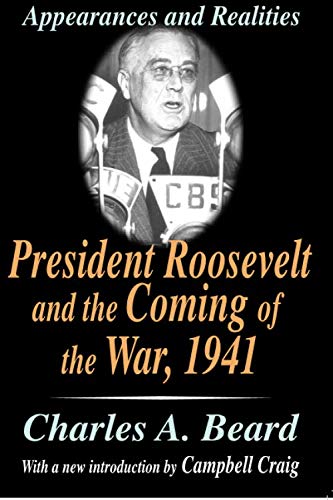 President Roosevelt an...
Best Price: $28.89
Buy New $41.45
(as of 10:15 UTC - Details)
The Five-Power Treaty, signed by the United States, Britain, France, Japan, and Italy in 1922, was an agreement to voluntarily scrap warships and limit the construction of new ones. The Kellogg-Briand Pact was signed in 1928 by the United States and the other major powers as they pledged to renounce war as an instrument of national policy. The Nye Committee in the U.S. Senate, which met between 1934 and 1935, investigated the munitions industry and documented not only the large profits made by arms manufacturers during World War I, but price fixing, the bribing of public officials, and collusion between U.S. and British firms. The U.S. Congress passed a series of Neutrality Acts beginning in 1935. The proposed amendment to the Constitution by Rep. Louis Ludlow (D-IN), introduced several times in Congress beginning in 1935, called for a national referendum on congressional declarations of war, unless the United States was attacked first. General Smedley Butler recommended a Peace Amendment that would prohibit the removal of the Army from U.S. soil, limit the distance that Navy ships could steam from our coasts, and limit the distance that military aircraft could fly from our borders. It was the same even after the start of the war in Europe. The America First Committee was formed in 1940 to try to keep the United States out of the war. Membership was over 800,000, with millions of fellow travelers. The AFC regularly published its statement of principles:
President Roosevelt an...
Best Price: $28.89
Buy New $41.45
(as of 10:15 UTC - Details)
The Five-Power Treaty, signed by the United States, Britain, France, Japan, and Italy in 1922, was an agreement to voluntarily scrap warships and limit the construction of new ones. The Kellogg-Briand Pact was signed in 1928 by the United States and the other major powers as they pledged to renounce war as an instrument of national policy. The Nye Committee in the U.S. Senate, which met between 1934 and 1935, investigated the munitions industry and documented not only the large profits made by arms manufacturers during World War I, but price fixing, the bribing of public officials, and collusion between U.S. and British firms. The U.S. Congress passed a series of Neutrality Acts beginning in 1935. The proposed amendment to the Constitution by Rep. Louis Ludlow (D-IN), introduced several times in Congress beginning in 1935, called for a national referendum on congressional declarations of war, unless the United States was attacked first. General Smedley Butler recommended a Peace Amendment that would prohibit the removal of the Army from U.S. soil, limit the distance that Navy ships could steam from our coasts, and limit the distance that military aircraft could fly from our borders. It was the same even after the start of the war in Europe. The America First Committee was formed in 1940 to try to keep the United States out of the war. Membership was over 800,000, with millions of fellow travelers. The AFC regularly published its statement of principles:
- Our first duty is to keep America out of foreign wars. Our entry would only destroy democracy, not save it.
- We must build a defense, for our own shores, so strong that no foreign power or combination of powers can invade our country by sea, air or land.
- Not by acts of war, but by preserving and extending democracy at home can we aid democracy and freedom in other lands.
- In 1917 we sent our ships into the war zone; and this led us to war. In 1941 we must keep our naval convoys and merchant vessels on this side of the Atlantic.
- Humanitarian aid is the duty of a strong free country at peace. With proper safeguards for the distribution of supplies we should feed and clothe the suffering and needy people of the occupied countries.
- We advocate official advisory vote by the people of the United States on the question of war and peace, so that when Congress decides this question, as the Constitution provides, it may know the opinion of the people on this gravest of all issues.
 America’s Second...
Best Price: $6.99
Buy New $12.00
(as of 11:13 UTC - Details)
On the American First Committee, see Bill Kauffman’s America First!: Its History, Culture, and Politics (Prometheus Books, 1995). On American anti-interventionist thought during the interwar years, see Eric A. Nordlinger’s Isolationism Reconfigured: American Foreign Policy for a New Century (Princeton University Press, 1995) and David Cortright’s Peace: A History of Movements and Ideas (Cambridge University Press, 2008). Indispensable on this subject is Justus D. Doenecke’s Storm on the Horizon: The Challenge to American Intervention 1939—1941 (Rowman & Littlefield, 2000). Both the Democrats and Republicans had antiwar statements in their 1940 political platforms: We will not participate in foreign wars and we will not send our army, naval or air forces to fight in foreign lands outside the Americas, except in case of attack. The Republican Party is firmly opposed to involving this nation in foreign wars. Both candidates — Roosevelt and Willkie — campaigned on the promise to stay out of foreign wars: While I am talking to you mothers and fathers, I give you one more assurance. I have said this before but I shall say it again and again. Your boys are not going to be sent into any foreign wars. If you elect me President, I will never send an American boy to fight in a European war. Now, we know that presidential candidates, like all other political candidates, will say whatever they think the public wants to hear in order to get elected. Roosevelt, as will be seen, moved the country toward war even while speaking out against getting involved. And Willkie, who openly espoused interventionism and raised money for interventionist causes before his run for the presidency as a weak peace candidate, showed his true interventionist colors after he lost the election. The point here is that what both candidates said about staying out of foreign wars resonated with the American people. But instead of Americans learning the lesson they should have from World War I, they succumbed to the war propaganda once more and got involved again — going to war in Europe after being attacked by an Asian country. This time, however, there was no turning back. World War II has been viewed as the “great exception” to the “great rule” of George Washington ever since. And not only that, America’s entry in the war was, as Murray Rothbard wrote in his obituary for Harry Elmer Barnes: The crucial act in expanding the United States from a republic into an Empire, and in spreading that Empire throughout the world, replacing the sagging British Empire in the process. Our entry into World War II was the crucial act in foisting a permanent militarization upon the economy and society, in bringing to the country a permanent garrison state, an overweening military-industrial complex, a permanent system of conscription. It was the crucial act in creating a Mixed Economy run by Big Government, a system of State-Monopoly-Capitalism run by the central government in collaboration with Big Business and Big Unionism. It was the crucial act in elevating Presidential power, particularly in foreign affairs, to the role of single most despotic person in the history of the world. And, finally, World War II is the last war-myth left, the myth that the Old Left clings to in pure desperation: the myth that here, at least, was a good war, here was a war in which America was in the right. World War II is the war thrown into our faces by the war-making Establishment, as it tries, in each war that we face, to wrap itself in the mantle of good and righteous World War II. But none of this matters because of Pearl Harbor. In fact, nothing we did to Japan during the war matters — because of Pearl Harbor. And for that matter, nothing we did during the war to Japan, Germany, Italy, or anyone else, including civilians and U.S. citizens, matters — because of Pearl Harbor. A Date which Will Live in Infamy The attack on Pearl Harbor was, of course, what actively put the United States into the Second World War. Without war against Japan, the conflict with Germany could conceivably have been limited to naval engagements. But was the “sudden and deliberate attack” on Pearl Harbor a surprise? There have been a slew of books written over the years on the subject of Roosevelt’s duplicity and culpability regarding the Japanese attack on Pearl Harbor. I believe the most recent one is George Victor’s The Pearl Harbor Myth: Rethinking the Unthinkable (Potomac Books, 2007). This is an exceptional book, not only because it is up-to-date and very well documented, but also because the author is an “admirer of Roosevelt” who maintains that “criticism and justification of Roosevelt’s acts are outside the purpose of this book.” But before World War II had even ended, Roosevelt’s nemesis John T. Flynn (1882—1964) wrote what is probably the first “revisionist” account of the Pearl Harbor attack: The Truth About Pearl Harbor. This appeared on the front page of the Chicago Daily Tribune on October 22, 1944, “with only a few deletions,” under the headline of: “Records Bear Truth about Pearl Harbor.” Flynn wrote a sequel in 1945 that was published in the same paper on September 2, 1945, under the three headlines of: Exposes More Secrets of Pearl Harbor Scandal Blame for Tragic Delays Fixed; Blunders Bared
America’s Second...
Best Price: $6.99
Buy New $12.00
(as of 11:13 UTC - Details)
On the American First Committee, see Bill Kauffman’s America First!: Its History, Culture, and Politics (Prometheus Books, 1995). On American anti-interventionist thought during the interwar years, see Eric A. Nordlinger’s Isolationism Reconfigured: American Foreign Policy for a New Century (Princeton University Press, 1995) and David Cortright’s Peace: A History of Movements and Ideas (Cambridge University Press, 2008). Indispensable on this subject is Justus D. Doenecke’s Storm on the Horizon: The Challenge to American Intervention 1939—1941 (Rowman & Littlefield, 2000). Both the Democrats and Republicans had antiwar statements in their 1940 political platforms: We will not participate in foreign wars and we will not send our army, naval or air forces to fight in foreign lands outside the Americas, except in case of attack. The Republican Party is firmly opposed to involving this nation in foreign wars. Both candidates — Roosevelt and Willkie — campaigned on the promise to stay out of foreign wars: While I am talking to you mothers and fathers, I give you one more assurance. I have said this before but I shall say it again and again. Your boys are not going to be sent into any foreign wars. If you elect me President, I will never send an American boy to fight in a European war. Now, we know that presidential candidates, like all other political candidates, will say whatever they think the public wants to hear in order to get elected. Roosevelt, as will be seen, moved the country toward war even while speaking out against getting involved. And Willkie, who openly espoused interventionism and raised money for interventionist causes before his run for the presidency as a weak peace candidate, showed his true interventionist colors after he lost the election. The point here is that what both candidates said about staying out of foreign wars resonated with the American people. But instead of Americans learning the lesson they should have from World War I, they succumbed to the war propaganda once more and got involved again — going to war in Europe after being attacked by an Asian country. This time, however, there was no turning back. World War II has been viewed as the “great exception” to the “great rule” of George Washington ever since. And not only that, America’s entry in the war was, as Murray Rothbard wrote in his obituary for Harry Elmer Barnes: The crucial act in expanding the United States from a republic into an Empire, and in spreading that Empire throughout the world, replacing the sagging British Empire in the process. Our entry into World War II was the crucial act in foisting a permanent militarization upon the economy and society, in bringing to the country a permanent garrison state, an overweening military-industrial complex, a permanent system of conscription. It was the crucial act in creating a Mixed Economy run by Big Government, a system of State-Monopoly-Capitalism run by the central government in collaboration with Big Business and Big Unionism. It was the crucial act in elevating Presidential power, particularly in foreign affairs, to the role of single most despotic person in the history of the world. And, finally, World War II is the last war-myth left, the myth that the Old Left clings to in pure desperation: the myth that here, at least, was a good war, here was a war in which America was in the right. World War II is the war thrown into our faces by the war-making Establishment, as it tries, in each war that we face, to wrap itself in the mantle of good and righteous World War II. But none of this matters because of Pearl Harbor. In fact, nothing we did to Japan during the war matters — because of Pearl Harbor. And for that matter, nothing we did during the war to Japan, Germany, Italy, or anyone else, including civilians and U.S. citizens, matters — because of Pearl Harbor. A Date which Will Live in Infamy The attack on Pearl Harbor was, of course, what actively put the United States into the Second World War. Without war against Japan, the conflict with Germany could conceivably have been limited to naval engagements. But was the “sudden and deliberate attack” on Pearl Harbor a surprise? There have been a slew of books written over the years on the subject of Roosevelt’s duplicity and culpability regarding the Japanese attack on Pearl Harbor. I believe the most recent one is George Victor’s The Pearl Harbor Myth: Rethinking the Unthinkable (Potomac Books, 2007). This is an exceptional book, not only because it is up-to-date and very well documented, but also because the author is an “admirer of Roosevelt” who maintains that “criticism and justification of Roosevelt’s acts are outside the purpose of this book.” But before World War II had even ended, Roosevelt’s nemesis John T. Flynn (1882—1964) wrote what is probably the first “revisionist” account of the Pearl Harbor attack: The Truth About Pearl Harbor. This appeared on the front page of the Chicago Daily Tribune on October 22, 1944, “with only a few deletions,” under the headline of: “Records Bear Truth about Pearl Harbor.” Flynn wrote a sequel in 1945 that was published in the same paper on September 2, 1945, under the three headlines of: Exposes More Secrets of Pearl Harbor Scandal Blame for Tragic Delays Fixed; Blunders Bared
John T. Flynn Charges Government Knew Jap Cabinet Intended to Break Relations
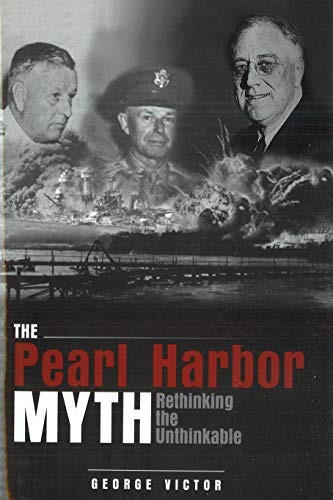 The Pearl Harbor Myth:...
Best Price: $6.98
Buy New $39.50
(as of 02:20 UTC - Details)
The editor’s note preceding the article reads: John T. Flynn, investigator and publicist, author of “The Truth About Pearl Harbor,” has written a second sensational article on this catastrophe. He discloses new and startling information that was in the possession of the United States high command during the final days and hours before the great Pacific base was attacked by the Japanese on Dec. 7, 1941. In this inclusive treatise, he fixes the blame for the disaster squarely upon Franklin D. Roosevelt, then President of the United States. This was published in booklet form as The Final Secret of Pearl Harbor. At the end of his essay in this latter work, Flynn summed up what he saw as the “pathetic tragedy of blunders”:
The Pearl Harbor Myth:...
Best Price: $6.98
Buy New $39.50
(as of 02:20 UTC - Details)
The editor’s note preceding the article reads: John T. Flynn, investigator and publicist, author of “The Truth About Pearl Harbor,” has written a second sensational article on this catastrophe. He discloses new and startling information that was in the possession of the United States high command during the final days and hours before the great Pacific base was attacked by the Japanese on Dec. 7, 1941. In this inclusive treatise, he fixes the blame for the disaster squarely upon Franklin D. Roosevelt, then President of the United States. This was published in booklet form as The Final Secret of Pearl Harbor. At the end of his essay in this latter work, Flynn summed up what he saw as the “pathetic tragedy of blunders”:
- By January l, 1941, Roosevelt had decided to go to war with Japan.
- But he had solemnly pledged the people he would not take their sons to foreign wars unless attacked. Hence he dared not attack and so decided to provoke the Japanese to do so.
- He kept all this a secret from the Army and Navy.
- He felt the moment to provoke the attack had come by November. He ended negotiations abruptly November 26 by handing the Japanese an ultimatum which he knew they dared not comply with.
- Immediately he knew his ruse would succeed, that the Japanese looked upon relations as ended and were preparing for the assault. He knew this from the intercepted messages.
- He was certain the attack would be against British territory, at Singapore perhaps, and perhaps on the Philippines or Guam. If on the Philippines or Guam he would have his desired attack. But if only British territory were attacked could he safely start shooting? He decided he could and committed himself to the British government. But he never revealed this to his naval chief.
- He did not order Short to change his alert and he did not order Kimmel to take his fleet out of Pearl Harbor, out where it could defend itself, because he wanted to create the appearance of being completely at peace and surprised when the Japs started shooting. Hence he ordered Kimmel and Short not to do anything to cause alarm or suspicion. He was completely sure the Japs would not strike at Pearl Harbor.
- Thus he completely miscalculated. He disregarded the advice of men who always held that Pearl Harbor would be first attacked. He disregarded the warning implicit in the hour chosen for attack and called to Knox’s attention. He disregarded the advice of his chiefs that we were unprepared.
- When the attack came he was appalled and frightened. He dared not give the facts to the country. To save himself he maneuvered to lay the blame upon Kimmel and Short. To prevent them from proving their innocence he refused them a trial. When the case was investigated by two naval and army boards, he suppressed the reports. He threatened prosecution to any man who would tell the truth.
 There is No Good War: ...
Check Amazon for Pricing.
[Kimmel and Short were the Pearl Harbor Navy and Army commanders; Knox was the Secretary of the Navy.] Flynn’s works on Pearl Harbor were followed by George Morgenstern’s Pearl Harbor: The Story of the Secret War (New York: Devin-Adair, 1947) and Rear Admiral Robert A. Theobald’s The Final Secret of Pearl Harbor: The Washington Contribution to the Japanese Attack (New York: Devin-Adair, 1954). In addition, the following books were also published about the same time that contain valuable chapters relating to Pearl Harbor and/or U.S. foreign policy in relation to Japan in the 1930s: Charles A. Beard’s President Roosevelt and the Coming of the War 1941: A Study in Appearances and Realities (Yale University Press, 1948), William Henry Chamberlin’s America’s Second Crusade (Henry Regnery, 1950), Charles Callan Tansill’s Back Door to War: The Roosevelt Foreign Policy 1933—1941 (Henry Regnery, 1952), and the edited work by Harry Elmer Barnes, with contributions by Morgenstern, Chamberlin, Tansill, et al., titled Perpetual War for Perpetual Peace: A Critical Examination of the Foreign Policy of Franklin Delano Roosevelt and Its Aftermath (The Caxton Printers, 1953). Nevertheless, the myth of Pearl Harbor was soon well established. Barnes lamented in 1966: Despite this voluminous revisionist literature which has appeared since 1945 and its sensational content, there is still virtually no public knowledge of revisionist facts over twenty years after V-J Day. The “man on the street” is just as prone to accept Roosevelt’s “day of infamy” legend today as he was on December 8, 1941. He gives several reasons why this is the case: the country never really had time to cool off after the war like it did following World War I, the American public proved more susceptible to simple brainwashing through propaganda than Orwell could imagine, the conformity of intellectuals whereby individuality and independence all but disappeared, the moderation of the liberals and radicals who had been champions of revisionism after the First World War, the intense hatred of Hitler and Mussolini that blinds people to accept any facts that might diminish their guilt, the rise of the idea that the United States must do battle with any foreign country whose political ideology does not accord with ours, the excessive security measures adopted under the Cold War that have increased the public’s fear and timidity, and the lack of major publishers willing to publish revisionist material. This latter point is especially important because, says Barnes: “No matter how many revisionist books are produced, how high their quality, or how sensational their revelations, they will have no effect on the American public until this public learns of the existence, nature, and importance of revisionist literature.” The last thing Barnes wrote before he died in 1968 was a careful summary of the whole Pearl Harbor controversy. He reasoned that “only a small fraction of the American people are any better acquainted with the realities of the responsibility for the attack than they were when President Roosevelt delivered his u2018Day of Infamy’ oration on December 8, 1941. The legends and rhetoric of that day still dominate the American mind.” “Pearl Harbor After a Quarter of a Century” was published in Murray Rothbard’s journal Left and Right: A Journal of Libertarian Thought (Vol. IV, 1968, 9—132). It would also be this journal’s last article, as it ceased publication with this “special Harry Barnes—Pearl Harbor issue.” Perhaps the most authoritative book on Pearl Harbor is Robert Stinnett’s Day Of Deceit: The Truth About FDR and Pearl Harbor (Free Press, 2000). Stinnett, who served in the Navy during World War II, spent seventeen years of his life researching in archives, conducting interviews, and examining documents obtained through Freedom of Information Act requests. He concludes that not only did FDR know the attack on Pearl Harbor was coming, he deliberately provoked it. From the White House perspective, the Pearl Harbor attack “had to be endured in order to stop a greater evil — the Nazi invaders in Europe who had begun the Holocaust and were poised to invade Europe.” Pearl Harbor was Roosevelt’s “back door to war.”
There is No Good War: ...
Check Amazon for Pricing.
[Kimmel and Short were the Pearl Harbor Navy and Army commanders; Knox was the Secretary of the Navy.] Flynn’s works on Pearl Harbor were followed by George Morgenstern’s Pearl Harbor: The Story of the Secret War (New York: Devin-Adair, 1947) and Rear Admiral Robert A. Theobald’s The Final Secret of Pearl Harbor: The Washington Contribution to the Japanese Attack (New York: Devin-Adair, 1954). In addition, the following books were also published about the same time that contain valuable chapters relating to Pearl Harbor and/or U.S. foreign policy in relation to Japan in the 1930s: Charles A. Beard’s President Roosevelt and the Coming of the War 1941: A Study in Appearances and Realities (Yale University Press, 1948), William Henry Chamberlin’s America’s Second Crusade (Henry Regnery, 1950), Charles Callan Tansill’s Back Door to War: The Roosevelt Foreign Policy 1933—1941 (Henry Regnery, 1952), and the edited work by Harry Elmer Barnes, with contributions by Morgenstern, Chamberlin, Tansill, et al., titled Perpetual War for Perpetual Peace: A Critical Examination of the Foreign Policy of Franklin Delano Roosevelt and Its Aftermath (The Caxton Printers, 1953). Nevertheless, the myth of Pearl Harbor was soon well established. Barnes lamented in 1966: Despite this voluminous revisionist literature which has appeared since 1945 and its sensational content, there is still virtually no public knowledge of revisionist facts over twenty years after V-J Day. The “man on the street” is just as prone to accept Roosevelt’s “day of infamy” legend today as he was on December 8, 1941. He gives several reasons why this is the case: the country never really had time to cool off after the war like it did following World War I, the American public proved more susceptible to simple brainwashing through propaganda than Orwell could imagine, the conformity of intellectuals whereby individuality and independence all but disappeared, the moderation of the liberals and radicals who had been champions of revisionism after the First World War, the intense hatred of Hitler and Mussolini that blinds people to accept any facts that might diminish their guilt, the rise of the idea that the United States must do battle with any foreign country whose political ideology does not accord with ours, the excessive security measures adopted under the Cold War that have increased the public’s fear and timidity, and the lack of major publishers willing to publish revisionist material. This latter point is especially important because, says Barnes: “No matter how many revisionist books are produced, how high their quality, or how sensational their revelations, they will have no effect on the American public until this public learns of the existence, nature, and importance of revisionist literature.” The last thing Barnes wrote before he died in 1968 was a careful summary of the whole Pearl Harbor controversy. He reasoned that “only a small fraction of the American people are any better acquainted with the realities of the responsibility for the attack than they were when President Roosevelt delivered his u2018Day of Infamy’ oration on December 8, 1941. The legends and rhetoric of that day still dominate the American mind.” “Pearl Harbor After a Quarter of a Century” was published in Murray Rothbard’s journal Left and Right: A Journal of Libertarian Thought (Vol. IV, 1968, 9—132). It would also be this journal’s last article, as it ceased publication with this “special Harry Barnes—Pearl Harbor issue.” Perhaps the most authoritative book on Pearl Harbor is Robert Stinnett’s Day Of Deceit: The Truth About FDR and Pearl Harbor (Free Press, 2000). Stinnett, who served in the Navy during World War II, spent seventeen years of his life researching in archives, conducting interviews, and examining documents obtained through Freedom of Information Act requests. He concludes that not only did FDR know the attack on Pearl Harbor was coming, he deliberately provoked it. From the White House perspective, the Pearl Harbor attack “had to be endured in order to stop a greater evil — the Nazi invaders in Europe who had begun the Holocaust and were poised to invade Europe.” Pearl Harbor was Roosevelt’s “back door to war.”
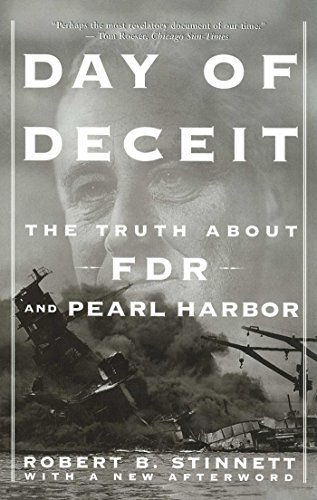 Day Of Deceit: The Tru...
Best Price: $1.77
Buy New $8.10
(as of 04:25 UTC - Details)
The Peruvian minister to Japan reported to the U.S. embassy there in January of 1941 — almost a year before Pearl Harbor — that “Japanese military forces were planning, in the event of trouble with the United States, to attempt a surprise mass attack on Pearl Harbor using all their military resources.” In former CIA director William Casey’s book The Secret War Against Hitler (Regnery, 1988), he claims that “the British had sent word that a Japanese fleet was steaming east toward Hawaii.” Secretary of War Henry Stimson recorded in his diary on November 25 — less than two weeks before the Pearl Harbor attack: The question was how we should maneuver them into the position of firing the first shot without allowing too much damage to ourselves. In spite of the risk involved, however, in letting the Japanese fire the first shot, we realized that in order to have the full support of the American people it was desirable to make sure that the Japanese be the ones to do this so that there should remain no doubt in anyone’s mind as to who were the aggressors. On the day the attack took place, he expressed relief: “When the news first came that Japan had attacked us, my first feeling was of relief that indecision was over and that a crisis had come in a way which would unite all our people.” And testifying after Pearl Harbor, Stimson stated: “If there was war, moreover, we wanted the Japanese to commit the first overt act.” Eleanor Roosevelt didn’t seem too surprised either. In an article in the New York Times Magazine a few years later, she recalled: “December 7 was just like any of the later D-days to us. We clustered at the radio and waited for more details — but it was far from the shock it proved to the country in general. We had expected something of the sort for a long time.” But even if Pearl Harbor was not in any way a surprise, was it, as Secretary of State Cordell Hull said, “a treacherous and utterly unprovoked attack on the United States”? Japan had become the dominant power in the Far East after its victory in the Russo-Japanese War of 1904—05. In 1931 Japan began the process of controlling all of Manchuria by seizing Mukden. After a series of skirmishes and “incidents,” full-scale war began in 1937 between China and Japan. The Chinese nationalists and the Chinese communists, who had been fighting a civil war since 1927, temporarily united against Japan. But instead of remaining neutral, the United States sided with China. As William Henry Chamberlin explains: There was sentimental sympathy for China as the “underdog” in the struggle against Japan. This was nourished by missionaries and other American residents of China. The “Open Door” policy for China, enunciated by Secretary of State John Hay about the turn of the century, was regarded as a sacrosanct tradition of American diplomacy and was seldom subjected to critical and realistic examination. Considerations of prestige made it difficult to surrender established rights under pressure. The groups which believed in permanent crusade against aggression, in a policy of perpetual war for the sake of perpetual peace, were quick to mobilize American opinion against Japan. China, of course, is now the boogeyman and Japan is one of our allies. The United States had already pressured Great Britain to scrap its Anglo-Japanese treaty, thus isolating Japan. The United States supplied munitions, arms, and aircraft to British, Chinese, and Dutch forces in the Pacific. China received millions of dollars worth of loans. Twenty-four U.S. submarines were sent to Manila. Roosevelt sent U.S. naval vessels on cruises into Japanese waters. He refused to meet with the Japanese prime minister, Prince Konoye, leading to the rise of Tojo. Secretary of State Hull issued a provocative ultimatum to Japan on November 26, 1941, that he knew the Japanese government would reject: “The government of Japan will withdraw all military, naval, air and police forces from China and Indochina.” The United States waged economic warfare against Japan. The 1911 Treaty of Commerce and Navigation with Japan was abrogated on January 26, 1940. Based on the Export Control Act of July 2, 1940, Roosevelt restricted exports of aviation fuels, lubricants, melting iron, and scrap steel beginning on July 31. On October 16, 1940, an embargo took effect on all exports of scrap iron and steel to overseas destinations other than Britain. All Japanese assets in the United States were frozen on July 25, 1941. On August 1, 1941, a final embargo on all oil shipments to Japan was instituted. Japan was allowed to build up its oil reserves just enough to enable it to go to war. In General Smedley Butler’s aforementioned book War Is a Racket, he mentions U.S. Navy war games in the Pacific that were bound to provoke Japan: “The Japanese, a proud people, of course will be pleased beyond expression to see the United States fleet so close to Nippon’s shores. Even as pleased as would be the residents of California were they to dimly discern through the morning mist, the Japanese fleet playing at war games off Los Angeles.” Then there is the American Volunteer Group (AVG), known as the Flying Tigers. This was the “efficient guerrilla air corps” mentioned in 1940 by Major Rodney Boone (USMC) of the Office of Naval Intelligence. This group of 100 American pilots, who were allowed to resign from their branch of the military with the assurance that they could be reinstated when their one-year contract with a front company called the Central Aircraft Manufacturing Company (CAMCO) was up, were mercenaries who secretly trained in the jungles of Southeast Asia to fly bombing missions for the Chinese Air Force. They sailed from the West Coast as ordinary civilians in order to keep hidden their true mission and mask FDR’s secret attempt to support China against Japan. All of the details, supported by government documents, are in Alan Armstrong’s Preemptive Strike: The Secret Plan that Would Have Prevented the Attack on Pearl Harbor (The Lyons Press, 2006). In 1991, the Flying Tigers were retroactively recognized as members of the U.S. military during their period of mercenary service. The most damaging piece of evidence that the United States provoked Japan into firing the first shot is the “McCollum memo” of October 7, 1940, written by Lieutenant Commander Arthur McCollum, the head of the Far East desk of the Office of Naval Intelligence. McCollum’s five-page, ten-point memorandum proposed eight actions under point nine to provoke Japan into war:
Day Of Deceit: The Tru...
Best Price: $1.77
Buy New $8.10
(as of 04:25 UTC - Details)
The Peruvian minister to Japan reported to the U.S. embassy there in January of 1941 — almost a year before Pearl Harbor — that “Japanese military forces were planning, in the event of trouble with the United States, to attempt a surprise mass attack on Pearl Harbor using all their military resources.” In former CIA director William Casey’s book The Secret War Against Hitler (Regnery, 1988), he claims that “the British had sent word that a Japanese fleet was steaming east toward Hawaii.” Secretary of War Henry Stimson recorded in his diary on November 25 — less than two weeks before the Pearl Harbor attack: The question was how we should maneuver them into the position of firing the first shot without allowing too much damage to ourselves. In spite of the risk involved, however, in letting the Japanese fire the first shot, we realized that in order to have the full support of the American people it was desirable to make sure that the Japanese be the ones to do this so that there should remain no doubt in anyone’s mind as to who were the aggressors. On the day the attack took place, he expressed relief: “When the news first came that Japan had attacked us, my first feeling was of relief that indecision was over and that a crisis had come in a way which would unite all our people.” And testifying after Pearl Harbor, Stimson stated: “If there was war, moreover, we wanted the Japanese to commit the first overt act.” Eleanor Roosevelt didn’t seem too surprised either. In an article in the New York Times Magazine a few years later, she recalled: “December 7 was just like any of the later D-days to us. We clustered at the radio and waited for more details — but it was far from the shock it proved to the country in general. We had expected something of the sort for a long time.” But even if Pearl Harbor was not in any way a surprise, was it, as Secretary of State Cordell Hull said, “a treacherous and utterly unprovoked attack on the United States”? Japan had become the dominant power in the Far East after its victory in the Russo-Japanese War of 1904—05. In 1931 Japan began the process of controlling all of Manchuria by seizing Mukden. After a series of skirmishes and “incidents,” full-scale war began in 1937 between China and Japan. The Chinese nationalists and the Chinese communists, who had been fighting a civil war since 1927, temporarily united against Japan. But instead of remaining neutral, the United States sided with China. As William Henry Chamberlin explains: There was sentimental sympathy for China as the “underdog” in the struggle against Japan. This was nourished by missionaries and other American residents of China. The “Open Door” policy for China, enunciated by Secretary of State John Hay about the turn of the century, was regarded as a sacrosanct tradition of American diplomacy and was seldom subjected to critical and realistic examination. Considerations of prestige made it difficult to surrender established rights under pressure. The groups which believed in permanent crusade against aggression, in a policy of perpetual war for the sake of perpetual peace, were quick to mobilize American opinion against Japan. China, of course, is now the boogeyman and Japan is one of our allies. The United States had already pressured Great Britain to scrap its Anglo-Japanese treaty, thus isolating Japan. The United States supplied munitions, arms, and aircraft to British, Chinese, and Dutch forces in the Pacific. China received millions of dollars worth of loans. Twenty-four U.S. submarines were sent to Manila. Roosevelt sent U.S. naval vessels on cruises into Japanese waters. He refused to meet with the Japanese prime minister, Prince Konoye, leading to the rise of Tojo. Secretary of State Hull issued a provocative ultimatum to Japan on November 26, 1941, that he knew the Japanese government would reject: “The government of Japan will withdraw all military, naval, air and police forces from China and Indochina.” The United States waged economic warfare against Japan. The 1911 Treaty of Commerce and Navigation with Japan was abrogated on January 26, 1940. Based on the Export Control Act of July 2, 1940, Roosevelt restricted exports of aviation fuels, lubricants, melting iron, and scrap steel beginning on July 31. On October 16, 1940, an embargo took effect on all exports of scrap iron and steel to overseas destinations other than Britain. All Japanese assets in the United States were frozen on July 25, 1941. On August 1, 1941, a final embargo on all oil shipments to Japan was instituted. Japan was allowed to build up its oil reserves just enough to enable it to go to war. In General Smedley Butler’s aforementioned book War Is a Racket, he mentions U.S. Navy war games in the Pacific that were bound to provoke Japan: “The Japanese, a proud people, of course will be pleased beyond expression to see the United States fleet so close to Nippon’s shores. Even as pleased as would be the residents of California were they to dimly discern through the morning mist, the Japanese fleet playing at war games off Los Angeles.” Then there is the American Volunteer Group (AVG), known as the Flying Tigers. This was the “efficient guerrilla air corps” mentioned in 1940 by Major Rodney Boone (USMC) of the Office of Naval Intelligence. This group of 100 American pilots, who were allowed to resign from their branch of the military with the assurance that they could be reinstated when their one-year contract with a front company called the Central Aircraft Manufacturing Company (CAMCO) was up, were mercenaries who secretly trained in the jungles of Southeast Asia to fly bombing missions for the Chinese Air Force. They sailed from the West Coast as ordinary civilians in order to keep hidden their true mission and mask FDR’s secret attempt to support China against Japan. All of the details, supported by government documents, are in Alan Armstrong’s Preemptive Strike: The Secret Plan that Would Have Prevented the Attack on Pearl Harbor (The Lyons Press, 2006). In 1991, the Flying Tigers were retroactively recognized as members of the U.S. military during their period of mercenary service. The most damaging piece of evidence that the United States provoked Japan into firing the first shot is the “McCollum memo” of October 7, 1940, written by Lieutenant Commander Arthur McCollum, the head of the Far East desk of the Office of Naval Intelligence. McCollum’s five-page, ten-point memorandum proposed eight actions under point nine to provoke Japan into war:
- Make an arrangement with Britain for the use of British bases in the Pacific, particularly Singapore.
- Make an arrangement with Holland for the use of base facilities and acquisition of supplies in the Dutch East Indies.
- Give all possible aid to the Chinese government of Chiang-Kai-shek.
- Send a division of long range heavy cruisers to the Orient, Philippines, or Singapore.
- Send two divisions of submarines to the Orient.
- Keep the main strength of the U.S. Fleet now in the Pacific in the vicinity of the Hawaiian Islands.
- Insist that the Dutch refuse to grant Japanese demands for undue economic concessions, particularly oil.
- Completely embargo all U.S. trade with Japan, in collaboration with a similar embargo imposed by the British Empire.
McCollum concludes that “if by these means Japan could be led to commit an overt act of war, so much the better.” The Tripartite Pact had just been signed by Germany, Italy, and Japan. Provoking Japan into war was a backdoor way to get the United States involved in the European war. McCollum’s proposals were all implemented by Roosevelt. The attack on Pearl Harbor was but the climax of a long series of events. It was neither a surprise nor unprovoked. To supplement these provocations against Japan, the U.S. Pacific Fleet was moved from the West Coast to Pearl Harbor beginning in April of 1940. The commander of the fleet at the time, Vice Admiral James Richardson, objected because of the lack of training facilities, large-scale ammunition and fuel supplies, support craft, and overhaul facilities. There was also the morale problem of men kept away from their families. FDR relieved Richardson of his command on February 1, 1941. In January of 1941, the Secretary of the Navy, Frank Knox, warned that Pearl Harbor was vulnerable to bombing, sabotage, and submarine attack. In an interview with FDR in June of 1941, the new commander of the Pacific Fleet, Admiral Husband Kimmel, outlined the weaknesses of placing the fleet at Pearl Harbor. In the days before Pearl Harbor, the Pacific Fleet’s two aircraft carriers, the Lexington and Enterprise, and twenty-one modern warships were sent out to sea. Although the Japanese diplomatic and naval codes were broken, vital information was withheld from the commanders at Pearl Harbor, General Walter Short and Admiral Husband Kimmel. Both men were made scapegoats, relieved of their commands, demoted in rank, and denied an opportunity to defend themselves. Yet, title V, subtitle D, section 546, of the National Defense Authorization Act for fiscal year 2001 reversed nine previous Pearl Harbor investigations and found: Numerous investigations following the attack on Pearl Harbor have documented that Admiral Kimmel and Lieutenant General Short were not provided necessary and critical intelligence that was available, that foretold of war with Japan, that warned of imminent attack, and that would have alerted them to prepare for the attack. Although Kimmel and Short were never posthumously restored to their former ranks, Congress concluded that “the losses incurred by the United States” in the attacks on Pearl Harbor “were not a result of dereliction in the performance” of their duties. Admirers of FDR — past and present — admit that he, as Clare Booth Luce remarked, “lied us into war”: Franklin Roosevelt repeatedly deceived the American people during the period before Pearl Harbor. . . . If he was going to induce the people to move at all, he would have to trick them into acting for their best interests, or what he conceived to be their best interests. He was like the physician who must tell the patient lies for the patient’s own good. . . . A president who cannot entrust the people with the truth betrays a certain lack of faith in the basic tenets of democracy. But because the masses are notoriously shortsighted and generally cannot see danger until it is at their throats, our statesmen are forced to deceive them into an awareness of their own long-run interests. This is clearly what Roosevelt had to do, and who shall say that posterity will not thank him for it. (Thomas A. Bailey, The Man in the Street, 1948). As Germany began to prepare for conquest, genocide, and destruction of civilization, the leader of only one major nation saw what was coming and made plans to stop it. As a result of Roosevelt’s leadership, a planned sequence of events carried out in the Atlantic and more decisively in the Pacific brought the United States into one of the world’s greatest cataclysms. The American contribution helped turn the war’s tide and saved the world from a destructive tyranny unparalleled in modern history. (George Victor, The Pearl Harbor Myth, 2007). For those who refuse to believe that presidents lie, see Eric Alterman’s When Presidents Lie: A History of Official Deception and Its Consequences (Viking, 2004). Truth, it has been said, is always the first casualty of war. But would Roosevelt really be willing to sacrifice American lives to become a war president? When he sent U.S. naval vessels on “pop-up” cruises into Japanese waters, FDR remarked: “I just want them to keep popping up here and there and keep the Japs guessing. I don’t mind losing one or two cruisers, but do not take a chance on losing five or six.” According to Robert Stinnett, losing two cruisers would be sacrificing 1,800 men. That is almost as many naval personnel as were killed at Pearl Harbor. And of course, Roosevelt knew that American entry into the war would result in thousands of dead U.S. soldiers. But even with all the Roosevelt lies and provocations, Japan still attacked us, it is argued. None of our pre-war actions directly killed any Japanese, but they killed 2,400 of our men when they bombed Pearl Harbor. But what did we expect Japan to do? We don’t cheer on the bully who taunts another kid for weeks and then beats him up after the kid finally breaks his nose. True, Japan was not just “another kid.” Japan was becoming increasingly militaristic. Japan sought to aggressively expand its empire in the Far East. The Japanese brutally treated the Chinese and the Koreans. But none of this should have been the concern of the United States. In fact, previous to this, the United States became increasingly militaristic, sought to expand its control over the Philippines, and brutally treated the Filipinos. The British and Dutch had been expanding their empires in the Far East for many years. Japan wanted to eject the European empires and replace them with its own. The Japanese may have been short, bucktoothed, slant-eyed, yellow vermin, subhuman apes in khaki (see U.S. wartime propaganda), but they weren’t stupid. Japan knew it could not win a war against the United States. Japan in 1941 was not the economic powerhouse it became after the war. It was a small island nation of fishermen and farmers. At the time of American entry into World War II, Japan had less than 4 percent of the world’s manufacturing capacity, while America produced more steel, aluminum, oil, and vehicles than all the other major nations combined. Japan had very little of the necessary resources for an industrial war economy. And the United States was the chief supplier to Japan. During the war there were four tons of supplies for each American soldier and two pounds of supplies for each Japanese soldier. Japan did not attack the United States because Japan was “evil” and America was “good.” Japan sought to gain control of Southeast Asian resources. The attack on Pearl Harbor would prevent the U.S. Pacific Fleet from interfering. Secretary of War Stimson acknowledged after the war that “if at any time the United States had been willing to concede to Japan a free hand in China there would have been no war in the Pacific.” This is all clear now, or at least it should be. The problem is that the average American at the time knew nothing about the lies and provocations of the Roosevelt administration. The only thing the typical American knew on December 7, 1941, was that Japan had attacked the United States. These things are also true of Americans serving in the military at the time. Should we fault the servicemen who valiantly defended Pearl Harbor? No. Should we dishonor those military personnel who were killed by the Japanese at Pearl Harbor, many of whom are still entombed in the USS Arizona? Certainly not. But was it necessary for 405,000 American soldiers to die to avenge the 2,400 killed at Pearl Harbor? But even if Japan had not been provoked, and the Pearl Harbor attack was a complete surprise, was war with Japan the correct response? This is a question that is rarely, if ever, raised. And here is another question that should be considered: Is it still a defensive war if troops have to travel thousands of miles to engage an “enemy” that attacked and then retreated? The war against Japan was certainly more a war of revenge, vengeance, retaliation, retribution, anger, or rage than a war of defense. Once again, if Japan had not been provoked, and the Pearl Harbor attack was a complete surprise, what should the United States have done? Regardless of what course of action should have been taken, there is one thing that should have been done immediately: determine why it happened. No country, army, navy, air force, terrorist organization, or individual aggresses against the United States for no reason. We may not like or agree with the reason, but there is always a good reason, at least in the minds of the attackers.
 War Without Mercy: Rac...
Best Price: $2.00
Buy New $9.59
(as of 01:25 UTC - Details)
Yet again, if Japan had not been provoked, and the Pearl Harbor attack was a complete surprise, does that justify the atrocities committed against the Japanese during the war? I mean things like the harvesting of gold teeth from dead and not-so-dead Japanese soldiers, boiling the flesh off enemy skulls to make ornaments for military vehicles or to send home as souvenirs, urinating in the mouths of dead Japanese soldiers, carving enemy bones into letter openers, mutilating corpses, attacking and sinking hospital ships, shooting sailors who abandoned ship, shooting pilots who bailed out, killing wounded enemy soldiers on the battlefield, torturing and executing enemy prisoners, massacring unarmed Japanese soldiers who just surrendered, kicking in the teeth of prisoners before or after their execution, and the collecting of Japanese ears. See John W. Dower’s War Without Mercy: Race and Power in the Pacific War (Pantheon Books, 1986). True, the Japanese committed unspeakable brutalities and atrocities against Allied soldiers and POWs, their own soldiers, and civilians in areas they occupied (see e.g., The Rape of Nanking: The Forgotten Holocaust of World War II [Basic Books, 1997]). But it is the Japanese that were considered to be uncivilized, knuckle-dragging brutes, not the Americans. And finally, if Japan had not been provoked, and the Pearl Harbor attack was a complete surprise, does that justify terrorizing the civilian population of Japan? The Japanese had the decency to attack a genuine military target instead of dropping bombs on downtown San Diego or Honolulu. After months of studies, planning, and several incendiary bombing test runs, the U.S. Army Air Force firebombed densely-populated Tokyo on the night of March 9, 1945. The results were unprecedented: 100,000 dead, 40,000 wounded, 1,000,000 made homeless, 267,000 buildings destroyed. Further incendiary attacks were made against other Japanese cities for the duration of the war. This was climaxed by the dropping of atomic bombs on Hiroshima and Nagasaki. And then, on August 14, 1945, after the two atomic bombs had been dropped on Japan, and after Emperor Hirohito had agreed to surrender because “the enemy now possesses a new and terrible weapon with the power to destroy many innocent lives and do incalculable damage,” the egotistical General Henry Harley “Hap” Arnold got his big finale: a 1,000-plane bombing mission against Tokyo. This was worse than Nagasaki and Hiroshima because it was so unnecessary. Although this was the largest bombing raid in history, many timelines of World War II do not even list this event as having occurred. Why is it that the 9/11 attacks on America are considered acts of terrorism but a 1,000-plane bombing raid on Tokyo after the dropping of two atomic bombs isn’t? (On the atomic bombing of Japan, see Gar Alperovitz’s The Decision to Use the Atomic Bomb: And the Architecture of an American Myth [Knopf, 1995]).
War Without Mercy: Rac...
Best Price: $2.00
Buy New $9.59
(as of 01:25 UTC - Details)
Yet again, if Japan had not been provoked, and the Pearl Harbor attack was a complete surprise, does that justify the atrocities committed against the Japanese during the war? I mean things like the harvesting of gold teeth from dead and not-so-dead Japanese soldiers, boiling the flesh off enemy skulls to make ornaments for military vehicles or to send home as souvenirs, urinating in the mouths of dead Japanese soldiers, carving enemy bones into letter openers, mutilating corpses, attacking and sinking hospital ships, shooting sailors who abandoned ship, shooting pilots who bailed out, killing wounded enemy soldiers on the battlefield, torturing and executing enemy prisoners, massacring unarmed Japanese soldiers who just surrendered, kicking in the teeth of prisoners before or after their execution, and the collecting of Japanese ears. See John W. Dower’s War Without Mercy: Race and Power in the Pacific War (Pantheon Books, 1986). True, the Japanese committed unspeakable brutalities and atrocities against Allied soldiers and POWs, their own soldiers, and civilians in areas they occupied (see e.g., The Rape of Nanking: The Forgotten Holocaust of World War II [Basic Books, 1997]). But it is the Japanese that were considered to be uncivilized, knuckle-dragging brutes, not the Americans. And finally, if Japan had not been provoked, and the Pearl Harbor attack was a complete surprise, does that justify terrorizing the civilian population of Japan? The Japanese had the decency to attack a genuine military target instead of dropping bombs on downtown San Diego or Honolulu. After months of studies, planning, and several incendiary bombing test runs, the U.S. Army Air Force firebombed densely-populated Tokyo on the night of March 9, 1945. The results were unprecedented: 100,000 dead, 40,000 wounded, 1,000,000 made homeless, 267,000 buildings destroyed. Further incendiary attacks were made against other Japanese cities for the duration of the war. This was climaxed by the dropping of atomic bombs on Hiroshima and Nagasaki. And then, on August 14, 1945, after the two atomic bombs had been dropped on Japan, and after Emperor Hirohito had agreed to surrender because “the enemy now possesses a new and terrible weapon with the power to destroy many innocent lives and do incalculable damage,” the egotistical General Henry Harley “Hap” Arnold got his big finale: a 1,000-plane bombing mission against Tokyo. This was worse than Nagasaki and Hiroshima because it was so unnecessary. Although this was the largest bombing raid in history, many timelines of World War II do not even list this event as having occurred. Why is it that the 9/11 attacks on America are considered acts of terrorism but a 1,000-plane bombing raid on Tokyo after the dropping of two atomic bombs isn’t? (On the atomic bombing of Japan, see Gar Alperovitz’s The Decision to Use the Atomic Bomb: And the Architecture of an American Myth [Knopf, 1995]).
 World War II: The Rest...
Best Price: $2.03
Buy New $12.17
(as of 11:35 UTC - Details)
I have seen documentaries on Pearl Harbor where U.S. servicemen who survived the attack still say that they will never forgive the Japanese and refuse to meet with Japanese pilots who bombed Pearl Harbor, as other survivors have done. But if any of these servicemen support the war in Iraq then they are hypocrites. Japan made a preemptive strike against the United States just like the United States did in Iraq. It can also be argued that the United States certainly provoked Japan more than Iraq provoked the United States. Why should we fault the Japanese pilots who bombed Pearl Harbor? Weren’t they just following orders like we expect American troops to do? And why should we fault the Japanese civilians who grew food and built weapons for their soldiers just like American civilians? None of this matters, of course, because of Pearl Harbor. Nothing we did to Japan during the war matters — because of Pearl Harbor. It is time to rethink Pearl Harbor. There is nothing “conspiratorial” about Pearl Harbor revisionism. In addition to the books mentioned thus far in relation to Pearl Harbor, I recommend chapter 3, “A Hobson’s Choice for Japan,” in Bruce M. Russett’s No Clear and Present Danger: A Skeptical View of the U.S. Entry into World War II (Harper & Row, 1972); chapter 4, “Myth: The Attack on Pearl Harbor Was a Surprise,” in Michael Zezima’s Saving Private Power: The Hidden History of “The Good War” (Soft Skull Press, 2000), issued in paperback in 2005 as There Is No Good War: The Myths of World War II; part 3, “The U.S. Enters the War,” in Richard J. Maybury’s World War II: The Rest of the Story and How It Affects You Today (Bluestocking Press, 2003); and chapter 4, “Franklin D. Roosevelt and the First Shot,” in John V. Denson’s A Century of War: Lincoln, Wilson, and Roosevelt (Mises Institute, 2006). The Independent Institute also maintains a very informative Pearl Harbor Archive.
World War II: The Rest...
Best Price: $2.03
Buy New $12.17
(as of 11:35 UTC - Details)
I have seen documentaries on Pearl Harbor where U.S. servicemen who survived the attack still say that they will never forgive the Japanese and refuse to meet with Japanese pilots who bombed Pearl Harbor, as other survivors have done. But if any of these servicemen support the war in Iraq then they are hypocrites. Japan made a preemptive strike against the United States just like the United States did in Iraq. It can also be argued that the United States certainly provoked Japan more than Iraq provoked the United States. Why should we fault the Japanese pilots who bombed Pearl Harbor? Weren’t they just following orders like we expect American troops to do? And why should we fault the Japanese civilians who grew food and built weapons for their soldiers just like American civilians? None of this matters, of course, because of Pearl Harbor. Nothing we did to Japan during the war matters — because of Pearl Harbor. It is time to rethink Pearl Harbor. There is nothing “conspiratorial” about Pearl Harbor revisionism. In addition to the books mentioned thus far in relation to Pearl Harbor, I recommend chapter 3, “A Hobson’s Choice for Japan,” in Bruce M. Russett’s No Clear and Present Danger: A Skeptical View of the U.S. Entry into World War II (Harper & Row, 1972); chapter 4, “Myth: The Attack on Pearl Harbor Was a Surprise,” in Michael Zezima’s Saving Private Power: The Hidden History of “The Good War” (Soft Skull Press, 2000), issued in paperback in 2005 as There Is No Good War: The Myths of World War II; part 3, “The U.S. Enters the War,” in Richard J. Maybury’s World War II: The Rest of the Story and How It Affects You Today (Bluestocking Press, 2003); and chapter 4, “Franklin D. Roosevelt and the First Shot,” in John V. Denson’s A Century of War: Lincoln, Wilson, and Roosevelt (Mises Institute, 2006). The Independent Institute also maintains a very informative Pearl Harbor Archive.
 What about Hitler?: Wr...
Best Price: $2.01
Buy New $2.99
(as of 04:00 UTC - Details)
Hitler So, what about Hitler? I have answered that question in the context of just war theory in my review of Robert Brimlow’s What about Hitler? Wrestling with Jesus’s Call to Nonviolence in an Evil World (Brazos Press, 2006). Here, however, we are concerned with the questions of the necessity of the United States to fight against Hitler, the wisdom of allying with Stalin against Hitler, the tactics of the U.S. military, the conduct of U.S. troops during and after the war, and, most importantly, the lies, provocations, and other actions of Roosevelt that resulted in the United States getting involved in the deadliest European war in history. Like Pearl Harbor, it is time to rethink Hitler. Now, there are many things about Hitler that don’t need rethinking. The evils of Hitler and Nazism are beyond dispute: fascism, militarism, racism, anti-Semitism, forced labor, death camps, gruesome medical experiments, murder, genocide, theft, book burning, lies, propaganda, brutal suppression of dissent, deliberate targeting of civilians, horrendous destruction of property, tremendous violations of civil rights, the invasion, conquest, and occupation of other countries, etc., etc., etc. Still, without excusing any of the horrors of Hitler’s regime, the questions remain about the necessity of fighting against Hitler, the wisdom of allying with Stalin, the tactics of the U.S. military, the conduct of U.S. troops, and the activities of Roosevelt that moved the country toward war. Like Pearl Harbor, nothing we did to Germany during the war matters — because of Hitler. Nothing we did during the war to Germany, Italy, Japan, or anyone else, including civilians and U.S. citizens, matters — because of Hitler. And furthermore, nothing the U.S. military has done since World War II matters — because of the supposed threats of other Hitlers. After the Japanese attack on Pearl Harbor on December 7, 1941, and the declaration of war against Japan by the United States on December 8, Germany and Italy, signatories of The Tripartite Pact with Japan, declared war on the United States on December 11. This was immediately followed by a declaration of war by the United States against Germany and Italy on the same date (the United States also declared war on the Axis powers of Bulgaria, Hungary, and Romania on June 5, 1942).
What about Hitler?: Wr...
Best Price: $2.01
Buy New $2.99
(as of 04:00 UTC - Details)
Hitler So, what about Hitler? I have answered that question in the context of just war theory in my review of Robert Brimlow’s What about Hitler? Wrestling with Jesus’s Call to Nonviolence in an Evil World (Brazos Press, 2006). Here, however, we are concerned with the questions of the necessity of the United States to fight against Hitler, the wisdom of allying with Stalin against Hitler, the tactics of the U.S. military, the conduct of U.S. troops during and after the war, and, most importantly, the lies, provocations, and other actions of Roosevelt that resulted in the United States getting involved in the deadliest European war in history. Like Pearl Harbor, it is time to rethink Hitler. Now, there are many things about Hitler that don’t need rethinking. The evils of Hitler and Nazism are beyond dispute: fascism, militarism, racism, anti-Semitism, forced labor, death camps, gruesome medical experiments, murder, genocide, theft, book burning, lies, propaganda, brutal suppression of dissent, deliberate targeting of civilians, horrendous destruction of property, tremendous violations of civil rights, the invasion, conquest, and occupation of other countries, etc., etc., etc. Still, without excusing any of the horrors of Hitler’s regime, the questions remain about the necessity of fighting against Hitler, the wisdom of allying with Stalin, the tactics of the U.S. military, the conduct of U.S. troops, and the activities of Roosevelt that moved the country toward war. Like Pearl Harbor, nothing we did to Germany during the war matters — because of Hitler. Nothing we did during the war to Germany, Italy, Japan, or anyone else, including civilians and U.S. citizens, matters — because of Hitler. And furthermore, nothing the U.S. military has done since World War II matters — because of the supposed threats of other Hitlers. After the Japanese attack on Pearl Harbor on December 7, 1941, and the declaration of war against Japan by the United States on December 8, Germany and Italy, signatories of The Tripartite Pact with Japan, declared war on the United States on December 11. This was immediately followed by a declaration of war by the United States against Germany and Italy on the same date (the United States also declared war on the Axis powers of Bulgaria, Hungary, and Romania on June 5, 1942).
 Depression, War, and C...
Best Price: $2.50
Buy New $24.59
(as of 09:55 UTC - Details)
Whether Germany declared war on the United States or not, it was not necessary for the United States to fight against Germany. Hitler was not a threat to the United States. On May 20, 1940, German forces reached the English Channel. Yet, the German Luftwaffe lost the Battle of Britain to the Royal Air Force; the German Kriegsmarine was no match for Britain’s Royal Navy, and the German Heer could neither invade nor conquer Great Britain. The British Isles were much more secure against a German invasion in 1941 than they were at the beginning of the war. Yet, Roosevelt made a speech on May 27 in which he asserted: “The war is approaching the brink of the western hemisphere itself. It is coming very close to home.” If Hitler couldn’t conquer Great Britain across the English Channel, how could he possibly have been a threat to the United States across the Atlantic Ocean? This was exactly the argument made at the time by several U.S. senators, including the great Old Right stalwart Robert Taft (R-OH). And looking back from the present time, three other things are clearly evident. If the French in occupied France weren’t forced to speak German, how can American’s keep repeating the lie that we would all be speaking German right now if the U.S. military hadn’t intervened to stop Hitler? If it was unnecessary for Britain and France to fight against Germany, as Patrick J. Buchanan powerfully and compassionately argues in Churchill, Hitler, and the Unnecessary War: How Britain Lost Its Empire and the West Lost the World (Crown Publishers, 2008), it was certainly more unnecessary for the United States to do so. And if Switzerland could remain neutral during World War II, then so could the United States. Hitler never wanted war with Britain. He wanted absolute power in Germany. He wanted to be a great German historical figure like Bismarck. He wanted to overturn the injustices of the Versailles Treaty. He wanted to restore German lands and people. He wanted to enlarge the German empire to the east. He wanted to cleanse Germany of Jews and other inferior races. He wanted to destroy Bolshevism. He wanted Germany to achieve economic self-sufficiency in Europe. Whether these things were right or wrong is immaterial. Hitler never wanted war with Britain, and certainly not with the United States. He never wanted a two-front war, let alone a world war. He wanted Germany to be a world power, not the ruler of the world. He wanted a friendly or neutral Britain, not a hostile or rival Britain. The greatest blunder in British history was not Munich, where Chamberlain “appeased” Hitler, but the Polish war guarantee that committed Britain to fight for an anti-Semitic Polish dictatorship that had considered making a preemptive strike against Germany, signed, like Stalin, a nonaggression pact with Hitler, and joined in the dismemberment of Czechoslovakia after the Munich Agreement. Germany did not declare war on Great Britain and France on that fateful day in September of 1939; Great Britain and France declared war on Germany after Germany invaded Poland. Yet, when the Soviet Union invaded Poland from the east just two weeks later, neither Great Britain nor France declared war on the Soviet Union. Why? On the other hand, just because Germany declared war on the United States doesn’t mean that American troops had to cross the Atlantic Ocean and go to war in Europe. Defensive wars are not fought thousands of miles away. It was Japan, not Germany, that attacked Pearl Harbor. The United States didn’t go to war with Germany over actual attacks on American ships like the Robin Moor, Sessa, Steel Seafarer, Greer, Montana, Pink Star, I. C. White, W. C. Teagle, Bold Venture, Kearny, Lehigh, Salinas, and Reuben James — all bombed or torpedoed and in most cases sunk by Germany during the period from May 21 to October 31, 1941.
Depression, War, and C...
Best Price: $2.50
Buy New $24.59
(as of 09:55 UTC - Details)
Whether Germany declared war on the United States or not, it was not necessary for the United States to fight against Germany. Hitler was not a threat to the United States. On May 20, 1940, German forces reached the English Channel. Yet, the German Luftwaffe lost the Battle of Britain to the Royal Air Force; the German Kriegsmarine was no match for Britain’s Royal Navy, and the German Heer could neither invade nor conquer Great Britain. The British Isles were much more secure against a German invasion in 1941 than they were at the beginning of the war. Yet, Roosevelt made a speech on May 27 in which he asserted: “The war is approaching the brink of the western hemisphere itself. It is coming very close to home.” If Hitler couldn’t conquer Great Britain across the English Channel, how could he possibly have been a threat to the United States across the Atlantic Ocean? This was exactly the argument made at the time by several U.S. senators, including the great Old Right stalwart Robert Taft (R-OH). And looking back from the present time, three other things are clearly evident. If the French in occupied France weren’t forced to speak German, how can American’s keep repeating the lie that we would all be speaking German right now if the U.S. military hadn’t intervened to stop Hitler? If it was unnecessary for Britain and France to fight against Germany, as Patrick J. Buchanan powerfully and compassionately argues in Churchill, Hitler, and the Unnecessary War: How Britain Lost Its Empire and the West Lost the World (Crown Publishers, 2008), it was certainly more unnecessary for the United States to do so. And if Switzerland could remain neutral during World War II, then so could the United States. Hitler never wanted war with Britain. He wanted absolute power in Germany. He wanted to be a great German historical figure like Bismarck. He wanted to overturn the injustices of the Versailles Treaty. He wanted to restore German lands and people. He wanted to enlarge the German empire to the east. He wanted to cleanse Germany of Jews and other inferior races. He wanted to destroy Bolshevism. He wanted Germany to achieve economic self-sufficiency in Europe. Whether these things were right or wrong is immaterial. Hitler never wanted war with Britain, and certainly not with the United States. He never wanted a two-front war, let alone a world war. He wanted Germany to be a world power, not the ruler of the world. He wanted a friendly or neutral Britain, not a hostile or rival Britain. The greatest blunder in British history was not Munich, where Chamberlain “appeased” Hitler, but the Polish war guarantee that committed Britain to fight for an anti-Semitic Polish dictatorship that had considered making a preemptive strike against Germany, signed, like Stalin, a nonaggression pact with Hitler, and joined in the dismemberment of Czechoslovakia after the Munich Agreement. Germany did not declare war on Great Britain and France on that fateful day in September of 1939; Great Britain and France declared war on Germany after Germany invaded Poland. Yet, when the Soviet Union invaded Poland from the east just two weeks later, neither Great Britain nor France declared war on the Soviet Union. Why? On the other hand, just because Germany declared war on the United States doesn’t mean that American troops had to cross the Atlantic Ocean and go to war in Europe. Defensive wars are not fought thousands of miles away. It was Japan, not Germany, that attacked Pearl Harbor. The United States didn’t go to war with Germany over actual attacks on American ships like the Robin Moor, Sessa, Steel Seafarer, Greer, Montana, Pink Star, I. C. White, W. C. Teagle, Bold Venture, Kearny, Lehigh, Salinas, and Reuben James — all bombed or torpedoed and in most cases sunk by Germany during the period from May 21 to October 31, 1941.
 Human Smoke: The Begin...
Best Price: $1.99
Buy New $19.85
(as of 02:15 UTC - Details)
Another recent book besides Buchanan’s that will cause one to question the well-entrenched orthodox view of the beginnings of World War II is Nicholson Baker’s Human Smoke: The Beginnings of World War II, the End of Civilization (Simon & Schuster, 2008). I agree with a sympathetic revisionist critic of the book that “it is not the book that needs to be written,” but for a different reason. That reason is that we don’t have to wait “until that book is published,” for it, or rather they, have already been published. I previously mentioned some revisionist books published soon after World War II that contained valuable chapters relating to Pearl Harbor and/or U.S. foreign policy in relation to Japan in the 1930s. These works likewise include much valuable information on the events leading up to World War II in Europe: Beard’s President Roosevelt and the Coming of the War 1941, Chamberlin’s America’s Second Crusade, Tansill’s Back Door to War, and the edited work by Barnes, Perpetual War for Perpetual Peace. To this I can now add Beard’s American Foreign Policy in the Making 1932-1940: A Study in Responsibilities (Yale University Press, 1946) and A. J. P. Taylor’s The Origins of the Second World War (Atheneum, 1962). To cite but one damning passage from these works, William Henry Chamberlin stated that “the eleven principal steps by which Roosevelt took America into undeclared war in the Atlantic may be briefly summarized as follows”:
Human Smoke: The Begin...
Best Price: $1.99
Buy New $19.85
(as of 02:15 UTC - Details)
Another recent book besides Buchanan’s that will cause one to question the well-entrenched orthodox view of the beginnings of World War II is Nicholson Baker’s Human Smoke: The Beginnings of World War II, the End of Civilization (Simon & Schuster, 2008). I agree with a sympathetic revisionist critic of the book that “it is not the book that needs to be written,” but for a different reason. That reason is that we don’t have to wait “until that book is published,” for it, or rather they, have already been published. I previously mentioned some revisionist books published soon after World War II that contained valuable chapters relating to Pearl Harbor and/or U.S. foreign policy in relation to Japan in the 1930s. These works likewise include much valuable information on the events leading up to World War II in Europe: Beard’s President Roosevelt and the Coming of the War 1941, Chamberlin’s America’s Second Crusade, Tansill’s Back Door to War, and the edited work by Barnes, Perpetual War for Perpetual Peace. To this I can now add Beard’s American Foreign Policy in the Making 1932-1940: A Study in Responsibilities (Yale University Press, 1946) and A. J. P. Taylor’s The Origins of the Second World War (Atheneum, 1962). To cite but one damning passage from these works, William Henry Chamberlin stated that “the eleven principal steps by which Roosevelt took America into undeclared war in the Atlantic may be briefly summarized as follows”:
- The repeal of the arms embargo in November 1939.
- The trade of destroyers for bases in September 1940.
- Enactment of the Lend-Lease Act in March 1941.
- The secret American-British staff talks, January—March 1941.
- The institution of “patrols” in the North Atlantic on April 24.
- The sending of American laborers to build a naval base in Northern Ireland.
- The blocking of German credits in the United States and the closing of consulates in the early summer of 1941.
- The occupation of Iceland by American troops on July 7.
- The Atlantic Conference, August 9—12.
- The shoot-at-sight orders given to American warships and announced on September 11.
- Authorization for the arming of merchant ships and the sending of merchant ships into war zones in November 1941.
All the details are in the abovementioned books by Beard, Chamberlin, Tansill, Barnes, and Baker, plus the other books I have mentioned by Russett, Zezima, and Maybury. There are, of course, many additional actions of Roosevelt that could be added to Chamberlin’s list. As Harry Elmer Barnes concluded: In regard to American entry into the European war, the case against President Roosevelt is far more serious than that against Woodrow Wilson with respect to the First World War. . . . Roosevelt had abandoned all semblance of neutrality, even before war broke out in 1939, and moved as speedily as was safe and feasible in the face of an anti-interventionist American public to involve this country in the European conflict. Yet, the same conservatives who denounce FDR for his socialism and interventionism often praise him for his warmongering. I cite here just a few more of FDR’s activities that moved the country toward war. In June of 1940, Roosevelt fired his anti-interventionist secretary of war, Harry Woodring, and appointed a militant interventionist, Republican Henry Stimson, to replace him. Another Republican war hawk, Frank Knox, was named the new Secretary of the Navy. Both supported the massive transfer of munitions and supplies to Great Britain. Stimson endorsed compulsory military training while Knox wanted a million-man army. The U.S. government began a massive military buildup as a “defensive” measure. Automobile companies were enlisted in the pre-war effort. To take Ford as an example, in early 1941 — long before Pearl Harbor — plans were made by Ford to manufacture the B-24 Liberator bomber for the government at a new plant at Willow Run, west of Detroit. One of the largest manufacturing plants ever constructed, the Willow Run plant was finished in 1942, eventually producing one bomber per hour. Before Pearl Harbor, Ford was already committed to, or had begun the production of, planes, tanks, aircraft engines, jeeps, reconnaissance cars, and anti-aircraft guns (see Ford: Decline and Rebirth: 1933—1962). In the five weeks before Pearl Harbor, the U.S. government contracted for $3.5 billion worth of military supplies from automobile plants alone.
 Selling War: The Briti...
Best Price: $3.79
Buy New $34.30
(as of 10:05 UTC - Details)
A peacetime conscription bill was introduced in June of 1940. This, of course, was another “defensive” measure. It passed both houses of Congress and was signed into law by FDR on September 16. Originally applying to men between 21 and 35, this was expanded after the United States entered the war to all men aged 18 to 65 being required to register. The day had already come in Europe where, as related by John Keegan: “Military service was seen no longer as the token by which the individual validated his citizenship but as the form in which the citizen tendered his duty to the state and took part in its functions.” And as Catherine Fitzgibbon of the Women’s International League for Peace and Freedom pointed out, it was large conscript armies that allowed Hitler, Mussolini, and Stalin to hold power. It is therefore not surprising that conscription had opponents from across the political spectrum. “Military conscription is not freedom but serfdom; its equality is the equality of slaves,” said the socialist Norman Thomas. “Conscription . . . is a road leading straight to militarism, imperialism and ultimately to American fascism and war,” he added. Harry Elmer Barnes called conscription “the first step to American fascism.” According to Senator Taft, the logical conclusion was “the conscription of everything — property, men, industries, and all labor.” Over 16,000 Americans were imprisoned for draft evasion. On November 14, 1940, a group of students stood before a judge and pled guilty to this “crime,” maintaining that “war consists of mass murder, deliberate starvation, vandalism, and similar evils.” They were each sentenced to a year and a day in prison. Around 40,000 soldiers in the European Theater alone decided that they weren’t fighting for our freedoms and deserted. While all of these things were going on in the United States, and before Hitler broke the Molotov—Ribbentrop Pact and invaded the Soviet Union on June 22, 1941, Stalin was engaged in carving up Europe just like Hitler. After attacking Poland soon after Germany, Stalin attacked Finland on November 30. Then, on June 17, 1941, the Soviet Union invaded and conquered Estonia, Latvia, and Lithuania. These Baltic states thus became part of Russia’s pre-war conquests that made up the Soviet Union: Armenia, Azerbaijan, Belarus, Georgia, Kazakhstan, Kyrgyzstan, Moldova, Tajikistan, Turkmenistan, Ukraine, and Uzbekistan — all now independent countries since the fall of the Soviet Union. The Soviet Union’s aggressive territorial expansion was greater than that of Germany. In light this, was it wise to ally with Stalin against Hitler? And not only did the Soviet Union join Germany in the rape of Poland and execute thousands of Polish army officers and intellectuals in what is known as the Katyn Forest Massacre, the Soviets had their own concentration camps. And as contemporary historian Norman Davies relates: “The liberators of Auschwitz were servants of a regime that ran an even larger network of concentration camps of its own.” In light of this, was it wise to ally with Stalin against Hitler?
Selling War: The Briti...
Best Price: $3.79
Buy New $34.30
(as of 10:05 UTC - Details)
A peacetime conscription bill was introduced in June of 1940. This, of course, was another “defensive” measure. It passed both houses of Congress and was signed into law by FDR on September 16. Originally applying to men between 21 and 35, this was expanded after the United States entered the war to all men aged 18 to 65 being required to register. The day had already come in Europe where, as related by John Keegan: “Military service was seen no longer as the token by which the individual validated his citizenship but as the form in which the citizen tendered his duty to the state and took part in its functions.” And as Catherine Fitzgibbon of the Women’s International League for Peace and Freedom pointed out, it was large conscript armies that allowed Hitler, Mussolini, and Stalin to hold power. It is therefore not surprising that conscription had opponents from across the political spectrum. “Military conscription is not freedom but serfdom; its equality is the equality of slaves,” said the socialist Norman Thomas. “Conscription . . . is a road leading straight to militarism, imperialism and ultimately to American fascism and war,” he added. Harry Elmer Barnes called conscription “the first step to American fascism.” According to Senator Taft, the logical conclusion was “the conscription of everything — property, men, industries, and all labor.” Over 16,000 Americans were imprisoned for draft evasion. On November 14, 1940, a group of students stood before a judge and pled guilty to this “crime,” maintaining that “war consists of mass murder, deliberate starvation, vandalism, and similar evils.” They were each sentenced to a year and a day in prison. Around 40,000 soldiers in the European Theater alone decided that they weren’t fighting for our freedoms and deserted. While all of these things were going on in the United States, and before Hitler broke the Molotov—Ribbentrop Pact and invaded the Soviet Union on June 22, 1941, Stalin was engaged in carving up Europe just like Hitler. After attacking Poland soon after Germany, Stalin attacked Finland on November 30. Then, on June 17, 1941, the Soviet Union invaded and conquered Estonia, Latvia, and Lithuania. These Baltic states thus became part of Russia’s pre-war conquests that made up the Soviet Union: Armenia, Azerbaijan, Belarus, Georgia, Kazakhstan, Kyrgyzstan, Moldova, Tajikistan, Turkmenistan, Ukraine, and Uzbekistan — all now independent countries since the fall of the Soviet Union. The Soviet Union’s aggressive territorial expansion was greater than that of Germany. In light this, was it wise to ally with Stalin against Hitler? And not only did the Soviet Union join Germany in the rape of Poland and execute thousands of Polish army officers and intellectuals in what is known as the Katyn Forest Massacre, the Soviets had their own concentration camps. And as contemporary historian Norman Davies relates: “The liberators of Auschwitz were servants of a regime that ran an even larger network of concentration camps of its own.” In light of this, was it wise to ally with Stalin against Hitler?
 Stalin and His Hangmen...
Best Price: $2.05
Buy New $10.62
(as of 01:05 UTC - Details)
Stalin’s body count was also much greater than Hitler’s. Stalin, who had once attended seminary and was exceptionally well read, was also an exceptional liar, forger, robber, sadist, adulterer, terrorist, revolutionary, and murderer. One can read all the gory details in a book like Donald Rayfield’s Stalin and His Hangmen: The Tyrant and Those Who Killed for Him (Random House, 2004). Stalin was a greater threat, and the Soviet Union a greater evil, than Hitler and Germany. After Germany attacked the Soviet Union, Senator Taft remarked that the victory of communism would be far more dangerous to the United States than the victory of fascism. This is because, although each had committed unspeakable horrors, communism had more of a worldwide appeal; fascism of the Nazi variety was racist and nationalistic. Communism, explained Taft, “Is a greater danger to the United States because it is a false philosophy which appeals to many. Fascism is a false philosophy which appeals to very few.” In light of this, was it wise to ally with Stalin against Hitler? More than anything else, World War II was a war between Nazism and Bolshevism. Three-fourths of all the deaths in the war were on the Eastern Front. Then-senator Harry Truman (D-MO) had the right idea: “If we see Germany is winning we ought to help Russia and if we see Russia is winning we ought to help Germany, and in that way let them kill as many as possible.” When the fascists and the communists turned against each other, Great Britain should have withdrawn from the war and watched from the sidelines with the United States as two of the most tyrannical states in history slaughtered each other. Instead, Great Britain and the United States sided with Stalin. The tactics of the U.S. military during the war were sometimes despicable. The United States joined with Great Britain in bombing civilians in German cities. And just like the United States did to Japan, American planes firebombed German cities, killing civilians by the thousands. The city of Dresden, which was packed with refugees from other German cities, was hit particularly hard. On Wednesday, February 14, 1945, it was Ash Wednesday in more ways than one as Dresden was firebombed by the U.S. Army Air Force, destroying much of the city and incinerating thousands of civilians. This was not war; this was terrorism and wholesale murder.
Stalin and His Hangmen...
Best Price: $2.05
Buy New $10.62
(as of 01:05 UTC - Details)
Stalin’s body count was also much greater than Hitler’s. Stalin, who had once attended seminary and was exceptionally well read, was also an exceptional liar, forger, robber, sadist, adulterer, terrorist, revolutionary, and murderer. One can read all the gory details in a book like Donald Rayfield’s Stalin and His Hangmen: The Tyrant and Those Who Killed for Him (Random House, 2004). Stalin was a greater threat, and the Soviet Union a greater evil, than Hitler and Germany. After Germany attacked the Soviet Union, Senator Taft remarked that the victory of communism would be far more dangerous to the United States than the victory of fascism. This is because, although each had committed unspeakable horrors, communism had more of a worldwide appeal; fascism of the Nazi variety was racist and nationalistic. Communism, explained Taft, “Is a greater danger to the United States because it is a false philosophy which appeals to many. Fascism is a false philosophy which appeals to very few.” In light of this, was it wise to ally with Stalin against Hitler? More than anything else, World War II was a war between Nazism and Bolshevism. Three-fourths of all the deaths in the war were on the Eastern Front. Then-senator Harry Truman (D-MO) had the right idea: “If we see Germany is winning we ought to help Russia and if we see Russia is winning we ought to help Germany, and in that way let them kill as many as possible.” When the fascists and the communists turned against each other, Great Britain should have withdrawn from the war and watched from the sidelines with the United States as two of the most tyrannical states in history slaughtered each other. Instead, Great Britain and the United States sided with Stalin. The tactics of the U.S. military during the war were sometimes despicable. The United States joined with Great Britain in bombing civilians in German cities. And just like the United States did to Japan, American planes firebombed German cities, killing civilians by the thousands. The city of Dresden, which was packed with refugees from other German cities, was hit particularly hard. On Wednesday, February 14, 1945, it was Ash Wednesday in more ways than one as Dresden was firebombed by the U.S. Army Air Force, destroying much of the city and incinerating thousands of civilians. This was not war; this was terrorism and wholesale murder.
 The Bitter Road to Fre...
Best Price: $3.17
(as of 09:40 UTC - Details)
Even the hallowed D-Day invasion is not untainted. About 3,000 French civilians died on D-Day — about the same number as American soldiers killed in the invasion. All told, hundreds of tons of Allied bombs were dropped during the “liberation” of Normandy, destroying fields and livestock, obliterating towns and villages, and killing 20,000 civilians. On D-Day from the civilian perspective, see William I. Hitchcock’s The Bitter Road to Freedom: A New History of the Liberation of Europe (Free Press, 2008). But, it is argued, this was all for the greater good: the liberation of Europe from the Nazis. True, but that is the problem with war: The greater good always results in too much collateral damage, destruction of property, and civilian suffering, and too many deadly mistakes, friendly-fire incidents, and unforeseen consequences. The conduct of American forces during the war, and in some cases after the war, was sometimes shameful. After the D-Day invasion, some members of the “greatest generation” engaged in drunkenness, carousing, vandalism, petty thefts, looting, seizing property as trophies, robbery, trafficking in stolen military goods, wasting scarce food and drink, billeting themselves in private homes, sexual assault, rape, and gang rape of women of all ages, and mistreating, assaulting, and otherwise abusing their power over those they liberated in France, Belgium, and Germany. Venereal disease and prostitution were rampant, as you can imagine. None of this matters, of course, because we were fighting Hitler. But after we were done fighting Hitler, American soldiers participated in the forced repatriation of hundreds of thousands of Russian POWs to the Soviet Union, where many were killed or sent to the gulag, and the mistreatment and neglect of German POWs. But none of this matters either because we fought against Hitler.
The Bitter Road to Fre...
Best Price: $3.17
(as of 09:40 UTC - Details)
Even the hallowed D-Day invasion is not untainted. About 3,000 French civilians died on D-Day — about the same number as American soldiers killed in the invasion. All told, hundreds of tons of Allied bombs were dropped during the “liberation” of Normandy, destroying fields and livestock, obliterating towns and villages, and killing 20,000 civilians. On D-Day from the civilian perspective, see William I. Hitchcock’s The Bitter Road to Freedom: A New History of the Liberation of Europe (Free Press, 2008). But, it is argued, this was all for the greater good: the liberation of Europe from the Nazis. True, but that is the problem with war: The greater good always results in too much collateral damage, destruction of property, and civilian suffering, and too many deadly mistakes, friendly-fire incidents, and unforeseen consequences. The conduct of American forces during the war, and in some cases after the war, was sometimes shameful. After the D-Day invasion, some members of the “greatest generation” engaged in drunkenness, carousing, vandalism, petty thefts, looting, seizing property as trophies, robbery, trafficking in stolen military goods, wasting scarce food and drink, billeting themselves in private homes, sexual assault, rape, and gang rape of women of all ages, and mistreating, assaulting, and otherwise abusing their power over those they liberated in France, Belgium, and Germany. Venereal disease and prostitution were rampant, as you can imagine. None of this matters, of course, because we were fighting Hitler. But after we were done fighting Hitler, American soldiers participated in the forced repatriation of hundreds of thousands of Russian POWs to the Soviet Union, where many were killed or sent to the gulag, and the mistreatment and neglect of German POWs. But none of this matters either because we fought against Hitler.
 The New Dealers’...
Best Price: $3.25
Buy New $13.00
(as of 11:05 UTC - Details)
But Hitler was evil, it is argued, and the United States had a moral duty to stop him regardless of whether he was a direct threat, regardless of Great Britain, regardless of Poland, regardless of Stalin, regardless of the tactics of the U.S. military, regardless of the conduct of U.S. soldiers, and regardless of Roosevelt. I will leave it to the philosophers to debate whether one can truly perform a moral duty while acting immorally. The world is full of evil — it always has been and always will be. Any individual or any group of people anywhere in the world who want to confront evil anywhere else in the world are free to do so. But, it is said, Hitler and Nazism were such a great menace that only the might of the U.S. military could bring about their downfall. Even if this were true (it isn’t — the Red Army was more responsible for the defeat of Germany), it doesn’t mean, in the words of John Quincy Adams, that America should go abroad seeking monsters to destroy. Neither the Bible nor the Constitution appointed the United States to be the world’s policeman. And if Hitler had to be stopped because he was so evil, then why did we wait until Japan bombed Pearl Harbor and Germany declared war on us? Hitler was just as evil during the first two years of the war as he was after the German declaration of war. And why does everyone stop with Hitler? The United States did nothing to stop greater and lesser evils like Stalin in the Soviet Union, Mao in China, Pol Pot in Cambodia, Kim Il-sung in North Korea, and Idi Amin in Uganda. Should the United States have gone to war against these evil rulers as well? If not, then what is it about Hitler that justifies the deaths of 405,000 Americans to make Eastern Europe safe for Stalin?
The New Dealers’...
Best Price: $3.25
Buy New $13.00
(as of 11:05 UTC - Details)
But Hitler was evil, it is argued, and the United States had a moral duty to stop him regardless of whether he was a direct threat, regardless of Great Britain, regardless of Poland, regardless of Stalin, regardless of the tactics of the U.S. military, regardless of the conduct of U.S. soldiers, and regardless of Roosevelt. I will leave it to the philosophers to debate whether one can truly perform a moral duty while acting immorally. The world is full of evil — it always has been and always will be. Any individual or any group of people anywhere in the world who want to confront evil anywhere else in the world are free to do so. But, it is said, Hitler and Nazism were such a great menace that only the might of the U.S. military could bring about their downfall. Even if this were true (it isn’t — the Red Army was more responsible for the defeat of Germany), it doesn’t mean, in the words of John Quincy Adams, that America should go abroad seeking monsters to destroy. Neither the Bible nor the Constitution appointed the United States to be the world’s policeman. And if Hitler had to be stopped because he was so evil, then why did we wait until Japan bombed Pearl Harbor and Germany declared war on us? Hitler was just as evil during the first two years of the war as he was after the German declaration of war. And why does everyone stop with Hitler? The United States did nothing to stop greater and lesser evils like Stalin in the Soviet Union, Mao in China, Pol Pot in Cambodia, Kim Il-sung in North Korea, and Idi Amin in Uganda. Should the United States have gone to war against these evil rulers as well? If not, then what is it about Hitler that justifies the deaths of 405,000 Americans to make Eastern Europe safe for Stalin?
 No Simple Victory: Wor...
Best Price: $2.64
Buy New $14.08
(as of 10:46 UTC - Details)
The reason certainly isn’t the Holocaust. Roosevelt was indifferent when asked — just days after Kristallnacht — if he would relax immigration restrictions so Jewish refugees from Germany could settle in the United States. On June 6, 1939, the passengers of the MS St. Louis, a German ship filled with over 900 Jewish refugees, were denied entry to the United States and forced to return to Europe where many of them later died in the Holocaust. On the recent 70th anniversary of this “voyage of the damned,” the U.S. Senate passed a resolution (S. Res. 111) acknowledging the role that the United States played in this tragic event. And how can we forget that the great ally of the United States — the Soviet Union — had a history of Jewish pogroms. And although our other great ally — Great Britain — did not have Jewish blood on its hands, it had the blood of German civilians on its hands thanks to its starvation blockade after World War I. According to Harry Elmer Barnes: “Had Hitler tortured and then killed every one of the half million Jews living in Germany in 1933 such a foul and detestable act would still have left him a piker compared to Britain’s blockade of 1918—1919.” Although Jewish persecution may have continued — as it had throughout history — the Holocaust was not inevitable; it was a consequence of the war. Conclusion In addition to World War I being the Great War, it should have also been the Great Example of how utterly and senselessly destructive to life, liberty, and property war on such scale could be. Over 400,000 U.S. soldiers died during World War II because what should have been never was. True, American soldiers fought and bled and died heroically, valiantly, and courageously, but how much greater the “greatest generation” would have been if its members had said “not again” and stayed out of the war altogether.
No Simple Victory: Wor...
Best Price: $2.64
Buy New $14.08
(as of 10:46 UTC - Details)
The reason certainly isn’t the Holocaust. Roosevelt was indifferent when asked — just days after Kristallnacht — if he would relax immigration restrictions so Jewish refugees from Germany could settle in the United States. On June 6, 1939, the passengers of the MS St. Louis, a German ship filled with over 900 Jewish refugees, were denied entry to the United States and forced to return to Europe where many of them later died in the Holocaust. On the recent 70th anniversary of this “voyage of the damned,” the U.S. Senate passed a resolution (S. Res. 111) acknowledging the role that the United States played in this tragic event. And how can we forget that the great ally of the United States — the Soviet Union — had a history of Jewish pogroms. And although our other great ally — Great Britain — did not have Jewish blood on its hands, it had the blood of German civilians on its hands thanks to its starvation blockade after World War I. According to Harry Elmer Barnes: “Had Hitler tortured and then killed every one of the half million Jews living in Germany in 1933 such a foul and detestable act would still have left him a piker compared to Britain’s blockade of 1918—1919.” Although Jewish persecution may have continued — as it had throughout history — the Holocaust was not inevitable; it was a consequence of the war. Conclusion In addition to World War I being the Great War, it should have also been the Great Example of how utterly and senselessly destructive to life, liberty, and property war on such scale could be. Over 400,000 U.S. soldiers died during World War II because what should have been never was. True, American soldiers fought and bled and died heroically, valiantly, and courageously, but how much greater the “greatest generation” would have been if its members had said “not again” and stayed out of the war altogether.
 Worshipping the Myths ...
Best Price: $4.00
Buy New $9.96
(as of 04:50 UTC - Details)
The legacy of World War II is a gruesome one. The bombing of civilians on a grand scale was adopted as an intentional policy. The killing of innocents at a distance was made part of our national character. The military/industrial warfare state became a permanent fixture in the United States. World War II ushered in the nuclear age of mutually assured destruction. The war also set a precedent for later interventions by the world’s new superpower. But even if World War II were good, just, and necessary, it still doesn’t justify any American military action since then — not in Korea, not in Vietnam, not in Iraq, not in Afghanistan, and certainly not in Iran. The governments of the world cannot be trusted when they say that their soldiers must go to war. The U.S. government is no exception. There is always more to it than this country did this so the U.S. military needs to do that. So, no matter what happens, the next time the U.S. government says that some military action overseas is necessary — just say no. Say no to loss of liberties. Say no to senseless destruction of property. Say no to flag-draped coffins. Say no to billions of dollars wasted. Say no to supporting the troops. Say no to the warfare state.
Worshipping the Myths ...
Best Price: $4.00
Buy New $9.96
(as of 04:50 UTC - Details)
The legacy of World War II is a gruesome one. The bombing of civilians on a grand scale was adopted as an intentional policy. The killing of innocents at a distance was made part of our national character. The military/industrial warfare state became a permanent fixture in the United States. World War II ushered in the nuclear age of mutually assured destruction. The war also set a precedent for later interventions by the world’s new superpower. But even if World War II were good, just, and necessary, it still doesn’t justify any American military action since then — not in Korea, not in Vietnam, not in Iraq, not in Afghanistan, and certainly not in Iran. The governments of the world cannot be trusted when they say that their soldiers must go to war. The U.S. government is no exception. There is always more to it than this country did this so the U.S. military needs to do that. So, no matter what happens, the next time the U.S. government says that some military action overseas is necessary — just say no. Say no to loss of liberties. Say no to senseless destruction of property. Say no to flag-draped coffins. Say no to billions of dollars wasted. Say no to supporting the troops. Say no to the warfare state.  Besides the books relating to World War II I have mentioned thus far, I would also recommend Clive Ponting’s Armageddon: The Reality Behind the Distortions, Myths, Lies, and Illusions of World War II (Random House, 1995), Karl Roebling’s Great Myths of World War II (Paragon Press, 1985), Thomas Fleming’s The New Dealers’ War: FDR and the War Within World War II (HarperCollins, 2001), Norman Davies’ No Simple Victory: World War II in Europe (Viking, 2007), and World War II veteran Edward W. Wood’s Worshipping the Myths of World War II: Reflections on America’s Dedication to War (Potomac Books, 2006). On the British propaganda effort to push America into the war, see Thomas E. Mahl’s Desperate Deception: British Covert Operations in the United States, 1939—44 (Brassey’s, 1988) or Nicholas J. Cull’s Selling War: The British Propaganda Campaign against American “Neutrality” in World War II (Oxford University Press, 1995). On Churchill as a power-hungry warmonger see Buchanan’s book and Ralph Raico’s “Rethinking Churchill” in John V. Denson, ed., The Costs of War: America’s Pyrrhic Victories, 2nd expanded ed. (Transaction Publishers, 1999). On the absurd idea that World War II is what got American out of The Great Depression, see Robert Higgs’ Depression, War and Cold War: Studies in Political Economy (Oxford University Press, 2006). And on historical revisionism in general see Jeff Riggenbach’s Why American History Is Not What They Say (Mises Institute, 2009). The Independent Institute also maintains a very detailed archive on World War II. It is time to rethink the Good War. Rather than being good, just, and necessary, it was the most destructive thing to life, liberty, and property that the world has ever seen. As Benjamin Franklin once said: “There never was a good War or a bad Peace.” A printed copy of this article is available from Vance Publications as a 36-page booklet.
 Pay Discrimination