


Memorial Day Alternative
May 16, 2007
 Joyeux Noel (Widescreen)
Best Price: $2.58
Buy New $9.99
(as of 12:30 UTC - Details)
Joyeux Noel (Widescreen)
Best Price: $2.58
Buy New $9.99
(as of 12:30 UTC - Details)

I have grown weary of the war-lovers taking over every holiday and exploiting them for their own deadly ambitions. Turning July 4th into a celebration of militaristic statism (see the old Bing Crosby musical Holiday Inn) was bad enough. But then seeing a Santa Claus in a flag-draped Uncle Sam suit on a Christmas card a couple years ago was simply too much.
 Paths of Glory
Best Price: $6.94
Buy New $10.49
(as of 09:15 UTC - Details)
Paths of Glory
Best Price: $6.94
Buy New $10.49
(as of 09:15 UTC - Details)
Memorial Day is one holiday on which I often hold an u201CAnti-War Film Festival,u201D inviting a few friends — who, being friends of mine, have no need to be reminded of the evils of warfare — to watch what I consider the best of the films that bring war into disrepute. Instead of going out to a cemetery to join an u201Chonor guardu201D gang to play taps and fire their rifles to celebrate the deaths of victims of warfare, I suggest such an anti-war film festival for your own consideration.
Some of the films I find most effective are the following (with the number of * [1—3] reflecting my opinion as to importance):
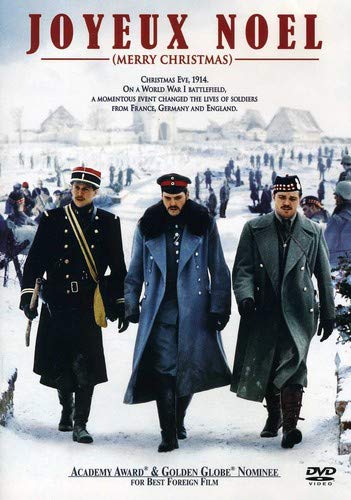
*** Joyeux Noel — a recent film depicting an actual pause in battle — on Christmas Eve — during World War I. French, German, and British soldiers met in a u201Cno-man’s-landu201D to exchange candy and cigarettes, converse, and even play an abbreviated game of soccer.
*** The King of Hearts — an Alan Bates film, set in World War I, in which a soldier, Bates, is sent into a French town to check things out, not being aware that the inhabitants had left the town, and residents of the local mental asylum had taken their places. Very good comedy.
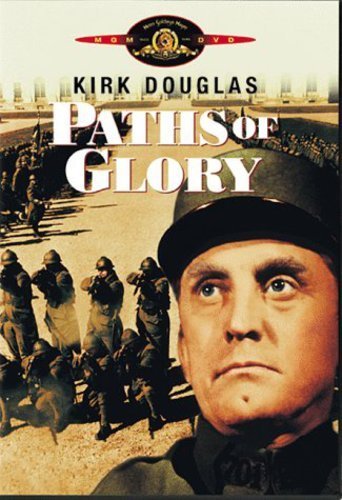
** Paths of Glory — A Kirk Douglas film. A general sends his men on a suicide mission. When the mission fails, a few soldiers are arbitrarily selected to be tried — and executed — for cowardice.
 M*A*S*H (Two-Disc Coll...
Best Price: $2.32
Buy New $8.97
(as of 05:20 UTC - Details)
M*A*S*H (Two-Disc Coll...
Best Price: $2.32
Buy New $8.97
(as of 05:20 UTC - Details)
* M*A*S*H — anyone not familiar with this comedic dark look at war — the Korean being the one in question — has probably been out in the desert too long.
*** Oh! What a Lovely War — a British musical comedy (it originated as a stage show) set in World War I. The ending scene, in particular, will bring tears to the eyes of those who abhor the systematic killing of people. One of my all-time favorites!
 All Quiet on the Weste...
Best Price: $3.23
Buy New $5.37
(as of 01:05 UTC - Details)
All Quiet on the Weste...
Best Price: $3.23
Buy New $5.37
(as of 01:05 UTC - Details)
** Johnny Got His Gun — a Dalton Trumbo film, set in World War I, from the perspective of an all-but-dead wounded soldier. The darkest of the films I’m recommending.
* The Mouse That Roared — the Peter Sellers classic about a European duchy that figures the best way out of its financial difficulties is to wage war on America, and then receive post-war foreign aid.
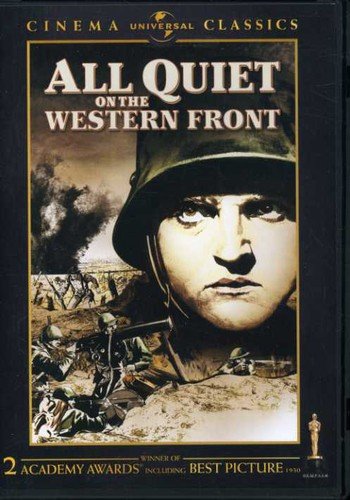
** All Quiet on the Western Front — won the Oscar (1930) for best film and best director. A very good anti-war film — from the perspective of some young Germans. I particularly like it because it stars one of the few real heroes from Hollywood, Lew Ayres, who refused to be conscripted into the army during World War II, a decision that virtually ruined his Hollywood career.
While on the topic of u201Cheroes,u201D I would exclude any and all war films by John Wayne who, more than anyone else, helped Hollywood glorify wartime butchery, even as he managed to keep himself out of the war. Sound like any presidents?
* Apocalypse Now — an excellent Vietnam war era film with dark and dark-side overtones.
 Slaughterhouse-Five
Best Price: $4.86
Buy New $8.79
(as of 11:15 UTC - Details)
Slaughterhouse-Five
Best Price: $4.86
Buy New $8.79
(as of 11:15 UTC - Details)
** The Deer Hunter — a powerful, not for the squeamish, look at the Vietnam war. It won an Oscar (1978) for best picture, and for best supporting actor (Christopher Walken).
** Gallipoli — a film by one of my favorite directors, Peter Weir. It takes place in World War I, and does a moving job of showing the disillusionment of young men caught up in the ersatz u201Cgloryu201D of war.
*** Shenandoah — the best anti-war film with a consistent libertarian message. Jimmy Stewart plays a Virginia farmer — with a large family — who has no use for the Civil War and its intrusions upon his property. When I first sat through this film over 40 years ago, I kept waiting for Stewart to cave in and see the errors of his ways. He never does. Some wonderful lines that you’ll not soon forget. One of the very few films that later became a stage play. If you haven’t seen this one, where have you been?
 Dr. Strangelove or How...
Best Price: $2.07
Buy New $8.69
(as of 12:55 UTC - Details)
Dr. Strangelove or How...
Best Price: $2.07
Buy New $8.69
(as of 12:55 UTC - Details)
** Catch-22 — the film adaptation of Joseph Heller’s treatment of the u201Cnormalu201D insanity of the war system, based on his own war-time experiences.
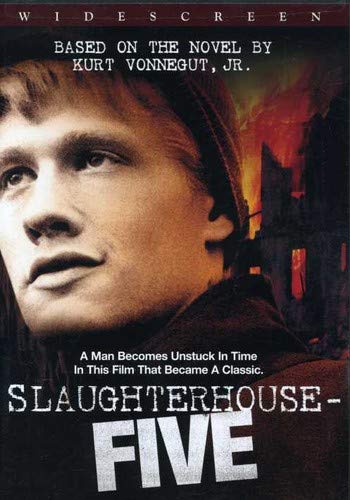
** Slaughterhouse-Five — Kurt Vonnegut’s offering of the same basic theme of the normalcy of institutionalized insanity, from the perspective of a soldier. I once saw a lengthy interview (on C-SPAN, as I recall) of Heller and Vonnegut together. Vonnegut related a conversation he had had with a friend on a troop-ship coming back from Europe. Vonnegut asked his friend: u201Cwhat did you learn from all of this?,u201D to which the other man replied: u201Cnever to believe your own government.u201D
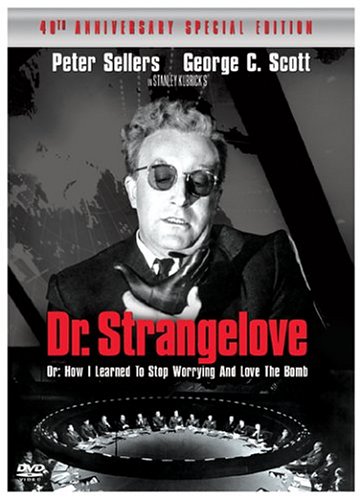
** Dr. Strangelove — another Peter Sellers offering that involves an Air Force general who decides to start a war with the Soviet Union. As with The Mouse That Roared, Sellers plays a number of roles. A film that ages well with time.
 The Quiet American
Best Price: $0.99
Buy New $5.77
(as of 03:05 UTC - Details)
The Quiet American
Best Price: $0.99
Buy New $5.77
(as of 03:05 UTC - Details)
*** Wag the Dog — for those who reject, out of hand, the idea that political conspiracies exist — unless, of course, one is talking about conspiracies perpetrated by u201Cbad guysu201D — this film may prove either troublesome or enlightening. In an age when the best way to satirize something is to make a factual report of same, this film of a contrived war engineered to enliven a presidential reelection campaign, has all the ring of a documentary. A u201Cmustu201D for any modern film festival.
** The Quiet American [2002 version] — the adaptation of Graham Greene’s novel deals with the behind-the-scenes manipulations that led to America’s involvement in the Vietnam war. Don’t waste your time with the 1958 version, which treats Greene’s novel as a murder mystery, not a political intrigue.
*** Aftermath: The Remnants of War — one of the most powerful of all anti-war films, particularly since it doesn’t show any battle scenes. It is a documentary, produced by the Canadian Film Board, of the various messes that the war system leaves to the rest of mankind to deal with decades after the wars have ended (e.g., unexploded munitions from World Wars I and II that continue to kill French farmers each year).
 Children of Men
Best Price: $1.40
Buy New $2.95
(as of 11:30 UTC - Details)
Children of Men
Best Price: $1.40
Buy New $2.95
(as of 11:30 UTC - Details)
*** The Americanization of Emily — I have saved my favorite anti-war film for last. This James Garner/Julie Andrews picture is quite good. The most powerful portion of it is the garden scene, in which Garner and Andrews are talking with Andrews’ mother about war. Garner’s impassioned soliloquy on the nature of war — with emphasis on the wives and mothers who keep the bloodbaths going by honoring them — packs more wallop than just about any other film. Garner ends up declaring that it will be cowards — such as himself — who will save the world.
 Why We Fight
Best Price: $1.17
Buy New $4.00
(as of 06:55 UTC - Details)
Why We Fight
Best Price: $1.17
Buy New $4.00
(as of 06:55 UTC - Details)
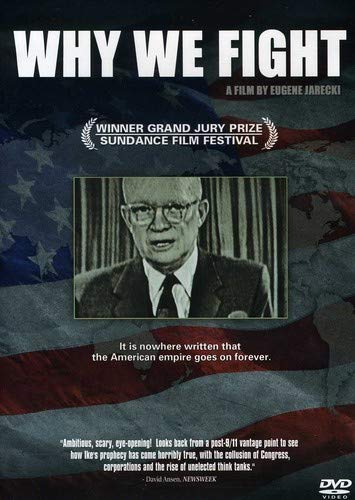
*** Why We Fight. A powerful documentary — in which Karen Kwiatkowski, Chalmers Johnson, and Gore Vidal carry most of the intellectual load — on the nature and history of the post—World War II American war-making system. It won the Grand Jury Prize at the 2005 Sundance Film Festival. WARNING! Do not confuse this with the pro-war series of the same name, produced during World War II by one of my un-favorite directors, Frank Capra.
 Three Kings
Best Price: $1.51
Buy New $2.99
(as of 11:35 UTC - Details)
Three Kings
Best Price: $1.51
Buy New $2.99
(as of 11:35 UTC - Details)
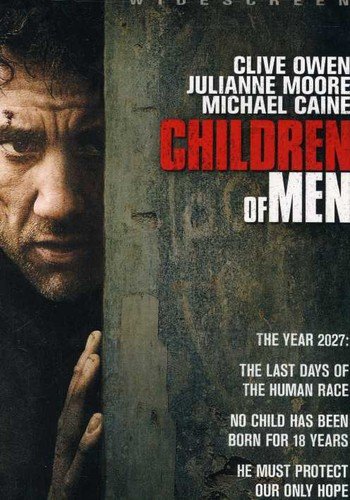
*** Children of Men. A futuristic film set in an Orwellian England, where endless wars against endless enemies have become the norm. Throughout the world, most women have become infertile, threatening the extinction of the human species. A woman has become pregnant, and most of the film is taken up with trying to get her to a country that would harbor her and her unborn child. This is a very dark and violent film — someone is always in the process of killing others, bombing buildings, etc. What is encouraging, however, is that none of the warring factions are presented as u201Cgoodu201D guys fighting the u201Cbadu201D guys. It is the anti-life nature of the war system itself — with mankind as the endangered species — that dominates the movie.
*** Breaker Morant. A couple readers couldn’t understand why I didn’t include this Australian film on my list. I must admit that I considered it but, perhaps because a similar theme had been presented in the Paths of Glory film I had recommended, I left it off the list. Upon reflection, I think the readers had better judgment than I on this one.
It is the story of Australian soldiers — during the Boer War — against whom phony murder charges are made in order to facilitate the political machinations of bringing the war to an end. It illustrates, quite well, how soldiers — treated by the state as nothing more than fungible resources for its exploitation — can be sacrificed both on and off the battlefield.
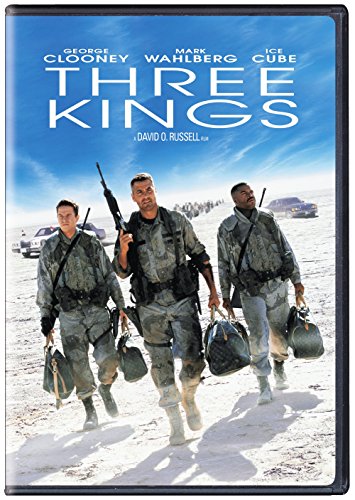
* Three Kings. Set in the first Gulf War, there is an abundance of the blood-bath that defines every war. What is of particular interest in this film, however, is the impact war has on the non-combatant refugees. A very nice ending from their perspective.
** Platoon and ** Full Metal Jacket. These are potent films providing a soldier’s perspective on the dehumanizing, life-destroying nature of war. As one who believes that the gore and broken bodies of those killed in wars should be regularly shown on television — so that the Sean Hannity’s, the Rush Limbaugh’s, the Bill O’Reilly’s, et al., can get a snootful of the system they so adore — these films provide a good secondary source. Platoon won an Oscar for u201Cbest film.u201D
 A Very Long Engagement
Best Price: $1.51
Buy New $9.87
(as of 04:40 UTC - Details)
A Very Long Engagement
Best Price: $1.51
Buy New $9.87
(as of 04:40 UTC - Details)
* Lord of War. This movie deals more with the underbelly of post—Cold War arms-trafficking than with wars themselves (although there is plenty of blood-letting for any pro-war vampires). Pay attention to the credits following the film. They inform us that the five largest nations involved in selling arms to the rest of the world, are also the five permanent members of the United Nations Security Council!
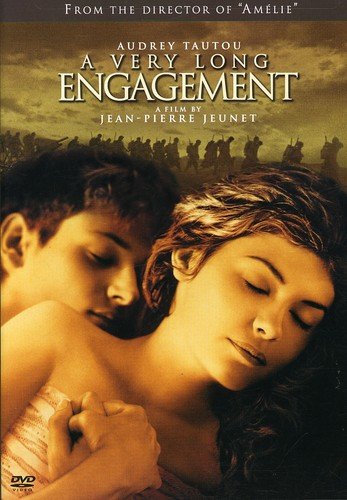
** A Very Long Engagement. Perhaps, as a motion picture production, this is artistically the best film of all I have recommended. While set in wartime (World War I), with plenty of battlefield insanity, it is essentially a love story involving a young woman intent on finding her fianc — is he alive or dead? — after the war. There is also a very interesting character; a prostitute bent on revenge against corrupt military officers.
 The Battle of Algiers ...
Best Price: $4.57
Buy New $34.95
(as of 12:05 UTC - Details)
The Battle of Algiers ...
Best Price: $4.57
Buy New $34.95
(as of 12:05 UTC - Details)
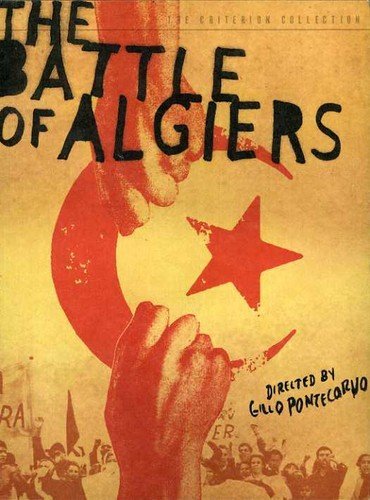
** The Battle of Algiers. A 1965 film done in a pseudo-documentary style, it dramatizes the decade-long struggle of Algerians against their French occupiers. This motion picture affords viewers insights into the current responses of Iraqis to their American occupiers.
** Duck Soup. The Marx Brothers slapstick assault on the war system, with Groucho — as Freedonia’s prime minister — declaring war on a neighboring country for no apparent reason. My favorite line in the film is when, in the course of battle, Groucho tells the others that they are fighting for (Margaret Dumont’s) u201Chonor: which is probably more than she ever did.u201D
** Hearts and Minds. Won an Oscar for best documentary. It deals with the events and machinations that led to the Vietnam War. No clearer example of the hypocrisy of the United States’ alleged efforts to bring u201Cfreedomu201D to Southeast Asia is found than in the effort of the federal government to have this film formally censored so that Americans could not learn what their u201Crepresentativeu201D thugs had been up to.
 Grand Illusion: Essent...
Best Price: $13.02
Buy New $39.97
(as of 01:35 UTC - Details)
Grand Illusion: Essent...
Best Price: $13.02
Buy New $39.97
(as of 01:35 UTC - Details)
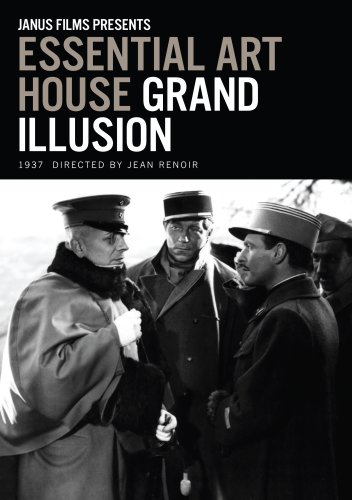
** Grand Illusion. A 1937 film by director Jean Renoir. I saw this motion picture so many years ago that it simply slipped my mind in writing my first article. An anti-war film focusing on the futility of the war system. That the German government tried to destroy this film when it first came out, provides some evidence of its importance.
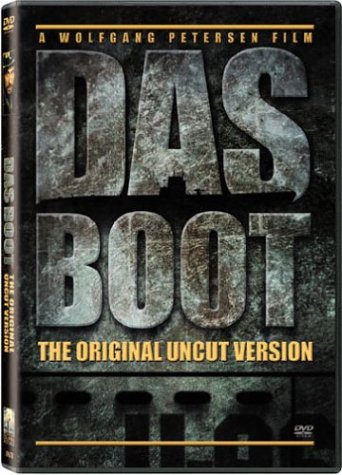 Das Boot - The Origina...
Best Price: $2.37
Buy New $35.89
(as of 12:30 UTC - Details)
Das Boot - The Origina...
Best Price: $2.37
Buy New $35.89
(as of 12:30 UTC - Details)
** Das Boot and ** Letters From Iwo Jima. Two films that address the horrors of warfare from the perspectives of those on the u201Cotheru201D side, the first Germans, the second Japanese. The latter is Clint Eastwood’s highly-praised picture.
There are a number of other films readers recommended, some of which I have seen, some I have not. These include The Lives of Others; Downfall; Kelly’s Heroes; The Ground Truth; Iraq for Sale: The War Profiteers; When I Came Home; Come and See; No Man’s Land; Born on the Fourth of July; The Razor’s Edge (1984 version); Coming Home; and A Midnight Clear. The latter film was reviewed at length by Rick Gee.
There are two documentaries that have just recently appeared: from u201CBill Moyers Journalu201D Buying the War. The other is titled SPIN: The Art of Selling War. They each examine the role of the media in helping the state promote its war efforts. I have seen the former film, but not the latter.
Should you decide to conduct your own Anti-War Film Festival this forthcoming Memorial Day weekend, you might be interested in including a recitation of one of the most powerful anti-war poems: Mark Twain’s The War Prayer.
 The FDA Has Blood on Its Hands