


The Truth Behind China's Currency Peg
November 21, 2009
Recently by Peter Schiff: Hair of the Dog
During President Obama’s high-profile visit to China this week, the most frequently discussed, yet least understood, topic was how currency valuations are affecting the economic relationship between the United States and China. The focal problem is the Chinese government’s policy of fixing the value of the renminbi against the U.S. dollar. While many correctly perceive that this ‘peg’ has contributed greatly to the current global imbalances, few fully comprehend the ramifications should that peg be discarded.
The common understanding is both incomplete and nave. Most analysts simply see the peg as China’s principal weapon in an economic struggle for global ascendancy. The peg, they argue, offers China a competitive advantage by making its products cheaper in U.S. markets, thus allowing Chinese firms to gobble up market share and steal jobs from U.S. manufacturers. The thought is that were China to allow its currency to rise, American manufactures would regain their lost edge, and both manufacturing firms and the jobs formerly associated with them would return. In this narrative, the struggle centers on the United States’ diminishing leverage in persuading the Chinese to lay down their unfair weaponry. It’s a sympathetic picture, but it tells the wrong story.
 Crash Proof 2.0: How t...
Best Price: $1.50
Buy New $3.97
(as of 10:46 UTC - Details)
Crash Proof 2.0: How t...
Best Price: $1.50
Buy New $3.97
(as of 10:46 UTC - Details)

While the peg certainly is responsible for much of the world’s problems, its abandonment would cause severe hardship in the United States. In fact, for the U.S., de-pegging would cause the economic equivalent of cardiac arrest. Our economy is currently on life support provided by an endless flow of debt financing from China. These purchases are the means by which China maintains the relative value of its currency against the dollar. As the dollar comes under even more downward pressure, China’s purchases must increase to keep the renminbi from rising. By maintaining the peg, China enables our politicians and citizens to continue spending more than they have and avoiding the hard choices necessary to restore our long-term economic health.
Contrary to the conventional wisdom, when China drops the peg, the immediate benefits will flow to the Chinese, not to Americans. Yes, prices for Chinese goods will rise in the United States — but so will prices for domestic goods. As a corollary, the Chinese will see falling prices across the board. As anyone who has ever been shopping can explain, low prices are a good thing.
In addition, credit will expand in China while it contracts here. When China abandons the peg, it will no longer need to swell its currency reserves by buying Treasuries or other dollar-denominated debt instruments. Other nations will no longer feel the pressure to keep their currencies from rising, so they too could throttle down on their onerous dollar purchases.
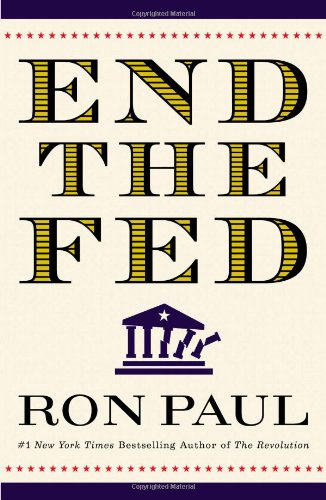 End the Fed
Best Price: $1.12
Buy New $8.53
(as of 10:10 UTC - Details)
End the Fed
Best Price: $1.12
Buy New $8.53
(as of 10:10 UTC - Details)
As demand falls for both dollars and Treasuries, prices and interest rates in the United States will rise. Rising rates will restrict the flow of credit that is currently financing government and consumer spending. This change will finally force a long overdue decline in borrowing. So, not only will Americans lose access to the consumer credit that funds their current spending, but the things they buy will also get more expensive.
Our short-term loss will be in sharp contrast to the gain felt by foreigners, who will be rewarded with falling consumer prices and a more abundant supply of investment capital. In other words, the American standard of living will fall while that of our trading partners will rise.
However, this does not mean that I want the Chinese to maintain the status quo. In the long run, the U.S. economy will benefit from the abandonment of a system that guarantees our dependency and inevitable downfall. De-pegging will force the hand of U.S. politicians toward pursuing realistic policies. The Chinese will come to their senses eventually because it is in their interest to do so. Meanwhile, the longer the peg is maintained, the more indebted we become, the more out of balance our economy grows, and the more our industrial base shrivels. In short, the longer they wait, the steeper our fall.
A weaker dollar will price many imported products beyond the reach of most Americas, giving our hollowed out manufacturing sector the opportunity to rebound. However, if our industry has any chance of getting off the mat, we must reduce taxes, repeal regulations, reform our cumbersome legal system, and, most importantly, replenish our savings to finance the necessary capital investment.
If we position ourselves to deal with the consequences, tough love from China will provide a path back to genuine economic growth. However, if our politicians continue to misread the problem and push us deeper in the red, the inevitable ‘rebalancing’ could be truly ruinous.
 Decide How (Not If) the Government Will Default