


Molecular Medicine
October 7, 2005
Look Who Just Ushered in Molecular Medicine?
by Bill Sardi by Bill Sardi
 The Associated Press reports that the resignation of Lester Crawford DVM, as chief of the FDA, has prompted President Bush to announce his temporary replacement, Dr. Andrew C. von Eschenbach, who hopes to usher in a new kind of health care where diseases are treated “at the molecular level.”
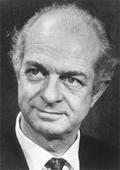 Molecular medicine — that term rings a bell. Who first coined it? Why none other than Dr. Linus Pauling in his seminal article in the 1968 issue of Science Magazine, when he first used the term orthomolecular psychiatry. Stephen Lawson, administrative officer of the Linus Pauling Institute (LPI) provides the history of the term at the LPI website.
Dr. von Eschenbach may appear to have a grasp on the right direction to take medicine. After all, nearly everybody "in the know" is talking about epigenetics, gene switching, and DNA microarrays.
Dr. von Eschenbach is heralded for his previous work as director of the National Cancer Institute, and his experience as a surviving cancer patient (two types). In an October 2004 report published in Nature Review Cancer, he says "a new era is now within our grasp, a time when no one suffers or dies as a result of cancer." However, this has been said time and again, with virtually no cures.
What is badly needed is a true disease prevention program, not just better disease detection programs that find more disease to treat. A review of Dr. von Eschenbach’s published papers reveals he hasn’t personally pioneered any preventive medical therapies. A strong portion of his published papers have to do with "salvage surgery" for prostate cancer. True preventive medicine would reduce the incidence of disease, delaying or preventing its onset altogether. That isn’t quite what most modern medical researchers have in mind.
Personalized medicine
What Dr. von Eschenbach is talking about is the prospect of personalized medicine. Pharmaceutical companies now recognize their drugs don’t work all the time. Allen Roses, of GlaxoSmithKline, is quoted in a national newspaper as saying more than 90% of drugs only work in 30—50% of people. [BBC News, December 8, 2003] The genetic makeup of an individual needs to be known before effective therapy can be applied, so they say.
The fact that the entire human genome has now been mapped, opens a captivating new era in medicine. A new type of technology called microarray, where large numbers of genes can be screened at a time, is promising. [Methods Molecular Medicine 114: 25—28, 2005]
Universal gene flaws
The problem here is that humans are already known to have universal genetic flaws. No testing or personalization is needed. Dr. Linus Pauling’s work with vitamin C attempted to make up for mankind’s inability to synthesize vitamin C as most mammals do.
Somewhere in the past, humans lost their ability to produce vitamin C. Four enzymes are required to convert sugars circulating through the liver into ascorbate, the scientific term for vitamin C. Humans universally carry a defective gene that can no longer produce the fourth enzyme (gulonolactone oxidase) required to synthesize vitamin C. Animals do this naturally, more so under stress when sugar stores are released, and do not exhibit the common form of arterial and heart disease as do humans. In fact, guinea pigs, which have the same genetic flaw as humans, must be provided with the human equivalent of 800 milligrams of vitamin C or they will develop heart and blood vessel disease.
You don’t have to perform elaborate and expensive tests to determine humans are genetically flawed here. There is no drug that can make up for the shortage of vitamin C, which results in a wide array of diseases, including cataracts, gall stones, aneurysms, allergy, vulnerability to viruses, anemia, arterial cholesterol plaque, hypertension, peripheral arterial disease, angina, sudden-death heart attacks and cancer. Better-designed drugs aren’t needed, just supplemental vitamin C. The millions of lives that have been prematurely lost due to modern medicine’s disregard for vitamin C makes one wonder how the public can ever develop confidence in public health authorities.
A little late, aren’t you?
To get back to where modern medicine is headed, it says it has "fully entered into the arena of molecular medicine," albeit belatedly if you want to consider Dr. Linus Pauling’s published papers from 35 years ago. [European Journal Cancer 41:2003—15, 2005]
What they want to develop is "individualized cancer chemotherapy, integrating drug sensitivity tests, pathological profile analysis and computational coordination." [Medical Hypotheses, September, 2005] Yes, but at what cost? How much more can private and public health plans handle?
Targeted cancer drugs
What cancer researchers are talking about are molecularly (or genetically) targeted drugs. We’ve already got drugs that genetically inhibit specific enzymes that induce cancer. Drugs like Gleevec, Avastin, Iressa, Herceptin and Erbitux. A National Cancer Institute says "targeted cancer therapies will give doctors a better way to tailor cancer treatment. Eventually, treatments may be individualized based on the unique set of molecular targets produced by the patient’s tumor."
But these targeted drugs are abject failures, regardless of the genetic makeup of an individual. They are not the miracle drugs they were hoped for. [Forbes Magazine, Robert Langreth, Conquering Cancer, Nov. 11, 2002]
Nature has better molecules
Italian researchers recently noted that there are some small molecules in nature that can be easily absorbed, can pass through the cell wall and into the cell nucleus where they can alter gene activity. The new innovative anti-cancer "drugs" researchers are talking about are indole-3-carbinol found naturally in broccoli, epigallocatechin gallate in green tea, curcumin from the spice turmeric, and resveratrol in red grapes, "all of which appear to have a number of different molecular targets, impinging on several signaling pathways." [Recent Results Cancer Research 166: 257—75, 2005] Translation: they potentially work better than man-made drugs.
What resveratrol can’t do?
One such miraculous molecule is resveratrol, known as a red wine molecule. Researchers P. Signorelli and R. Ghidoni of the University of Milan question whether drugs singularly targeted at certain genes will ever work. Natural molecules like resveratrol are able to silence or activate an array of cancer causing or suppressing genes. Resveratrol blocks several pathways involved in the development of tumors and inhibits all three stages of cancer, initiation (genetic mutation), growth and metastasis (spread), something no existing man-made anti-cancer drug can do. [Journal Nutritional Biochemistry 16: 449—66, 2005]
A recent research study involving resveratrol showed that it switched hundreds of genes at one time. [Cancer Biology Therapy 3: 882—89, 2004] John Pezutto, a noted cancer researcher from the University of Illinois, likens resveratrol to a "whiff that induces a biologically specific tsunami." [Cancer Biology Therapy 3: 889—90, 2004] Those are strong words from a usually reserved investigator.
 David Sinclair, PhD, Associate Professor of Pathology at Harvard Medical School, and co-founder of Sirtris Pharmaceuticals, a developmental pharmaceutical company that leads the knowledge-base on resveratrol, sits in a promising position. Forbes Magazine says Sirtis is one company to watch in the future.
 Resveratrol isn’t limited to preventing or treating cancer. It potentially is a replacement for all drugs used to treat diabetes, cholesterol, hypertension, and age-related brain disease. It also has antibiotic, anti-viral and anti-fungal properties, is an anti-inflammatory agent, prevents blood clots, has Viagra-like properties, and is widely touted as a molecule that prolongs life. That is just too staggering to imagine.
Resveratrol pills
Resveratrol pills are widely available as dietary supplements, though they face one serious drawback. Once resveratrol is extracted from botanical sources or synthetically made, it is vulnerable to degradation by exposure to light, heat and oxygen. These factors can turn the active form of resveratrol (trans resveratrol) into its less active form (cis resveratrol). [Neurosignals 14:61—70, 2005] However, some resveratrol in wine bottles is preserved because of airtight sealage in dark bottles that are usually stored in a cool place. One patent-applied-for resveratrol pill (Longevinex™) licenses special technology (Licaps®) developed by Capsugel®, a division of Pfizer, to produce resveratrol in an airtight opaque capsule that preserves its molecular integrity.
But researchers at Stanford University believe it will take doses stronger than found in wine or dietary supplements to treat cancer. [Cancer Epidemiology Biomarkers Prevention 14:596—604, 2005] The only human resveratrol study underway is in Europe, where a 500-milligram capsule is being tested among healthy adults for cancer prevention.
Old guard vs the new maverick
 Shock Report