


Second Thoughts and Moral Culpability
December 6, 2005
The freedom to change one’s mind is a human right, and we can only celebrate when someone rejects moral error in favor of truth. For that reason, we can hail the crowd of intellectuals and politicians who are turning from their support of the War on Iraq toward skepticism and rejection. I’m thinking in particular of Reps. John Murtha and Norm Dicks, and other leading Democrats as well as lower-ranking Republicans who are inching toward the dissenting camp. They are not "surrendering to terrorists" as Bush’s mouthpiece said. They are starting to reject the terrorism of war in favor of a policy of peace.
However: something bugs me about it all. In every crime movie involving a gang, there is a committed leader who whips up everyone and organizes the caper. He has faithful lieutenants who do his bidding and do not question his judgment. Then, at the lower levels, there are people in it for personal advantage but whose dedication is suspect, and suspected by the others in the group. Sure enough, once the caper begins to go wrong — too many people are getting killed, for example, or they are in danger of getting caught — these people begin to inch away and try to talk sense into their leaders.
The question becomes how these people ought to be regarded by law and public opinion. It would be strange to celebrate their change of heart as an act of moral courage. After all, they only began to grow queasy when the heat was on, or too much blood began to spill. Their opinion on crime and its merits is somewhat suspect, isn’t it? Perhaps we shouldn’t look to them as the most credible source in making the case against crime. The law will frequently offer a plea bargain with such people, but in no case will they be treated as innocent.
In the same vein, J. Douglas Allen-Taylor of Alternet spots a possible problem with making too much of those with second thoughts on the war. "It concedes that the only moral voice who can oppose a war is someone who supported and/or participated in a past war." He is right that it is not the Murthas who are responsible for the change in national mood concerning the war. "It was the anti-war activists…who have led us to the moment where the war in Iraq is no longer supported by a majority of Americans."
How good it would be to hear the politicians who are changing their minds begin seriously to confront their errors, and admit that those they once smeared were right all along. Only that course of action will lay the proper groundwork for a culture-wide opposition to war in the future. They should admit that people like Ron Paul and Jimmy Carter were right all along, and that they were wrong, and that their errors played a role in whipping up public support for a horrible policy.
That politicians would be buffeted by the winds of public opinion — well over half the public believes that the whole war has been a mistake — is hardly surprising. Far more problematic are the intellectuals, particularly religious intellectuals such as Michael Novak, Jerry "God-is-pro-war" Falwell, and the Rev. Richard J. Neuhaus.
The net is filled with rumors that Fr. Neuhaus, for example, is inching toward an antiwar stance, which, again, we can only praise.
But let’s look back. As the blood lust of the Bush administration increased, many religious Catholics were getting nervous, since there was no sense in which an attack on Iraq could be reconciled with Just War teaching. It was not a defensive war, not a last-resort war, not a proportionate war, not a war aimed only at the military, and it was not authorized by the competent authority. It was an imperial adventure to satisfy the longings of a lunatic, and it has ended in complete catastrophe, economically and morally.
Fr. Neuhaus played a very important role in urging people to mute their consciences, ignore the Vatican, and march in lockstep with the Bush administration.
In 2003, Fr. Neuhaus, who lives and moves within the Bush intellectual camp, was asked about Pope John Paul II’s opposition to the Iraq War. He said "Whether that cause [Just War] can be vindicated without resort to military force, and whether it would be wiser to wait and see what Iraq might do over a period of months or years, are matters of prudential judgment beyond the competence of religious authority."
In other words, what does the Pope know about war and peace?
But in the same interview, sent out to millions of Catholics the world over, Fr. Neuhaus didn’t apply this standard to himself. He said that war was just and that Catholicism bound us to embrace it.
"War, if it is just, is not an option chosen but a duty imposed," he said. "To wait until the worst happens is to wait too long, and leaders guilty of such negligence would rightly be held morally accountable…. Religious leaders should bring more to the public discussion than their fears. Nervous hand-wringing is not a moral argument…. In sum, military action in order to disarm Iraq can be morally justified in terms of just-war doctrine."
Now, these words were more measured than most in the neoconservative camp, but the import is unmistakable: go to war. But by October of this year, he was already conceding more to the antiwar camp than he was to the war camp: "There are thoughtful people, both liberal and conservative, who think that regime change in Iraq was a disaster in both conception and execution, and not all of them can be easily dismissed as u2018isolationists.’"
Watch his writings over the next six months. I think we can know where they are headed: a slow and methodical embrace of the antiwar case made by John Paul II, a competent authority if there ever was one. Fr. Neuhaus will come around at some point, but he dares not do it too quickly for fear of undermining his credibility.
But we need to remember that this is not a philosophical parlor game. This isn’t about editorial strategy. Real people die in war. Families are shattered, men are tortured, lives are ruined, enemies are made for generations, governments become more corrupt through their war lies and spending, whole regions are pushed to loathe the occupier, and society and culture become imbued with a tolerance for spilling blood.
You care about life? Oppose war. Worry about the disregard for the sanctity of God’s most precious creation? Oppose war. Seek the well-being of all, and peaceful cooperation among the whole human family? Oppose war. In our world today, with weapons of mass destruction in the hands of lying governments, the idea of a just war is a pure abstraction, one that probably can never appear in reality, as Benedict XVI noted before his election.
 What about those who placed their imprimatur on war? They bear responsibility. They are free to change their minds, but they bear responsibility. They can be forgiven, but their culpability is a burden they must carry, one to be worked out in acts of penance. They will be judged in this world and the next.
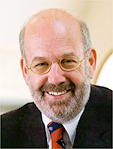 Fr. Neuhaus will be angry at me when he reads this. Instead he should be angry at those who lied to him, angry at himself for having believed them, and disgusted that he ever played a role in ruining and wrecking lives. He should write an unqualified statement of moral regret, one that includes a firm purpose of amendment. He can’t erase his past actions. He can’t remove the temporal punishment due for dismissing the Pope in favor of the fevered imaginings of the head of the US regime. But he can concede that he was wrong, and bear the burden of guilt with humility.
The Best of Llewellyn H. Rockwell, Jr.
 Freedom = Torture and Gulag