


Rockwell on Libertarianism
April 20, 2007
KUSKOWSKI: Your site, LewRockwell.com, is greatly popular and is still growing. The internet has proven to be an invaluable tool in the hands of libertarians. What has your experience shown you to be the most important for a growing movement: individual blogs, professional sites with an abundance of materials, like Mises.org, or something of a collective effort, like LRC?
ROCKWELL: The movement is growing beyond belief, in all sectors of society and in nearly all countries, so far as I can tell. The web has been important, obviously. Libertarians have always believed that getting the ideas out there is the most important step we can take. Any media that get our message out are thrilling, especially the media that are not highly controlled by government. The government made a mistake with the internet, from its own point of view. It controlled radio, television, and much of the print media by default. But the web took off before the government got its hooks in it.
KUSKOWSKI: Now that so many great leaders of the movement, like Hess and Rothbard are gone, what can we, as a movement do to compensate for that loss? Do you see any leaders of such a caliber emerging on the horizon? Or maybe we don’t really need a unifying figure?
ROCKWELL: More often than not, leaders emerge in retrospect. They aren’t something you seek out but rather emerge out of the fabric of a movement. In many ways, I think we are surrounded by them. But it will take time to know what thinkers are the most influential for the long run. Another point to consider is that the leaders of the past are not dead because the most important part of their lives, namely their ideas, thrive now as never before.
KUSKOWSKI: Do you think that it is the poor or the rich who benefit from State regulations the most? Seeing how libertarianism is often accused of being a “rich man’s philosophy,” what can we offer those less fortunate and how to convince them of the promise of libertarianism?
ROCKWELL: Government is always and everywhere a rich man’s business. The poor have never played a role in the administration of the State, except insofar as they are used by elites as a cover. In fact, the emergence of the State itself grows out of the successful cartelization of one sector of elites against all its competitors. So of course these same elites rule on behalf of themselves. In the whole history of humanity, there is only one means by which the class of the poor have successfully converted their lot into something higher, and that is capitalism.
KUSKOWSKI: Do you think Ron Paul has any chance of getting the GOP’s presidential nomination? How could his candidacy affect the US political scene?
ROCKWELL: Political parties are quasi-official agencies within the fabric of the State. They exist to create the appearance of free entry into the sector of power. No outsider has been able to crash them unless the outsider agreed to play along. Ron Paul — perhaps the most libertarian political figure in American history — is not someone who plays along. However, the internet is a new factor, and I suspect he will surprise a lot of us. Certainly he will bring more attention to libertarian ideas, which is all to the good.
KUSKOWSKI: How much, in your opinion, is the Libertarian Party worth to the libertarian movement? Should we engage ourselves in political action as a movement, or is it better to concentrate just on agitation and education?
ROCKWELL: Many good people have run for office, and many activists have performed heroically. The problems for the LP come about when the people running the party begin to think of themselves as vying for power as versus being an educational organization that uses the structure of elections as a venue.
KUSKOWSKI: You are sometimes accused in right-wing circles of collaborating with the left, and vice-versa. What do you see cooperation with those more left- or right-oriented can bring us and what is your general view on the type of alliances that libertarians should engage in from a strategic point of view?
ROCKWELL: Libertarians can draw from the right and the left but we finally must chart our own course, though there is nothing wrong with praising a non-libertarian thinker for being correct on a certain issue. In 1929, Mises said that the reason Old Liberals are so misunderstood is that we stand for the general interest instead of a particular interest. This remains true today. It is for this reason that people are always accusing us of being rightists or leftists or whatever. Liberals have always been misunderstood for the reasons that Mises explains.
KUSKOWSKI: What is your opinion on leftist or agorist libertarian mavericks, like Roderick Long or Samuel Konkin? Do you think they’re on to something, for instance in criticising corporations, or are they just a harmless faction?
ROCKWELL: I’ve noticed a general tendency here. When the right is in control, the left looks better to libertarians. When the left is in control, the right looks better. We are all generally drawn to the merits of the people who are not in power! So it is hardly surprising to see a rise of “left libertarians” in a time when the chief threat to liberty comes from the right, that is, from the red-state fascists who celebrate militarism and see no downside to every form of human-rights violation. Right now, it seems as if most of the intelligent non-libertarians are on the left. I would only caution that the left is beset with as many problems as the right. They want freedom without markets, peace without free trade, civil liberties without property rights. This can’t work.
KUSKOWSKI: What do you think about the mainstream more-or-less libertarian groups, like neolibertarians, neoliberals, “Beltway libertarians,” or “vulgar libertarians”? Is it better to treat them as part of the movement, or should we remain neutral, or maybe denounce and criticise them?
ROCKWELL: This phenomenon proves that libertarians are not immune to seduction by power. Indeed, there is a special premium that the State pays to libertarians who sell out. The State wants nothing more than to be seen as promoting liberty, so when libertarians assist in providing that cover, the State is pleased to oblige. It is, however, easy to tell the difference between the phony and real libertarians by observing their proximity to the centers of power.
KUSKOWSKI: The recent passing away of Milton Friedman presents an opportunity to assess his contribution to the cause of liberty. What is your opinion of him? Can libertarianism be based in neoclassical economics? What do you think about the attempts to create such a hybrid by people like David Friedman and Bryan Caplan?
ROCKWELL: He obviously did great work on many economic questions. But it is a mistake to see him as a libertarian. He was a wage and price controller in wartime. He was an advocate of the withholding tax and the guaranteed national income. His idea of tax-funded subsidies for private schools is a very bad one. His plan for stabilizing money was refuted 100 years ago by Benjamin Anderson. He was pro-war. I could go on, but it’s probably best to focus on his contributions, of which there are many.
KUSKOWSKI: Now, a tricky question. If, all of a sudden, George Bush read Mises or Hayek and decided that he wanted to strip the United States down to a minarchist State — but only so far — and invited you to do the job, would you accept? If you would, then laying aside Congress and the Supreme Court, what would be your first acts in office?
ROCKWELL: Would I push the button? Yes. I wouldn’t want to stay in office, given the corruptions of power. So I would cut anything and everything, with a focus on abolition. Abolish the executive branch, then the judicial branch, then the legislative branch. These would be good first steps.
KUSKOWSKI: Libertarians are divided on the immigration question, with both sides having seemingly good libertarian arguments for their position. The Mises Institute is reputed for its anti-immigration stance. Do you share that position?
ROCKWELL: Free movement of people, like free movement of property, is the ideal. The problem is the universal franchise and welfare, which permit the State to use mass immigration to its own advantage. Absent those, the US has plenty of room for many millions more. In any event, the calls to spy on and jail employers for hiring immigrants are wrong and dangerous.
KUSKOWSKI: What is your opinion of the anti-globalisation movement? Do you think libertarians have a common cause with them in opposing, say, Nafta, or are the differences too pronounced?
ROCKWELL: Nafta didn’t end up creating more liberty. The key problem is that we have to distinguish between real and false free trade. Real free trade requires no treaties. The problem of collaboration with either the pro- or anti- side on this issue is that both are wrong and both are right. We need to keep focused on the true goal and not get distracted. What poses the greater danger: the treaties or the protectionists who oppose them? It depends on the time and place.
KUSKOWSKI: How will the American economy fare in the coming years? Are we in for a depression, or will a boom be sustained and recession contained?
ROCKWELL: I don’t know, but it is a mistake to become sanguine and relaxed. The US could sink into an inflationary depression. The dollar could lose its status. The US could grow economically far less than emerging economies. There is nothing in the central planning apparatus to prevent this.
KUSKOWSKI: Do you think that the number of problems that the State faces today, like enormous deficits, will ultimately lead to its downfall or will those be used to justify even stricter control and more emergency powers?
ROCKWELL: The State is tightening control in some areas while it loses control in other areas. The reality of economic law is one of the greatest limiting devices. The State cannot accomplish what it sets out to accomplish, but the attempt leads to a great loss of liberty. So while I can imagine that an economic crisis will lead to more control, I don’t think this can succeed over the long term.
KUSKOWSKI: Do you sometimes follow events in Poland? If so, what direction do you think our county is headed in? What are the chances for libertarianism to flourish in post-socialist countries?
 ROCKWELL: I only visited Poland once, at the end of the Soviet era, but I am very interested, and so I am thrilled at the progress and freedom. On the other hand, the post-socialist economies are largely in the same boat as the US. We are all beset by fascistic planning structures, monopolistic regulations, socialized health care and education, even as new sectors of freedom pop up every day. So given this, it is long past time that libertarians of the world unite in common cause. The State is vulnerable.
KUSKOWSKI: Are there certain strategic errors made in the beginnings of the libertarian movement that continue to haunt it? If so, what could we do to evade them in Poland?
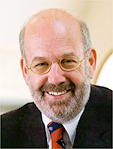 ROCKWELL: The biggest strategic error is collaborating with the powers that be, as if the people in charge — those consumed by what St Augustine called "the lust to rule" — can be convinced by libertarian arguments. This isn’t going to work. We need to come to terms with the fact that we are ultimately a revolutionary movement.
The Best of Llewellyn H. Rockwell, Jr.
 The State or the People