


This talk was delivered at the Mises Circle at the University Club in New York City on September 16, 2006.
Since 1990, we’ve heard about what a low rate of inflation we’ve experienced. In some ways, it might appear low compared with what we experienced in the late 1970s. The dollar of 1976 was worth only 63 cents by 1981, once the Nixon-Carter inflation had done its work.
The cultural and economic consequences were devastating. A generation was punished for having saved and accumulated capital. Debtors were rewarded, with the government being biggest debtor, of course.
This period of our financial history was called the Age of Inflation. But did it really come to an end? The problem is that we’ve continued to live through the late 1970s, just stretched out over a greater period of time. The dollar of 1990 is today worth 64 cents. And yet we call this a low rate of inflation, though the same level of devaluation was accomplished.
Really, it is perverse that we should ever be sanguine about inflation. It would be as if we screamed bloody murder if someone broke into our house one night and stole all our flatware, our electronics, and our precious metals. But if the same burglar had the key and came in every day to grab just a fork, an iPod, or a Krugerrand, should we happily announce that we are experiencing a low-burglar rate?
Whether you think prices are rising or falling depends on what you have been buying lately, because it is true that not all prices are rising. Some are falling, and for this we can only be grateful.
Since 1996, wireless telephone service has dropped by 40%. Personal computers and software accessories have fallen by more than 55%. Apparel in general, including women’s clothing, has fallen by 10%. Furniture and bedding has fallen by 5%.
Now, keep in mind several points. These price declines are a reality. They haven’t occurred despite the existence of the CPI. Indeed, these price declines are factored into the creation of the CPI.
Now, the CPI is nothing but an index number that compares the change in one group of averages to the same group of averages at a later time. It may or may not have anything to do with an individual consumer’s experience. The CPI is like a composite picture of all the pictures hanging in your living room; such a thing can obscure more than reveal.
Murray Rothbard used to say that the main thing he bought with his money was scholarly books, one of the fastest-rising goods, and so his personal inflation rate was far above the average. Of course, that was before the internet starting doing strange things to book prices, driving the price of new books way down, and the price of used books way up.
In any case, the CPI is not a measure of price inflation. It is a statistical fiction that serves only the function of helping us keep track of general price movements. There is nothing in nature called the consumer price index. There are only consumer prices. In the absence of government money management, prices rise and fall based on supply and demand. Even in the presence of government management, not all prices rise at the same rate, while some prices fall.
For years, Fed officials and others have warned about the grave dangers associated with deflation. Now, we praise this very thing taking place in clothing, technology, and other goods that you can buy at large discount stores.
What is the result? It’s been a wonderful blessing to consumers. Indeed, it has been our saving grace in times of soaring prices for education, energy, houses, and medical care. If some prices had not fallen, the American economy would be in much worse shape.
Does deflation make business more difficult? Most certainly. Retailers can’t hold on to inventory as long. The maintenance of profitability involves relentless innovation, keen-eyed cost watching and cutting, and constant attention to the competition. In a deflationary environment, consumers expect outstanding services and a big bang for their buck. They are ready to defect to the competition over the slightest thing.
All these are facts of life in a deflationary environment. My only question is: why should we regret this? If we seek an economy in which waste is held to a minimum, the people are served, the consumer is king, business operates with top efficiency and innovation, this is all to the good. Deflation never harmed anyone except those who are not willing to work hard for their profits.
It’s true that these industries are constantly kvetching about this supposed problem. But I don’t see any evidence that entrepreneurs are thereby avoiding these industries. In fact, these industries have become increasingly competitive and robust job creators.
Deflation clarifies what kind of business people should be doing and who should be doing it. Let me give you an example from the Mises Institute store. Last year we considered offering specialized flash keys of memory, emblazoned with the Institute logo. We hoped to carry sticks that held up to 1 gig of data. Pricing them out, we found that they were running about $100 retail. We could get them customized at wholesale prices.
But then we took notice of price trends for hard memory, and saw nothing but falling prices. So we decided against it. Sure enough, six months later, you could get a gig stick for $50, less than we could have paid to have them made. Today you can find them for $20 in some places. What would have happened to our stock? We would have had to sell at a loss.
What this taught us is that we should leave the business of computer hardware sales to specialists. Downward price pressure helped us understand this. If you are in business, you understand this point too. I was walking through an Office Max the other day and saw some gig sticks for $80. Now, either the store manager is not paying attention to price changes or he is counting on very gullible consumers. You can’t make money for long with either practice.
Well, let us consider, then, some of the price increases that have skewed the CPI so as to cause the entire index to rise so dramatically over the same period of time. Medical care has gone up 45% since 1996. Education has gone up 80%. Housing has gone up 33%. Energy prices have soared more than 100%. Now, given these figures, and excluding the deflationary sectors, it should be clear that the CPI should be rising much more than it is.
And yet even by the standard measure, the increase of inflation in our times has led to declines in real wages over the last three years, in a period of sustained economic growth. This is an alarming fact. Thanks to inflation, we are not benefiting from economic growth the way we should. If the economy turns to recession under these conditions, it’s not going to be a pretty picture.
Take notice of the sectors in which prices are rising and those that are falling. The markets that are relatively free are innovative and internationally competitive. Consumers have benefited from pressure from imports. The globalization of textiles, for example, has been a great boon to consumers, and this is despite protectionist legislation designed to keep out as many goods as possible. These sectors are also the most innovative. Meanwhile, the sectors in which government is heavily involved — through taxes, regulations, subsidies, protectionism, price supports, and what have you — we find prices are going up.
What is happening here? To some extent, the interventions themselves are keeping prices high. But they are also immunizing these sectors against pressures that would otherwise cause them to respond to inflationary prices by cutting costs. In other words, it is the inflationary pressure of bad monetary policy that has affected these sectors more than any other. The relatively free market sectors are dealing with inflationary pressure by adjusting to serve consumers in the best possible way.
When I say “bad” monetary policy, let me be clear what I mean. I mean all monetary policy — the very existence of monetary policy. The free market position that Mises and his successors laid out regards money as a good like any other, one whose creation and management should be handled by the market economy. There should be no policy at all. That’s the free market answer.
Most economists are happy to have the market for shoes, watches, and computers managed by the market, but they draw the line on money. They believe that in this sector, we need socialist-style money management.
This is where the Austrians are different. Carl Menger broke new ground in 1871 by explaining the origin of money. It was not created by the state or by some sort of social compact. It emerged from within the structures of the market economy. Barter is suitable for a primitive level of development, but once societies and economies grow more complex, traders find a need for a good that they can purchase and hold to trade for other goods and services at a later time. This good is the most highly valued good in society, also called money.
Money makes possible the emergence of cardinal numbers that permit calculation of profits and losses over time. This is the essence of what it means to economize.
Experience suggests that the best money commodity is one that is divisible, qualitatively uniform, has a high value per unit of weight, is portable, and cannot be manufactured without end. Precious metals, then, have served this function quite well. One precious metal rose above the others in being the most suitable, and that is gold. Now, there is nothing magical or mystical about gold that made it money. It just happened to conform mostly closely to the features that make for excellent money.
That’s why the quality of money in society is so critical to a well-functioning economy. And how do we insure quality? It is the same with money and banking as it is with computers and cell phones. We need the market to be in charge. We need free entry and exit, rivalrous competition, consumer sovereignty, and no special privileges. Our current monetary system has none of those features, so we shouldn’t be surprised to see the quality of our money slipping day by day.
As we all know, the dollar was once as good as gold. We never had a perfect gold standard in this country, which I would define as being one that provides for perfect and instant convertibility between paper money and gold coin, one without a central bank managing it, one in which there is no government coinage but only private coinage, and one that circulated in a banking system that enjoys no government privileges whatsoever.
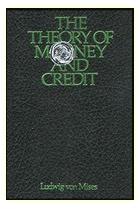 That ideal system has never been a reality in full. But as a general rule, the more closely a money system reflects that ideal, the better it is. The more it is monopolized, cartelized, managed, and papered over, the worse it is. This was the thesis advanced by Ludwig von Mises in his 1912 book entitled The Theory of Money and Credit. At the beginning of the age of central banking, he took us back to the beginning to show what money is, how it acquires its value, and where the attempt to monopolize it would lead. In the intervening years, he has been proven right.
The dollar today is worth a bit less than a nickel from what it was at the founding of the Federal Reserve. Now, this is a remarkable fact, given that prices had been on a general downward decline during the whole of the 19th century, excepting periods of war. It is even more remarkable when you consider that one of the stated jobs of the Fed was to stabilize the value of our money.
Looking at the long trend, we can say not only that the Fed has failed to do its job but, even worse, it has produced the very opposite results of its promise.
This is especially true in the area of business cycles, which the Fed was supposed to counter with careful management of the money supply. It was supposed to provide more money in times when business conditions supposedly required more liquidity. It was supposed to pull back on its money creation in other times when liquidity was not necessary.
No surprise: it turns out that the Fed has never met business conditions that it deemed not to be in need of liquidity.
In many ways, the Fed is a childish institution. I mean this in a very precise sense. A key feature of childish behavior is that it is action taken without a thought given to how actions might affect the reactions of others. Children always assume that they live and act in a vacuum. They are forever shocked to see that others’ lives are impacted by their choices. Part of the process of maturity involves the realization that one’s actions cause reactions from others.
But it takes many years to mature. Childish traits can continue even into teenage and college years, when kids still imagine themselves to be autonomous actors and forget that their actions generate responses from others that might foil their plans.
Think of the typical teenage driver, buzzing in and out of lanes, zipping around cars, speeding up and slowing down based solely on his own whim. He doesn’t give a thought to how his behavior impacts the responses of other drivers, and makes the roads less safe. He looks at traffic patterns as a given, and assumes that everyone is neutral with regard to his own driving.
So too does the Fed pursue its goal without a thought to how market actors are going to respond. It will lower the price of credit on the market for bank lending. This affects other interest rates by driving them down. All of it is paid for by money created out of thin air. In the same way that children and teens might consider their actions “neutral” from the point of view of others — since they are thinking only of themselves — so too the Fed considers money to be neutral with respect to the market. The Fed figures that it is only adding liquidity, but in fact it is gravely distorting the decision-making process, particularly as it affects long-term investment.
It is because this assumption of neutral money is at the heart of the monetary model of the Fed that they can believe that its inflationary policies do not constitute intervention in the market process. What they do not consider is that cheap credit sends signals to entrepreneurs to over-extend themselves, planning products that take a very long time to complete and presuming a more robust capital stock than exists in reality. When the reality is revealed — usually after the rate of monetary expansion slows — the boom turns to bust. Here we have a short description of the business cycle in its barest outlines.
The other day, the London Financial Times published an article that drew attention to the Austrian Theory of the Business Cycle. It said that only Mises and Hayek’s theory can account for the constant emergence of bubbles in such sectors as housing. Having watched the press coverage of the Austrians for years, I’ve noticed that we can almost track the business cycle based on the number of mentions of the Austrian Cycle theory in the press.
They never mention the Austrian theory in the boom times. It is only once the bust hits, and no one can really explain why it is happening, that the Austrians come in for mention. If you have ever wondered why the Austrians have a reputation as a school of gloom and doom, this might be why!
But let us remember that the Austrian theory is not just a theory of the bust. It is a theory of the boom and bust. It recognizes that there is a distinction between the appearance of prosperity and its reality. If you really want to explain a bust, you can’t just look at the factors that coincided with a fall. You have to look back to the boom period and see what artificial factors led the market to expand at an unsustainable rate.
This was the primary focus of the Austrians in the interwar period. In a book the Mises Institute is publishing right now, we find a series of wonderful essays by Mises. One is from 1928 in which he warns that inflationary credit has blown up many sectors beyond a sustainable rate. He warned of a coming collapse, one that would affect banking in particular. After that bust hit, he wrote a series of essays that reviewed its causes and pointed the way forward. He urged a policy of laissez-faire that would let the downward adjustment take place so that the economy could again stabilize.
Of course, his advice was rejected. This was the age of central planning. Keynes was its prophet in England and America, while FDR was its political arm. In the East, the future belonged to Stalin. In Europe, it belonged to Mussolini and Hitler. The handful of laissez-faire radicals like Mises and Hayek — along with American thinkers like Nock, Flynn, Chodorov, and Benjamin Anderson — were in an extreme minority.
There is far more at stake with this debate than merely discovering the technical causes behind the business cycle, or even in securing the monetary unit against depreciation. What is really at stake in the debate over money is the very idea of freedom itself, which always means freedom from the arbitrary and expansionist power of the state.
After all, the real reason that government destroyed the gold standard, and why our money has been completely untied from anything real and has been reduced to nothing more than computer entries backed by pressed cotton tickets with colored printing of idealized government officials, has little to do with theoretical error. Government found it to be in its interest to create all the money it would ever need for itself. The power to inflate, from the point of view of government, meant that it could be liberated to some extent from the need to tax.
 The power to inflate is absolutely crucial to the agenda of everyone who believes in using the government to manage the economy and society. As Mises says, they need the power to inflate in order to finance their policy of reckless spending, lavish subsidies, and bribing voters. They also need it for financing their wars, bailouts, and space shuttle trips, and for building their ever-larger palaces to keep comfortable the millions of bureaucrats they employ to make our lives miserable.
People talk of restraining government, but there will be no restraining government so long as the monetary system permits government to expand and spend without limit. So long as their debt is not traded with a default premium, so long as the government and all its connected institutions are considered to be too big to fail, we are going to have a problem with the expansion of power and the loss of freedom.
 Whenever the subject of monetary reform comes up, people ask many questions about the technicalities involved. How can we get by without a Fed, without deposit insurance, without a Bureau of Engraving and Printing? How can we determine the gold definition of the dollar? What will happen to all the dollars overseas? How can we really know how much money there is to be covered?
There are answers to all these questions. You can gain them by reading two Rothbard books: What Has Government Done to Our Money? and The Case Against the Fed. I also highly recommend to you the most systematic study on the Austrian business cycle and its relationship to money that has ever been published: Jesus Huerta de Soto’s Money, Bank Credit, and Economic Cycles.
But I submit to you that none of these technical issues are what is standing in the way of monetary reform. What is really stopping a much-needed change is public ideology. So long as the political system encourages the idea that government is the savior of mankind, the solver of all human problems, the machine that will bring freedom to the world through tanks and bombs, we are going to have the problem of monetary instability.
 Sound money and freedom go together. So long as we do not want freedom, we can never achieve the goal of sound money. For what government is doing to our money is nothing but a microcosm of what government is doing to our freedom. To institute sound money is to put a lock on the door so that the burglar of government cannot get in to steal from us, at either a fast or a slow rate.
Someday if you ever meet a person who is disparagingly called a goldbug, you might ask him why it is that he likes to collect and hold gold coins. The answer is that owning and holding gold symbolizes independence and freedom. Governments can destroy it. They can take it away if they can find it, and they have in the past.
But so long as we are free to buy it and keep it, we are able to hold a tangible good that remains universally recognized as a standard of value. It reminds us of what real money could be if we would ever let go of our attachments to the redistributionist state. Thus does the goldbug understand far more about the nature of things than others who blithely assume that wealth can be created by a printing press.
The case for radical monetary reform need not be left to the goldbugs, or to the Austrians at the Mises Institute. We are perfectly happy for anyone of any perspective to join our cause. But by understanding the connection between liberty and money, we gain some insight into why Mises, as a great libertarian, was also a passionate advocate of sound money. We can see why it is that his brilliant student Rothbard followed up on his cause.
It is only the libertarians who seem to fully understand the relationship between free markets in money and free markets in general. To champion one is to champion the other. This, I believe, is why we seem to be so alone in this battle. Those who have a stake in statism also have a stake in its means of finance. Those who might otherwise appreciate an economy without business cycles and inflation are unwilling to abide by the extreme limits that sound money places on state expansion.
 Consider a book like Jesus Huerta de Soto’s on money and business cycles. This is one of the great works on money that has been published. Why is it left to the Mises Institute to publish it? Because it takes a seriously radical institute to raise the fundamental questions of our age. Our publishing arm is not afraid to push forward the boundaries of economic science to the point where the conclusions bring into question the whole of the modern political project.
 And so we must. And so we will. We appreciate every bit of help you can provide us in this great cause. Join us in our intellectual struggle, so that we may once again embrace the freedom that is our heritage and our destiny.


