


To Think or Not To Think
December 13, 2004
General semantics is the study of language and meaning and is intended to help us to think clearly and to stay in touch with reality. Neither of those is as easy as one might suppose.
A basic theme of general semantics is recognition that language is a system of symbols, both written and aural, that relate to the stuff of reality. For example, when we English-speakers wish to refer to H2O, we say, "water." A Spanish-speaker would say, "agua." Here we have the same reality but two different symbols for it. There is only one reality, but there are thousands of languages.
The important thing to remember is that the word is not the thing itself. People who confuse words with reality are said to suffer from a belief in word magic. Words actually produce no effect whatsoever on reality. They are just arbitrary symbols we use for the purpose of communication. When we say someone is guilty of some crime, merely saying it does not prove it. To say that a country is a "terrorist state" does not prove that it is.
Another rule of semantics is to remember that the universe consists of unique stuff. No two people, no two trees, no two anythings are precisely identical. Alfred Korzybski, the founder of general semantics, used a numbering system to remind us of the uniqueness of reality. Cow-1 is not cow-2. The United States-1945 is not the same as the United States-2004. When someone says, "When you’ve seen one, you’ve seen them all," he or she is announcing a closed mind that will miss much of the beauty of this world.
Not only does our world consist of unique stuff, but everything, including ourselves, is undergoing continuous change. Well, so what, you might say. Well, this: Often when people talk about America, they are talking about an America that no longer exists except in their memory. It’s very important that we always deal with the here and now and not with the past or some imagined but nonexistent future. The United States in the 1940s was literally the arsenal of democracy. Today, we lack that capacity. The America that exists today is quite different from the country we were born into, the country in which we came of age.
Two other hints from general semantics are the phrases "as far as I know" and "at this time." To keep "as far as I know" in mind when we say something is to recognize we have limited knowledge. Nobody knows everything about anything. To keep in mind the phrase "at this time" is to remind ourselves that what we know today might not be true tomorrow.
Still another important tip is to know the difference between fact and opinion. A fact is a statement about reality that is verifiable by others. If I tell you that city hall is located at Main and Elm Streets, you can go to Main and Elm Streets and verify that for yourself. If I tell you that city hall is ugly, you can’t verify that. An opinion is an evaluation of reality and is always necessarily subjective. I see ugliness; you see beauty. It depends entirely on our own criteria for judging beauty.
There is a difference between informed opinion and uninformed opinion. We often hear people state as facts opinions that we know are not based on knowledge. Some of them are ridiculous, as when people speak as if they knew the inner thoughts of somebody they’ve never seen, much less met. I hear people say that Arab textbooks teach anti-Semitism. Have they ever seen an Arab textbook? No. Do they read Arabic? No. Then what they are really saying is that somebody else told them that Arab textbooks teach anti-Semitism.
Quite often in this age of propaganda, propaganda gets absorbed into people’s minds and then repeated as fact. We should always distinguish between what we know, what we don’t know and what somebody else told us. Korzybski’s Science and Sanity, published in 1933, is heavy reading, but there are popular works on general semantics by the late S.I. Hayakawa that are delightful to read.
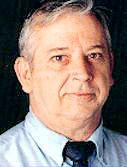 Charley Reese [send him mail] has been a journalist for 49 years, reporting on everything from sports to politics. From 1969—71, he worked as a campaign staffer for gubernatorial, senatorial and congressional races in several states. He was an editor, assistant to the publisher, and columnist for the Orlando Sentinel from 1971 to 2001. He now writes a syndicated column which is carried on LewRockwell.com. Reese served two years active duty in the U.S. Army as a tank gunner. Write to Charley Reese at P.O. Box 2446, Orlando, FL 32802.
 Afghaniscam