


America’s Fed Addiction
June 9, 2009
Scott Horton Interviews Ron Paul Scott Horton Interviews Ron Paul
This interview was recorded May 29, 2009. Listen to the interview.
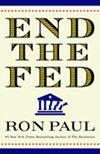
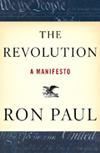
Scott Horton: Alright y’all, welcome back to the show. It’s Antiwar Radio on KAOS 95.9 FM in Austin, Texas, and our next guest on the show is Dr. Ron Paul, Republican Congressman representing District 14 in South Texas. He is the author of the books The Revolution: A Manifesto, Freedom Under Siege, The Case For Gold, with Lewis Lehrman, Gold, Peace, and Prosperity, Mises and Austrian Economics: A Personal View, A Foreign Policy of Freedom, Pillars of Prosperity and End the Fed.
Welcome back to the show, sir. How are you doing?
Ron Paul: Thank you. It’s good to be with you.
Horton: Well, and as everybody can tell here — The Case For Gold, that was the minority report of the Gold Commission, right?
Paul: Right. Yeah, it was.
Horton: All right, so obviously, you have the background in economics and more and more of those of us who watch cable TV news can see, you know, other people in the media finally picking up on this fact and asking you about your view and I’d like to ask you, I think principally about some of the things you said on CNN yesterday.
I think they basically started the interview the same way I’d like to today with a question actually suggested by a caller earlier. Barack Obama says that the worst is over, that the economic recovery has begun.
Yesterday, you didn’t seem to buy that. I was wondering if you could explain why not.
Paul: Well, all they’re going by is a blip upwards in the stock market. You know, a lot of people have been losing a lot of money, not just in the last couple of years, but they’ve been losing a lot of money for the past ten years.
If you go back to the Nasdaq bubble collapse, a lot of people lost a lot then and they never got back in, but then with all the new credit in the last ten years, you know, there were enough speculators going in and people wanting to spend money and they bid these markets up again all at the encouragement of the government and the Federal Reserve.
But now, with this bust, it’s going down again, but I think it’s in bad shape and besides, everything we’ve done so far has been completely wrong. We’ve created more spending, more debt, and more inflation, creating a lot more money out of thin air.
So for them to think this is over, it would mean that we, as Americans, would never have to work again because these foreign governments and the foreign people just love us. They trust us. They trust our military and they trust our economy, and therefore all we’re obligated to do is create money, and then they’ll sell us whatever we want.
And that’s just a dream, so the fact that the markets are up a little bit, I think doesn’t indicate in any way that this recovery is on its way up.
Horton: Well, but now, the Nasdaq bubble popped back in 2000 and they succeeded in, at least, making it seem like we had a recovery all the way up through last year. So could it be that, even if it’s a pseudo-recovery that we’re going to have it, and basically things will look good at least for the next few years?
Paul: It’s always possible. It might be six months. It might be a year or so because even in the 1930s, you know, they’d get some recovery periods of time. You know, at one point it went down a little bit, but as long as the Roosevelt and Hoover policies continued, the real rebuilding of the economy couldn’t occur.
So even by 1939, it was a very, very high unemployment rate at 18 or 19 percent and we’re doing the same thing. So the fact that some collection of people feel good about what’s happening or at least they have this wishful thinking, I just don’t think it’s going to be real growth.
We haven’t done anything. We haven’t gotten rid of the bad debts. We haven’t gotten rid of the malinvestment. We haven’t restored sound money. We haven’t gotten the government’s role defined in the way it should be in the free market.
So, no, I don’t see any way that we’re going to come out of this as of now, even though you might see, maybe even a year of some improvement, which I doubt.
Horton: Well, you know, we’ve talked before in terms of foreign policy about how difficult it can be to come up with a libertarian solution caused by a gigantic empire. It’s the kind of problem that, you know, your policy or mine wouldn’t have gotten us into and yet here we are, so how do we have a libertarian solution to a war, for example? It’s sort of the same question here, isn’t it? The boom and bust cycle, I know as a subscriber to the Austrian theory of economics, you blame on the fractional central banking system that we have and so forth.
Paul: Right.
Horton: But now that we’re in this mess, is it… well, take the hangover analogy, right? Everybody felt really, really good last night because they were drunk, but now they’ve got a hangover, is there an argument to be made at all, sir, for a little bit of the hair of the dog to get you through? Maybe your headache is so bad in the morning and a little bit of beer would help to get you through until lunchtime.
Paul: (laughter) Yeah, I sometime use the analogy of drug addiction. You know, the drug addict might want to get off drugs, but he doesn’t like the consequences of not having the drugs, so he is always needing the drugs to feel better. If he gets off, there are consequences. So the addiction is big government. We’re addicted to big government’s spending. We’re dependent on the government and all the guarantees, which does not do much more than give us a lot more of moral hazard and makes us do the wrong thing.
But I think this is a lot bigger problem than it was with the corrections that we’ve had over the last 35 years. We have a much bigger bubble that’s worldwide. It’s never been this way where one single currency could inflate like we have since 1971, so that’s the reason that I’m not a bit optimistic about what’s going to happen.
But I think what we’re doing is we’re leading to a dollar crisis and the end will come and we’ll have to change our ways, but we don’t have to do that if we all of a sudden had more libertarian constitutional policymakers. Maybe we could easily, you know, come to our senses and say, “Look, it’s going to be a bad year.
"But we’re not going to bailout anybody. We’re not going to print anymore money. We’re not going to have anymore deficit financing and we’re going to lower taxes. We’re going to get rid of the income tax and we’re going to have a backing to our currency." And then they’ll say, "Oh yeah, it sounds fine, but how are you going to cut the spending?" And that would be the biggest challenge because nobody wants their programs cut.
But I would, and have said this many times, I would cut overseas because I think politically, you could do that. But right now, the people might accept cutting overseas, but the people in charge will not; those who love the military-industrial complex.
Just this last week, it really bothered me in no end to see what Obama did with the Senate when they were dealing with the supplemental. Obama goes and makes these rash promises overseas of giving the IMF $100 billion. Well, where is he going to get $100 billion? And now, they’re working on gimmicks to put that into the budget where it doesn’t show up and they call this as that we’re going to "trade assets."
We are to give them $100 billion, and they’re going to give us scraps of paper saying, “Oh, yeah, well, we have something like an IMF bond,” and it’s the trading of assets or we then have a line of credit. It’s actually crazy, people. It’s unbelievable that they are doing this.
So in the midst of all this spending and everything, now we’re going to give foreign international organizations like this another $100 billion.
Horton: Well, it’s all just a bookkeeping trick at our expense, right?
Paul: Right, that’s it, but the consequences will come.
Horton: All right. Now, I want to try to… I’m not very good at playing devil’s advocate because I’m a pretty anti-interventionist kind of guy myself, but I want to try to see if I can poke holes in your theory here a little bit about, you know, what ought to be done here.
If unemployment gets up to 30 percent or worse, we could have a civil war. If, you know, take the 1930s, if unemployment was 25, almost 30 percent and Roosevelt, by inflation and by do-nothing work programs and whatever was able to bring that unemployment rate to only 15 percent, isn’t that important? I mean, couldn’t it be that America would have become a fascist or a communist dictatorship in the 1930s if something hadn’t been done about that unemployment?
Paul: Well, it looks like they did a lot of big government programs back then and they’ve continued, and look at what they’re doing now, even with the bailouts. They’re using as an opportunity to become fascistic, taking over ownership or becoming very socialistic, but the question is this, nobody wants civil war or 30 percent unemployment rate, but I’m convinced that the policies that we have now are much more likely to give us that than if we do the right thing.
If we did the right thing and we had a bad year and you had a 30 percent unemployment rate, yes, the government’s responsibility would be to quell the violence. But this whole idea that if we don’t do anything and we continue to spend and you have a collapse of the dollar, you’re going to have this, and that’s the whole reason why we don’t want them to follow these policies.
So and if we did have it under today’s circumstances or if we try to improve things and it got worse for a year, you have to still blame the people who created the mess, who created the bubble and made the mess. They have to be blamed for it, not for us who are getting the drug addict off his drugs. If we take him off the drugs and give him some medication and they’re getting better, but they don’t feel very good, the doctor shouldn’t be blamed for that. The person who got sick and got addicted should be blamed and this is the whole thing.
But the most important thing we do is blame the right people for the crisis we’re in. If we blame free markets and capitalism and sound money like we did in the 1930s for our problems, we can’t have a recovery. I mean, we’re going to lose even more freedoms.
The only advantage we have today that I think is a big advantage is in the 30’s, they said, “You know, it was…” They didn’t blame the Federal Reserve system. They blamed the gold standard and they blamed capitalism. Well, today we have to prove to them that we haven’t had capitalism for a long time and we certainly haven’t had the gold standard, so we have to blame the paper standard. We have to blame the Federal Reserve and we have to come down hard on them and they have to be the culprits and I think we could come out of here with a victory, but it will be touch-and-go on what happens if we end up with violence and, of course, that’s what I worry about the most.
Horton: Okay, so if we can stay on that drug analogy. When I say, you know, we could have this terrible high level of unemployment that could lead to disaster, that’s the kick. That’s getting off of opium and it’s really uncomfortable, but when I’m saying, you know, maybe it would be better to inflate, to have make work programs et cetera to keep that unemployment rate down, you’re saying that is the equivalent of more drugs and we’re running a risk of overdose. We’re running a risk of inflating so much to try to keep people employed that everybody ends up unemployed. The patient dies on the table of too much paper money.
Paul: Yes, and your argument has some credibility because that’s essentially what they do or what they have done in the past 35 years. Every time a recession came along, they didn’t want to really have the true correction, they say, “We’ll just keep inflating.” You know, the Nasdaq bubble breaks, and Greenspan comes along and he gives us the housing bubble and that’s why people are tempted to believe, you know, in the presentation of your argument and yet this is different.
And finally, it doesn’t work anymore and finally, the money doesn’t work anymore and that’s why the value of the dollar is so crucial. Like today, the dollar was down over a percent, you know, and that’s a lot for one day. And even that is not the best measurement of the dollar being down — against other currencies — because the other currencies aren’t worth anything either. They’re all paper currencies.
Ultimately, the only thing you have to watch is the value of the purchasing power of money throughout the world and in particular with the dollar, and I think the purchasing power of the dollar will go down.
Horton: Well, now, one of the things that’s argued is that if we follow your approach of do nothing, that we could get into a deflationary spiral, which I guess the analogy would be coming off of a heroin addiction so harshly that they end up having a heart attack and dying anyway, you know, from kicking the drugs. That you would have good businesses that ought to survive, all things being equal, that would be brought down by everybody else being brought down and the whole economy will end up — you know, "systemic risk" and so forth — being destroyed, including the parts of the economy that on any given day ought to be sustainable projects.
Paul: Now, I think people ought to concentrate on the word "correction." You know, we talk about recession and depression and deflation, but what we’re looking for is a correction, and that’s a good word because there has been a lot of mistakes made. There has been too many houses built, so we have to correct that. So what does the government do, they come in and say, “Oh, the prices of houses, they’re going down. We have to prop the prices up and at the same time, we better stimulate housing because that will create jobs.”
 No, you don’t want that. You want it to correct. You want the housing prices to go down so poor people who did happen to save some money can buy a house again and then when all these corrections are made, then we will have real growth again. We can’t patch it up just like we did for all these recessions that we’ve had for 35 years because this one is quite different.
Horton: Okay, and now to wrap up this conversation, Dr. Paul, how much money do we really spend on our military forces around the world and how much of that realistically could be cut? If, for example, you were the president instead of Barack Obama, what kind of military budget would we really be looking at for, say, next year?
Paul: Well, some have done some studies and they added up the total amount per year that we spend maintaining our empire and it comes up to over a trillion dollars. But you can’t cut all of that because what they work into that is some interest and taking care of veterans and whatever, but you could cut a lot. I mean, how many hundreds of billions of dollars could you cut if you didn’t have troops in Korea or Japan or Germany or the Middle East.
I would say that you could very quickly in the first year or two, you could probably save a couple of hundred billion dollars and then the next year, even more per year. And the big thing would be the shift of attitude, the change. People would know the direction we’re going in. I mean, the whole world would change if they all of a sudden realized that we weren’t going to be the bully of the world telling everybody what to do and if they don’t do it our way, we either bomb them and if they do it our way, then we give them more foreign aid.
A lot of money could be saved, so just the change of perception would be very good. As a matter of fact, if we didn’t have our Navy over, you know, threatening Iran, and we had a different policy, maybe oil prices would come down, especially if we quit printing so much money and then didn’t run up so much debt.
Horton: Well, then again, that would be terrible, right? — for any price to come down according to all the experts, all of them saying…
Paul: (laughter) Yeah, they want it to go up!
Horton: Well, maybe we should just threaten them some more —
 Paul: (laughter) Yeah.
Horton: — to stimulate the economy. All right. Well, I really appreciate your time on the show today, Dr. Paul. Thank you.
Paul: Thank you, Scott.
Horton: All right. That’s Dr. Ron Paul. He’s the author of A Foreign Policy of Freedom and… oh, are you still there, Ron?
Paul: Yeah.
Horton: And what’s the name of the new book about the Fed?
Paul: End the Fed.
Horton: End the Fed.
Paul: Right.
Horton: And when is it coming out?
Paul: September.
Horton: In September. All right. Well, I can’t wait to get my hands on that.
Paul: Okay.
Horton: All right. Thanks very much.
Paul: Thank you.
Horton: Also, I strongly urge you guys to read The Revolution, A Manifesto. It’s absolutely great. And A Foreign Policy of Freedom is a collection of speeches on foreign affairs going all the way back to the 1970s. Brilliant stuff. The guy’s been right this whole time.
(Transcript thanks to RonPaul.com.)




 Audio Book
Dr. Ron Paul is a Republican member of Congress from Texas.
 Getting to the Truth About World War II