


Undermining the Regime
July 1, 2006
Why Are Americans So Angry?
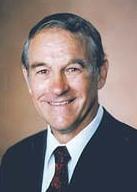
by Ron Paul by Ron Paul
Before the U.S. House of Representatives, June 29, 2006
I have been involved in politics for over 30 years and have never seen the American people so angry. It’s not unusual to sense a modest amount of outrage, but it seems the anger today is unusually intense and quite possibly worse than ever. It’s not easily explained, but I have some thoughts on this matter. Generally, anger and frustration among people are related to economic conditions; bread and butter issues. Yet today, according to government statistics, things are going well. We have low unemployment, low inflation, more homeowners than ever before, and abundant leisure with abundant luxuries. Even the poor have cell phones, televisions, and computers. Public school is free, and anyone can get free medical care at any emergency room in the country. Almost all taxes are paid by the top 50% of income earners. The lower 50% pay essentially no income taxes, yet general dissatisfaction and anger are commonplace. The old slogan “It’s the economy, stupid,” just doesn’t seem to explain things.
Some say it’s the war, yet we’ve lived with war throughout the 20th century. The bigger they were the more we pulled together. And the current war, by comparison, has fewer American casualties than the rest. So it can’t just be the war itself.
People complain about corruption, but what’s new about government corruption? In the 19th century we had railroad scandals; in the 20th century we endured the Teapot Dome scandal, Watergate, Koreagate, and many others without too much anger and resentment. Yet today it seems anger is pervasive and worse than we’ve experienced in the past.
Could it be that war, vague yet persistent economic uncertainty, corruption, and the immigration problem all contribute to the anger we feel in America? Perhaps, but it’s almost as though people aren’t exactly sure why they are so uneasy. They only know that they’ve had it and aren’t going to put up with it anymore.
High gasoline prices make a lot of people angry, though there is little understanding of how deficits, inflation, and war in the Middle East all contribute to these higher prices.
Generally speaking, there are two controlling forces that determine the nature of government: the people’s concern for their economic self-interests; and the philosophy of those who hold positions of power and influence in any particular government. Under Soviet Communism the workers believed their economic best interests were being served, while a few dedicated theoreticians placed themselves in positions of power. Likewise, the intellectual leaders of the American Revolution were few, but rallied the colonists to risk all to overthrow a tyrannical king.
Since there’s never a perfect understanding between these two forces the people and the philosophical leaders and because the motivations of the intellectual leaders vary greatly, any transition from one system of government to another is unpredictable. The communist takeover by Lenin was violent and costly; the demise of communism and the acceptance of a relatively open system in the former Soviet Union occurred in a miraculous manner. Both systems had intellectual underpinnings.
In the United States over the last century we have witnessed the coming and going of various intellectual influences by proponents of the free market, Keynesian welfarism, varieties of socialism, and supply-side economics. In foreign policy we’ve seen a transition from the founder’s vision of non-intervention in the affairs of others to internationalism, unilateral nation building, and policing the world. We now have in place a policy, driven by determined neo-conservatives, to promote American “goodness” and democracy throughout the world by military force — with particular emphasis on remaking the Middle East.
We all know that ideas do have consequences. Bad ideas, even when supported navely by the people, will have bad results. Could it be the people sense, in a profound way, that the policies of recent decades are unworkable — and thus they have instinctively lost confidence in their government leaders? This certainly happened in the final years of the Soviet system. Though not fully understood, this sense of frustration may well be the source of anger we hear expressed on a daily basis by so many.
No matter how noble the motivations of political leaders are, when they achieve positions of power the power itself inevitably becomes their driving force. Government officials too often yield to the temptations and corrupting influences of power.
But there are many others who are not bashful about using government power to do “good.” They truly believe they can make the economy fair through a redistributive tax and spending system; make the people moral by regulating personal behavior and choices; and remake the world in our image using armies. They argue that the use of force to achieve good is legitimate and proper for government — always speaking of the noble goals while ignoring the inevitable failures and evils caused by coercion.
Not only do they justify government force, they believe they have a moral obligation to do so.
Once we concede government has this “legitimate” function and can be manipulated by a majority vote, the various special interests move in quickly. They gain control to direct government largesse for their own benefit. Too often it is corporate interests who learn how to manipulate every contract, regulation, and tax policy. Likewise, promoters of the “progressive” agenda, always hostile to property rights, compete for government power through safety, health, and environmental initiatives. Both groups resort to using government power — and abuse this power — in an effort to serve their narrow interests. In the meantime, constitutional limits on power and its mandate to protect liberty are totally forgotten.
Since the use of power to achieve political ends is accepted, pervasive, and ever expanding, popular support for various programs is achieved by creating fear. Sometimes the fear is concocted out of thin air, but usually it’s created by wildly exaggerating a problem or incident that does not warrant the proposed government “solution.” Often government caused the problem in the first place. The irony, of course, is that government action rarely solves any problem, but rather worsens existing problems or creates altogether new ones.
Fear is generated to garner popular support for the proposed government action, even when some liberty has to be sacrificed. This leads to a society that is systemically driven toward fear — fear that gives the monstrous government more and more authority and control over our lives and property.
Fear is constantly generated by politicians to rally the support of the people.
Environmentalists go back and forth, from warning about a coming ice age to arguing the grave dangers of global warming.
It is said that without an economic safety net — for everyone, from cradle to grave — people would starve and many would become homeless.
It is said that without government health care, the poor would not receive treatment. Medical care would be available only to the rich.
Without government insuring pensions, all private pensions would be threatened.
Without federal assistance, there would be no funds for public education, and the quality of our public schools would diminish — ignoring recent history to the contrary.
It is argued that without government surveillance of every American, even without search warrants, security cannot be achieved. The sacrifice of some liberty is required for security of our citizens, they claim.
We are constantly told that the next terrorist attack could come at any moment. Rather than questioning why we might be attacked, this atmosphere of fear instead prompts giving up liberty and privacy. 9/11 has been conveniently used to generate the fear necessary to expand both our foreign intervention and domestic surveillance.
Fear of nuclear power is used to assure shortages and highly expensive energy.
In all instances where fear is generated and used to expand government control, it’s safe to say the problems behind the fears were not caused by the free market economy, or too much privacy, or excessive liberty.
It’s easy to generate fear, fear that too often becomes excessive, unrealistic, and difficult to curb. This is important: It leads to even more demands for government action than the perpetrators of the fear actually anticipated.
Once people look to government to alleviate their fears and make them safe, expectations exceed reality. FEMA originally had a small role, but its current mission is to centrally manage every natural disaster that befalls us. This mission was exposed as a fraud during last year’s hurricanes; incompetence and corruption are now FEMA’s legacy. This generates anger among those who have to pay the bills, and among those who didn’t receive the handouts promised to them quickly enough.
Generating exaggerated fear to justify and promote attacks on private property is commonplace. It serves to inflame resentment between the producers in society and the so-called victims, whose demands grow exponentially.
The economic impossibility of this system guarantees that the harder government tries to satisfy the unlimited demands, the worse the problems become. We won’t be able to pay the bills forever, and eventually our ability to borrow and print new money must end. This dependency on government will guarantee anger when the money runs out. Today we’re still able to borrow and inflate, but budgets are getting tighter and people sense serious problems lurking in the future. This fear is legitimate. No easy solution to our fiscal problems is readily apparent, and this ignites anger and apprehension.
Disenchantment is directed at the politicians and their false promises, made in order to secure reelection and exert power that so many of them enjoy.
It is, however, in foreign affairs that governments have most abused fear to generate support for an agenda that under normal circumstances would have been rejected. For decades our administrations have targeted one supposed “Hitler” after another to gain support for military action against a particular country. Today we have three choices termed the axis of evil: Iran, Iraq or North Korea.
We recently witnessed how unfounded fear was generated concerning Saddam Hussein’s weapons of mass destruction to justify our first pre-emptive war. It is now universally known the fear was based on falsehoods. And yet the war goes on; the death and destruction continue.
This is not a new phenomenon. General Douglas MacArthur understood the political use of fear when he made this famous statement:
“Always there has been some terrible evil at home or some monstrous foreign power that was going to gobble us up if we did not blindly rally behind it.”
We should be ever vigilant when we hear the fear mongers preparing us for the next military conflict our young men and women will be expected to fight. We’re being told of the great danger posed by Ahmadinejad in Iran and Kim Jung Il in North Korea. Even Russia and China bashing is in vogue again. And we’re still not able to trade with or travel to Cuba. A constant enemy is required to expand the state. More and more news stories blame Iran for the bad results in Iraq. Does this mean Iran is next on the hit list?
The world is much too dangerous, we’re told, and therefore we must be prepared to fight at a moment’s notice regardless of the cost. If the public could not be manipulated by politicians’ efforts to instill needless fear, fewer wars would be fought and far fewer lives would be lost.
Fear and Anger over Iraq
Though the American people are fed up for a lot of legitimate reasons, almost all polls show the mess in Iraq leads the list of why the anger is so intense.
Short wars, with well-defined victories, are tolerated by the American people even when they are misled as to the reasons for the war. Wars entered into without a proper declaration tend to be politically motivated and not for national security reasons. These wars, by their very nature, are prolonged, costly, and usually require a new administration to finally end them. This certainly was true with the Korean and Vietnam wars. The lack of a quick military success, the loss of life and limb, and the huge economic costs of lengthy wars precipitate anger. This is overwhelmingly true when the war propaganda that stirred up illegitimate fears is exposed as a fraud. Most soon come to realize the promise of guns and butter is an illusion. They come to understand that inflation, a weak economy, and a prolonged war without real success are the reality.
The anger over the Iraq war is multifaceted. Some are angry believing they were lied to in order to gain their support at the beginning. Others are angry that the forty billion dollars we spend every year on intelligence gathering failed to provide good information. Proponents of the war too often are unable to admit the truth. They become frustrated with the progress of the war and then turn on those wanting to change course, angrily denouncing them as unpatriotic and un-American.
Those accused are quick to respond to the insulting charges made by those who want to fight on forever without regard to casualties. Proponents of the war do not hesitate to challenge the manhood of war critics, accusing them of wanting to cut and run. Some war supporters ducked military service themselves while others fought and died, only adding to the anger of those who have seen battle up close and question our campaign in Iraq.
When people see a $600 million embassy being built in Baghdad, while funding for services here in the United States is hard to obtain, they become angry. They can’t understand why the money is being spent, especially when they are told by our government that we have no intention of remaining permanently in Iraq.
The bickering and anger will not subside soon, since victory in Iraq is not on the horizon and a change in policy is not likely to occur.
The neoconservative instigators of the war are angry at everyone: at the people who want to get out of Iraq; and especially at those prosecuting the war for not bombing more aggressively, sending more troops, and expanding the war into Iran.
As our country becomes poorer due to the cost of the war, anger surely will escalate. Some of it will be justified.
It seems bizarre that it’s so unthinkable to change course if the current policy is failing. Our leaders are like a physician who makes a wrong diagnosis and prescribes the wrong medicine, but because of his ego can’t tell the patient he made a mistake. Instead he hopes the patient will get better on his own. But instead of improving, the patient gets worse from the medication wrongly prescribed. This would be abhorrent behavior in medicine, but tragically it is commonplace in politics.
If the truth is admitted, it would appear that the lives lost and the money spent have been in vain. Instead, more casualties must be sustained to prove a false premise. If the truth is admitted, imagine the anger of all the families that already have suffered such a burden. That burden is softened when the families and the wounded are told their great sacrifice was worthy, and required to preserve our freedoms and our Constitution.
But no one is allowed to ask the obvious. How have the 2,500 plus deaths, and the 18,500 wounded, made us more free? What in the world does Iraq have to do with protecting our civil liberties here at home? What national security threat prompted American’s first pre-emptive war? How does our unilateral enforcement of UN resolutions enhance our freedoms?
These questions aren’t permitted. They are not politically correct. I agree that the truth hurts, and the questions are terribly hurtful to the families that have suffered so much. What a horrible thought it would be to find out the cause for which we fight is not quite so noble.
I don’t believe those who hide from the truth and refuse to face the reality of the war do so deliberately. The pain is too great. Deep down, psychologically, many are incapable of admitting such a costly and emotionally damaging error. They instead become even greater and more determined supporters of the failed policy.
I would concede that there are some — especially the die-hard neoconservatives, who believe it is our moral duty to spread American goodness through force and remake the Middle East — who neither suffer regrets nor are bothered by the casualties. They continue to argue for more war without remorse, as long as they themselves do not have to fight. Criticism is reserved for the wimps who want to “cut and run.”
Due to the psychological need to persist with the failed policy, the war proponents must remain in denial of many facts staring them in the face.
They refuse to accept that the real reason for our invasion and occupation of Iraq was not related to terrorism.
They deny that our military is weaker as a consequence of this war.
They won’t admit that our invasion has served the interests of Osama Bin Laden. They continue to blame our image problems around the world on a few bad apples.
They won’t admit that our invasion has served the interests of Iran’s radical regime.
The cost in lives lost and dollars spent is glossed over, and the deficit spirals up without concern.
They ridicule those who point out that our relationships with our allies have been significantly damaged.
We have provided a tremendous incentive for Russia and China, and others like Iran, to organize through the Shanghai Cooperation Organization. They entertain future challenges to our plans to dominate South East Asia, the Middle East, and all its oil.
Radicalizing the Middle East will in the long term jeopardize Israel’s security, and increase the odds of this war spreading.
War supporters cannot see that for every Iraqi killed, another family turns on us — regardless of who did the killing. We are and will continue to be blamed for every wrong done in Iraq: all deaths, illness, water problems, food shortages, and electricity outages.
As long as our political leaders persist in these denials, the war won’t end. The problem is that this is the source of the anger, because the American people are not in denial and want a change in policy.
Policy changes in wartime are difficult, for it is almost impossible for the administration to change course since so much emotional energy has been invested in the effort. That’s why Eisenhower ended the Korean War, and not Truman. That’s why Nixon ended the Vietnam War, and not LBJ. Even in the case of Vietnam the end was too slow and costly, as more then 30,000 military deaths came after Nixon’s election in 1968. It makes a lot more sense to avoid unnecessary wars than to overcome the politics involved in stopping them once started. I personally am convinced that many of our wars could be prevented by paying stricter attention to the method whereby our troops are committed to battle. I also am convinced that when Congress does not declare war, victory is unlikely.
The most important thing Congress can do to prevent needless and foolish wars is for every member to take seriously his or her oath to obey the Constitution. Wars should be entered into only after great deliberation and caution. Wars that are declared by Congress should reflect the support of the people, and the goal should be a quick and successful resolution.
Our undeclared wars over the past 65 years have dragged on without precise victories. We fight to spread American values, to enforce UN resolutions, and to slay supposed Hitlers. We forget that we once spread American values by persuasion and setting an example — not by bombs and preemptive invasions. Nowhere in the Constitution are we permitted to go to war on behalf of the United Nations at the sacrifice of our national sovereignty. We repeatedly use military force against former allies, thugs we helped empower — like Saddam Hussein and Osama bin Laden — even when they pose no danger to us.
The 2002 resolution allowing the president to decide when and if to invade Iraq is an embarrassment. The Constitution authorizes only Congress to declare war. Our refusal to declare war transferred power to the president illegally, without a constitutional amendment. Congress did this with a simple resolution, passed by majority vote. This means Congress reneged on its responsibility as a separate branch of government, and should be held accountable for the bad policy in Iraq that the majority of Americans are now upset about. Congress is every bit as much at fault as the president.
Constitutional questions aside, the American people should have demanded more answers from their government before they supported the invasion and occupation of a foreign country.
Some of the strongest supporters of the war declare that we are a Christian nation, yet use their religious beliefs to justify the war. They claim it is our Christian duty to remake the Middle East and attack the Muslim infidels. Evidently I have been reading from a different Bible. I remember something about “Blessed are the peacemakers.”
My beliefs aside, Christian teaching of nearly a thousand years reinforces the concept of “Just War Theory.” This Christian theory emphasizes six criteria needed to justify Christian participation in war. Briefly the six points are as follows:
- War should be fought only in self-defense;
- War should be undertaken only as a last resort;
- A decision to enter war should be made only by a legitimate authority;
- All military responses must be proportional to the threat;
- There must be a reasonable chance of success; and
- A public declaration notifying all parties concerned is required.
The war in Iraq fails to meet almost all of these requirements. This discrepancy has generated anger and division within the Christian community.
Some are angry because the war is being fought out of Christian duty, yet does not have uniform support from all Christians. Others are angry because they see Christianity as a religion as peace and forgiveness, not war and annihilation of enemies.
Constitutional and moral restraints on war should be strictly followed. It is understandable when kings, dictators, and tyrants take their people into war, since it serves their selfish interests — and those sent to fight have no say in the matter. It is more difficult to understand why democracies and democratic legislative bodies, which have a say over the issue of war, so readily submit to the executive branch of government. The determined effort of the authors of our Constitution to firmly place the power to declare war in the legislative branch has been ignored in the decades following WWII.
Many members have confided in me that they are quite comfortable with this arrangement. They flatly do not expect, in this modern age, to formally declare war ever again. Yet no one predicts there will be fewer wars fought. It is instead assumed they will be ordered by the executive branch or the United Nations — a rather sad commentary.
What about the practical arguments against war, since no one seems interested in exerting constitutional or moral restraints? Why do we continue to fight prolonged, political wars when the practical results are so bad? Our undeclared wars since 1945 have been very costly, to put it mildly. We have suffered over one hundred thousand military deaths, and even more serious casualties. Tens of thousands have suffered from serious war-related illnesses. Sadly, we as a nation express essentially no concern for the millions of civilian casualties in the countries where we fought.
The cost of war since 1945, and our military presence in over 100 countries, exceeds two trillion dollars in today’s dollars. The cost in higher taxes, debt, and persistent inflation is immeasurable. Likewise, the economic opportunities lost by diverting trillions of dollars into war is impossible to measure, but it is huge. Yet our presidents persist in picking fights with countries that pose no threat to us, refusing to participate in true diplomacy to resolve differences. Congress over the decades has never resisted the political pressures to send our troops abroad on missions that defy imagination.
When the people object to a new adventure, the propaganda machine goes into action to make sure critics are seen as unpatriotic Americans or even traitors.
The military-industrial complex we were warned about has been transformed into a military-media-industrial-government complex that is capable of silencing the dissenters and cheerleading for war. It’s only after years of failure that people are able to overcome the propaganda for war and pressure their representatives in Congress to stop the needless killing. Many times the economic costs of war stir people to demand an end. This time around the war might be brought to a halt by our actual inability to pay the bills due to a dollar crisis. A dollar crisis will make borrowing 2.5 billion dollars per day from foreign powers like China and Japan virtually impossible, at least at affordable interest rates.
That’s when we will be forced to reassess the spending spree, both at home and abroad.
The solution to this mess is not complicated; but the changes needed are nearly impossible for political reasons. Sound free market economics, sound money, and a sensible foreign policy would all result from strict adherence to the Constitution. If the people desired it, and Congress was filled with responsible members, a smooth although challenging transition could be achieved. Since this is unlikely, we can only hope that the rule of law and the goal of liberty can be reestablished without chaos.
We must move quickly toward a more traditional American foreign policy of peace, friendship, and trade with all nations; entangling alliances with none. We must reject the notion that we can or should make the world safe for democracy. We must forget about being the world’s policeman. We should disengage from the unworkable and unforgiving task of nation building. We must reject the notion that our military should be used to protect natural resources, private investments, or serve the interest of any foreign government or the United Nations. Our military should be designed for one purpose: defending our national security. It’s time to come home now, before financial conditions or military weakness dictates it.
The major obstacle to a sensible foreign policy is the fiction about what patriotism means. Today patriotism has come to mean blind support for the government and its policies. In earlier times patriotism meant having the willingness and courage to challenge government policies regardless of popular perceptions.
Today we constantly hear innuendos and direct insults aimed at those who dare to challenge current foreign policy, no matter how flawed that policy may be. I would suggest it takes more courage to admit the truth, to admit mistakes, than to attack others as unpatriotic for disagreeing with the war in Iraq.
Remember, the original American patriots challenged the abuses of King George, and wrote and carried out the Declaration of Independence.
 Yes Mr. Speaker, there is a lot of anger in this country. Much of it is justified; some of it is totally unnecessary and misdirected. The only thing that can lessen this anger is an informed public, a better understanding of economic principles, a rejection of foreign intervention, and a strict adherence to the constitutional rule of law. This will be difficult to achieve, but it’s not impossible and well worth the effort.
Dr. Ron Paul is a Republican member of Congress from Texas.
 Say Thank You to the Grocer