


Praise the Troops, Fine
March 17, 2004
Praise the Troops
by Rep. Ron Paul, MD by Rep. Ron Paul, MD
Before the US House of Representatives, March 17, 2004
Mr. Speaker, today, in the floor debate on H. Res. 557, the Iraq resolution, though a member of the Committee on International Relations, I was unfortunately denied time to express my dissent on the policy of preemptive war in Iraq. The fact that the Committee on International Relations held no hearings and did not mark up the resolution further challenges the fairness of the process.
Mr. Speaker, I now rise to express my opposition to H. Res. 557, obviously, not because our Armed Forces do not deserve praise, but rather because our policy in the Persian Gulf is seriously flawed. An effort to commend our forces should not be used to rubber-stamp a policy of folly. To do so is disingenuous. Though the resolution may have political benefits, it will prove to be historically incorrect.
Justifying preemption is not an answer to avoiding appeasement. Very few wars are necessary. Very few wars are good wars. And this one does not qualify. Most wars are costly beyond measure, in life and limb and economic hardship. In this regard, this war does qualify: 566 deaths, 10,000 casualties, and hundreds of billions of dollars for a victory requiring self-deception.
Rather than bragging about victory, we should recognize that the war that rages on between the Muslim East and the Christian West has intensified and spread, leaving our allies and our own people less safe. Denying we have an interest in oil and that occupying an Islamic country is not an affront to the sensitivities of most Arabs and Muslims is foolhardy.
Reasserting U.N. Security Council resolutions as a justification for the war further emphasizes our sacrifice of sovereignty and Congress’s reneging its constitutional responsibility over war.
This resolution dramatizes our forgetfulness that for too long we were staunch military and economic allies of Saddam Hussein, confirming the folly of our policy of foreign meddling over many decades. From the days of installing the Shah of Iran to the current worldwide spread of hostilities and hatred, our unnecessary involvement shows so clearly how unintended consequences come back to haunt generation after generation.
 Someday our leaders ought to ask why Switzerland, Sweden, Canada, Mexico, and many others are not potential targets of an Islamic attack. Falsely believing that the al Qaeda was aligned with Saddam Hussein has resulted in the al Qaeda now having a strong presence and influence in Iraq. Falsely believing that Iraq had a supply of weapons of mass destruction has resulted in a dramatic loss of U.S. credibility, as anti-Americanism spreads around the world. Al Qaeda recruitment, sadly, has been dramatically increased.
We all praise our troops and support them. Challenging one’s patriotism for not supporting this resolution and/or policy in the Persian Gulf is not legitimate. We should all be cautious in endorsing and financing a policy that unfortunately expands the war rather than ends it.
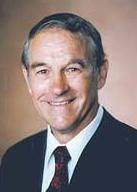
Dr. Ron Paul is a Republican member of Congress from Texas.
 Martha Stewart's u2018Crime'