


The Dark Side of Rand
April 17, 2003
 Howdy, LRC readers. I just dropped by to recommend Jeff Walker’s The Ayn Rand Cult.
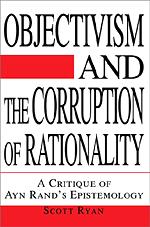
It’s actually the fault of my friend Bob Wallace. He’s a regular LRC columnist, you see, and he wrote a review of my own book on Objectivism (see below). So when Lew asked him about reviewing Walker’s book, he said, “Well, I know a guy . . .”
It’s only fair that I begin by telling you what I think of Rand, so that you know roughly where I’m coming from as a reviewer. Here’s a nutshell account.
In my own view, she was a pretty good novelist, but as a philosopher, she was a pretty good novelist. Sure, she did a lot to popularize the cause of liberty – but she subtly changed it in the process, and (to put it mildly) I don’t think the changes were for the better. Her philosophical foundations will not support the free and prosperous libertarian commonwealth. (Having written an entire book in support of these points, I don’t feel too bad about making them here so summarily.)
So some iconoclasm is in order. Well, if it’s iconoclasm you want, Walker delivers.
Walker’s book has been in print since 1999 and what I have to say about it is brief: if you’re at all interested in the history of Ayn Rand and the Objectivist movement, you should read it, but you shouldn’t do so credulously. (Hee hee. Like I have to tell LRC readers not to read credulously.)
Walker’s book is still the only one that collects all the “dirt” on the Objectivist movement into a single handy volume. And for that, we owe Walker a big fat thank-you. LRC readers will probably also enjoy the numerous quotations from Murray Rothbard. (Any readers who don’t know about Rothbard’s interactions with the Objectivist movement are referred to Justin Raimondo’s An Enemy of the State. Rothbard was also, of course, the author of the hilarious Rand – skewering one-act play “Mozart Was a Red” and regarded the Objectivist movement as a cult himself; see his essay “The Sociology of the Ayn Rand Cult.”)
Walker collects plenty of good material here. What he’s trying to do is show that the Objectivist movement evinces a lot of the features of a “cult.” A personality cult, that is, not a “religious cult.” This won’t surprise anybody who knows much about Objectivist history or has been keeping even half an eye on the doings at the Ayn Rand Institute under the “leadership” of Leonard Peikoff. But Walker makes his case well and relies on the work of actual scholars who have studied actual cults.
Some of the really fun stuff comes from Walker’s personal interviews with the people who helpfully brought us the Objectivist movement in the first place. I’m thinking here particularly of psychotherapist Allan Blumenthal, who characterizes Rand as suffering from several personality disorders and at one point opines to Walker that the entire philosophy of Objectivism was created, in effect, as therapy for Rand herself. Whee!
The problem is that Walker sometimes goes out on a limb and saws it off behind him. His throw-everything-at-the-wall-and-see-what-sticks approach is close enough to tabloid-style journalism to arouse the suspicions of scholarly readers. He comes across, in short, as a guy with an axe to grind. Worse, he thereby undermines a case that would have been very strong if he’d taken a slightly different tack and edited out some of his own speculations.
For example, Walker spends a whole chapter shredding Nathaniel Branden’s character and painting him as a pompous, self-absorbed blowhard who can’t be trusted about much of anything. At one point he even blames Branden, most unfairly and even cruelly, for culpable negligence in the accidental death of Branden’s beloved second wife Patrecia. And yet he relies on Branden throughout the rest of the book as a source of information about the Objectivist movement.
There’s just a little too much of this sort of thing. Some of Walker’s critics, including me, have repeatedly pointed out that the book needs to be taken with several grains of salt. You have been warned; ’nuff said.
At any rate the book’s rather dark portrait of Rand herself is not only defensible in its own right but a welcome counterbalance to the hagiographic approach of the Peikoffians. It also works well as a more critical companion to the Brandens’ two less-than-hagiographic biographies (Barbara Branden’s The Passion of Ayn Rand and Nathaniel Branden’s My Years with Ayn Rand). Walker’s positive case is good but he makes his point just as effectively by contrast: his closing chapter is a fictional portrait of a “Rand who might have been,” and it’s very incisive as a critique of the Rand who really was.
If you’re looking for a scholarly and philosophical account of Objectivism, you don’t want this book; you want Chris Matthew Sciabarra’s Ayn Rand: The Russian Radical, which has set the standard for scholarly works on Objectivism. If you want philosophical critiques of Objectivism, you’ll get just a little in Walker’s book, but you’ll probably want something else – say perhaps (modest cough) my own. (Two others that are pretty good in some respects, and excellent in a few, are Greg Nyquist’s Ayn Rand Contra Human Nature, and John W. Robbins’s Without A Prayer: Ayn Rand and the Close of Her System.)
But if you want a factual, critical account of the dark side of the Objectivist movement, and a point-by-point dissection of the features that made (make) it a “cult,” Walker’s book is the best one out there. Actually it’s the only one out there – which, given its flaws, is too bad, but it will serve until something better comes along.
 Objectivism-watchers shouldn’t miss it.
April 17, 2003


 The Split on the Right