


Auditing the Fed Will Audit the State
July 2, 2009
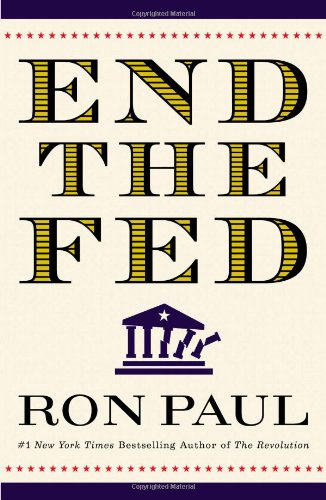 End the Fed
Best Price: $1.12
Buy New $8.53
(as of 10:10 UTC - Details)
End the Fed
Best Price: $1.12
Buy New $8.53
(as of 10:10 UTC - Details)
 An MP3 audio version of this article, read by Floy Lilley, is available as a free download.
If Ron Paul succeeds in getting the Fed audited, the consequences could be far-reaching. Assuming the audit isn’t rigged to protect the guilty, as a similar bill was in 1978, the Fed will need every obfuscating Keynesian to testify and write editorials on its behalf, to reassure the public that monetary matters really are best left to the gods who rule us, such as Ben Bernanke and Timothy Geithner. Monetarists, too, would likely join the "Save the Fed" crusade, perhaps arguing that even a great free market economist like Milton Friedman considered the Fed useful for preventing and curing recessions.
But the really appetizing part of auditing the Fed is knowing what stands behind it. The Fed is a racket at heart, a con game writ large – what else can you call an organization with the exclusive privilege of printing money in the trillions and handing it over to friends? But if this is true, what does that say about the state, the organization that created and sanctions it? Is the Fed an honest mistake in the state’s otherwise undying efforts to preserve our liberty, or might it be a key component of a bigger racket?
Without the power of the state, there would be no proposal to audit the Fed because there would be no Fed to audit. Like any cartel, it exists to protect its members from market retribution, and only the police power of the state can make us shoulder that burden. A bill to audit the Fed could by force of logic become a state audit, much like the investigations of the 1972 Watergate burglary exposed the grinning skull behind the government’s public persona. During a Fed audit, for example, would it not be reasonable to ask why the people’s elected representatives continue to support a banking system that secretly steals wealth from their countrymen and other dollar holders? Or are we to take the naïve position that most elected officials really are clueless about the Fed’s policy of currency debasement and the effects such policies have had in history?
Partners in Crime
There are any number of ways a Fed audit could bring the state itself under close scrutiny, but let us sketch just one line of argument:
- It is well known that banks engage in fractional-reserve lending, meaning that bankers use their deposits in lending operations, with only a part of their loans covered by money reserves. Fractional reserves expand the money supply, which, until the age of Keynes and Fisher, was called inflation. It is also common knowledge that when banks extend too much credit, depositors quite naturally get nervous and start withdrawing their money.
Although fractional reserves would seemingly qualify as a form of embezzlement – the act of taking for personal use other people’s property without their knowledge or consent – government court rulings have never viewed it as such. As Murray Rothbard observed, a bank that fails to meet its deposit obligations is just another insolvent, not an embezzler. Following the British ruling in Foley v. Hill and Others in 1848, US courts consider that money left with a banker is, "to all intents and purposes, the money of the banker, to do with as he pleases."
 It's Time To Stand Up for Homemade Potato Salad Come On, People, It's Not That Hard To Make. Do You Really Think We Can't Tell the Difference?