


“In the long run, we are all dead but our children will be left to pick up the tab.” ~ Thomas Hoenig
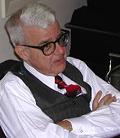
Thomas Hoenig is the president of the Federal Reserve Bank of Kansas City. In a recent speech, he laid out a scenario for what the Federal Reserve ought to do and what the U.S. government ought to do, and what will happen if they refuse. You can read it here.
They will refuse. He did not say this, but it is clear to me that they will refuse, at least for the near term.
I hope they won’t refuse.
Hoenig surveyed what he called “challenges.” He said that we — a crucial word in the speech — must “begin now to address them genuinely and systematically or we risk repeating past mistakes and creating an environment that leads to our next set of crises.
Who are “we”? How will “we” accomplish this?
Herbert Hoover could have said as much in 1932. So could Bush 1 in 1991 or Bush 2 in 2001. So could Barack Obama today. They never say anything like this. Neither do Federal Reserve Chairmen, except when they are about to implement past mistakes.
He thinks the recession will abate in the second half of this year or in 2010. He did mention housing price declines as a drag on the economy. He did not mention foreclosures.
He said that the cause of this new economic growth will be the result of “the significant degree of monetary and fiscal stimulus” that has taken place.
He said that “Monetary policy has been enormously accommodative, with the fed funds rate being near zero.” This correctly identifies the cause of the fed funds rate at zero: monetary inflation. The FED cannot simply announce a lower fedfunds rate. It has to back this up with fiat money.
He identified the main subsidized sectors. The FED has thrown money at housing and the financial markets. It is now buying longer-term assets, including T-bonds. If we count all of the Federal Reserve Banks’ balance sheets, the increase has been from $1 trillion to $3 trillion in less than two years (p. 2).
Fiscal policy — the code words for “Federal deficits” — has matched the FED’s expansion of money. There was $700 billion for TARP during the past 8 months. The recent spending package will add another $800 billion in tax cuts, grants to state governments, and jobless benefits. There will be more highways.
NO FREE LUNCHES
He is a Keynesian. They all are. So, he did not mention that every dime that the Federal government spends in excess of revenues must be borrowed. That is what a deficit means. The only question is: From whom?
If from foreign central banks, the dependence of the U.S. government and the economy on foreign central bankers increases.
If from the domestic economy, every dime lent to the Federal government must come out of savings that would otherwise have gone into the private sector or local government. Every dime transferred from the private capital markets to the Federal government reduces economic productivity. The private sector jobs that would have been created become government jobs.
If from the Federal Reserve System, fiat money will spread into the economy.
If from commercial banks, this will come at the expense of either private producers or consumers, or through moving funds presently kept at the FED as excess reserves. The fractional reserve process will then take over: more money through the money multiplier, which will at last go positive.
Hoenig mentioned none of this.
There are no free lunches. There are no free loans. There are always costs attached.
He is cautiously optimistic. He thinks the recovery will be modest. This is becoming the standard opinion. He added this word of warning:
Our financial institutions remain fragile and will require significant additional amounts of capital to regain their stability.
He did not say how this capital is going to be raised.
THE OLIGARCHY OF INTERESTS
He said that the U.S. financial system very nearly collapsed in 2008. Then he did what they all do. He announced that we “need a better set of incentives within the industry and better oversight by the regulatory institutions if we are to avoid a repeat of these events in the future.”
This raises a few questions.
Why were the regulators blind before? For how long? Why are they better able to see now? What kind of incentives motivate them? Who applies these incentives? What about disincentives? Who applies these?
He understands this. “Unfortunately, I’m afraid we are witnessing some regulatory malpractice now” (p. 4). That is exactly what we are seeing. We are seeing the financial regulatory structure being handed over to the Federal Reserve System. This was the source of the bubble in the first place. Greenspan denied that anyone can identify a bubble in the making.
What if we do not get the reforms we need? His answer is amazing for its candidness: “. . . we will perpetuate an oligarchy of interests that will fail to serve the best interests of business, the consumer and the U.S. economy.”
Notice the key word: “perpetuate.” It is an admission of the existence of such an oligarchy.
It has been with us ever since the Civil War. It has consolidated its hold on the economy ever since the Federal Reserve began operations in 1914.
Why will this change now? He never said.
Today, the FED has created the legal basis of massive monetary inflation — unprecedented. How will it police the financial system?
He said that before “we” spend time reforming the system, “we should first determine which rules of conduct should be reintroduced and enforced to provide for better outcomes.”
How inspiring! But who are “we,” and how will “we” make these assessments? How will “we” get the existing oligarchy to consent to its suicide?
We have heard all this before, but never from a sitting president of a regional Federal Reserve Bank.
TOO BIG TO FAIL
He called for policy-makers to abandon this doctrine (p. 5). The policy is anti-capitalistic, he said. Indeed, it is. That is the reason why the Federal Reserve System was created by the big bank oligarchy in 1913.
He said the bailouts create moral hazard. Senior managers take extreme risks, looking for easy profits from high leverage, knowing that if their companies get in trouble, the government or the FED will bail them out.
To warn against “moral hazard” at this late date is naïve. The concept was first named and discussed in the 1870’s. It is well enough known by now that a Nashville financial planner has created a country music alter ego named Merle Hazard. He sings more sense than the Board of Governors of the Federal Reserve has yet to announce. If you doubt me, listen for yourself.
Hoenig did not outline exactly what this new, improved “let ’em die” system should look like. He did not say how Congress will implement it. He did not say why, at this late date, the oligarchy will consent to it.
This is standard fare. Nobody in authority says what needs to be done or how it will ever come to pass. Economists tell us that incentives are everything. Then, when they call for financial reform, they refuse to discuss incentives. How does the fractional reserve banking process not create booms and busts? How can regulators overcome the booms that fiat money produces, or the busts that monetary stabilization later produces?
ECONOMIC IMBALANCES
He identified several. One is the balance of payments problem. We borrow hundreds of billions of dollars from abroad.
But who are “we”? He did not identify the major lenders: Asian central banks. He did not mention why they do this: to increase their exports of goods to the United States. How? By lowering the dollar-denominated value of their currencies. These central banks buy dollars with their own recently created fiat money.
The balance of payments deficit is mainly a product of mercantilist economics in Asia and Keynesian economics in the United States. Mercantilism and Keynesianism are the mutually dependent twins of modern trade. Asian central banks buy mainly Treasury debt and Federal agency debt. The imbalance problem stems from governments on both sides of the transactions.
Until very recently, the personal savings rate has fallen, he said (p. 6). Quite true. Now that it is rising again, the Federal government is running a $1.8 trillion deficit to get Americans to spend, spend, spend. The Federal Reserve has lowered the fedfunds rate to zero. Lend, lend, lend! The joint policies of the government and the FED are designed to increase spending. The lower capital gains rate will expire in 2010. That will reduce thrift.
Then there are the unfunded liabilities of the Federal government: Social Security and Medicare (p. 7). These are permanent imbalances. They have grown up over decades. Why would Hoenig imagine that Congress will reverse itself and start funding these sinkholes? With what? Congress will not invest in the private markets. It buys Treasury debt and spends the money. It always has.
Where are the new incentives that will change Congress? Who will impose them?
Hoenig’s whole exercise is utterly utopian. It is an economists’ fantasy: a world devoid of political incentives to correct the imbalances. Government created these imbalances for political purposes: buying votes, expanding power, deferring a day of reckoning. It has been successful. Why change now?
Someday, he said, “investment will slow and cause lower productivity.” What does he mean, someday? We are there.
The whole Western world is there. Every government and central bank has pursued the same policies. Every government is now trapped. Every central bank has lowered the overnight interest rate. Every central bank has inflated.
INTEREST RATES WILL RISE
He finally gets down to the real world (p. 8). He said that interest rates will rise.
He actually predicted monetary deflation. “As the economy recovers, even at a modest pace, resource demands will begin to increase. At that point, the current level of monetary accommodation will need to be withdrawn to avoid introducing inflationary impulses.” This is true. But if this is done, unemployment levels will remain high, he said.
If this happens, he predicted, “there will be considerable pressure on the central bank to ‘help out’ in easing the adjustment process by keeping interest rates low for an extended period” He’s got that right! This would lead to “high inflation and an actual worsening of an economy’s long-term performance.” Correct again!
Conclusion: “We face difficult adjustments that must be made. The process will not be free of pain.”
The FED has more than doubled its balance sheet over the past two years (p. 9). The FED must now remove this stimulus “carefully.” What does he mean, “carefully”? The FED either removes it or else it doesn’t.
He refused to say the obvious: to maintain today’s rate of price inflation, the FED will have to sell all of the toxic assets, all of the Fannie Mae and Freddie Mac debt, and all of the T-bonds that it has bought.
In short, it will have to collapse the already fragile financial system.
How likely is this scenario?
The monetary base has more than doubled. This allows a doubling of bank loans. This will double the money supply. If the FED does nothing, we will see 100% price inflation when the banks finally lend all of the money they legally can lend today.
So, at some point, he is right. The FED must sell those assets, or else raise bank reserve requirements to sterilize the assets it has bought. I think the latter is more likely.
If the FED does not sell assets or raise reserve requirements, then mass inflation is guaranteed.
This is not just America’s problem. This is the whole world’s problem,
MORE OF THE SAME
It has finally become acceptable to blame Alan Greenspan for his policy of lowering short-term rates. The problem today is this: the central banks have inflated at a rate that makes Greenspan look like a hard-money man. They have lowered short-term rates to unprecedented levels. They have out-Greenspanned Greenspan.
Now what? The supposed green shoots of recovery will persuade solvent banks to lend again. The M1 money supply will rise without being offset by a negative money multiplier, as has happened so far.
If banks refuse to lend, then interest rates will go up. This will cut short the recovery.
Imagine what the real estate market would look like if the FED ever unloaded its Fannie Mae and Freddie Mac bonds, and mortgages went to 7% or 8%. If you think the Case-Shiller index of urban housing prices in 20 cities looks like Niagara Falls today, just wait.
 I think the FED will continue to buy T-bonds. It will not unload its assets until the political repercussions of 30% price inflation finally force it to stop buying. Then rates will soar.
CONCLUSION
The FED is on the back of the tiger. Hoenig sees this. He knows the financial system remains fragile. I presume that he knows that the only way to keep it solvent is for the FED to refuse to sell its assets to the general investment community. Bernanke knows this, too.
No matter how carefully the FED sells off debt, this policy will reverse the recovery. I mean the hoped-for recovery. It is nowhere in sight yet.
The FED will continue to support the T-bond market. It will not allow T-bond rates to rise dramatically.
It will ignore corporate bond rates. Get ready for a bumpy ride.
June 10, 2009
Gary North [send him mail] is the author of Mises on Money. Visit http://www.garynorth.com. He is also the author of a free 20-volume series, An Economic Commentary on the Bible.
Copyright © 2009 Gary North

