


Paul Poirot, RIP
February 21, 2006
Paul Poirot [PuhROWE] edited the incarnation of The Freeman that was published by the Foundation for Economic Education (FEE), from the little magazine’s inception in 1955 until his retirement in 1987. For that, he should receive an obituary in every libertarian and conservative publication in the United States. This will not happen.
The impact of Poirot’s Freeman — and it surely was his Freeman — would be as difficult to overstate as it would be to prove. For decades, its subscribers would pass along a copy of the magazine to a friend, with motivation similar to that of a fundamentalist passing along a gospel tract. Today, gospel tracts are no longer familiar tools of evangelism. Neither is The Freeman.
How many Americans over age 50 can say, “I became a free market believer when someone handed me a copy of The Freeman“? Thousands, I suspect. I was one. I have heard many other people tell me the same thing.
The Freeman was the recruiting tool of choice, as well as a readable monthly reinforcement that reminded its readers, “No, you have not lost your mind. Yes, the government’s latest attempt to make the economy better has failed. Again.”
Other than Poirot, I have never met anyone who claimed to read every issue cover to cover. But we would all skim the latest issue, looking for one or two items of interest to us. I suspect that the only thing that as many as half the subscribers may have read every month was John Chamberlain’s book review column.
For the lonely conservative man in the street in early 1955, there was no self-consciously conservative magazine. There were a few newsletters: Human Events, The Dan Smoot Report, and the brilliant but obscure Don Bell Reports. National Review was launched later that year, and it would have been called The Freeman if William F. Buckley had been able to persuade Leonard E. Read to let him have the right to revive the name of Albert Jay Nock’s defunct, though once resurrected, little journal. Read had other plans.
Read put Poirot on the job as editor. Poirot had a Ph.D. in economics from Cornell. He was one of several FEE employees who had come out of Cornell’s program in agricultural economics, including F. A. “Baldy” Harper, who had been on the faculty.
THE RIGHT STUFF
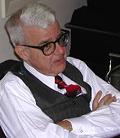
Poirot was afflicted with a physical defect. The left side of his face sagged. He refused to speak publicly. He also preferred not to write. His one little book, The Pension Idea, was solid but undistinguished. So, editing was well suited for him.
The Freeman reflected his sense of what would best serve readers and donors. Its articles were always readable. Some might include footnotes and be several pages long. Others were short pieces, more like editorials. But anyone with the ability to follow an argument could read any article in the magazine.
He understood that The Freeman was an introductory journal. This matched FEE’s positioning. Read was never going to make FEE into an advanced think tank. FEE was a “Read tank,” and he was not a certified intellectual. FEE was a place where small businessmen, high school teachers, and college undergraduates could come to hear a few lectures. There was no place in 1955 for them to extend their knowledge beyond what FEE provided. There were no academic economics journals written from a free market perspective.
For a student wanting to be trained by an entire department that believed in the free market in 1955, there were only Grove City College, Harding College, Hillsdale College, and the University of Chicago. There was only the University of Chicago for graduate students, and they had to be masters of higher mathematics.
So, Poirot did not try to turn The Freeman into something other than an introductory magazine. He identified a niche market for the magazine, and he filled it. Until he retired in 1987, four years after Read died, The Freeman never departed from this niche.
By 1987, The Freeman no longer filled it. The niche had become much larger. Competition for a share of that niche was fierce. The Freeman had not changed. Neither had FEE. Both had shrunk. The high point in circulation had been the Goldwater campaign in 1964, with something like 35,000 subscribers, none of whom was required to pay for it. For comparison’s sake, Richard Viguerie laid the foundation of the New Right in 1965 with a hand-compiled mailing list of the names of donors who had given over $50 to the Goldwater campaign. That list was under 15,000 people.
POIROT, THE EDITOR
Poirot had a wry sense of humor that he could tap instantaneously. This was known only to employees at FEE and his friends. He also had a mastery of the English language. Yet he never edited any of my articles grammatically, as far as I know. He did insert subheadings to thwart the eye-glazing effect of extended copy. I soon learned to provide my own subheads, which satisfied him. I have never stopped using them. To that extent, he shaped my writing style.
He did not use an editor’s familiar blue pencil. He did not re-write articles. He simply sent them back, with a brief note suggesting a possible change, or maybe nothing at all if he was not interested.
I sent in a book review of a book by the former economist and then U.S. Senator, Paul H. Douglas. He sent it back and suggested that I turn it into an article. I did. It was published 39 years ago this month: Repressed Depression. That was my first nationally published article. I even got paid, which was like manna for a graduate student.
That same month, I was at the apartment of a person I had just met. He picked up a magazine. “Have you ever heard of The Freeman,” he asked. I could see that it was the February issue. I said, “Take a look at the table of contents,” which back then was on the front cover. He did. He could almost not believe his eyes. An author gets a maximum of one of these serendipitous events in a lifetime. Mine happened early.
Based on my articles, 1967—71, Read hired me in 1971 to replace George Roche. Roche had just been appointed president of Hillsdale College. He immediately hired Lew Rockwell to imitate Poirot’s strategy, using a newsletter, Imprimis, as a Freeman substitute: a free publication used to generate donations. It became the most financially successful newsletter in history, raising hundreds of millions of dollars for a college whose faculty was not as committed to the free market as Imprimis was.
COOKIE-CUTTER OBITUARIES
Newspaper editors have always stuck trainees on the obituary beat. Obituaries are pro-forma exercises that attract readers, provide a few details of the deceased’s life, and fill space. The local newspaper in Lewisburg, Pennsylvania, ran a standard obituary on Saturday, February 19.
Paul grew up on the family farm and attended high school in Nashville, Ill. He was a 1936 graduate of the University of Illinois and earned a doctorate in agricultural economics from Cornell University in 1940.
He was employed as an economist by the U.S. Office of Price Administration in Washington, D.C. from 1941 to 1945, and for the Grange League Federation in Ithaca, N.Y., from 1945 to 1949. In 1949, he joined the staff of the Foundation for Economic Education in Irvington, N.Y., where he was the managing editor of The Freeman magazine until he retired in 1987. He continued as editor emeritus of the magazine until the time of his death.
Such is life. One becomes “emeritus.” Then, when emeritus ends, there are a few words in some local newspaper, a graveside service, and it is over. But, of course, it is never over. Each person leaves a legacy. Its visibility is usually narrowly confined, but it is there. Crossroads get crossed. Things are never what they might have been.
Poirot’s legacy is a generation of people who learned the basics of free market economics from The Freeman. A few of those articles are still on the web, although not all of them are on FEE’s site. They were copyrighted because The Freeman was copyrighted, but Poirot in each issue authorized their reprinting, just so long as The Freeman was mentioned. Today, we call this strategy “viral marketing.” Poirot understood it early.
CONCLUSION
There is a photo hanging in FEE’s headquarters. Ronald Reagan is reading a copy of The Freeman, with Mrs. Reagan’s head on his shoulder. She is asleep. The photo ran first in a New York City newspaper (not the Times). That photo recorded for posterity a representative sample of Poirot’s legacy.
 You are part of it, too. You have just read this. I am here because he was there.
February 21, 2006
Gary North [send him mail] is the author of Mises on Money. Visit http://www.garynorth.com. He is also the author of a free 17-volume series, An Economic Commentary on the Bible.
Copyright © 2006 LewRockwell.com
 Intellectuals, Algeria, and Vietnam