


Guys Didn't Scream for Elvis
August 16, 2002
 Twenty-five years ago today, Elvis Presley died. Millions of women supposedly grieved. But I have yet to meet a man who says that part of him died with Elvis.
The Elvis Presley phenomenon began as a teenage girl phenomenon. Unlike other teenage girl phenomena, this one matured along with them, growing fatter, becoming nostalgic about the glory days of youth and insecure about the future. Then he died, just in time, freezing him at age 42 in the memories of millions of his fans, who could look back and say to themselves, “I could have made him happy.” The obvious is lost to them: if someone as stunningly gorgeous as Priscilla Presley, and as smart about money, couldn’t make the man happy, then he wasn’t going to be happy.
SCREAM THERAPY
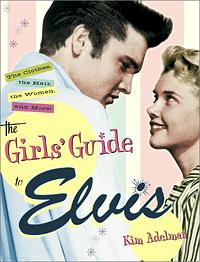 The screaming-girls phenomenon began with Frank Sinatra. In Sinatra’s case, the boys were not screaming because they were overseas during World War II. Sinatra avoided military service. When Johnny came marching home, the screaming girls phase of Sinatra’s career ended. Chairmanship of the board status was decades in the future.
A decade later, Elvis became the next target of collective cacophony. The Beatles were the third a decade after Elvis. The Beatles knew that nobody could hear them, so they decided to get off the road. Their more cerebral studio phase began, with the orchestras. But rock and roll has never mixed well with orchestras.
 As the 25th anniversary of his death has approached, we have seen a series of film clips on TV featuring Elvis and relatively small crowds. I have searched the audience for a male. There are none. His crowds were exclusively female. His visible fans were girls who did not get asked on a date to see Elvis. Girls who get asked on dates are wise enough not to scream at the top of their lungs for a guy only slightly older than their dates. Guys who scream also applaud, when they scream at all. We never see film clips of girls applauding Elvis. Applause indicates appreciation for a musical performance. Screaming indicates unfulfillable female fantasies, the details of which I have never had the courage to consider.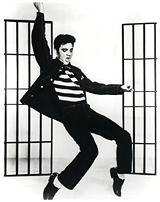
I write all this as a man of the ‘fifties who spent exactly 93 cents on Elvis, for one 45 RPM record. This officially qualifies me as an Elvis fan, but on the far edge of the galaxy.
ROCK-A-BILLY
Presley broke into stardom with Sun Records. Sun’s owner, Sam Phillips, had an uncanny and very brief ability (1954-57) to spot country-boy talent that would sell records: Johnny Cash, Carl Perkins, and Jerry Lee Lewis. These were Southern white boys who combined country music without twang, either in the voice or the steel guitar, with the rhythm of rock and roll. 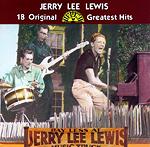
(Just for the record, the phrase “rock and roll” comes from asong, recorded in 1948, “We’re Gonna Rock, We’re Gonna Roll.” That’s right: the inventor of bluegrass indirectly named the new music. This is one reason why he was inducted into the Rock & Roll Hall of Fame in 1997, the year after his death.)
 Phillips made Presley a regional star after the arrival of Bill Haley and the Comets, which was the first successful crossover band from country music. Haley recorded “Crazy, Man, Crazy” in 1953. This was the first rock and roll record to make the Billboard top-20. “Rock Around the Clock” (1954) later became the biggest selling rock record of all time: over 25 million copies, and possibly 43 million. It’s in the Guinness Book of Records. It is second only to Bing Crosby’s “White Christmas.” It has been revived again and again in its original format. I have never heard a re-recording by any other group, even Sonny Dae and His Knights, which recorded it first in 1952. It originally was only a modest seller until it became the opening theme for the movie, “The Blackboard Jungle” (1955). “Shake, Rattle, and Roll” (1954), issued after “Rock Around the Clock,” was the first rock and roll record to sell a million copies. It was issued in July 1954, and went on to sell 12 million. It was a “cover” record — a white group singing a black man’s record — that was first performed by Big Joe Turner. Haley cleaned up the lyrics.
 In July 1954, Haley’s “Shake, Rattle, and Roll” cracked the top-10, three months after Turner’s version had been released. On July 5, Sun Records released Presley’s “That’s All Right (Mama)” — a cover of Arthur “Big Boy” Cruddup — and “Blue Moon of Kentucky,” an upbeat version of a Bill Monroe song. The record became an instant hit that day, when a Memphis disc jockey played it over and over, while Elvis, extremely shy, sat in a movie theater, knowing that the record was scheduled to be played. By the time the movie was over, his career had taken off. The switchboard had lit up as soon as the “That’s All Right” was over, so the DJ played it repeatedly.
 What created the female screaming phenomenon was Elvis’ first public performance, three weeks after the record was released. He was part of The Blue Moon Boys. It was at the Overton Park Shell Concert in Memphis. The headliner that night was — you won’t believe this — Slim Whitman, the man whose record sales dominated the 2 am to 5 am local TV slots in the 1980s. When Elvis sang, the girls started screaming. He could not understand it. His guitarist, Scotty Moore, understood. “It was your leg, man. It was the way you were shaking your left leg.”
The king was born. The Blue Moon Boys would fade, to be replaced by royalty. “Shake that thing” was his stepping stone to a strange immortality.
THE BIG TIME
 Presley hit the big time in January 1956 with “Heartbreak Hotel,” which sold over a million copies. It was on the RCA label, which had bought his contract from Phillips for $40,000. That record got Presley national attention. It was the first time I had heard of him. Why that song was popular, I have never been able to figure out. But it made a lasting impression on Hoyt Axton, whose mother co-wrote it. There is no question that it was a girls’ song. The guys in 1956 were into Bill Haley, Bo Diddley, Little Richard, Chuck Berry, Fats Domino, and (which no one will now admit) Pat Boone, who became popular by doing cover records for Fats Domino hits, most famously the appropriately titled “Ain’t That a Shame.” (Shame? It was a disgrace.)
Contrary to the legend, “The Ed Sullivan Show” was not Presley’s first TV appearance. Six times he appeared on “The Dorsey Brothers Stage Show.” That’s right: the Dorseys. Brother Tommy had introduced Frank Sinatra to his legions of screamers 15 years earlier. Then “The Milton Berle Show,” after which he got his nickname, Elvis the Pelvis. Then it was an appearance on “The Steve Allen Show,” where Steve made him sing “Hound Dog” to a hound dog. (Cruel.) Only then did he appear on “The Ed Sullivan Show.” And Ed was not even there. He had been injured in an auto accident. Elvis was introduced by Charles Laughton.
(Again, hard to believe. I can imagine Sullivan’s producer. “We don’t want to make Ed look bad. Who can we get to fill in who is even less lively than Ed?” Laughton surely qualified. He had played police chief Javert in the 1935 version of “Les Miserables,” and followed this role as Quasimodo in “The Hunchback of Notre Dame.” Not exactly Mr. Lively.)
 It was only on Elvis’ third appearance on Sullivan’s show, over three months later, that the famous “waist-up-only” camera rule was imposed. That, of course, made the screamers even more enthusiastic in subsequent appearances.
It was after his appearance on “The Milton Berle Show” that Hal Wallis signed him for a 7-movie contract for Paramount Pictures. In the history on entrepreneurship, this one is right up there at the top. How could Wallis possibly have known that Presley really could act — surely well enough to match the scripts that Paramount gave him? He would eventually star in 31 films, none of which I have seen. In fact, I have never met a man who has admitted to me of having seen one.
When Elvis got drafted in 1958, this took him out of the limelight for two years. When he came back to the States from Germany, his career entered its ballads-and-schlock-movies phase. His first TV appearance after his discharge was on ABC’s show, “Frank Sinatra’s Welcome Home Elvis.” The screaming had stopped by then, as it had for Sinatra. This event launched the next aspect of his career, “Age Along With Elvis,” which Sinatra had already tested and mastered.
By the mid-1960s, the fire was gone, musically speaking. He continued to sell records by the millions, but they were not rocking, nor were they country. His fans were not men.
 Then, in 1969, lightning struck again. He began to record country music that was worth listening to. In a comeback, he appeared for five weeks at the International Hotel in Las Vegas. In February 1970, he played six times at the Houston Astrodome. Over 200,000 people showed up.
Just how good was he, musically speaking, at this point in his career? Let me cite an assessment by an old friend, Bob Warford. In the 1960s, Warford was arguably the best bluegrass banjo picker on the West Coast. He played with The Kentucky Colonels and (briefly) Bill Monroe, who described him as “fast as greased lightning.” About the time Elvis was entering the Vegas phase of his career, Warford was the lead guitarist for the Everly Brothers, sometimes playing in Vegas. In the 1970s, after the untimely death of former Colonels’ guitarist (and Byrds member) Clarence White, he replaced White as a sideman in heavy demand for Los Angeles country rock performers, including Linda Ronstadt. He was also the best educated sideman in the business: all but the PhD dissertation in neurobiology, and then law school. He is today a corporate lawyer specializing in medical cases. Here is his assessment of Presley during the Vegas phase of his career. 
I never saw Elvis perform live, but knew most of his band through the Vegas years, and they were absolutely top-notch. Ron Tutt on drums, Emory Gordy (among others) on bass, [James] Burton on guitar, Glenn D. Hardin on piano (as I recall), etc. I have seen some footage of them playing (one of the live concert movies) and it was a fabulous band, with great energy.
I do tend to agree with you as to target audience and base of support — females seemed to be much more devoted to him then males — of course, there were (and are) lots of Elvis impersonators, and that was (and is, probably) born of the perception that such an act would collect female fans and female attention. The impression I got was that he was just “naughty” enough to be interesting to women, while not evil enough to be dangerous in their eyes, yet nowhere near bad or nasty enough to be an interesting “model” for males.
CONCLUSION
Elvis Presley was very good at what he did. His voice was better than his early songs indicated. He had terrific side men, from start to finish. In the early RCA years, he had Chet Atkins producing his songs, the all-time master of the country music electric guitar. He also had the highest paid manager in entertainment history (50%), Andreas van Kuijk (Col. Tom Parker).
He was not the first rock and roller, and his rock and roll phase did not last very long. He was not the first country singer turned rocker. Bill Haley was. Haley sold more rock and roll records than Presley did. Access to his coronation rested more on his left leg than his early musical abilities.
His unprecedented success was another example of the spontaneous order of the free market. Nobody could have predicted his career in early 1954, including Sam Phillips. But non-colonel Parker cashed in on it, after Presley’s career had begun to soar.
Win some. Lose some. But, in the final analysis, the biggest loser of all was Presley. Exchanging Priscilla Presley for grilled peanut butter and banana sandwiches was not a wise decision.
His main problem was that he spent every dime he made, so he became dependent on Parker to run his career. Parker cared only for money, and schlock was selling well. If Elvis had asserted his right to sing what he wanted, where he wanted, and when, he still would have made a small fortune. If he had turned his finances over to his wife, they would have done very well. Instead, he did what Parker told him to do. This destroyed his own self-image. He never trusted his own remarkable talent or his fans’ immense loyalty. He never saw in his wife the ability to create an empire. He was blind.
 Presley died in 1977. He is probably more famous today than he was in 1957. Graceland attracts 700,000 visitors a year and grosses $15 million. That is Priscilla’s handiwork. Because of the “Elvis did not die” story, which I like to think was dreamed up by “Col.” Parker, his popularity will probably survive the deaths of the doddering screamers.
One thing cannot be taken from him, ever. On one legendary night in his hotel room in Las Vegas, he showed the good taste and common sense to fire a .44 magnum into a TV screen when Robert Goulet started to sing. While this event is not widely publicized as an example of a valid exercise of Second Amendment liberties, it should be.
August 16, 2002
Gary North is the author of Mises on Money. Visit http://www.freebooks.com. For a free subscription to Gary North’s twice-weekly economics newsletter, click here.
 Letter to Alan Greenspan and John Taylor