


TV Nation: The Killing of American Brain Cells
March 5, 2003
Growing up in the 70s, it was so common to be active in a range of endeavors that TV watching was typically reserved for after 8pm — pajamas, a no-brand cola, cheese puffs, Rowan and Martin’s Laugh-In, and life was good. No kid wanted to be indoors for too long, no matter what the temperature was outside.
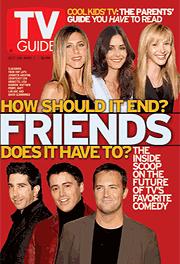 As adults, neither of us watch TV, at least since the days of M*A*S*H and Northern Exposure. Well, except for sports, sports news, and the occasional late night show. We hate TV. We loathe it. Okay, the only contemporary shows — of all the sitcoms and dramas and reality stuff — both of us will give some credence to are The Simpsons and Cops. The Simpsons is a passable show with some clever themes, and Cops can be especially entertaining because the producers always manage to scour up some footage of debris from the bottom tiers of the urban social order.
TV, along with sugar, is one of the great evils in society. Walk into the home of any friend or family member, say hi to the kids, and they don’t dare turn their face away from the tube to acknowledge that you’ve walked in, because they just can’t be distracted from their daily dose of obedience to their visual master. Their faces are frozen to the tube because they are unable to lose their trance for even a single moment. Look at their eyes, and note they are hugely dilated by the light of the idiot box.
Our observation is, and has been, that the American public we know of has been weaned on TV, and they are lost without that dumb tube staring back at their faces. The American TV nation has become a docile bunch of followers who are far too easily entertained by any and all attempts at dumbing them down.
Besides, who doesn’t notice the progression of sitcoms where the man in the house has gone from the family leader to the laughingstock nincompoop of the house — always stupid, clueless, under everyone’s thumb, and constantly being swatted down by the wife. The problem is, that sort of representation is now the truth of many households, thanks to a generation of docility brought on by militant feminism and leftist Hollywood.
In order to preserve your sanity and intelligence, here are some good reasons to not watch TV:
1. Opportunity costs: You could spend the same time doing such things as reading something job-related that might make you more successful in the future; reading something intellectual that will make you more fun at parties and less gullible to advertisers and government propaganda; doing something job-related that will make you more money right now; or exercising so you can better enjoy not only the extra money you’ll earn but also the people you’ll spend it with.
2. Direct costs: TV stupids you. The intellectual level of major-network sitcom dialogue and situations is (we’re guessing) 6th grade. The more time you spend at that level, the more that level will describe you. Typical sitcom conflicts involve such things as a teenager’s parent(s) disallowing some risky social activity; children interfering with a parent’s plan to watch sports on TV; someone throwing a party that turns out to be no fun; an adult meeting a long-lost relative; and so on ad pukum. The conflicts themselves are nothing more than substrates for the delivery of funny lines. The conflicts seem typical of 1960s sitcoms, though they are from next week’s online television listings. One would assume (without watching) that the jokes are retreads, too. You being stupided is a relatively insignificant direct cost, because it’s just you. Much worse is:
3. Moral costs: Sex in the City, Fear Factor, Temptation Island, and other reality shows focusing on sexual fidelity/infidelity, shows that normalize or glamorize violence, and other down-defining (to paraphrase Rush Limbaugh) presentations have an impact on people’s behavior: garbage in, garbage out. The more you watch people behave immorally, the more you consider the behavior normal and permissible. This may not apply to you personally, but when the images are presented night after night, year after year, to a population of 280 million people, there are effects on the population. If our founders were correct in stating that their highly libertarian experiment required a religious, moral populace, we may have in television a partial explanation of the “progression” from our minarchist 1780s to the American socialism we have today.
4. There’s more than snobbery in being able to say you don’t watch television — for example, there are practical benefits, such as being able to find the people you want to meet at parties. As soon as you admit you don’t know any of the characters in Friends, indeed that you’ve never seen an episode, the Friends fans will begin to wander away from you, while the attractive, vibrant, professional person there will wander over and ask what you think of, say, the relationships between property rights and political freedom.
5. If you’re into passive entertainment, there are more nourishing forms of it than television…though admittedly there is the occasional requirement that you think. There’s a difference between a string of sitcoms and a rerun of One Flew Over the Cuckoo’s Nest; and there’s a bigger difference between watching mud wrestling and watching a chess match.
6. You have a finite number of hours to live. You will bequeath something to your family and to humanity. Would you rather it be memories of you consuming hours laughing at the equivalent of pie throwing; or memories of fortunes you earned, meaningful conversations you had, home repairs you made, or songs you sang at the piano?
7. As long as you have a finite number of hours to live, consider what you spend those hours doing. Twenty years from now: Would you rather be sitting on the beach, alone with your thoughts, having watched 20 years of TV; or would you rather be on that beach alone with your thoughts having done 20 years of other things? There are self-administered rewards that accrue to achievement. Partake of them. They cost only the time you would’ve spent watching TV. The entire history of the best of human thought and action is available for free on the internet, just as one example.
On the whole, folks our age — even colleagues who are high-level business consultants and whatnot — think we’re “odd ducks” because we don’t know the latest Friends, NYPD Blue, or Bachelorette storyline; they think we are the weird ones because we could care less about the 347 reality TV shows now on the air. All they talk about at the office is TV, TV, TV, and more TV. We go out to lunch with the folks at the office, and the topic of the day, every day, is TV. Who wants to deal with the collective, I-need-to-be-entertained mentality of the TV crowd day in and day out?
These boob tube people all have “their shows” every night, meaning, Monday they have to be home to watch blah, blah, and Tuesday is their night to watch blah, blah, and…you get the picture. They even obsess on the early evening reruns of shows they’ve watched over and over already. They eschew all the glories of life for static TV viewing.
 Our formerly intellectual American culture is sunk. Perhaps it is lost forever. The docile masses are in a perpetual trance from the daily absorption of TV, propaganda, and State edicts. They take anything and everything at face value. TV is a way for them to be led to the herding gates, waiting for the next order. TV keeps them entertained and at bay. It’s stunning how easily so many people are amused by the stupid and meaningless. The stupider the sitcom, the more people like it. As a matter of fact, we voted 2-0 on Friends being the most brainless TV series ever. Or should it be Married With Children?
The TV watching masses make up the perfect audience to take marching orders from the State. They love TV, and it often seems that some of them would give you their children before they’d give up their TV.
 Sneak Attack