


Gold Chuckles
January 17, 2006
The price of gold shot up again at the end of last week. It doesn’t seem to want to go down. Maybe it knows something. Or it is just toying with us.
That gold has a sense of humor is beyond question. We hear it laughing every time Alan Greenspan opens his mouth. You’ll recall that Mr. Greenspan was once a close friend of gold. The two were practically bosom buddies. Greenspan wrote that gold was indispensable to an honest money system. Of course, that was before he came to head up the largest and most cocksure central bank in history. Since then, he’s hardly had time for his old pal. He has new friends in very high places.
A cynic would scowl and say that Greenspan merely did what he had to do; running a central bank is a government job. The idea is to keep the economy as stable as possible, while you debase the currency; that way, the voters never catch on or complain. Greenspan only did what his employers asked.
But a poet or an artist might smile. He could draw out a deeper meaning from Mr. Greenspan’s career, and see in it an almost divine elegance — like the ceiling of the Sistene Chapel or Shakespeare’s sonnets. Or, more modestly, he might see it as a short story with a twist at the end.
In the latest reported week, more than $25 billion was added to the nation’s money supply. If this were to continue, it would add more new money in 18 months than the present value of all the gold ever mined. Of course, that is only a small part of the picture. While Mr. Greenspan has been on watch, the amount of money, credit, and debts have soared. By almost every measure, more purchasing power has been added since he has held his post at the Fed than under all the U.S. Treasury secretaries, Fed chiefs, and presidents that preceded him combined.
Gold chuckles.
What gold knows is that it is one thing to create money and credit; it is quite another to create real wealth. The first is as easy as running a printing press; the second is hard. You can inspire people to consume wealth by spreading around some spending money. You can even inspire people to make more of the things they consume. Before you know it, you’ll have what looks like a boom. But if you could get rich by printing up extra currency, or by borrowing and spending…everybody would do it.
What gold also knows is that the more money and credit you make available, the less each unit of it is really worth. And if you order up enough of it, you can destroy the currency itself.
Gold chuckles knowingly again.
“The Greenspan era will not end on January 31st,” says this week’s Economist magazine, “Instead, his legacy will linger in the shape of the biggest economic imbalances in American history; a negative household saving rate and a record current-account deficit…Until these imbalances unwind — a process that could prove painful — it is too soon to applaud Mr. Greenspan’s record.”
Oh no, it’s not. We applaud him right now. He is doing for central banking what the Titanic did for ocean cruises and George Armstrong Custer did for the cavalry. With a little luck, soon people won’t want anything to do with it. For the first part of his career, he argued that paper money, un-backed by gold, was doomed to failure. For the last 18 years, he has worked to prove it. Not by logic or argument, but by demonstration. He has blown up the biggest bubble in money and credit the world has ever seen. When it pops, Americans will turn to gold. Gold will sell for thousands of dollars an ounce, before the dollar is replaced. And Americans will trust neither “paper” money, nor central bankers for at least the next three generations. We just hope Alan Greenspan lives long enough to see it.
• Here’s an interesting note from the Economist. Measured in the usual way — inflation plus unemployment — the misery index in the United States has gone down. Both numbers are low…making the country less miserable than its rivals in Europe, for example.
But the numbers are misleading, say analysts at Merrill Lynch. A proper look at misery should include GDP growth rates, interest rates, budget and trade balances, they say. When they use these additional numbers they get a different result completely: the United States “is the most wretched economy among the big G7 countries.”
Who you gonna believe?
By the way, the Merrill Lynch numbers show that our neighbors to the north should be happier than we are. Canada has only half as much misery as the United States, according to the new index.
• Last night, we spent the night at our country house alone. The rest of the family took an airplane back to London in the afternoon. We stayed overnight to tie up some loose ends. This left us time to think…
What a lovely place, but a lonely one. The moon was full…and ice cold. A desolate wind blew from the northwest, rustling the leaves. Inside, the house was quiet, except for an occasional creak or clang.
We took refuge in our library, which we had built in an octagonal pavilion out in the yard. Turning up the heat and putting on some music, we looked at our watch. It was only 8:30. What would we do for the next two or three hours? We are not used to being on our own and don’t care for it. When we have only ourselves for company, we feel almost desperate. We don’t even like to get up early or stay up late — not enough people around. It’s not that we regard ourselves as bad company. Nor do we consider ourselves boring. Even after so many years, we are still full of surprises; we never know what we will say or think. It’s just that…well, we don’t care.
We turned to e-mail and found a long letter from an old friend. He explained how he had run through quite a bit of money; he seemed to have none left. He asked for a loan. What could we do? What are old friends for, if not to lend money when you need it? But the amount he requested was no trifle. At an early stage of life, we both would have considered it a fortune.
It is amazing how fast you adjust to circumstances. What seemed like a huge sum two decades ago now seems like not so much. Besides, it has become more abstract. We already have a house and a car. We don’t need anything. We’re not saving for anything in particular. So any money we have is merely placed somewhere — usually a place we will never actually see it. It is an abstraction. Arabic numbers arranged on a piece of paper or a computer screen. It has no real meaning to us. If there are five digits or six, what’s the difference? How do we know there’s really anything there?
Last week, we noticed that things have a way of losing their appeal over time. When we were in our 20s, there were things we wanted — desperately. Now, we can have them. But they don’t mean anything. For the most part, they are just more junk we will have to take care of and eventually get rid of.
But we wondered where this trend leads. Does the day come when you wake up and realize that nothing matters to you anymore? Then, what do you do with your money?
When we have the time and courage to look at ourselves, we notice that while “things” seem to matter less and less…people matter more and more. We are losing old friends — to accidents and diseases. We hate to see them go; they can’t be replaced. Maybe old friends, like currencies, become more important as they grow fewer in number. Or maybe, as you grow older, your interests naturally shift. When we were younger, we were so busy trying to make our way in the world, that we had no time for friends or family. Now, we look around and wonder where we were and what we were doing when the children grew up; we don’t remember it. And now that we have more time for the children, they have less time for us! They’re developing careers of their own. They have their own schedules…their own interests… their own lives to live.
 If you have money, you tend to part with it readily. Each additional dollar has less “marginal utility,” say economists. The more you have of them, the less each one is worth to you. Before you know it, you’re spending like a Congressional committee. If you don’t have much money, on the other hand, each dollar is precious. You look over at the right hand side of the menu before ordering. You ask about senior discounts. In the end, whether you have money or not, doesn’t seem to make much difference one way or another. But transitions are hard. Not the transition from not having to having, but going in the other direction can hurt. Rather than make the transition, our old friend has asked for some money so that he may continue living in the style to which he has become accustomed. He is an optimist, he tells us, and believes his investments will eventually put him back on his feet. In the meantime, he lives far beyond his actual means.
 If he were one of our children we would tell him “no.” Using capital to pay living expenses is a classic way to ruin yourself. We feel very lucky to be alive and healthy…with happy children and a pretty wife. Hoping for an investment success might be pushing it.
Not that we think there is a limit to the amount of luck a man can enjoy, but we note from observation that luck, like capital, has a way of running out just when you need it the most. Then, you need to make that disagreeable transition…
We’d like to leave a little in the vault just in case.
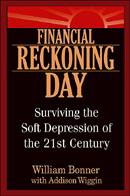
Bill Bonner [send him mail] is the author, with Addison Wiggin, of Financial Reckoning Day: Surviving the Soft Depression of The 21st Century and Empire of Debt: The Rise Of An Epic Financial Crisis.
 Learning From the Past