


Health care companies, working with the neo-Marxists in Western blue states, are using local and state-level policies, and numberless NGOs, to produce ever more drug addiction, alcoholism, mental illness diagnoses, and homelessness.
This is the homelessness industry in Oregon.
I was in the Pacific Northwest about six months ago, in a bucolic little college town. It was the end of April. We were having a real, old-fashioned Spring. Days were warming; a faint sun was waxing steadier; the tiny leaves on trees, that had looked like a haze of veiling when I had first arrived, were emboldened; they grew into stubborn green nubs, and then vivid flags.
 The Great Book of Amer...
Best Price: $5.00
Buy New $14.52
(as of 03:27 UTC - Details)

When I sat on the balcony with my beloved elder relative, massive rough-trunked trees shook down upon us a shower of seed pods like translucent coins; they spun in the sun as they descended.
Rhodedendra bloomed: the leaves were spearlike, a backdrop to small heaping mountains of blossoms. These were deep-purple, or scarlet, or cream-colored with slate-grey centers. Peonies and irises, as various gardeners explained to me with the precision of those who truly loved their landscapes, would bloom the following week.
Everything looked as beautiful, as bucolic, as extremely friendly, as it always has.
But I noticed, as others may not notice if they are there every day, how much has changed since my last visit. And at that time, I had noticed how much had changed from the year prior to that.
I wrote in a former essay that I’d seen the tents of the homeless people steadily change locations.
At first the tents had been set up outside of town. Then they moved to an underpass separating the town from its outskirts, becoming a mini-neighborhood. Civic policy at that time had been to leave them alone.
Then the homeless population moved into the town itself; I wrote about how the town had in fact built tiny homes for the homeless, very pretty ones, located in a parking lot. I don’t know what became of that experiment, but each of these interventions did not seem to lessen the problem of homelessness there. On each visit of mine I saw the dwellings of what seemed to be an ever-increasing homeless population: and particularly, there were more and more drugged-out people, moving slowly due to their use of “tranq”.
This substance, also called “zombie drug”, or xylazine mixed with fentanyl, causes the lassitude, and the immobilized, bowed posture, characteristic of many homeless people in American downtowns today.
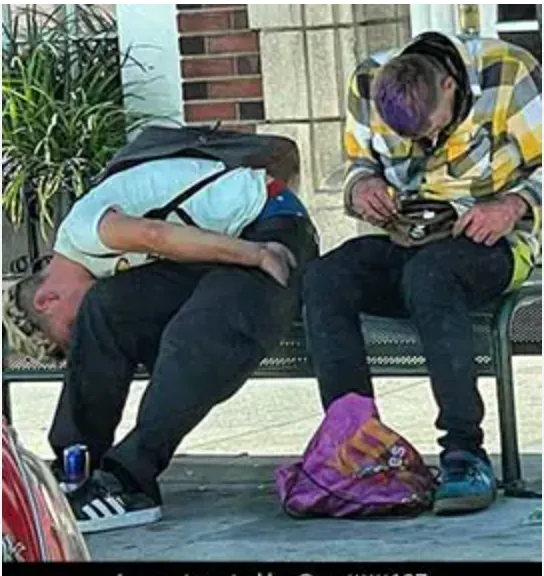
I noted in my last essay that the beautiful park in the center of town, one used by elderly people and children, with borders of rose plantings, a playground, and statues, now housed a “free store” run by anarchists, which offered clothing, canned and packaged food, and other items gratis, at one park entrance.
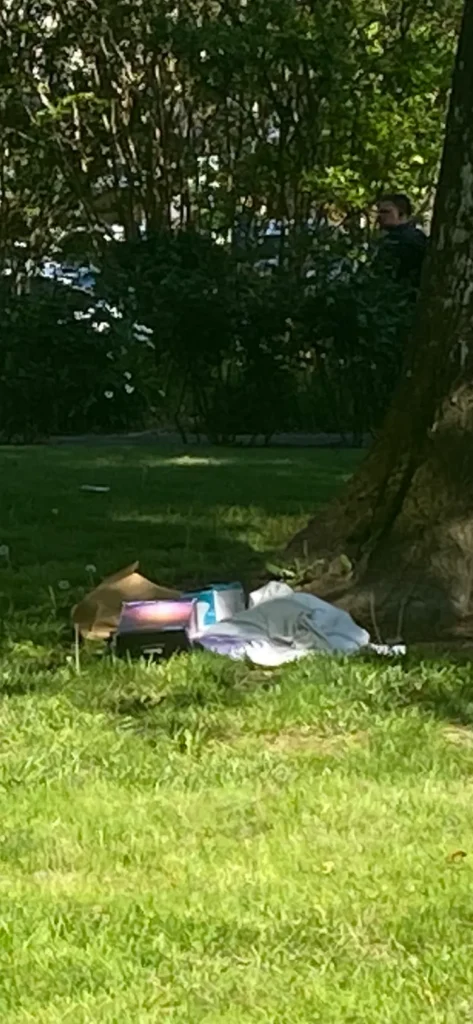
Unsurprisingly, drug users are attracted to the “free store”, and now spend their time sitting on the park benches, nodding off or slumped over, near the free items handout. A church facing the park had offered a free bag lunch to homeless people when I was last in town. Now, on this visit, I saw that it had extended its offerings, and offered both lunch and dinner. The discarded paper plates and plastic silverware were all over the park.
To my astonishment on my last visit, a sign had gone up at the entrance to the park inviting the homeless people there to pitch their tents on one lovely, green, grassy oval. A Port-a-Potty had also been installed.
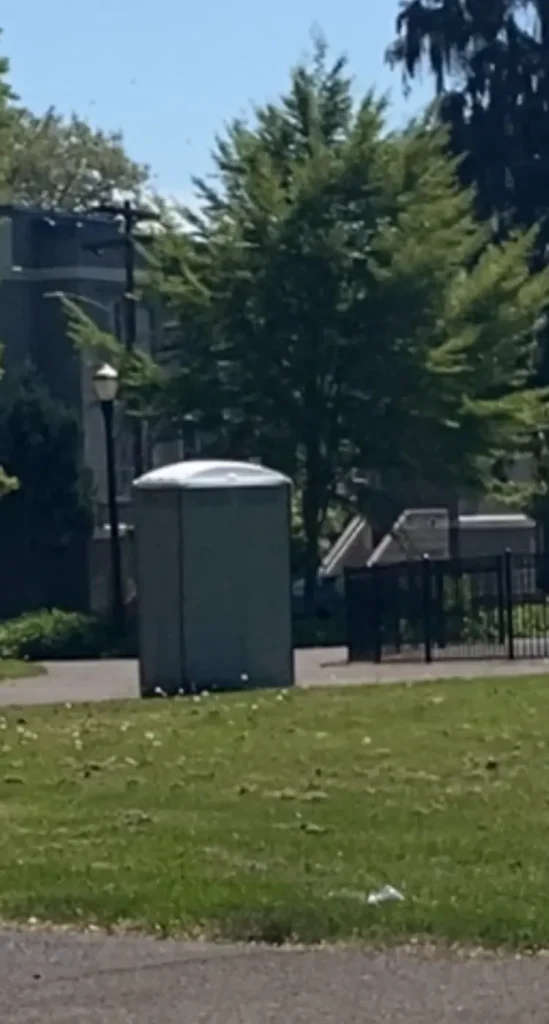
Though I like to think of myself as a caring and generous person, I was upset. This was not “generosity,” I warned my beloved elder; this was the transformation of shared public space, in a way that would hand it over to just one sector of the community — to the drug-addicted homeless. I cautioned my beloved elder that this policy, which seemed so “nice”, would transform that treasured public space: children, families, people of all ages, elderly people, women — would no longer make use of the park the same way.
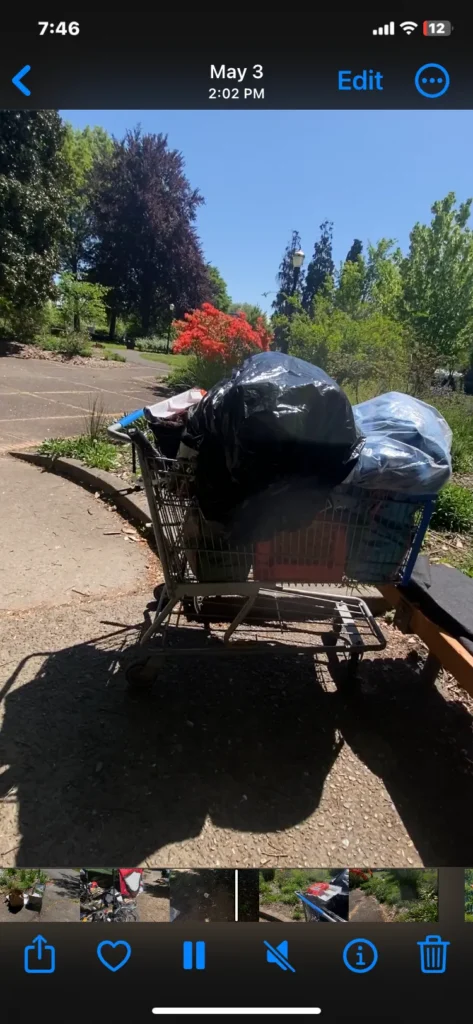
By the latest visit, as I knew would be the case, almost no one who was not homeless or drug-addicted, could enjoy the beautiful square. A few children did still play in the enclosed playground, guardians or parents watching them warily. But no one strolled the walkways. No one lounged on the grass. Young women in groups, or as singles, wearing bikini tops and shorts, or crop tops, no longer lay on beach blankets to sun themselves, or to listen to music on their headphones. Couples did not lie together any longer gazing into one another’s eyes. Young men did not play Frisbee. Middle schoolers did not ride their scooters around the walkways or gather to gossip and laugh in groups. Elders did not sit on the benches. Moms did not bring their babies to lounge on the lawn and play.
No one picnicked. Have you noticed the quiet death of the picnic?
 I Don’t Have Eno...
Best Price: $8.15
Buy New $12.84
(as of 09:46 UTC - Details)
All of these things used to happen, in public spaces like this one in America. Not so long ago. I remember them.
Do you remember them?
I felt the presence, as if of shadows, of the dozens, if not hundreds, of people who no longer gathered to do those things. But in addition, something negative had been built up. What had accumulated since I was last there — and this is human nature — were high-stacked piles of possessions that belonged to the homeless people who slept in the park.
Why?
Because this was now their home and no one else’s. They had begun treating it as such.
Though a sign did warn that the people sleeping in the park should pack up their possessions every day — where did the policymakers expect them to store the items? And did the policymakers really think people would disassemble and reassemble a tent every day, if nothing compelled them to do so?
Sure enough, ringing the park, and stacked next to the tents, were discrete piles of homeless people’s possessions. Boxes, cooler, stacks of packaged bottled water; books, bags of clothing, folded carts, shopping carts, food containers, portable radios, flashlights. Some of these piles reached four or five feet in height.
The park was finished as a public spac. We couldn’t sit there. It had been given up on by everyone but the homeless population, the anarchists who were “doing good” by handing out free items, and a handful of kids in one tiny area, under careful watch.
The rest of the community withdrew, in a tactical surrender.
Why does this matter so much?
We talk about the loneliness of the elderly. But now they can’t meet their old friends or make new friends, in what had been a safe “third good place.”
 Stealing from God: Why...
Best Price: $7.61
Buy New $11.41
(as of 09:41 UTC - Details)
We worry about kids on screens all day, becoming depressed and anxious, sedentary, risking obesity and related illnesses. But older kids and teenagers can’t go to this little park any more by themselves, to socialize and get fresh air and exercise.
We worry about the destruction of community. But this policy around homelessness literally destroyed a space that created and nurtured community.
Is this situation artificially created and sustained, for ulterior motives?
Not only did this particular homelessness policy in this one park, destroy all other forms of community around it; it seemed that all this money being thrown at homeless services, was not eradicating homelessness at all. It was, rather, attracting homeless people to the state and was incentivizing many remaining homeless. That is to say, it subsidized and supported a lifestyle of being fed for free, living in tents, being cared for in other ways including medically, and being otherwise being left alone to abuse drugs and alcohol.
Was all this activity not a symptom of homelessness, but rather, of the need of NGOs to secure from the government and then launder vast sums of money?
Was all this homelessness industry, indeed, a pretext for a massive asset grab?
Oregon spends an eyewatering amount of money on “homelessness,” — that is, on NGO programs — much of it generated from a “homelessness services tax” and the rest from the Federal government, state government and the “pandemic relief” programs:
“Local, state, regional and federal governments, plus private philanthropies, spent $724 million on direct homeless services in the tri-county Portland area in fiscal year 2024, according to a report released Tuesday by economic consulting firm ECOnorthwest.
 The Case for Christ: A...
Best Price: $6.80
Buy New $10.48
(as of 10:26 UTC - Details)
Eviction prevention, long-term rent assistance, street outreach and shelter construction and operation are among the many types of services counted as direct homeless services and included in the report. Health care, affordable housing vouchers and police time are all services that can help homeless people, but spending on these services was not included in the count. [In other words, the total amount spent is even higher].
Of the $724 million in total spending, 43% came from the regional homeless services tax, 21% came from federal sources only, including pandemic relief dollars, and 10% came from Multnomah County.’“
So without the manifestation of visible homelessness as a pressing civic issue, politicians and NGOs cannot justify a tax on hardworking Oregonians’ money, nor can they request funds from the Federal government, nor can they mop up state tax dollars, nor can they tap the ”pandemic” relief” money that is mystifyingly still flowing to address “homelessness” — an issue completely unrelated to COVID itself — six years after the pandemic.
How much of the economic activity in Oregon does the NGO industry represent?
Nonprofits account for a staggering 10-12 per cent of the total Oregon economy.
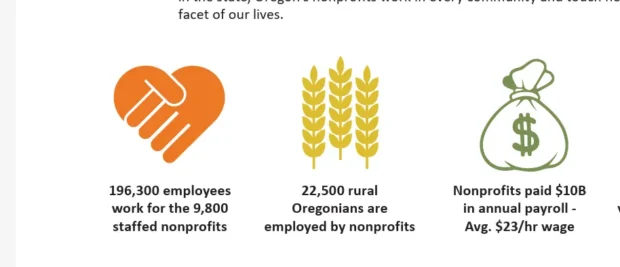
There are almost 200,000 nonprofit jobs in Oregon.
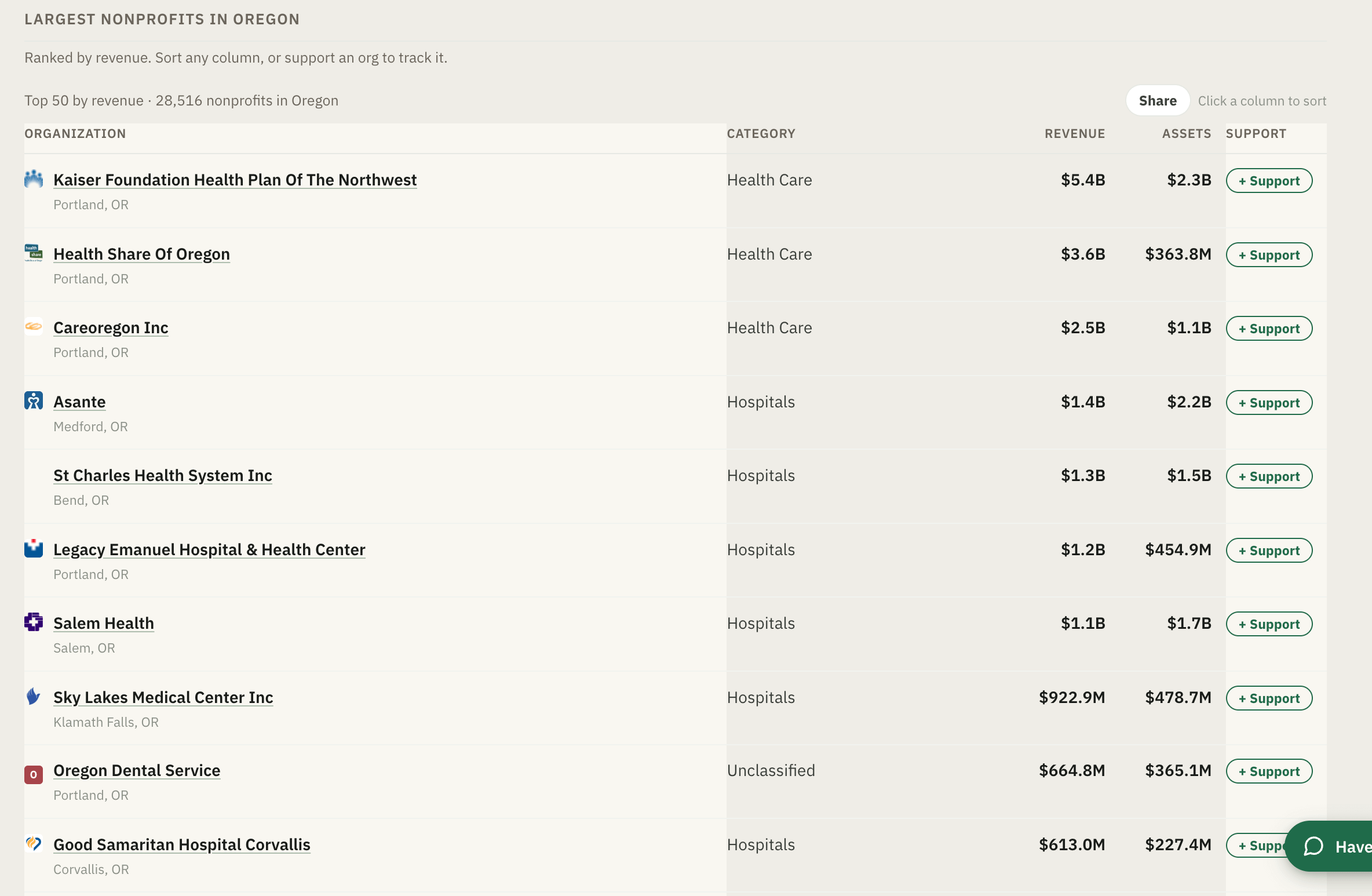
In a data point I can scarcely process, “Oregon nonprofits generate over $44 billion in annual revenue and hold $108 billion in assets.”
What are the $108 billion in “assets” that Oregon NGOs hold? NGOs by definition are not supposed to generate profit, but rather to spend their income on their missions.
By far, the largest proportion of the assets held by NGOs in Oregon, are hospitals and health care facilities.
“Social assistance,” which is deceptively lumped together with “Health Care”, is a massive part of that NGO economy in Oregon:
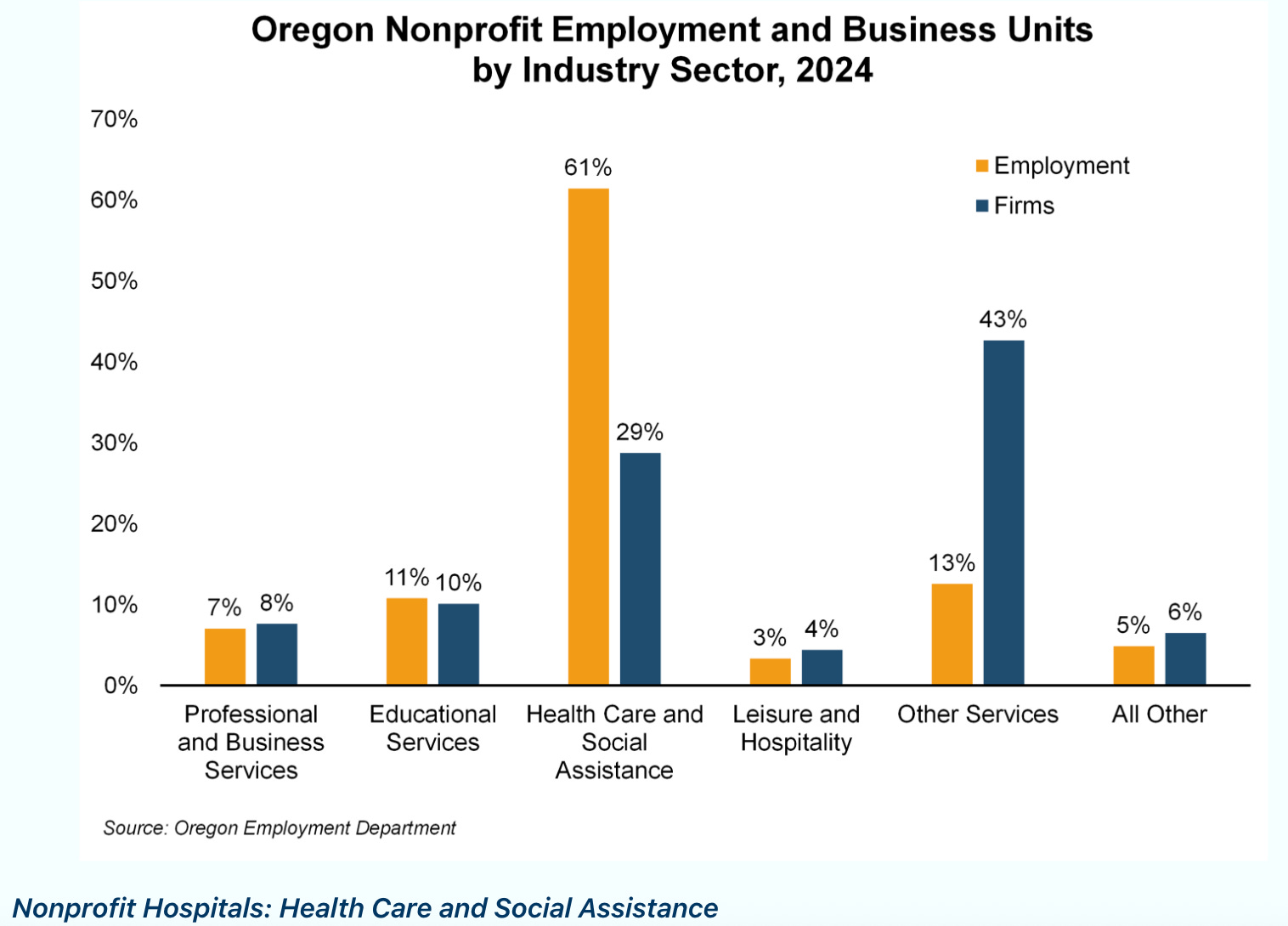
Seeing this set of data points, without having any knowledge of whether health care systems in Oregon provide social assistance to the homeless — which is, of course, not the traditional mandate of hospitals — I looked it up, and I got this:
“Healthcare organizations in Oregon provide direct assistance to people experiencing homelessness, including housing support, medical care, and behavioral health services.”
 Emergen-C Vitamin C 10...
Buy New $12.15
(as of 07:06 UTC - Details)
 Natureu2019s Bounty Zi...
Buy New $7.42
(as of 12:16 UTC - Details)
 Create Creatine Monohy...
Buy New $35.98
(as of 09:36 UTC - Details)
 Physician’s CHOI...
Buy New $17.97
(as of 03:06 UTC - Details)
 Why Hamas Really Attacked Israel on Oct. 7
