

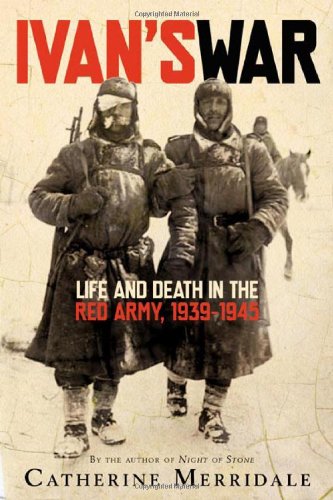
“History is indeed little more than the register of the crimes, follies, and misfortunes of mankind” ~ Edward Gibbon (1737—1794) “Those who cannot remember the past are condemned to repeat it” ~ George Santayana (1863—1952) “What experience and history teach is this — that people and governments never have learned anything from history, or acted on principles deduced from it” ~ Georg Hegel (1770—1831) Writing in 1968, the historian Will Durant, in his The Lessons of History, remarked that “in the last 3,421 years of recorded history only 268 have seen no war.” Unfortunately, the most recent century was the bloodiest on record. Operation Barbarossa, the German invasion of the Soviet Union in June of 1941, was one of the most horrendous military campaigns, not only in the twentieth century, but in all of history. As related by Catherine Merridale in Ivan’s War: Life and Death in the Red Army, 1939—1945 (Metropolitan Books, 2006): By December 1941, six months into the conflict, the Red Army had lost 4.5 million men. The carnage was beyond imagination. Eyewitnesses described the battlefields as landscapes of charred steel and ash. The round shapes of lifeless heads caught the late summer light like potatoes turned up from new-broken soil. The prisoners were marched off in their multitudes. Even the Germans did not have the guards, let alone enough barbed wire, to contain the 2.5 million Red Army troops they captured in the first five months. One single campaign, the defense of Kiev, cost the Soviets nearly 700,000 killed or missing in a matter of weeks. Almost the entire army of the pre-war years, the troops that shared the panic of those first nights back in June, was dead or captured by the end of 1941. And this process would be repeated as another generation was called up, crammed into uniform, and killed, captured, or wounded beyond recovery.
 Ivanu2019s War: Life a...
Best Price: $3.75
Buy New $22.00
(as of 10:49 UTC - Details)
Ivanu2019s War: Life a...
Best Price: $3.75
Buy New $22.00
(as of 10:49 UTC - Details)
 The folly of war cannot be limited to Germans and Russians; it can also be seen in the actions of Americans. During World War II, the Battle of Peleliu between the United States and Japan was folly on a grand scale. As part of General MacArthur’s strategy to recapture the Philippines, it was thought to be necessary to neutralize the Japanese occupation of the island of Peleliu — 550 miles east of the Philippines. It wasn’t. After 1,794 U.S. Marines died, it was determined that the island had no strategic value. Rather than being a “good war,” World War II was an unnecessary bloodbath just like most of the previous wars in history. I suppose that men have pointed out the folly and wickedness of war for as long as wars have been fought. But judging from the history of warfare, I suppose also that they have been in the minority. Most people, I suppose, are familiar with the novelist Leo Tolstoy (1828—1910), the author of War and Peace and a harsh critic of both war and the state. Writing in 1894, Tolstoy powerfully described the folly and wickedness of war: Every war … with all its ordinary consequences … the murder with the justifications of its necessity and justice, the exaltation and glorification of military exploits, the worship of the flag, the patriotic sentiments … and so on, does more in one year to pervert men’s minds than thousands of robberies, murders, and arsons perpetrated during hundreds of years by individual men under the influence of passion. Just think how many millions of innocent lives could have been spared from the horrors of both World Wars had the participants listened to Tolstoy. But long before Tolstoy, someone in Britain penned an equally powerful missive titled “On the Folly and Wickedness of War.” That someone was the preacher and educator Vicesimus Knox (1752—1821), a tireless advocate of civil liberties and adversary of offensive war. I have written about Knox previously (“Vicesimus Knox: Minister of Peace“). My purpose here, however, is to bring this long-forgotten work of Knox into the public domain. I recently discovered it in volume one of Knox’s collected works, and have transcribed it below. The date of publication of “The Folly and Wickedness of War” must be around 1800 for it was reprinted, with a few changes, in The Hive of Ancient and Modern Literature: A Collection of Essays, Narratives, Allegories, and Instructive Compositions, selected by the Solomon Hodgson. The third edition of this book was issued at Newcastle in 1806. The first edition is supposed to have been published in 1799, but I have been unable to confirm this.
 War and Peace (Vintage...
Best Price: $4.23
Buy New $7.56
(as of 03:05 UTC - Details)
Here is “On the Folly and Wickedness and War,” circa 1800: The calamities attendant on a state of war seem to have prevented the mind of man from viewing it in the light of an absurdity, and an object of ridicule as well as pity. But if we could suppose a superior Being capable of beholding us, miserable mortals, without compassion, there is, I think, very little doubt but the variety of military manoeuvres and formalities, the pride, pomp, and circumstance of war, and all the ingenious contrivances for the glorious purposes of mutual destruction, which seem to constitute the business of many whole kingdoms, would furnish him with an entertainment like that which is received by us from the exhibition of a farce or puppet-show. But, notwithstanding the ridiculousness of all these solemnities, we, poor mortals, are doomed to feel that they are no farce, but the concomitant circumstances of a most woeful tragedy. The causes of war are for the most part such as must disgrace an animal pretending to rationality. Two poor mortals take offence at each other, without any reason, or with the very bad one of wishing for an opportunity of aggrandizing themselves, by making reciprocal depredations. The creatures of the court, and the leading men of the nation, who are usually under the influence of the court, resolve (for it is their interest) to support their royal master, and are never at a loss to invent some colourable pretence for engaging the nation in the horrors of war. Taxes of the most burthensome kind are levied, soldiers are collected so as to leave a paucity of husbandmen, reviews and encampments succeed, and at last a hundred thousand men meet on a plain, and coolly shed each others blood, without the smallest personal animosity, or the shadow of a provocation. The kings, in the mean time, and the grandees, who have employed these poor innocent victims to shoot bullets at each other’s heads, remain quietly at home, and amuse themselves, in the intervals of balls, hunting schemes, and pleasures of every species, with reading at the fire side, over a cup of chocolate, the dispatches from the army, and the news in the Extraordinary Gazette. Horace very truly observes, that whatever mad frolics enter into the heads of kings, it is the common people, that is, the honest artisan, and the industrious tribes in the middle ranks, unoffended and unoffending, who chiefly suffer in the evil consequences. If the old king of Prussia were not at the head of some of the best troops in the universe, he would be judged more worthy of being tried, cast, and condemned at the Old Bailey, than any shedder of blood who ever died by a halter. But he was a king; but he was a hero; — those names fascinate us, and we enrol the butcher of mankind among their benefactors.
War and Peace (Vintage...
Best Price: $4.23
Buy New $7.56
(as of 03:05 UTC - Details)
Here is “On the Folly and Wickedness and War,” circa 1800: The calamities attendant on a state of war seem to have prevented the mind of man from viewing it in the light of an absurdity, and an object of ridicule as well as pity. But if we could suppose a superior Being capable of beholding us, miserable mortals, without compassion, there is, I think, very little doubt but the variety of military manoeuvres and formalities, the pride, pomp, and circumstance of war, and all the ingenious contrivances for the glorious purposes of mutual destruction, which seem to constitute the business of many whole kingdoms, would furnish him with an entertainment like that which is received by us from the exhibition of a farce or puppet-show. But, notwithstanding the ridiculousness of all these solemnities, we, poor mortals, are doomed to feel that they are no farce, but the concomitant circumstances of a most woeful tragedy. The causes of war are for the most part such as must disgrace an animal pretending to rationality. Two poor mortals take offence at each other, without any reason, or with the very bad one of wishing for an opportunity of aggrandizing themselves, by making reciprocal depredations. The creatures of the court, and the leading men of the nation, who are usually under the influence of the court, resolve (for it is their interest) to support their royal master, and are never at a loss to invent some colourable pretence for engaging the nation in the horrors of war. Taxes of the most burthensome kind are levied, soldiers are collected so as to leave a paucity of husbandmen, reviews and encampments succeed, and at last a hundred thousand men meet on a plain, and coolly shed each others blood, without the smallest personal animosity, or the shadow of a provocation. The kings, in the mean time, and the grandees, who have employed these poor innocent victims to shoot bullets at each other’s heads, remain quietly at home, and amuse themselves, in the intervals of balls, hunting schemes, and pleasures of every species, with reading at the fire side, over a cup of chocolate, the dispatches from the army, and the news in the Extraordinary Gazette. Horace very truly observes, that whatever mad frolics enter into the heads of kings, it is the common people, that is, the honest artisan, and the industrious tribes in the middle ranks, unoffended and unoffending, who chiefly suffer in the evil consequences. If the old king of Prussia were not at the head of some of the best troops in the universe, he would be judged more worthy of being tried, cast, and condemned at the Old Bailey, than any shedder of blood who ever died by a halter. But he was a king; but he was a hero; — those names fascinate us, and we enrol the butcher of mankind among their benefactors.
 Christianity and War a...
Best Price: $3.46
Buy New $5.96
(as of 12:30 UTC - Details)
When one considers the dreadful circumstances that attend even victories, one cannot help being a little shocked at the exultation which they occasion. I have often thought it a laughable scene, if there were not a little too much of the melancholy in it, when a circle of eager politicians have met to congratulate each other on what is called a piece of good news just arrived. Every eye sparkles with delight; every voice is raised in announcing the happy event. And what is the cause of all this joy? and for what are our windows illuminated, bonfires kindled, bells rung, and feasts celebrated? We have had a successful engagement. We have left a thousand of the enemy dead on the field of battle, and only half the number of our countrymen. Charming news! it was a glorious battle! But before you give a loose to your raptures, pause a while; and consider, that to every one of these three thousand, life was no less sweet than it is to you; that to the far greater part of them there probably were wives, fathers, mothers, sons, daughters, sisters, brothers, and friends, all of whom are at this moment bewailing that event which occasions your foolish and brutal triumph; a triumph perfectly consistent with the basest cowardice. The whole time of war ought to be a time of general mourning, a mourning in the heart, a mourning much more sincere than on the death of one of those princes whose cursed ambition is often the sole cause of war. Indeed that a whole people should tamely submit to the evils of war, because it is the will of a few vain, selfish, ignorant, though exalted, individuals, is a phenomenon almost unaccountable. But they are led away by false glory, by their passions, by their vices. They reflect not; and indeed, if they did reflect, and oppose, what would avail the opposition of unarmed myriads to the mandate of a government supported by a standing army? Many of the European nations are entirely military; war is their trade; and when they have no employment at home, or near it, they blush not to let themselves out to shed any blood, in any cause of the best paymaster. Ye beasts of the forest, no longer allow that man is your superior, while there is found on the face of the earth such degeneracy! Morality and religion forbid war in its motives, conduct, and consequences; but to many rulers and potentates, morality and religion appear as the inventions of politicians to facilitate subordination. The principal objects of crowned heads, and their minions, in countries subject to despotism, are the extension of empire, the augmentation of a revenue, or the total annihilation of their subjects’ liberty. Their restraints in the pursuit of these objects are not those of morality and religion; but solely reasons of state and political caution. Plausible words are used, but they are only used to hide the deformity of the real principles. Wherever war is deemed desirable in an interested view, a specious pretext never yet remained unfound. Morality is as little considered in the beginning, as in the prosecution of war. The most solemn treaties and engagements are violated by the governing part of the nation, with no more scruple than oaths and bonds are broken by a cheat and a villain in the walks of private life. Does the difference of rank and situation make any difference in the atrocity of crimes? If any, it renders a thousand times more criminal than that of a thief, the villainy of them, who, by violating every sacred obligation between nation and nation, give rise to miseries and mischiefs most dreadful in their nature; and to which no human power can say, Thus far shall ye proceed, and no farther. Are not the natural and moral evils of life sufficient, but they must be rendered more acute, more numerous, and more imbittered by artificial means? My heart bleeds over those complicated scenes of woe, for which no epithet can be found sufficiently descriptive. Language fails in labouring to express the horrors of war amid private families, who are so unfortunate as to be situated on the seat of it.
Christianity and War a...
Best Price: $3.46
Buy New $5.96
(as of 12:30 UTC - Details)
When one considers the dreadful circumstances that attend even victories, one cannot help being a little shocked at the exultation which they occasion. I have often thought it a laughable scene, if there were not a little too much of the melancholy in it, when a circle of eager politicians have met to congratulate each other on what is called a piece of good news just arrived. Every eye sparkles with delight; every voice is raised in announcing the happy event. And what is the cause of all this joy? and for what are our windows illuminated, bonfires kindled, bells rung, and feasts celebrated? We have had a successful engagement. We have left a thousand of the enemy dead on the field of battle, and only half the number of our countrymen. Charming news! it was a glorious battle! But before you give a loose to your raptures, pause a while; and consider, that to every one of these three thousand, life was no less sweet than it is to you; that to the far greater part of them there probably were wives, fathers, mothers, sons, daughters, sisters, brothers, and friends, all of whom are at this moment bewailing that event which occasions your foolish and brutal triumph; a triumph perfectly consistent with the basest cowardice. The whole time of war ought to be a time of general mourning, a mourning in the heart, a mourning much more sincere than on the death of one of those princes whose cursed ambition is often the sole cause of war. Indeed that a whole people should tamely submit to the evils of war, because it is the will of a few vain, selfish, ignorant, though exalted, individuals, is a phenomenon almost unaccountable. But they are led away by false glory, by their passions, by their vices. They reflect not; and indeed, if they did reflect, and oppose, what would avail the opposition of unarmed myriads to the mandate of a government supported by a standing army? Many of the European nations are entirely military; war is their trade; and when they have no employment at home, or near it, they blush not to let themselves out to shed any blood, in any cause of the best paymaster. Ye beasts of the forest, no longer allow that man is your superior, while there is found on the face of the earth such degeneracy! Morality and religion forbid war in its motives, conduct, and consequences; but to many rulers and potentates, morality and religion appear as the inventions of politicians to facilitate subordination. The principal objects of crowned heads, and their minions, in countries subject to despotism, are the extension of empire, the augmentation of a revenue, or the total annihilation of their subjects’ liberty. Their restraints in the pursuit of these objects are not those of morality and religion; but solely reasons of state and political caution. Plausible words are used, but they are only used to hide the deformity of the real principles. Wherever war is deemed desirable in an interested view, a specious pretext never yet remained unfound. Morality is as little considered in the beginning, as in the prosecution of war. The most solemn treaties and engagements are violated by the governing part of the nation, with no more scruple than oaths and bonds are broken by a cheat and a villain in the walks of private life. Does the difference of rank and situation make any difference in the atrocity of crimes? If any, it renders a thousand times more criminal than that of a thief, the villainy of them, who, by violating every sacred obligation between nation and nation, give rise to miseries and mischiefs most dreadful in their nature; and to which no human power can say, Thus far shall ye proceed, and no farther. Are not the natural and moral evils of life sufficient, but they must be rendered more acute, more numerous, and more imbittered by artificial means? My heart bleeds over those complicated scenes of woe, for which no epithet can be found sufficiently descriptive. Language fails in labouring to express the horrors of war amid private families, who are so unfortunate as to be situated on the seat of it.
 The Revolution that Wa...
Buy New $5.95
(as of 12:45 UTC - Details)
War, however, it will be said, has always been permitted by Providence. This is indeed true; but it has been only permitted as a scourge. Let a spirit and activity be exerted in regulating the morals of a nation, equal to that with which war, and all its apparatus, are attended to, and mankind will no longer be scourged, neither will it be necessary to evacuate an empire of its members, for none will be superfluous. Let us, according to the advice of a pious divine of the present age, think less of our fleets and armies, and more of our faith and practice. While we are warriors, with all our pretensions to civilization, we are savages. But be it remembered, that nothing in this essay, or in any other composition of its author, was ever intended, or could be fairly understood, to discountenance a truly just and necessary war is the subject of his reprehension. Will men ever learn from history that war is nothing but folly and wickedness? Will civilized, educated Christian Americans ever learn from history that war is nothing but folly and wickedness? Judging from the persistent Christian support for war, the warfare state, and the military, I am not optimistic. Knox’s “On the Folly and Wickedness of War,” along with his other anti-war writings and a biographical preface, are available in the now updated Vicesimus Knox on War and Peace.
The Revolution that Wa...
Buy New $5.95
(as of 12:45 UTC - Details)
War, however, it will be said, has always been permitted by Providence. This is indeed true; but it has been only permitted as a scourge. Let a spirit and activity be exerted in regulating the morals of a nation, equal to that with which war, and all its apparatus, are attended to, and mankind will no longer be scourged, neither will it be necessary to evacuate an empire of its members, for none will be superfluous. Let us, according to the advice of a pious divine of the present age, think less of our fleets and armies, and more of our faith and practice. While we are warriors, with all our pretensions to civilization, we are savages. But be it remembered, that nothing in this essay, or in any other composition of its author, was ever intended, or could be fairly understood, to discountenance a truly just and necessary war is the subject of his reprehension. Will men ever learn from history that war is nothing but folly and wickedness? Will civilized, educated Christian Americans ever learn from history that war is nothing but folly and wickedness? Judging from the persistent Christian support for war, the warfare state, and the military, I am not optimistic. Knox’s “On the Folly and Wickedness of War,” along with his other anti-war writings and a biographical preface, are available in the now updated Vicesimus Knox on War and Peace.

The Folly and Wickedness of War
August 8, 2009
Laurence M. Vance [send him mail] writes from central Florida. He is the author of The Free Society; War, Christianity, and the State: Essays on the Follies of Christian Militarism; War, Empire, and the Military: Essays on the Follies of War and U.S. Foreign Policy; King James, His Bible, and Its Translators, and many other books. His newest book is The U.S. Proxy War in Ukraine.

Previous article by Laurence M. Vance: Will the Republicans Save Us?
Political Theatre
- Earth Day Founder Warned Against Mass Immigration as ‘Tremendous Cost’ to Americans’ Quality of Life
- Musk concurs that civil war is looming in the West
- Candace Owen’s Husband Inyerviewed
- This is what 1 trillion in cash would look like
- Trump Sold-Out His Base to Shovel $95 Billion to Ukraine and Israel
- Paid so little, she was forced to moonlight
- The left and right in the U.S. are pro-death cults
- The Future of the US Government.
- Ukraine Gets Billions Despite CIA Director Reportedly Warning Zelenksy To Stop Stealing So Much Money
- Young, healthy women being euthanized in the Netherlands should be a warning for Canada
- MORE

LRC Blog
- Senator JD Vance Issues Unvarnished Take About Pending Ukraine Aid Legislation
- Bizarre Mitch McConnell: ‘It’s All Tucker Carlson’s Fault!
- NATO At 75 – Time To Retire?
- Draining Your Body’s (Lymph) Swamp
- CIA To Zelensky: ‘Please Stop Stealing So Much.’
- Climate Change Communist Party (CCCP) Celebrates Lenin’s Birthday Today, April 22
- ‘Charles, You’ve Always Been a Radical’
- Walter Karp on Textbook America
- Tucker and Rogan
- Don’t Expect The Fed To Fix The Problems It Created!
- MORE
LRC Podcasts
